At 1:36 AM, in a makeshift execution chamber within Nuremberg Prison, the chief architect of the Nazi terror state met his end. Ernst Kaltenbrunner, the highest-ranking SS leader captured alive by the Allies, was hanged for crimes against humanity. His death closed a chapter on one of history’s most ruthless bureaucrats of genocide.
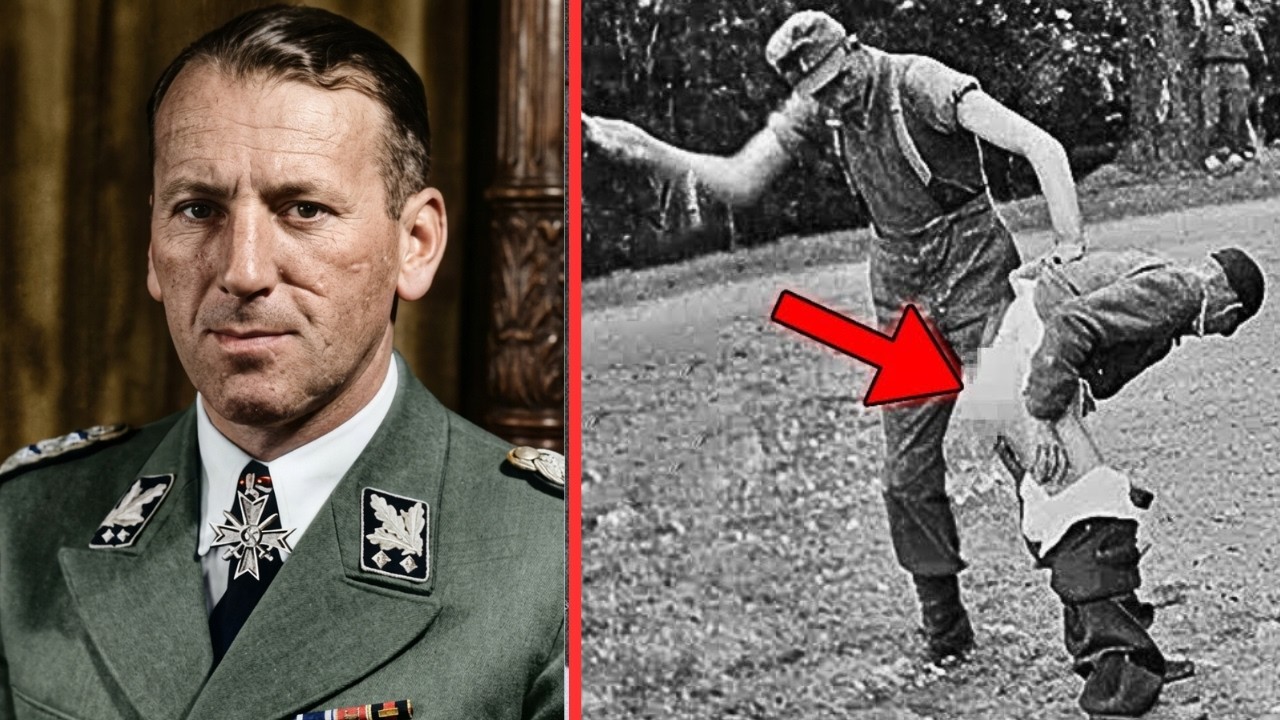 The man who walked steadily to the gallows had for years commanded the Gestapo, the criminal police, and the SS intelligence service simultaneously. As head of the Reich Security Main Office (RSHA), his signature was on orders that doomed millions. His final words were a quiet murmur of misplaced patriotism before the trapdoor opened.
Kaltenbrunner’s journey to the Nuremberg gymnasium began in a remote Alpine cabin. As the Third Reich collapsed in May 1945, he fled to the Totes Gebirge mountains. American Counter Intelligence Corps agents, led by Sergeant Robert Madison, undertook a perilous midnight climb through thirty feet of snow to reach his hideout.
Disguised in Austrian hiking gear, Madison approached the Wildensee Hütte cabin at dawn. After a brief standoff, a gaunt and exhausted Kaltenbrunner emerged with his hands raised. His iconic dueling scars made immediate identification certain, despite his feeble attempt to claim he was a doctor.
His capture marked the fall of a figure so powerful he reportedly made Heinrich Himmler uneasy. Following the assassination of Reinhard Heydrich in 1942, Himmler appointed Kaltenbrunner to lead the RSHA, believing him to be a controllable bureaucrat. This proved a catastrophic miscalculation.

Kaltenbrunner’s authority expanded rapidly, soon bypassing Himmler to report directly to Hitler. He wielded control over the entire apparatus of state terror, from the secret police to the concentration camp system. The Holocaust accelerated under his direct command.
Evidence presented at his trial painted a damning portrait of hands-on brutality. In the summer of 1943, he visited the Mauthausen concentration camp. There, fifteen prisoners were allegedly executed via three methods—gunshot, hanging, and gassing—as a demonstration for the visiting chief.
He issued direct orders for the deportation of Jews from Italy and pressured the Hungarian government to hand over its Jewish population. After the July 20th plot to assassinate Hitler, Kaltenbrunner personally led the vicious investigation, resulting in thousands of arrests and hundreds of executions.

At the International Military Tribunal, his defense was met with derision. He claimed ignorance of the Final Solution until 1943 and denied ever visiting Mauthausen. The prosecution systematically dismantled his testimony with signed orders, witness accounts, and the testimony of his own subordinates.
The court found him guilty of war crimes and crimes against humanity. The judgment stated he was “responsible for crimes against humanity committed through the Gestapo and the SD, including the murder and ill-treatment of civilians, and the persecution of Jews.”
On the night of October 16, 1946, he followed Foreign Minister Joachim von Ribbentrop to the gallows. Asked for final words, he declared, “I have loved my German people and my fatherland with a warm heart. I have done my duty by the laws of my people and I am sorry this time my people were led by men who were not soldiers and that crimes were committed of which I had no knowledge.”

With a black hood placed over his scarred face, his last audible words were, “Germany, good luck.” Master Sergeant John C. Woods carried out the sentence. Kaltenbrunner was pronounced dead at 1:50 AM.
His body, along with those of the other executed Nazi leaders, was cremated in Munich. The ashes were secretly scattered in the Conwentzbach, a tributary of the Isar River, ensuring no physical grave would ever become a shrine.
The story of Ernst Kaltenbrunner is not one of a blind follower but of an educated, calculating lawyer who made deliberate choices. He chose to watch demonstration killings, sign deportation orders, and build an intelligence empire of unparalleled brutality. His execution served as a stark postscript to an era of industrialized evil, a final accounting for the man who operated the levers of the Nazi genocide.
