PARIS, October 15, 1945 – Pierre Laval, the disgraced architect of France’s collaboration with Nazi Germany, was executed by firing squad at Fresnes Prison this morning, concluding a dramatic final chapter marked by a failed suicide attempt.
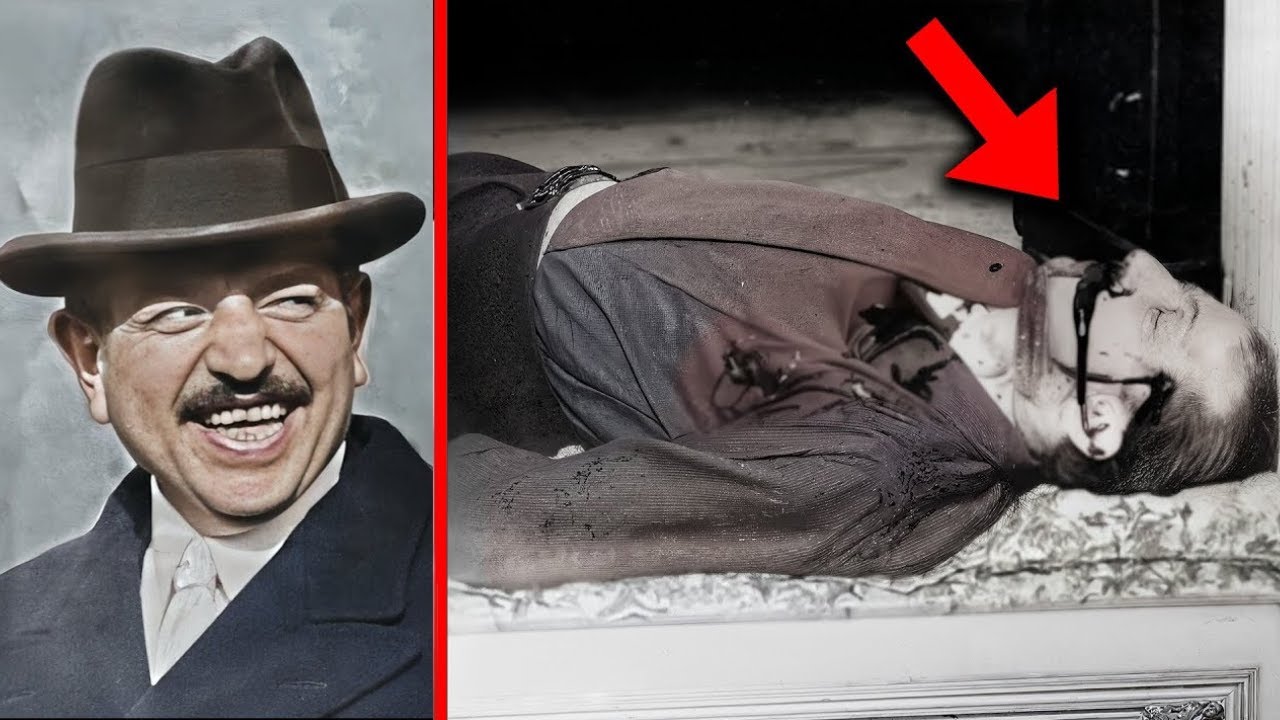 The former prime minister’s death closes a story of profound national betrayal. Laval, 62, was carried to the execution yard after prison doctors revived him from a cyanide overdose taken hours earlier.
His final shout of “Vive la France!” echoed with devastating irony across the prison courtyard. Moments later, a volley from a French military firing squad ended the life of the man who had eagerly served Hitler’s regime.
The execution follows a swift and tumultuous trial where Laval was convicted of plotting against state security and collaborating with the enemy. He offered no defense during the proceedings, declaring the court’s hostility proved he was a victim of “judicial crime.”
Laval’s journey from socialist firebrand to fascist collaborator remains one of history’s most shocking political transformations. Once a lawyer defending trade unionists, he later became the calculating force behind the Vichy government’s darkest policies.
His political career, which saw him serve multiple terms as prime minister in the 1930s, was already marred by controversy. The Hoare-Laval Pact, a secret plan to appease Mussolini’s invasion of Ethiopia, forced his resignation in disgrace in 1936.
France’s catastrophic defeat in 1940 provided Laval his path back to power. He masterminded the dissolution of the Third Republic and helped install the authoritarian Vichy state under the figurehead of Marshal Philippe Pétain.
Laval operated under a core belief: Nazi Germany would win the war. He argued that France’s survival depended on full integration into Hitler’s New Order, a conviction he stated publicly in a notorious 1942 radio broadcast.

“I desire a German victory,” Laval declared, “because without it, Bolshevism would establish itself everywhere.” This fear of Soviet communism became the ideological justification for his deepening collaboration.
His administration became an indispensable tool for the Nazi occupation. Laval created the Milice, a vicious French paramilitary force that hunted resistance fighters with brutal efficiency, often surpassing Gestapo cruelty.
He negotiated the forced deportation of hundreds of thousands of French workers to German factories. Yet these actions were eclipsed by his direct complicity in the Holocaust on French soil.
French police, under Vichy authority, actively rounded up Jews for deportation. Laval personally ensured children were not spared, overriding even German orders that initially specified only adults.
During the infamous Vel’ d’Hiv Roundup in July 1942, French authorities arrested over 13,000 Jews, including more than 4,000 children. Laval insisted families be deported together, cynically framing it as humanitarian.
When confronted about the certain fate of these children, Laval was unequivocal. “Not one Jewish child must remain in France,” he stated. Approximately 77,000 Jews from France were murdered in extermination camps.

As Allied forces liberated France in 1944, Laval fled to Germany and then Spain. He was eventually captured and returned to a nation yearning for justice and grappling with the shame of widespread collaboration.
His trial laid bare the horrific consequences of his policies. The prosecution presented overwhelming evidence of his voluntary partnership with the Nazis and his personal role in the deportation of thousands to their deaths.
The court rejected his argument that collaboration had been a necessary strategy to shield France from greater suffering. The verdict was death, a sentence met with widespread public approval.
In the early hours of October 15, Laval attempted to cheat the firing squad. He swallowed cyanide concealed in a vial within his clothing, but the poison was degraded and failed to kill him.
Medical staff forcibly revived the former premier. Weak and disoriented, he was bound to an execution post in the prison yard as the morning light broke.
Witnesses reported the once-powerful politician could barely stand. His final cry was a futile attempt to reclaim a patriotism he had utterly betrayed throughout the war years.

Pierre Laval’s body was initially buried in an unmarked grave, in accordance with laws denying formal burial to those executed for treason. His family later quietly relocated his remains to a private mausoleum.
No official monument commemorates Pierre Laval. His name is absent from street signs and public memorials. Historians now dissect his legacy as the ultimate cautionary tale of moral collapse.
The central question persists: was he a cynical opportunist or a misguided patriot convinced of his grim realism? Evidence suggests a fatal combination of both ambition and ideological conviction.
His story demonstrates how the pursuit of power and a catastrophic misreading of history can corrupt absolutely. Laval’s France became an accomplice to genocide, a stain on the national conscience that endures.
The execution brings a form of closure, but the painful examination of France’s Vichy past is only beginning. The nation must now reconcile with the uncomfortable truth that its own institutions and citizens facilitated atrocity.
Laval’s death signals not just the end of a man, but the end of an era of willing submission. As France rebuilds, the memory of his betrayal serves as a grim warning for generations to come.
