A harrowing new investigation reveals the systematic torture and abuse of an estimated 300,000 North Vietnamese and Vietcong prisoners by U.S. forces and their South Vietnamese allies during the Vietnam War. Survivor testimonies and historical records detail a widespread campaign of brutality that flagrantly violated international law and left generations scarred.
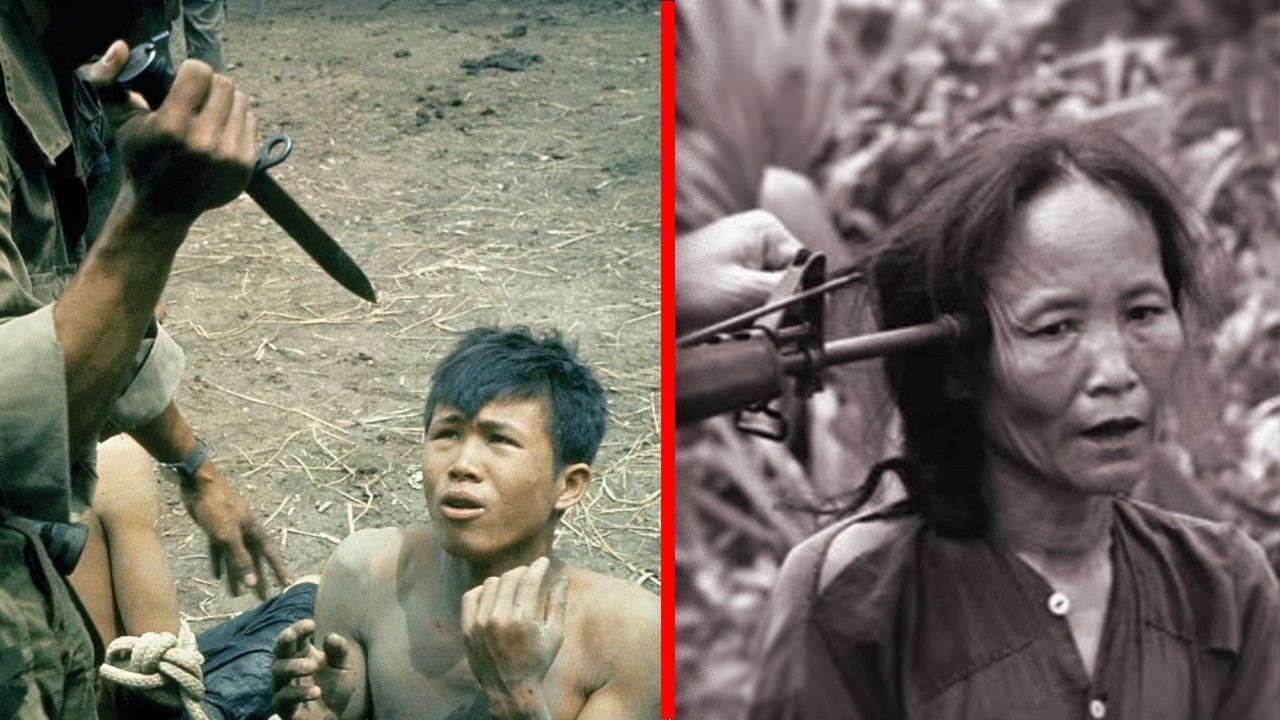 Detainees were held in notorious facilities like Coconut Tree Prison, which held up to 40,000 people behind 15 layers of barbed wire. Conditions were deliberately inhumane, designed to break both body and spirit. The treatment of senior communist officials was often particularly severe, involving constant surveillance and intensified violence.
Infamous prisons like Phu Quoc and Con Son utilized “tiger cages”—claustrophobic, unventilated metal or bamboo cells. These cages were symbols of a regime where ethical considerations were abandoned in pursuit of military intelligence. Prisoners endured sweltering heat and extreme confinement for weeks or months at a time.
Physical torture methods were barbaric and routine. Interrogators deliberately broke bones, sometimes re-breaking them to prolong agony. Prisoners were suspended by their arms for days, causing permanent joint damage. Dental torture, involving the forcible removal of teeth with crude tools, was both painful and deliberately dehumanizing.
Psychological torment was a cornerstone of the detention system. Prolonged isolation in dark cells aimed to shatter mental fortitude. Public displays of torture instilled fear in the wider prison population. The constant threat of violence created an atmosphere of utter desperation and helplessness among detainees.
Forced labor under brutal conditions, combined with starvation-level rations, weakened prisoners physically. Many became emaciated and prone to disease. This systematic degradation served to strip individuals of their dignity and resistance, making them more pliable for interrogation efforts.
These practices directly contravened the Geneva Conventions, which the United States had signed. Investigations and survivor accounts point to systemic violations, not isolated incidents. The scale of the abuse suggests a tacitly approved policy operating within the framework of the conflict.
 The covert Phoenix Program, operational from 1967-1972, institutionalized these brutal tactics on a massive scale. Its objective was to “neutralize” the Vietcong’s political infrastructure. Official figures state the program was responsible for over 81,000 killings, detentions, and arrests, though its methods are widely condemned.
Interrogations under Phoenix were notoriously cruel. A technique dubbed the “Bell Telephone Hour” used car batteries to administer electric shocks to prisoners’ genitals, tongues, and ears. This inflicted excruciating pain and caused long-term physical and psychological damage to countless detainees.
Sexual violence was a pervasive weapon. Prisoners were assaulted with objects like clubs, snakes, and eels to degrade and humiliate them. Some were confined with venomous snakes or scorpions, living under a constant threat of agonizing death to force compliance.
Mock executions were commonplace, designed to traumatize prisoners into submission. Blindfolded and bound detainees were subjected to the sounds of gunfire, believing their death was imminent. Threats against prisoners’ families further compounded the psychological torture.
The program relied on a network of often-unreliable informants, leading to tragic errors. Personal vendettas were settled with false accusations, resulting in the deaths of innocent civilians. When a target could not be found, their entire family was sometimes massacred instead.
Assassination squads, trained by the CIA and operating with impunity, carried out these killings. The lack of oversight and the indiscriminate nature of the violence sparked international outrage and raised serious questions about the program’s legality and morality.

Beyond covert operations, the use of Agent Orange caused generational devastation. Over 80 million liters were sprayed to destroy forest cover and crops. The chemical’s toxic dioxin component led to severe health issues for soldiers and civilians, including cancers and neurological disorders.
The legacy of Agent Orange is a continuing crisis. An estimated 3 million Vietnamese suffer from its effects, including children born with severe birth defects like spina bifida and limb deformities. The social and economic burden on affected families and the nation remains immense.
The war’s violence spilled illegally into neutral Laos and Cambodia. Intensive U.S. bombing campaigns, aimed at the Ho Chi Minh Trail, dropped over 2.7 million tons of ordnance on Laos alone. This made it the most heavily bombed nation per capita in history.
These bombings killed an estimated 250,000 to 350,000 people, overwhelmingly civilians. Nearly a million were displaced. The campaigns created a lasting humanitarian disaster, with infrastructure destroyed and communities shattered.
A deadly legacy persists in the form of unexploded ordnance (UXO). Approximately 30% of bombs failed to detonate, littering the landscape. Since the war ended, over 20,000 people in Laos have been killed or maimed by these remnants, with children being particularly vulnerable.
 The contamination of farmland with UXO cripples economic development to this day. Vast tracts of arable land remain unusable, perpetuating poverty. The cost of clearance is staggering, and the work progresses slowly, leaving generations in danger.
The policy of “free-fire zones” sanctioned indiscriminate violence. These areas were designated as enemy-held, granting soldiers permission to shoot at anything that moved. This led to the routine killing of civilians mistaken for combatants.
Analysts estimate that approximately one-third of all Vietnamese war casualties were civilians, a statistic that underscores the deadly consequence of such policies. Entire families were obliterated with no recourse for justice or acknowledgment.
The massacre at My Lai in 1968 stands as a horrific example of this unchecked brutality. U.S. soldiers systematically killed 347 unarmed civilians—women, children, and the elderly. Acts of rape and the destruction of villages compounded the atrocity.
Accountability for My Lai was virtually nonexistent. Only one officer, Lieutenant William Calley, was convicted, and his life sentence was swiftly reduced to three years of house arrest. This outcome sparked global condemnation and highlighted systemic failures in military justice.
The collective trauma from these events endures. Organizations continue demining efforts, provide care for Agent Orange victims, and support veterans and civilians grappling with psychological wounds. The path toward healing and full accountability remains long and fraught.
This comprehensive account, drawn from extensive documentation and survivor narratives, paints a stark picture of a conflict where the lines of acceptable conduct were repeatedly crossed. The scars, both physical and on the landscape, serve as a somber reminder of war’s profound and lasting human cost.
