The 19-year-old man sitting in a New Mexico jail cell in the late summer of 1947 had already lost everything that mattered to him. His radio career was finished. His marriage was crumbling.
His name appeared on the back pages of the Roswell Daily Record, buried beneath the headlines about flying saucers and dead aliens that had made the town famous. William Orville Frizzell, known to everyone who would one day know his music as Lefty, picked up a piece of paper and began to write a letter to his wife Alice. He was facing six months in the Chavez County jail on a charge of statutory rape involving a 14-year-old girl.
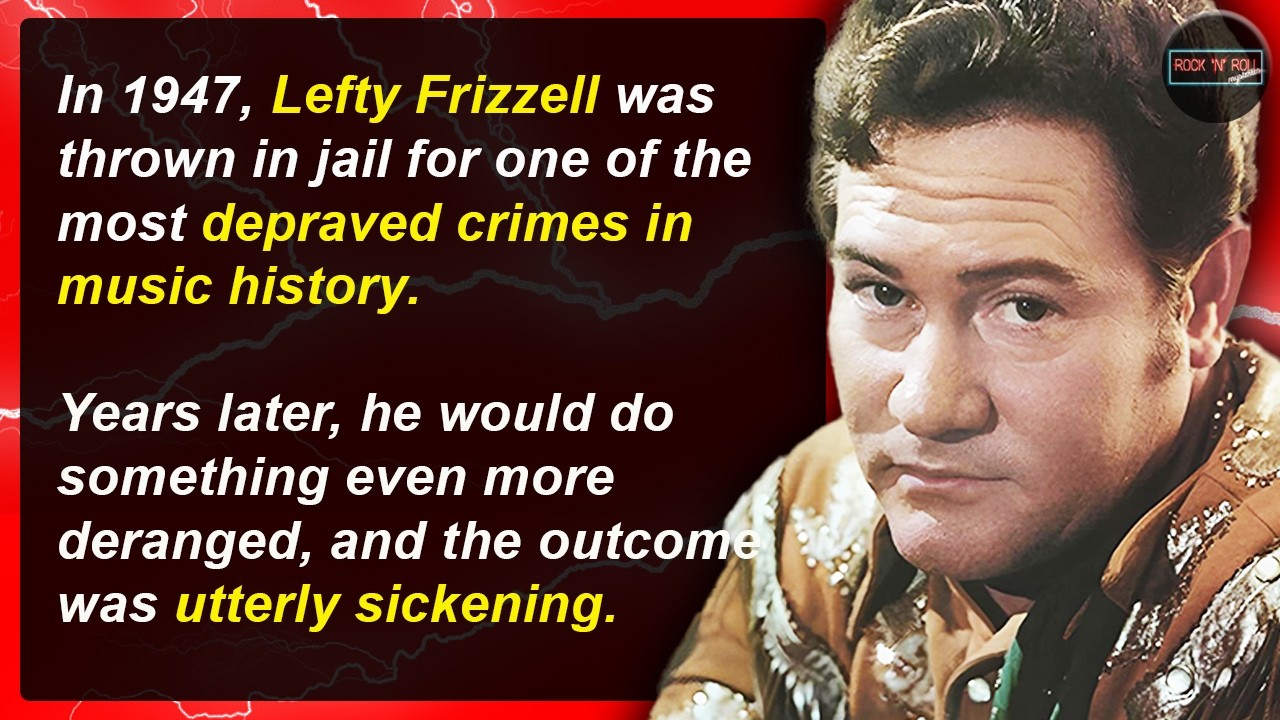 The letter he wrote that day would become a song called I Love You a Thousand Ways, and three years later it would become his first number one record. But in that moment, he was just a scared kid from the oil fields who had finally run out of road.
The story of Lefty Frizzell begins in Corsicana, Texas, a flat, oil-soaked town in Navarro County where the derricks outnumber the church steeples and the smell of crude oil gets into your clothes before you are old enough to know what crude is. He was born on March 31, 1928, the first of eight children, and his family called him Sonny. His father Naaman was a driller who chased rigs across three states, and his mother Addie kept what could be kept of a household that was always packing up.
The Frizzells moved when the oil moved, from East Texas to Louisiana, from Louisiana to Arkansas, from Arkansas back to Texas, a circuit of boom towns and shotgun houses and dirt yards that gave the boy a working knowledge of every honky-tonk between Beaumont and El Dorado before he turned 12. It was an upbringing that taught him two things very quickly, how to leave and how to make himself at home anywhere with a guitar in his hands.
He was small, sharp-faced, and quick with his fists. The nickname Lefty did not come from a Golden Gloves match as his publicist would later claim, but from a schoolyard scrap in which he laid out a bully with his left hand. The story stuck because it suited him.
Lefty sounded like a country singer, where Sonny sounded like a kid who had not yet decided what to be. But he had already decided. At 12, he was singing on KELD in El Dorado, Arkansas, on a childrens show.
The Victrola in his fathers parlor had given him an early and dangerous education in the records of Jimmie Rodgers and Roy Acuff. He would stick his head against the speaker, his brother David later remembered, to catch every slide and bend of the singing brakeman’s voice the way a chemist might study an unstable compound. I knew when I was 12 years old what I was going to do, he said later.
He just did not yet know what it was going to cost him.
By the time World War II was ending, he was in Greenville, Texas, working radio dates around KPLT in Paris, and that was where he met Alice Harper. She was 16 and so was he, and they were both too young to marry without parental permission. They got the permission and married anyway in March of 1945.
A daughter named Lois arrived not long after. The young Frizzells did what young oil field families did in the late 1940s, moving where the work was. The work in 1946 was in New Mexico.
They tried Capitan first, then Roswell, an army town swelling on the back of the Eighth Air Force and the atomic test economy. Lefty got himself a regular spot on KGFL and a steady booking with the house band at the Cactus Gardens dance hall. Alice took a job at a cafe downtown.
He was 19, ferociously talented, locally famous, and already in possession of every appetite that would eventually kill him.
In the early days of July 1947, ranchers north of Roswell began finding what they swore were pieces of a flying saucer. Within a week, the town was crawling with reporters from every newspaper in the country, all of them shouting at the army about little dead green men. While the nation lost its mind over Roswell, Lefty Frizzell was conducting his own private cover-up, badly.
He had a 14-year-old groupie, and he took advantage of the situation. She had a father. The father went to the police.
The judge gave Frizzell six months on a charge of statutory rape, and the local paper buried the item among the saucer stories on a back page, which was perhaps the only piece of luck the boy got that summer. Some today might shrug off the nature of this relationship as the kind of thing that happened in the past, but the laws of the state and the moral landscape tell a different story. Lefty knew what he was doing was deeply wrong.
Years later, in an interview, he would describe what had happened with a kind of wincing euphemism, calling it fighting and carrying on. But the documentary record is plain enough. A married man of 19, with a baby at home, had been caught with a child, and he was going to do time for it.
He sat in that cell through the Texas edge heat of late 1947 wondering whether Alice was going to take Lois and disappear into the West Texas dust. While he sat there, he wrote songs, dozens of them, a feverish, guilt-driven flood of verses, most of them apology letters set to imaginary melodies, mailed home to his wife in the hope that she would read them and stay. One of those letters was called I Love You a Thousand Ways.
It was, by any honest reading, a confession dressed in a love song. It would become the first thing he ever released on a major label three years later, and it would go to number one.
He got out of jail in early 1948, certainly chastened, broke, and now unemployable in New Mexico. He drifted back to Texas with Alice and the baby and tried briefly to go straight. He worked the oil fields with his father.
He pumped fuel. He played weekends when he could. By 1950, he had landed a residency at the Ace of Clubs in Big Spring, a chicken-wire joint where the chicken wire was not a decoration but a structural feature, and where he very quickly became the local sensation.
The biographer Joe Nick Patoski would later describe Big Spring’s Ace of Clubs as Frizzell’s Cavern Club, his CBGB. It was an apt comparison. He drove 180 miles to fill in for a sick lead singer one night and never really left the stage again.
People came from across the Panhandle to hear the kid with the crooked smile and the impossible voice.
The voice did things other country singers were not doing in 1950, and they were not even quite sure they wanted to do. It bent. It lingered.
 It pulled syllables apart and laid them down again in a different order. It broke down the wall between the singer and the song the way a good actor breaks down the wall between himself and the part. In the spring of 1950, he made the drive from Big Spring to Dallas to audition at Jim Beck’s studio.
Beck was the most important country talent scout in the Southwest, a man with a direct line to Columbia Records in Nashville, and a producer who could hear a hit before the singer was finished singing it. Beck did not, on first listen, think much of Frizzell. He was polite about it.
Then the kid played him something he was still in the middle of writing, a swinging two-step about a man with no money and a man with money called If Youve Got the Money, Ive Got the Time.
Beck’s ears, it was said, did a small backflip. He cut a demo, drove it to Nashville, and tried to interest Columbia’s Don Law in the song as a vehicle for Little Jimmy Dickens. Law listened to the demo.
Law did not buy the song. Law bought the singer. By June of 1950, William Orville Frizzell had a Columbia contract.
By July, in Beck’s Dallas studio, he had recorded his first session. The first single, released at the end of that summer, paired the swinging money song on the A-side with the apology written in a Roswell jail cell on the B-side. Both sides reached number one.
What followed, between the autumn of 1950 and the autumn of 1952, was one of the most extraordinary chart runs in the history of American popular music. He was 22 years old, unknown outside of a few hundred miles of West Texas oil country, and within 18 months he had 13 top 10 country hits.
In October of 1951, four of his singles were simultaneously in the Billboard country top 10, a feat the trade press at the time noted had never been done before and would not be matched until the Beatles did it in the next decade. There was I Want to Be With You Always and Always Late With Your Kisses, the song whose title would become his epitaph among musicians who had to wait around for him to show up. There was Mom and Dad’s Waltz, which he wrote for his parents and to which he signed away the royalties as a gift, a gesture characteristic of a man who for all his appetite could be ruinously generous when the mood struck him.
There was Traveling Blues and Give Me More More More of Your Kisses and the Jimmie Rodgers gospel sides. He sounded on those records like nobody else who had ever made a country record.
Daniel Cooper, who would later write the Country Music Hall of Fame’s essay on him, identified the trick as plainly as it could be identified. He introduced an intimate vowel-bending style of singing that has been internalized by countless performers since he burst to stardom in 1950. Bill Ivey, who ran the Country Music Foundation, put it another way.
Of all the honky-tonk singers of the 1940s and early 1950s, Lefty was the one who has shown the greatest influence. He had a more open, warmer tone than Hank, almost as if he moved the music in its vocal sound one step away from the nasal edginess that you had with Hank Williams. The man himself, asked once what he was doing in there, gave the simplest possible answer.
When I sing, to me every word has a feeling about it. I had to linger, had to hold it. I want to hold one word for a whole line of melody.
That was Lefty’s game, as Alice called it. It was a holding action against the way country singers had sung before, and it would set the terms for the way they sang afterwards. By the summer of 1951, he was on tour with Hank Williams.
The two of them respected each other warily, the way two men of comparable gift and incompatible egos always do. Hank, three years from his own death in the back of a Cadillac, allegedly told the younger man at some point during the tour, Someday, when you slow down, you need to join the Opry. Lefty did join the Grand Ole Opry in July of 1951, but the slowing down would not be a problem he ever fully solved.
He told a journalist later that the Williams tour had produced enough stories to fill a book. He never told them.
The songwriter Harlan Howard, who knew him from his California period, remembered him this way. He was a wonderful guy, someone who was just about as loose and free as any rock star you ever saw. On stage and off.
He was really flamboyant, a good-looking guy with curly hair, always chasing after women and drinking a lot like Hank. The chasing after women caught up with him quickly. In August of 1951, in the middle of his greatest year, plainclothes officers met him backstage at the Grand Ole Opry and arrested him on a charge of contributing to the delinquency of a minor.
The charge stemmed from a liaison in Arkansas during the Williams tour. Although it was eventually dropped and never prosecuted, the embarrassment was severe and the timing exquisite. Lefty Frizzell, the cleanest voice singer in country music, had been caught with another underage girl four years almost to the month after the first one.
The Opry was, predictably, not amused. His business affairs were a parallel disaster. He had signed in January of 1951, at the peak of his ascent, a management contract with a Texas operator named Jack Starns Jr.
, one of several conflicting agreements he put his name to in the early years. Starns filed a major lawsuit against him in June of 1952. It dragged through 1953 before being settled out of court, and it ate at Lefty’s earnings, his peace of mind, and his concentration during exactly the period when he should have been consolidating his stardom.
Don Law, the Columbia executive who had signed him and would produce his greatest records, wrote a description of the man during those years that has the cold accuracy of someone who loved his client and could not save him from himself. In his early years, when I knew him best, he was happy-go-lucky and irresponsible. His motto could have well been the title of one of his hit songs, Always Late.
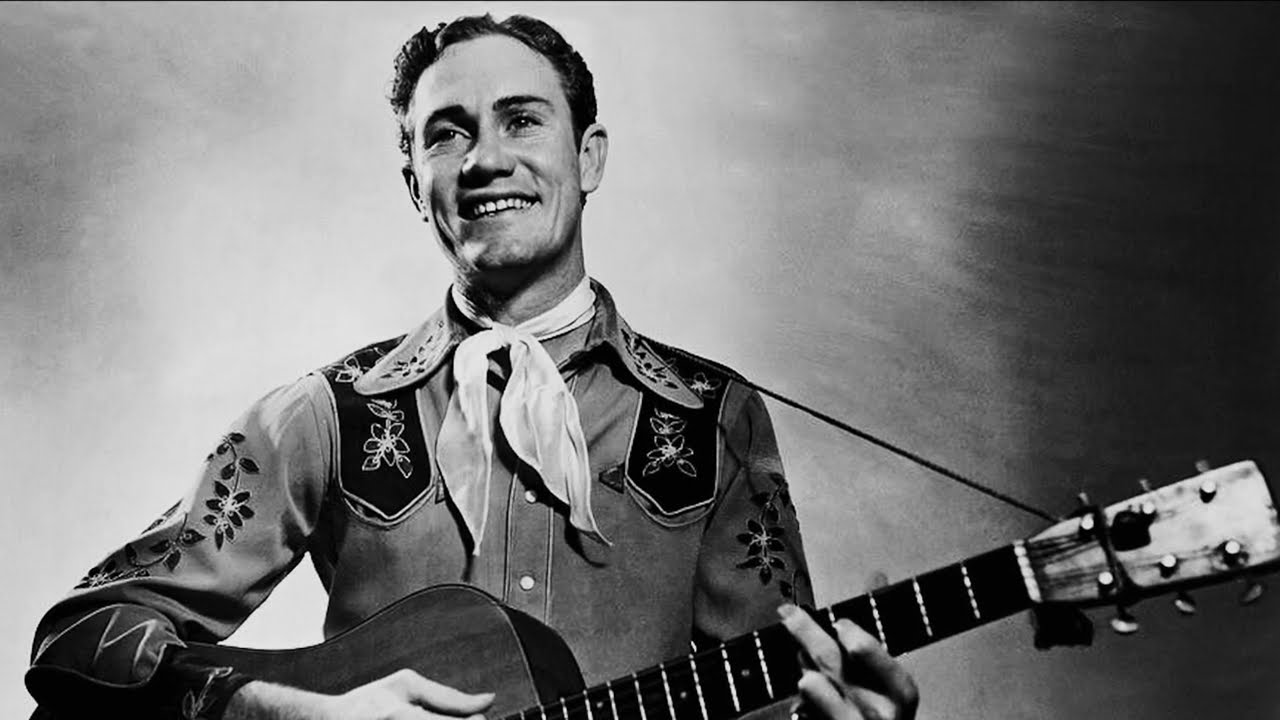 He was never on time for a session and sometimes did not show up at all.
In January of 1954, on the drive home from a Louisiana Hayride date in Shreveport with a Mississippi concert booked the following night, Lefty was at the wheel of his Cadillac when he ran it through a small town called Minden in Webster Parish, Louisiana. He hit a Nash station wagon parked outside the home of a man named R. Harmon Drew Senior, who happened to be a former city judge and later a state representative.
Lefty, who handled the matter with what the local witnesses described as remarkable poise for a man who had just demolished a state representative’s car, apologized, said he hoped to visit Minden again under more favorable circumstances, posted bond, called a taxi back to Shreveport, and got on a plane to make the next gig. It is one of those vignettes that tell you everything about the man in 30 seconds. He was charming, reckless, somewhere he should not have been, and already running late for the next thing.
The Minden crash sits at the exact pivot point of his career. Within weeks, he had decided he could not stand Nashville any longer. He bankrolled a three-month tour with musicians from the Louisiana Hayride and used the takings to relocate his family to Southern California, settling in Northridge, a hot suburb in the San Fernando Valley.
He left the Opry behind. He did not, as it would turn out, quite leave it the way a man should. Hollywood was good to him for a year or two, and then it stopped being good to him.
He became a regular on Town Hall Party, the Compton-based country television show that did for the West Coast scene what the Opry did for Nashville. In 1955, he headlined the first country concert ever staged at the Hollywood Bowl, an extraordinary moment for a kid from Corsicana whose first paying gig had been at a children’s show on KELD in El Dorado.
They put a star with his name on it into the pavement on Hollywood Boulevard, one of the first ever awarded to a country singer. And then, as if the universe had decided the boy from the oil fields was getting above himself, the record stopped working. From the early months of 1955 through the end of 1958, he did not score a single chart hit of any kind.
He had no manager of consequence in California. He recorded a Songs of Jimmie Rodgers tribute LP and toured ferociously, but the radio, which had been his oxygen, simply stopped breathing him in. Rockabilly was eating country music.
Elvis was on the way. A Texas kid singing about heartbreak in three-quarter time was being looked at by Columbia as an asset of declining value. He was 27 years old.
The drinking did not start in California, but in California, it began to organize itself into a vocation. He had always drunk hard. He had drunk hard on the Williams tour, hard at the Opry, hard at the Ace of Clubs.
In the suburb in the valley, he drank harder because he was bored, because he was forgotten, because he was 30 and had no more hits, and because he could. He was a vodka man chiefly, on the theory common to drinkers of a certain school, that you could not smell it on him. He suffered for years from high blood pressure, and he refused to manage it because the medication interfered with his ability to drink.
He smoked. He carried a low-burning bitterness about Columbia’s choices of singles, about the songs of his they would not release, about Nashville politics, about everything. He stopped writing for long stretches.
He told his wife he was burnt out. He toured anyway. He always toured.
In late 1958 and 1959, he came back. Marijohn Wilkin had written a song called The Long Black Veil, a Civil War tinged ballad about a man hanged for a murder he did not commit because he could not produce an alibi without naming the married woman he had been with at the time. Lefty recorded it.
It went top 10. It became over the decades that followed the most covered song in his catalog, picked up by everyone from Johnny Cash to The Band to Mick Jagger, and it functions in retrospect as a kind of secret ultimate biography. The song of a man who would rather die than say where he had been.
He charted again with Cigarettes and Coffee Blues. The records were coming back into focus. In 1962, he moved the family back to Nashville, settling in Hendersonville, the lakeside suburb where Johnny Cash and a dozen other Nashville exiles kept houses.
Then in late 1963 and early 1964, he had his last truly great moment. The song was called Saginaw, Michigan. It was a story song, a perfect three-minute narrative about a Saginaw fisherman who tricks his sweetheart’s snobbish father into financing a Klondike gold prospecting expedition that turns out to be a fraud, marries the daughter, and pockets the old man’s investment.
It is funny, structurally elegant, vocally extraordinary, and it sat in the country chart number one slot well into 1964. It earned him his only Grammy nomination. It would be the last number one of his life.
He was 35 years old. He had 10 years left.
The slide from there was not melodramatic. It was a slow gray accumulation of a kind of professional erosion that happens to almost every artist who lives long enough to outlast his own moment. Don Law, his great ally at Columbia, retired in 1967, and the new producers at the label did not understand him or particularly want to.
They sat on the masters of records he was proudest of. He drank more. He fought with Alice and stayed out and stayed out longer and chased women he should not have been chasing.
 He befriended in the late 1960s a Texas songwriter named Sanger D. Shafer who went by Whitey, and the two of them working in Lefty’s home in Hendersonville wrote some of the most haunted honky-tonk songs of the period. There was Thats the Way Love Goes, a slow devastated ballad that Lefty would never have a real hit with but which after his death would go to number one twice.
First for Johnny Rodriguez in 1973 and then in 1983 for Merle Haggard, the protege who had spent his whole life trying to be Lefty Frizzell and who by the 1980s was perhaps the closest thing American music had to him. There was I Never Go Around Mirrors, which is exactly what it sounds like, the song of a man who can no longer bear his own reflection. Lefty cut both of them.
They sold poorly. He played them on the road to dwindling rooms. In early 1972 he left Columbia who had effectively given up on him and signed with ABC Records.
ABC put him in the studio with a producer Don Gant in December of that year. Gant, who would never forget the sessions, remembered Lefty listening back to the playbacks of his own ABC sides with tears in his eyes. The voice, against all the odds, against the cigarettes and the vodka and the blood pressure he refused to treat, was still there.
It had darkened the way wood darkens with age but the bending and the lingering, the holding of one word across a whole line of melody, was undiminished. The records were called The Legendary Lefty Frizzell. They did not sell.
The country music of 1973 was Glen Campbell and the Nashville Sound, lush strings and top 40 crossovers. A 45-year-old man from Corsicana singing the way a 45-year-old man from Corsicana had to sing was not what country radio was looking for that season. He was in the last years often lonely.
Whitey Shafer would later tell the Los Angeles Times with the precision of someone who had watched it happen at close range, He was a pretty lonely man. I don’t think he cared if he lived or died. Harlan Howard’s flamboyant fellow from the Town Hall Party years was gone.
In his place was a thickening exhausted man who would sit in his Hendersonville den listening to playbacks of his old hits and crying.
In early 1975, Alice Frizzell, who had stayed with him through the Roswell jail and the Arkansas arrest and the California exile and the Tennessee infidelities, who had played a pivotal role in managing the rigors of road life, finally filed for divorce. They had been together for 30 years. They never legally divorced.
The paperwork was still in motion when he died. On the morning of July 19, 1975, in his home in Hendersonville, hours before he was due to board a plane to play the Delaware State Fair, Lefty Frizzell suffered a massive stroke. He was taken to the hospital.
He did not regain consciousness in any meaningful sense. He was pronounced dead later the same day. He was 47 years old.
His blood pressure, the blood pressure he had refused to treat because the medicine would have interfered with the vodka, had finally done the work it had been preparing to do for years.
The lore that grew up around the death was that he had died of a broken heart. A romantic story circulated by friends and biographers and seized upon by every magazine that ever wrote a posthumous Lefty Frizzell feature. Whitey Shafer’s line that he didn’t think Lefty cared if he lived or died was the seed of that legend.
The truth was more clinical. The truth was a stroke in a Hendersonville bedroom on a July morning and a man who had been drinking himself to death in plain sight for 15 years finally getting there. The Delaware State Fair gig was the last appointment he would ever miss.
He had, fittingly, made it almost on time.
The Country Music Hall of Fame inducted him in 1982. The Nashville Songwriters Hall of Fame had already taken him in 1972, three years before his death. Roy Orbison, when he and Bob Dylan and George Harrison and Tom Petty and Jeff Lynne formed the Traveling Wilburys in the late 1980s and took on fictional surnames for the project, called himself Lefty Wilbury.
Asked why, he gave one of the more direct testimonies to Frizzell’s influence ever recorded. The first singer I heard on the radio who really slayed me was Lefty Frizzell. He had this technique sliding syllables together that really blew me away.
You can hear him in George Jones, who was sent home from his first recording session because he sounded too much like Lefty. You can hear him in Merle Haggard, in Willie Nelson, in George Strait, in Randy Travis, in Keith Whitley, in Dwight Yoakam, in every neo-traditionalist of the 1980s and 1990s who reached back past the strings and the crossovers for the original honky-tonk current.
You can hear him in singers who have never knowingly heard a Lefty Frizzell record in their lives, because by the time they came up the trick had been so thoroughly absorbed into the language that it no longer needed a name. He was, in the literal sense, the singer’s singer of American country music. The singer whose innovations became the air the next four generations breathed.
He left behind a wife he had been about to lose, four children, three musical brothers, a house in Hendersonville, a stack of unreleased Columbia masters that took the rest of the century to make their way out into the world, and one of the strangest catalogs in the history of American song. A body of work assembled in a fever in a New Mexico jail cell, and abandoned, mostly, before he was 40. He died 47 years old and exhausted, his voice still intact, and his life having outrun him by a decade.
Sonny Frizzell from Corsicana, Texas, who had once held one word for a whole line of melody, had finally let it go.
