The narrative surrounding Kyle Tucker’s early struggles with the Los Angeles Dodgers has officially been punctured by a single, softly-struck hit that may have saved the season’s opening act from becoming a premature drama. In a tense pitcher’s duel against the New York Mets, it was Tucker’s eighth-inning, go-ahead single that broke a 1-1 deadlock, delivering a 2-1 victory and a critical moment of personal validation for the high-profile offseason acquisition.

For two weeks, the discourse had been building. Signed to a monumental contract to be a cornerstone in the Dodgers’ pursuit of a historic third consecutive championship, Tucker’s stat line through 17 games was underwhelming. Analysts pointed to a strikeout rate soaring above his career norm and a lack of his characteristic hard contact. The whispers, comparing him to previous high-profile Dodger disappointments, had begun to circulate in the digital ether.

All of that noise was silenced in one pivotal at-bat last night. With the game on the line, the Mets intentionally walked Shohei Ohtani, extending his historic on-base streak but setting the stage for Tucker with two outs and a runner in scoring position. Facing a left-handed reliever, Tucker stayed inside on a pitch, fighting off what looked like a jam shot and instead floating a 56-mph bloop into right field.
The box score will forever record it as a simple RBI single. For Tucker and the Dodgers, it was a rocket shot of relief. It scored pinch-runner Miguel Rojas and provided the winning margin, secured by a dominant Alex Vesia striking out the side in the ninth. More importantly, it offered tangible proof that the elite hitter the Dodgers paid for is still very much present.
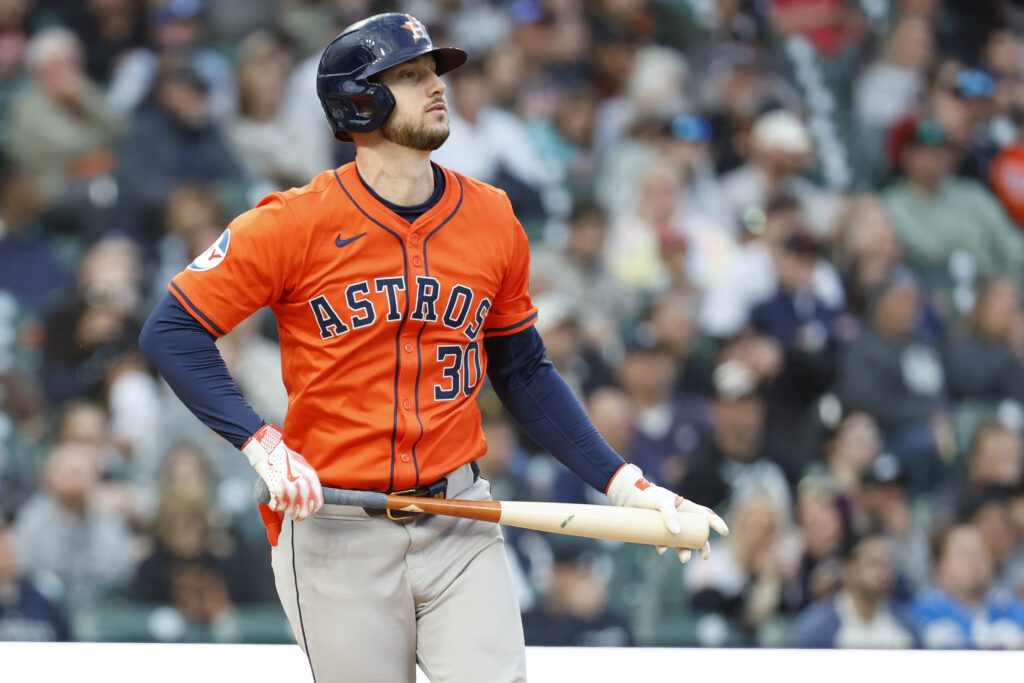
“It was nice,” Tucker said postgame, a master of understatement. “Haven’t had as many hits or barrels as I would have liked… but to come up with a huge hit right there, you know, get the run and win the game, so I’ll take it.” His comments reflected a player aware of the external noise but grounded in the marathon nature of the season. “It’s still early,” he emphasized. “We still got five and a half months… plenty of time to figure it out.”
This moment was a textbook case of why early-season panic is a fool’s errand, especially for stars changing leagues and teams. The adjustment period is real, as evidenced by Ohtani himself not hitting his first Dodger home run until nearly two weeks into the season. Tucker’s underlying process, notably his maintained discipline and league-average on-base percentage, suggested the breakout was a matter of timing, not talent.
The statistical case for patience is overwhelming. Despite the slow start, Tucker entered the game with a 95 Weighted Runs Created Plus, meaning his overall offensive output was only 5% below league average—a far cry from the catastrophic levels of previous busts. His current 0.3 fWAR already eclipses the total value of Michael Conforto’s entire 2023 season with Los Angeles, a comparison now rendered utterly obsolete.
Furthermore, Tucker’s career profile as a hitter with elite bat-to-ball skills and a sub-16% career strikeout rate indicates his current 22.7% rate is an aberration, not a new norm. As that number regresses toward his mean, more contact will be made, and with his power, harder contact will follow. The floor for a player of his caliber remains exceptionally high.
Manager Dave Roberts has consistently expressed unwavering confidence, and last night’s game-winning sequence vindicated that faith. By strategically using Rojas and having Santiago Espinal execute a sacrifice bunt, Roberts engineered the exact high-leverage situation designed to jumpstart a slumping star. The Mets played the percentages by walking Ohtani, and Tucker made them pay.
This victory also underscored the Dodgers’ formidable pitching, which has carried the team to a stellar 13-4 record. Starter Yoshinobu Yamamoto was brilliant in a no-decision, and the bullpen, led by Vesia, was flawless. This environment allows a hitter like Tucker the grace to find his rhythm without the pressure of carrying the entire offensive load nightly.
The ultimate truth, as Tucker himself would likely acknowledge, is that his $60 million annual salary will be judged by October performance. This early-season hiccup will be a forgotten footnote if he delivers in the postseason. Last night’s hit was not a culmination, but a catalyst—a release of pressure and a potential gateway to the dominant production expected.
For the Dodger faithful, the message is clear: the movie of the 2026 season has barely begun. The opening credits are still rolling. Kyle Tucker has just provided the first major plot twist, a soft liner that landed with the weight of a grand slam. The floodgates for King Tuck may now be open. The swagger, the bat flips, and the towering home runs will come. After last night, the only appropriate reaction is the one he invoked himself: relax.
