The Eastern Front of World War II witnessed a uniquely brutal fate for thousands of women who took up arms. New historical analysis confirms captured female Soviet soldiers were routinely executed immediately upon capture, a policy rooted in Nazi ideology, explicit military orders, and the savage combat reality of a conflict without rules.
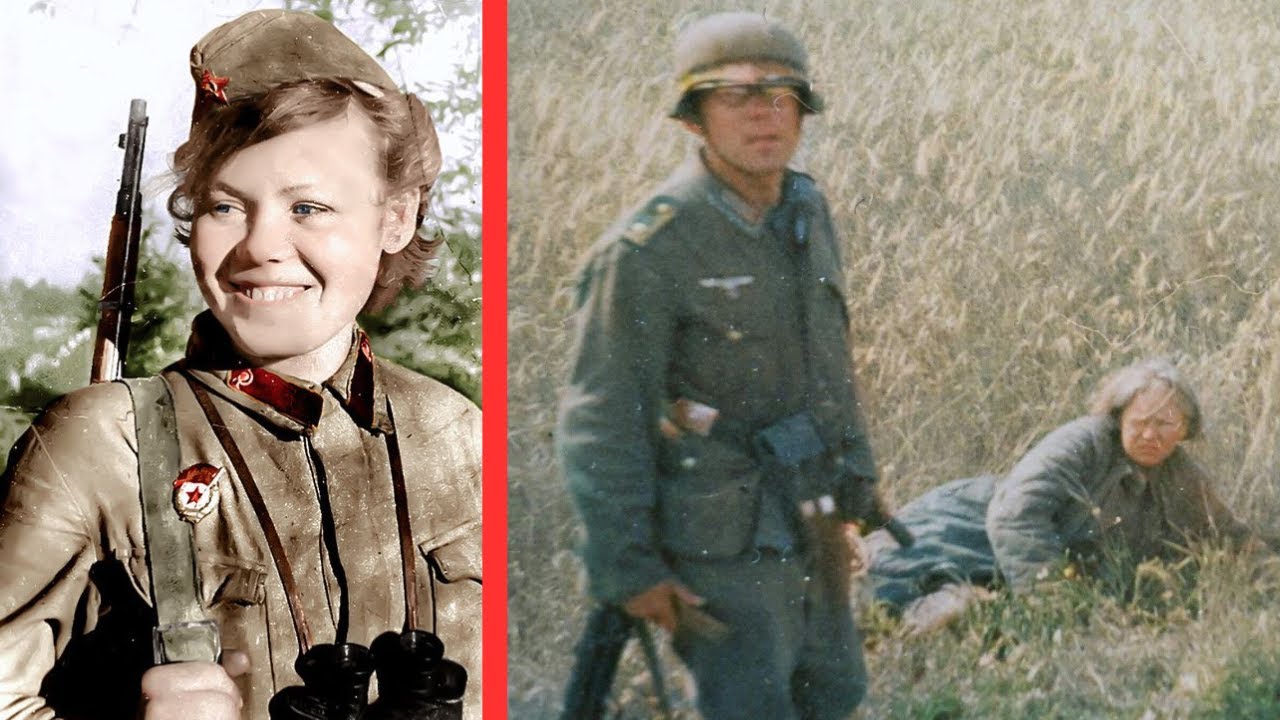 Approximately 800,000 women served in the Red Army during the war, comprising nearly five percent of Soviet military personnel. Initially reluctant, Joseph Stalin authorized their frontline deployment to stem catastrophic manpower losses. These women served as medics, pilots, anti-aircraft gunners, and in one of their most feared roles, as snipers.
Female snipers, operating in bombed-out cities like Stalingrad, were credited with a staggering 11,000 kills. The legendary 46th Guards Night Bomber Regiment, dubbed “Night Witches” by the Germans, flew relentless harassment missions in flimsy biplanes. Their effectiveness and mere presence, however, made them prime targets for extermination.
For Nazi Germany, the sight of a woman in uniform was an ideological abomination. Core Nazi doctrine rigidly defined a woman’s place as strictly within the home, dedicated to childbearing for the Reich. Female soldiers were thus seen not as legitimate combatants but as a monstrous perversion of the natural order, a direct product of the “Judeo-Bolshevism” they sought to eradicate.

This ideological hatred was codified into military policy. The German High Command deliberately exempted the Eastern Front from the Geneva Convention. Standing orders, such as the notorious “Commissar Order,” mandated the execution of political officers. Female soldiers were frequently and falsely categorized as partisans or political fighters, groups subject to summary execution.
Specific directives left no room for interpretation. General Günther von Kluge, commanding the German Fourth Army, ordered his troops that “all women who were found in Soviet Army uniform are to be shot straight away.” This order transformed ideological contempt into standard operating procedure on the ground.

The specialized roles many women held further sealed their fate. Snipers from any army were often killed upon capture due to the stealthy nature of their work, viewed as assassins rather than soldiers. The Germans reported particular fury at encountering women in these roles. Even unarmed medics and stretcher-bearers were not spared, accused of prolonging Soviet resistance.
Adolf Hitler’s “Barbarossa Jurisdiction Decree” provided a blanket guarantee of impunity, stating German soldiers would not be prosecuted for crimes against Soviet civilians or prisoners. This license to kill removed any last barrier to brutality. For frontline units, executing a female prisoner was often seen as simpler than the logistical burden of transporting them to rear-area camps.

Survivor testimonies and postwar interrogations reveal a horrific pattern. Captured women frequently faced assault and torture before being led to a secluded area for a final bullet to the neck. Their deaths were swift, undocumented, and intended to erase their very existence as soldiers.
While the Soviet state celebrated its female heroes with propaganda and high honors like “Hero of the Soviet Union,” these accolades offered no protection in the field. To the German soldier, they were unnatural enemies to be physically destroyed, a key tenet of the Nazi regime’s war of annihilation.
The systematic shooting of these women was therefore not random atrocity but a confluence of fanatical ideology, criminal orders, and total war. It highlights the extreme peril women faced simply for serving their country in combat. Their graves, scattered across Eastern Europe, stand as somber testament to a dark chapter where the rules of war were not merely broken but deliberately incinerated. Their stories, long overshadowed, are a crucial part of understanding the absolute brutality of history’s largest and most devastating front.
