The quiet meadows of Prague’s District 6 conceal a horror that has remained buried for nearly eight decades, a massacre where 42 ethnic Germans were dragged from a cinema, shot at close range, and crushed beneath the wheels of a Red Army truck in an act of vengeance that blurred the line between liberation and atrocity. This is the story of the Bořislavka Massacre, a dark chapter in the final days of World War II that challenges the narrative of Allied triumph.
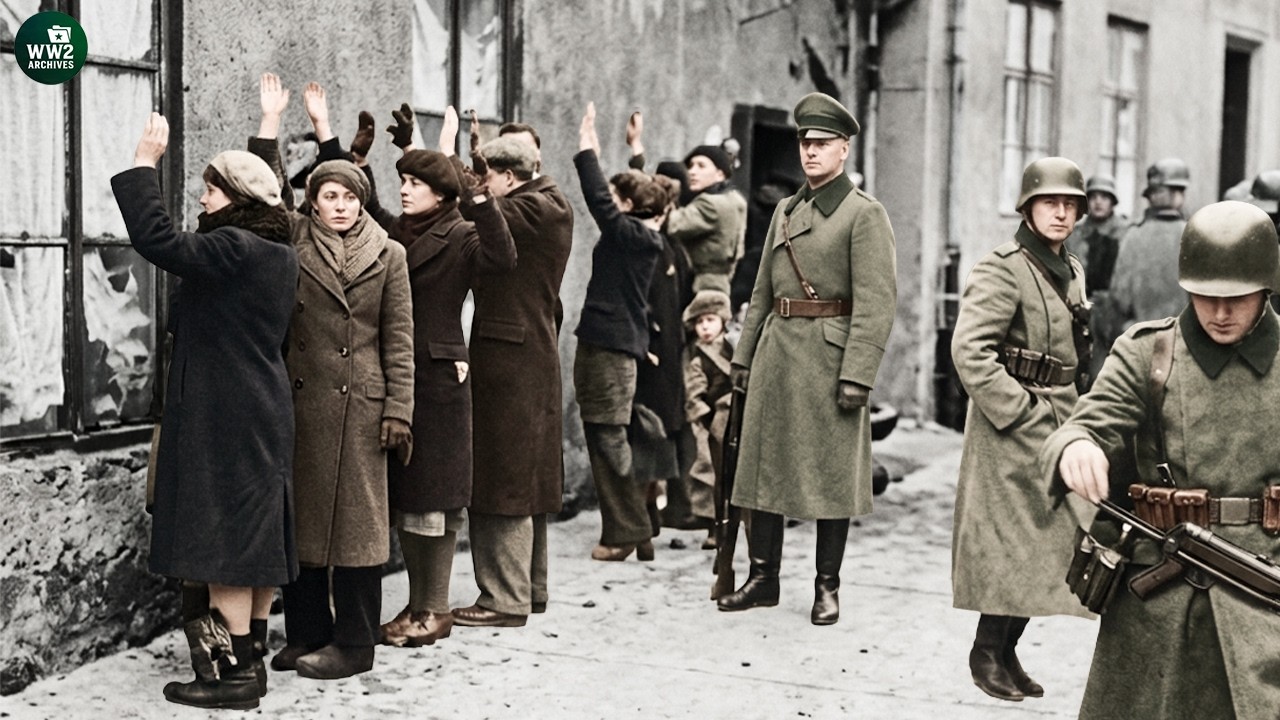 On May 10, 1945, just two days after the official surrender of Nazi Germany, the streets of Prague should have echoed with celebration. Instead, they rang with the sound of submachine gun fire as Czechoslovak militia and Red Army soldiers conducted a brutal roundup of ethnic Germans in the Bořislavka district. The victims, including at least one woman, were pulled from a cinema and forced to stand against a lime wall on Kladenska Street. No trial was held, no evidence was presented, and no charges were read. Their only crime was their German heritage.
The execution squad opened fire at close range, cutting down the victims in successive volleys. Bodies crumpled and piled atop one another, but the cruelty did not end with the gunfire. For those still gasping for breath, writhing in agony, a heavy military truck was driven over them, crushing the wounded and dying under its wheels. This act was not merely about ending life, it was about humiliation, about the total destruction of humanity in the name of retribution.
The Bořislavka Massacre was not an isolated incident but the opening salvo of a broader ethnic cleansing campaign that would sweep across Czechoslovakia in the months following the war. The roots of this fury stretched back seven years to the Nazi occupation, a period of systematic humiliation and violence that began with the Munich Agreement of 1938. Britain and France had handed the Sudetenland to Hitler, stripping Czechoslovakia of its defenses and leaving it vulnerable to invasion.
When German troops marched into Prague on March 15, 1939, the Protectorate of Bohemia and Moravia was born. Hitler coveted this land not only for its strategic position but for its massive industrial power. Germany seized over 2,000 field guns, 500 tanks, and 43,000 machine guns, turning Czechoslovakia into the arsenal of the Reich. The occupation was brutal, but it was the appointment of Reinhard Heydrich as deputy protector in 1941 that turned the screws of terror to their breaking point.
Heydrich, known as the Butcher of Prague, established a reign of terror based on mass executions and anti-Semitic policies. Of the 90,000 Jews in the region, only 14,000 survived. Public hangings on lamp posts became a common sight, a constant reminder of Nazi power. The peak of brutality came after Heydrich’s assassination in 1942, when Hitler ordered the obliteration of the village of Lidice. One hundred seventy-three men were shot on the spot, women and children were sent to concentration camps, and the village was leveled to the ground.
These specific, brutal crimes compressed the fury of the Czechoslovak people into a psychological powder keg. When the Nazi darkness receded, that keg exploded at Bořislavka. The massacre was not a military campaign but an eruption of hatred accumulated over 2,500 days of oppression. The executioners included Red Army soldiers and revolutionary militia, but among them were also former Nazi collaborators, individuals who had bowed to the occupiers for years and now rushed to fire at ethnic Germans to wash away their own stains of cowardice.
This irony cuts to the heart of the tragedy. The men holding the guns were not all liberators. Some were collaborators who had just yesterday saluted the swastika, now proving their loyalty to the new order through the most brutal acts. The Bořislavka Massacre became a stage where the degradation of humanity played out, where the line between victim and executioner blurred into obscurity.
The violence did not stop at Bořislavka. The Czechoslovak government, under President Edvard Beneš, issued a series of decrees that provided a legal framework for the expulsion of approximately 3 million ethnic Germans. These people, many of whom had lived in the Sudetenland for generations, were stripped of their homes, their property, and their citizenship. They were herded into long lines of evacuees under the guard of gun barrels seething with revenge.
The period known as the wild expulsions saw violence become systematic. At least 30,000 Germans were killed directly in shootings along evacuation routes. Another 700,000 to 800,000 were pushed into temporary concentration camps and forced labor sites, where death came from exhaustion, hunger, and daily floggings. For the militia, forcing Germans to labor to death in ruined mines was seen as appropriate compensation for seven years of enslavement.
One of the most haunting cases occurred on the night of June 18, 1945, in Prerov. A Czechoslovak militia unit intercepted a train carrying evacuees and dragged 265 Germans to the ground. Among them were many women and children. The victims were forced to dig a mass grave 17 meters long and 2 meters deep. When the pit was complete, the militia opened fire and killed everyone, including infants. The goal was clear, to permanently eliminate the German presence from the land.
The Beneš decrees officially called these acts people’s justice, a form of collective punishment that equated every individual of German blood with the crimes of the Hitler regime. These decrees ensured that those who pulled the trigger or performed torture would be completely exempt from criminal responsibility. This indulgence from the highest levels turned violence from individual clashes into a national campaign of revenge, where humanity was discarded to make room for bloodlust in the name of liberation.
The truth of the Bořislavka Massacre might have vanished into the dust of history if not for a fateful film reel. Immediately after the massacre, the communist secret police launched a campaign to erase all traces. They threatened and interrogated the cameraman who had captured the execution and the truck running over the wounded, demanding the film be destroyed. But with extraordinary courage, the cameraman hid the reel for decades, accepting a life in fear to protect the evidence.
Today, that film serves as a haunting reminder of what humans can do to one another in a bloodthirsty frenzy of revenge. Yet the victims of Bořislavka remain nameless. More than 40 people lie in unmarked graves, their records empty, their identities lost. No trial minutes, no indictments, not even a headstone. The mass killing turned Bořislavka into a black hole of justice, where the right to life was stripped away based on ethnic prejudice.
Modern efforts are underway to uncover the truth. Archaeologists and anthropologists are surveying the meadows near Kladenska Street to locate the mass graves. The goal is not to rekindle political hatred but to perform a humanitarian duty, to exhume remains, conduct DNA testing, and return a name to each victim. Bringing these anonymous skeletons out of historical darkness is a belated response aimed at closing a bloody chapter with respect for the deceased.
The Bořislavka Massacre forces us to confront a painful paradox. When the guns of war fell silent, the guns of revenge immediately rang out. The brutal violence that Nazi Germany spread for seven years did not vanish on May 8, 1945. It simply changed hands, turning victims who had just escaped their chains into executioners. The meadows of Prague are a historical scar that has never truly closed, a reminder that revenge never brings justice, it only creates a perpetual cycle of pain.
As we look at history through the lens of the victors, with flowers and medals, Bořislavka forces us to look at the darkest corners. It is a place where small human lives were crushed between the wheels of history, where the blood you carried in your body suddenly became the sole capital offense. A death without a judge, without law, and painfully, sometimes carried out by the very neighbors who just yesterday shared the same pain of occupation.
The greatest lesson from the meadows in Prague is that revenge never brings justice. It only creates a perpetual cycle of pain. History education is not about passing down hatred but building a cognitive filter that helps identify and reject the monster of violence the moment it begins to stir in thought. Understanding the past is the key to becoming creators of peace rather than inheritors of hatred.
In today’s volatile world, the question remains, are we clear-headed enough to not let humanity be swapped by the fury of the crowd once again? The Bořislavka Massacre is a cold reminder that when demons are destroyed, we must be careful not to grow wings just like theirs. The truth of this tragedy, the death, the crimes, and the terrifying silence, demands to be remembered, not to rekindle hatred, but to ensure that such darkness never descends again.
