The condemned man stood on the wooden platform, his hands bound and a noose already cinched around his neck. But unlike the familiar scenes from countless Western films, there was no trap door beneath his feet. Instead, a heavy iron weight, several hundred pounds of cold, unforgiving metal, hung suspended above the executioner. When the lever was pulled, that weight would not fall to the ground. It would plummet, and in doing so, it would violently yank the prisoner upward into the air, snapping his spine in a brutal, mechanical jerk. This was the upright jerker gallows, a forgotten and gruesome chapter in the history of American capital punishment, a machine built not to drop a man to his death, but to hurl him toward the sky.
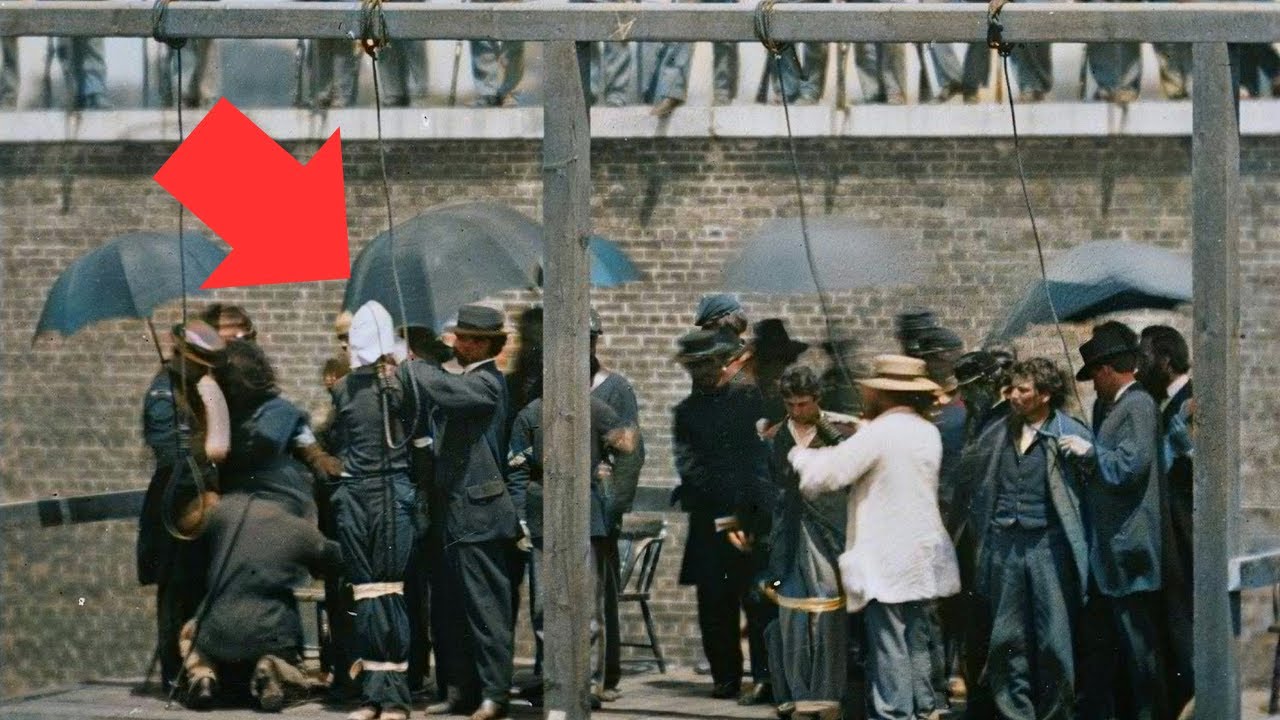 For centuries, the standard method of hanging involved what was known as the short drop. The condemned person stood on a cart, a ladder, or a simple platform, and when the support was removed, they fell only a short distance. The rope would tighten around their neck, but the fall was rarely enough to break the vertebrae. Instead, death came by slow, agonizing strangulation. Victims would convulse, struggle, and choke for minutes on end, their faces turning purple as they fought for air that would never come. This was a public spectacle, a gruesome theater of suffering that horrified reformers and executioners alike. The system was broken, and the search for a more humane, more efficient method became a pressing concern for prison officials across the United States and Europe.
The solution that emerged in Britain was the long drop, perfected in the 1870s by executioners like William Marwood. This method calculated the exact distance a prisoner needed to fall based on their weight, ensuring a clean break of the neck and instantaneous death. The trap door became the iconic symbol of this new approach. But in the United States, particularly in the New England states of Vermont and Connecticut, a different kind of innovation was taking shape. Inventors and prison wardens, skeptical of the complex engineering required for a long drop platform, looked for a simpler, more mechanical solution. They found it in the principles of the counterweight, a system used in elevators and theater rigging. Why drop the prisoner down, they reasoned, when you could simply yank them up?
The upright jerker gallows was a stark departure from the traditional scaffold. The setup was deceptively simple. A tall, sturdy frame was erected, often inside a prison yard or a dedicated execution chamber. At the top of the frame, a series of pulleys were mounted. A rope was threaded through these pulleys, with one end attached to the prisoner’s noose and the other end connected to a heavy counterweight. This weight, often made of iron or lead, could weigh several hundred pounds. When the executioner released a catch or pulled a lever, the counterweight was set free. Gravity did the rest. The weight slammed downward, and the rope, acting through the pulleys, instantly and violently hoisted the condemned person into the air. Instead of falling through a trap door, the prisoner was shot upward, often several feet off the ground, in a fraction of a second.
 The theory behind the upright jerker was that this sudden, forceful upward motion would snap the prisoner’s neck just as effectively as the long drop. The whiplash effect was intended to be instantaneous, severing the spinal cord and causing immediate unconsciousness and death. It was a mechanical solution to a biological problem, a cold, calculated attempt to engineer a humane execution. Prison officials who championed the device believed it was cleaner and more reliable than building a trap door platform, which required precise carpentry and careful calibration. The upright jerker seemed to offer a modern, scientific alternative to the messy, unpredictable hangings of the past. But the reality, as so often happens with capital punishment, was far more horrific.
The first known use of the upright jerker in the United States occurred in Vermont in the 1890s. The execution was reported in local newspapers, which described the novel mechanism with a mixture of fascination and horror. Over the next few decades, the device spread to other state prisons, most notably Connecticut’s Weathersfield Prison. Officials there installed an upright jerker in the prison yard, believing it would provide a more efficient method of execution. But the device was notoriously difficult to calibrate. The counterweight had to be precisely matched to the prisoner’s body weight. Too light, and the jerk would not be strong enough to break the neck, leaving the condemned to strangle slowly while dangling in the air. Too heavy, and the results were catastrophic.
Reports from botched executions paint a grim picture of the upright jerker’s failures. In some cases, the force was insufficient, and the prisoner was hoisted into the air only to suffer a prolonged, agonizing death by strangulation. Witnesses described the horrifying sight of a man kicking and twisting at the end of a rope, his face contorted in pain, as the counterweight sat uselessly at the bottom of its track. In other cases, the force was too great. There are documented accounts of executions where the prisoner’s head was partially or completely torn from their body, a gruesome spectacle that left the execution chamber drenched in blood. One of the most infamous examples occurred in 1903 during the execution of a man named James Rogers in Connecticut. According to witness reports, Rogers did not die instantly. Instead, he struggled for several minutes, his body convulsing violently as he slowly suffocated. The upright jerker, designed to be humane, had become an instrument of prolonged torture.

The visual spectacle of the upright jerker was also deeply disturbing to onlookers. In a traditional hanging, the condemned person disappears through a trap door, their fall hidden from view. The upright jerker, by contrast, was a violent, upward explosion. The prisoner’s body would shoot into the air, legs kicking, arms flailing, as the counterweight slammed down with a deafening crash. Newspapers of the era described the scene as theatrical, almost like a stage effect, but the reality was far from entertainment. Journalists who witnessed these executions often wrote scathing critiques of the method, calling it cruel, unreliable, and barbaric. The upright jerker was becoming a public relations disaster for the states that used it.
By the early 20th century, the upright jerker was falling out of favor. The electric chair, first used in 1890, promised a cleaner, more scientific approach to execution. The gas chamber, introduced in the 1920s, offered another alternative. These new technologies were marketed as modern and humane, even though they too would later be plagued by botched executions and accusations of cruelty. The upright jerker, with its mechanical violence and gruesome failures, seemed like a relic of a less enlightened age. Connecticut, one of the last holdouts, continued to use the device into the 1930s. The very last execution by upright jerker in the state occurred in 1937, when a man was put to death in the prison yard. Reports once again described the execution as prolonged and gruesome. After that, Connecticut abandoned the jerker in favor of the electric chair, bringing an end to this strange experiment in gallows design.
 The history of the upright jerker is a chilling reminder of the lengths to which societies have gone in their quest to mechanize death. Each new method of execution, from the long drop to the electric chair to lethal injection, has been introduced as a supposed improvement, a more humane way to carry out the ultimate punishment. But in practice, many of these methods have proven to be either unreliable or cruel in their own ways. The upright jerker, with its counterweights and pulleys, was a machine built for killing, a product of both ingenuity and brutality. It reflected a desperate desire to find a perfect, painless death, a goal that has remained elusive throughout history.
Today, upright jerker gallows can still be seen in a few museums and historic prison sites in the United States. They stand as strange, silent relics of a time when executioners experimented with machinery to find the perfect death. Visitors to these museums often stare at the contraptions in disbelief, unable to comprehend how such a device could have been considered a humane alternative. The upright jerker is little known today, overshadowed by the more famous electric chair and gas chamber. But its story is a vital part of the history of capital punishment, a cautionary tale about the dangers of trying to engineer a solution to a moral problem. The upright jerker was a bold but ultimately flawed attempt to modernize the age-old practice of hanging. It sought to deliver a faster, more reliable execution, but in practice, it often failed, sometimes leaving prisoners to strangle slowly, other times producing gruesome injuries. Its short history, mostly confined to New England in the late 19th and early 20th centuries, reveals the uneasy balance between justice, punishment, and humanity.
The upright jerker is a stark reminder that the pursuit of a humane execution is a paradox. The very act of killing, no matter how carefully engineered, is inherently violent and degrading. The mechanical violence of the upright jerker, the sudden, brutal yank upward, highlights the unsettling mix of engineering and death that characterizes the history of capital punishment. It was a machine that reflected both the ingenuity and the brutality of its time, a strange and forgotten footnote in the long, dark history of how societies have chosen to end human life. The upright jerker may be gone, but the questions it raises about justice, punishment, and the limits of human ingenuity remain as urgent as ever. The search for the perfect death continues, but the lessons of the upright jerker suggest that such a search may be doomed to fail.
