The sun had barely risen over the Bavarian town of Landsberg on May 28, 1946, when the trapdoor swung open beneath a man who had turned industrial killing into a personal art form. Otto Moll, the gardener who became the most feared SS officer at Auschwitz-Birkenau, dropped into eternity with no final words, no apology, and no acknowledgment of the hundreds of thousands of souls he had helped extinguish. The noose did its work in seconds, but the memory of what Moll did inside the barbed wire fences of history’s most notorious death camp will never die. Survivors had given him two names that spoke louder than any military rank: Cyclops, for the glass eye that stared blankly at their suffering, and Schweinemetzger, the pig butcher, for the way he treated human beings like livestock destined for slaughter.
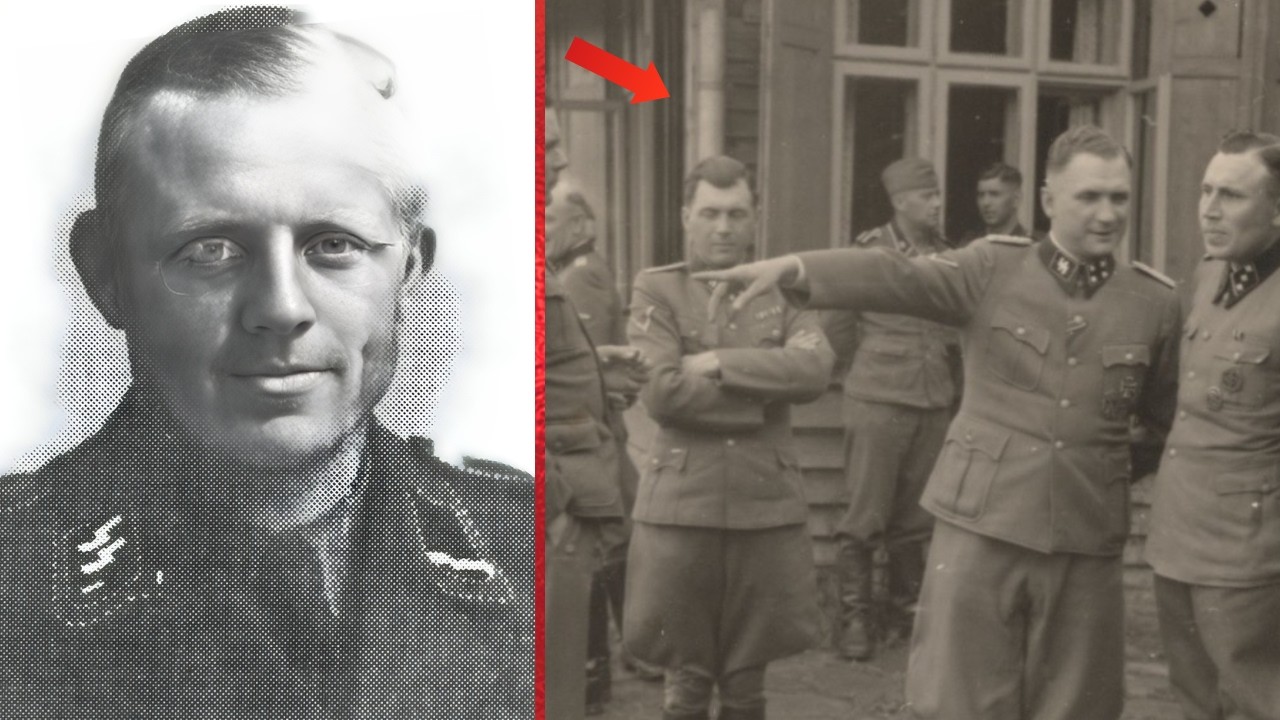 Moll was not a general. He did not command armies or plan invasions. He was a gardener by training, a man who played in an SS marching band, a man who, by all appearances, was completely ordinary. But inside the wire fences of Auschwitz-Birkenau, he became something that survivors refused to call human. Born on March 4, 1915, in Hohenschönberg, then part of the German Empire, Moll trained as a gardener, a quiet, unremarkable profession. He was also musically inclined, joining an SS marching band after enlisting in the SS in 1936. During a routine trip, the SS truck he was riding in collided with a vehicle. One SS man was killed. Moll suffered a fractured skull and lost his right eye. He spent months in a hospital recovering. Doctors believed the trauma had caused lasting brain damage, altering his personality in ways that would make him perfect for the machinery of genocide that was quietly being assembled across Germany.
From 1938 to 1941, Moll worked at Sachsenhausen concentration camp north of Berlin, a facility that held Jews, political prisoners, homosexuals, Roma people, and Soviet civilians. He worked as the head of a gardening detail there, protected closely by Rudolf Höss, a man who would soon become the commandant of the most lethal place on Earth. When Höss transferred to Auschwitz, he brought Moll with him on May 2, 1941. The monster had found his arena. Moll arrived at Auschwitz with his wife and two daughters and lived within the camp complex itself. His first wife, Ellie, had already died from blood poisoning in 1940, and Moll remarried just weeks after her death, barely pausing to grieve. At Auschwitz, every former prisoner who survived and gave testimony described Otto Moll in nearly identical terms: the worst SS man in the entire camp. Not just cruel, but sadistically cruel in ways that went far beyond orders or ideology.
 Because he had lost his eye in that truck accident years earlier and wore a glass replacement, prisoners gave him a grim nickname, Cyclops. His single real eye, witnesses said, was cold, fixed, and completely empty of human feeling. A survivor named Benjamin Jacobs later recalled, “His straight blond hair was cut short. In his chiseled face were set a pair of cold blue eyes. Only one of them was real. When he spoke, only the live eye shifted. There seemed to be no real feeling in the heart beating beneath his bulging chest.” Moll first ran Auschwitz’s agricultural work detail, but in June 1942, he was placed in command of the camp’s notorious penal company, the most feared assignment in the entire system. Prisoners were sent to the penal company as punishment for minor infractions, attempting escape, making illegal contact with civilians, being caught with a piece of extra bread. Once inside, they were isolated completely from the rest of the camp, forced to perform the most brutal labor available, and beaten continuously by SS men and prisoner functionaries. Most did not survive their assignment.
In 1942, as Auschwitz expanded from a concentration camp into a full-scale extermination facility under Heinrich Himmler’s direct orders, Moll devoted himself entirely to killing. He worked alongside Franz Hössler to direct mass killings in crematorium one and in the makeshift gas chambers of bunkers one and two, converted farmhouses turned into death chambers. Hundreds of thousands of corpses were buried in mass graves nearby until contaminated groundwater began killing SS personnel. The graves were then reopened and the bodies burned. By 1943, four enormous crematoria and gas chambers were fully operational at Auschwitz-Birkenau. The process was horrifyingly clinical. Trains arrived at the platform. Families were separated, men and boys in one line, women and girls in another. SS physicians like Josef Mengele walked the lines and pointed, left or right, deciding in seconds who would be worked to death and who would die immediately. And those selected for death were escorted calmly by SS men who lied to their faces. They were told they were heading to showers and delousing stations. They were promised food, soup, tea, coffee waiting for them afterward. They were told to remember their hook number so they could retrieve their belongings. Then they were locked inside sealed chambers and killed with Zyklon B gas.
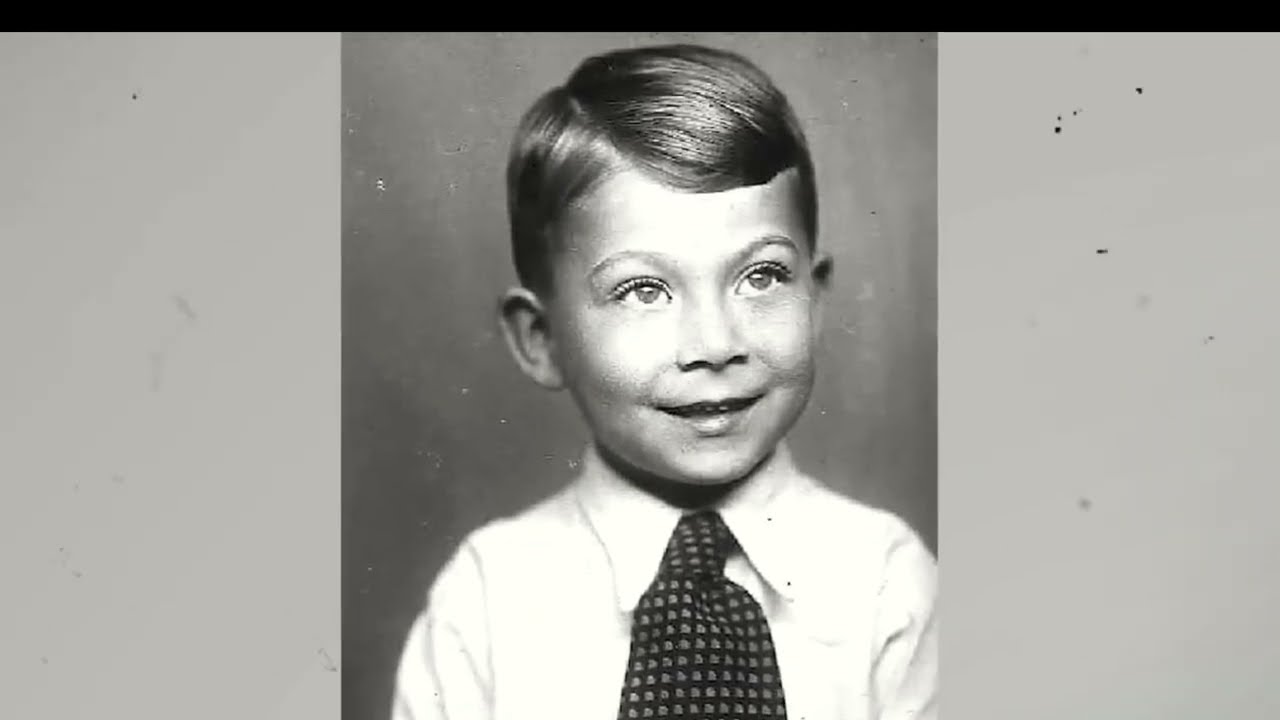
Otto Moll was often at the platform, moving through the crowds, sometimes handing out sweets to small children to separate them from their mothers. In May 1944, Moll was promoted by commandant Rudolf Höss to the most powerful position in the death machine, head of all crematoria at Auschwitz-Birkenau. The timing was not accidental. The largest single deportation of the Holocaust was about to begin. Between May 15th and July 9th, 1944, just eight weeks, approximately 424,000 Hungarian Jews were deported to Auschwitz-Birkenau. Moll quickly calculated that the crematoria’s existing ovens could not handle that volume of bodies. So he designed and ordered the construction of massive open-air burning pits alongside the crematoria, complete with drainage gutters of his own invention, designed so that melting fat from burning corpses could be collected in buckets by forced laborers and poured back into the flames to sustain the fire. For his role in industrializing this slaughter, Adolf Hitler personally decorated Moll with the War Merit Cross, first class with swords, on April 20, 1943, Hitler’s birthday. Among the entire Auschwitz personnel, only commandant Höss and one other SS man received the same decoration. It was a reward for mass murder.
 Moll also oversaw the Jewish Sonderkommando, camp prisoners who were forced under threat of death to assist with gas chamber operations, removing bodies, extracting gold teeth, transporting remains to the crematorium. Prisoners who refused were thrown alive into the burning furnaces by Moll himself. When he discovered a Sonderkommando prisoner concealing jewelry, he doused the man in gasoline and set him on fire in front of the others. By mid-January 1945, Soviet forces were advancing on Auschwitz. The SS scrambled to erase the evidence. Nearly 60,000 prisoners were forced west on foot in brutal winter conditions, starving, frostbitten, and dying with every mile. Moll led one of these death marches personally. By February 1945, he arrived at Kaufering, a network of 11 subcamps connected to the Dachau system. The conditions there defied description. Prisoners slept on straw-covered dirt floors inside partially buried earthen huts. Rain and snow poured through the roofs. Vermin crawled through everything. Food was barely a concept. SS guards stole what little existed. Some prisoners, driven past the final edge of endurance, threw themselves into the electric fencing to end their own lives. Of the 30,000 prisoners who passed through Kaufering, 15,000 died from starvation, disease, execution, or the death marches themselves.
As American forces swept closer in late April 1945, Moll forced the remaining Kaufering prisoners on a final death march toward Dachau. During that march, he personally shot 26 prisoners who collapsed from exhaustion and could no longer walk. At least 120 others were killed during the march overall. On April 28, 1945, Moll arrived at Dachau. One day later, the camp was liberated by the US 7th Army’s 45th Infantry Division. The soldiers who entered found railroad cars packed with thousands of decomposing bodies. Thirty thousand survivors who resembled walking skeletons. The stench of death and sewage hung over everything. Veterans who had fought across Europe broke down and wept. And standing somewhere in that nightmare, Otto Moll, the Cyclops, the pig butcher, captured at last. In November 1945, Moll was brought before a US military tribunal at the Dachau camp trial, held fittingly inside the former concentration camp itself. Forty men stood trial together. Witness after witness took the stand and described what Moll had done. Not from rumor, but from memory, from the inside of those burning pits. From the selection lines at the platform. The charges focused on the death march murders, the 26 prisoners he had personally shot while they lay exhausted in the snow. Moll’s crimes at Auschwitz, the hundreds of thousands of deaths he oversaw, the children, the fire pits, the gas chambers, were not included in the formal indictment. He would never truly be prosecuted for the full scope of what he had done.
On December 13, 1945, the tribunal found Otto Moll guilty and sentenced him to death by hanging. Six months later, during the Nuremberg proceedings, Moll was confronted by Rudolf Höss, the man who had brought him to Auschwitz, who now sat as a witness against the Nazi machine. Moll admitted to some crimes. He denied others. He lied. He calculated. He still believed, even then, that his words might save him. They did not. On May 28, 1946, Otto Moll, 31 years old, was led from his cell at Landsberg prison into the prison courtyard where a scaffold had been erected. He offered no final statement, no apology, no acknowledgement of the hundreds of thousands of lives he had extinguished. The noose was placed around his neck, and the Cyclops, the man who had smiled while kicking children to death, who had designed fire pits to handle 10,000 corpses per day, who had shot exhausted prisoners in the snow, was hanged. History records no tears shed for Otto Moll. This is why the world must never forget, not to glorify the monsters, but to make sure they are never forgotten, never glamorized, and never allowed to fade into comfortable silence. The people who died at Auschwitz-Birkenau deserve witnesses.
