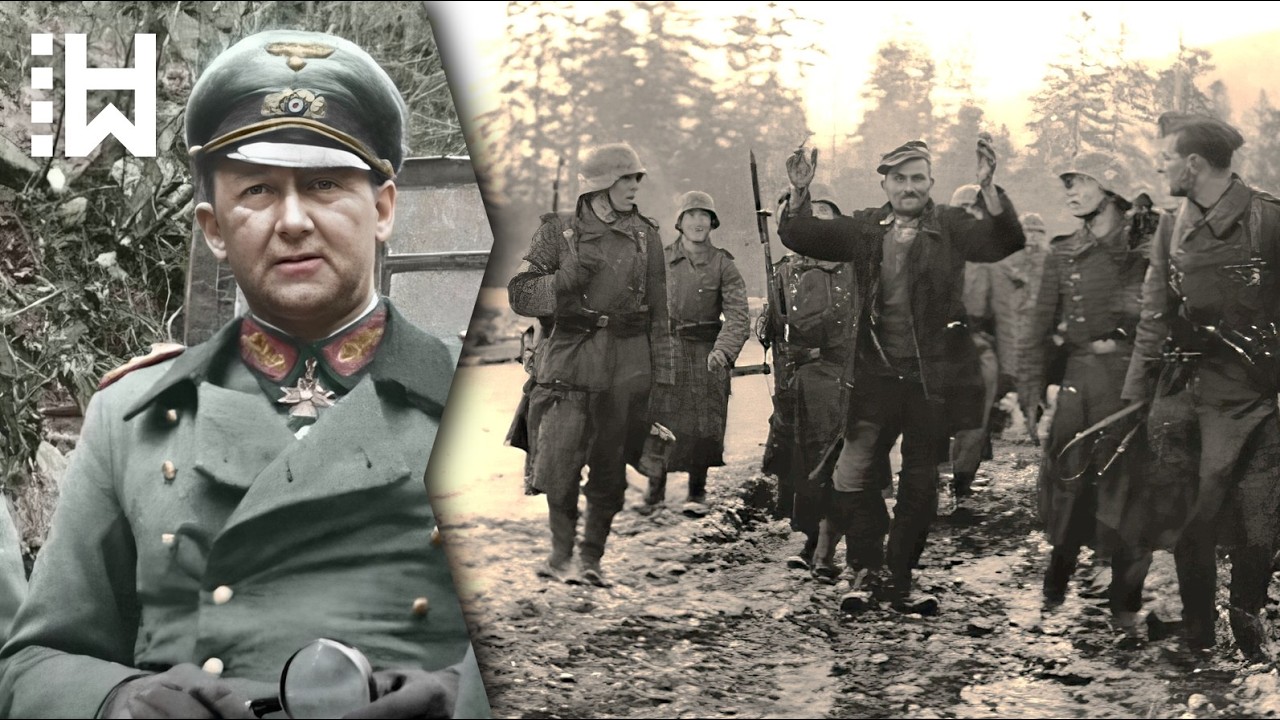
Yugoslavia, 1943.
The Balkans have become a land of fear.
German troops sweep through villages.
Homes burn.
Families flee into the forests.
Anyone suspected of helping the resistance risks execution.
Official reports call these operations “anti-partisan campaigns.”
The people living through them call them something else:
Massacres.
At the center of this campaign stands a German general few remember today—but whose victims never forgot.
His name was Fritz Neidholdt.
And under his command marched one of the most feared units in the Balkans:
The Devil’s Division.
A GENERAL RAISED TO OBEY
Born in 1887 in a quiet German village, Fritz Neidholdt grew up as the son of a Protestant pastor.
His childhood was filled with discipline, obedience, and strict rules.
But religion never fascinated him as much as the military.
The sight of uniforms.
The chain of command.
The power of rank.
These became the guiding forces of his life.
At just nineteen years old, he joined the German Army and began climbing through the ranks.
He fought in World War I.
He earned military decorations.
He survived Germany’s defeat.
And when Hitler rebuilt the German military, Neidholdt returned to service.
HITLER’S WAR MACHINE
By the time World War II erupted, Neidholdt was once again commanding troops.
His superiors viewed him as reliable, disciplined, and unquestioningly obedient.
The perfect officer for a regime that demanded absolute loyalty.
In September 1942, he received the assignment that would define his legacy.
Command of the newly created 369th Croatian Infantry Division.
A formation made up of Croatian volunteers serving under German leadership.
Its nickname sounded almost legendary:
The Devil’s Division.
But the name would soon take on a far darker meaning.
THE DEVIL’S DIVISION ARRIVES IN THE BALKANS
Originally intended for the Eastern Front, the division was instead sent to Yugoslavia.
There, communist Partisans under Josip Broz Tito were waging a relentless guerrilla war against Axis occupation forces.
The fighting was brutal.
The enemy was often invisible.
Partisans blended into the civilian population.
German commanders responded with collective punishment.
And civilians paid the price.
VILLAGES TURNED TO ASHES
As Neidholdt’s division advanced through Bosnia, Montenegro, and Herzegovina, reports of atrocities followed.
Villages suspected of supporting the resistance were burned.
Homes were destroyed.
Livestock was seized.
Men were executed.
Women and children were driven from their homes.
Entire communities disappeared in smoke and fire.
German military reports praised the division’s effectiveness.
Survivors remembered something very different.
They remembered the screams.
The gunfire.
The flames lighting up the night sky.
A REPUTATION BUILT ON FEAR
The Devil’s Division participated in major anti-partisan offensives across the Balkans.
Operations known by names like Operation Weiss and Case Black became synonymous with devastation.
Again and again, the same pattern emerged.
Resistance attacks.
German reprisals.
Civilian suffering.
And wherever the division marched, fear followed.
THE ORDER THAT SEALED HIS FATE
By 1944, Germany was losing the war.
The Red Army was advancing.
The Partisans were growing stronger.
But the violence did not stop.
On September 11, 1944, Neidholdt issued one of the most notorious orders of his career.
His troops surrounded the villages of Zagnježđe and Udora near Stolac.
More than one hundred men were killed.
Women and children were expelled.
The villages were left in ruins.
For many investigators after the war, this became one of the clearest examples of his responsibility for crimes against civilians.
THE HUNTER BECOMES THE HUNTED
As the Third Reich collapsed, Neidholdt’s military career collapsed with it.
The Balkans slipped from German control.
The Red Army advanced westward.
Partisan forces pushed north.
The Devil’s Division disintegrated.
Neidholdt resigned his command and returned to Germany.
But there would be no peaceful retirement.
THE WAR CRIMES TRIAL
After Germany surrendered, Allied authorities arrested him.
In early 1947 he was extradited to Yugoslavia.
There he stood trial alongside several other senior German commanders.
Witnesses described massacres.
Hangings.
Executions.
Entire families wiped out.
Captured German documents revealed that many reprisals had been officially ordered and approved through military channels.
Neidholdt did not deny that civilians had been executed.
Instead, he relied on a familiar defense.
He claimed he had simply followed orders.
He insisted he had acted according to military necessity and the laws of war.
The judges were not convinced.
GUILTY
On February 16, 1947, the court delivered its verdict.
Fritz Neidholdt was found guilty of war crimes and crimes against humanity.
The sentence:
Death.
His appeals failed.
No clemency was granted.
No reprieve arrived.
The former commander would soon face the same fate imposed on countless victims during the war.
THE END OF THE DEVIL’S GENERAL
On March 5, 1947, Fritz Neidholdt was led to the gallows.
He was fifty-nine years old.
The officer who had spent his entire life obeying orders now stood before the consequences of those orders.
Moments later, the execution was carried out.
The commander of the Devil’s Division was dead.
A LEGACY WRITTEN IN FIRE
Today, Fritz Neidholdt is remembered not for military victories or battlefield achievements.
His legacy lies elsewhere.
In burned villages.
In shattered families.
In mass graves scattered across the Balkans.
The Devil’s Division marched through Yugoslavia leaving destruction behind it.
And long after the guns fell silent, survivors continued to remember the fires, the executions, and the terror that followed in its wake.
