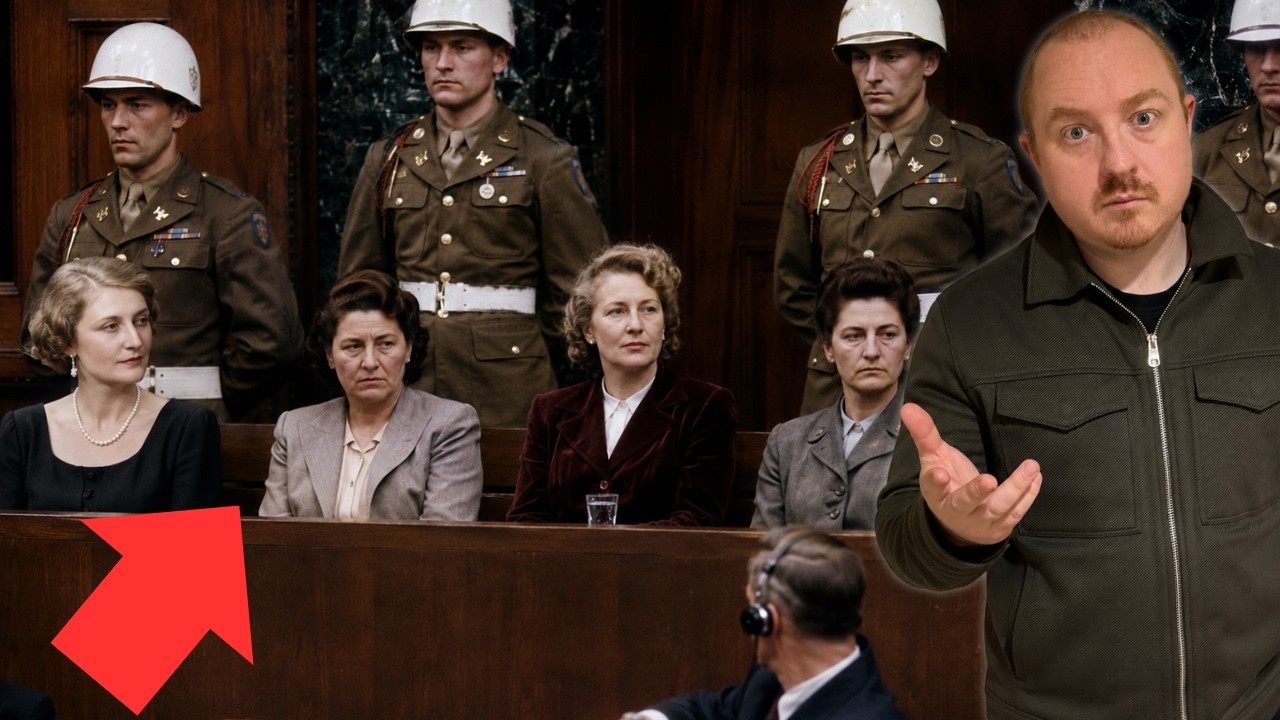
The Third Reich lay in ruins.
Its leaders were being hunted across Europe.
Inside the courtroom at the famous Nuremberg Trials, the world’s most notorious Nazi leaders sat in the dock awaiting judgment.
Men like:
- Hermann Göring
- Rudolf Hess
- Wilhelm Keitel
were accused of helping unleash the deadliest war in human history and overseeing crimes that left millions dead.
Yet one group was missing.
No wives.
No mistresses.
No women from the inner circle of Nazi power.
And that raised a question that still sparks debate today:
How did the women closest to the Nazi elite escape the most famous war crimes trial in history?
THE WOMEN WHO LIVED AT THE CENTER OF EVIL
They attended lavish banquets.
Lived in luxurious estates.
Socialized with the most powerful figures in Nazi Germany.
And enjoyed privileges unavailable to ordinary Germans.
Among them were:
- Emmy Göring
- Magda Goebbels
- Lina Heydrich
- Henriette von Schirach
- Eva Braun
These women stood closer to the heart of Nazi power than almost anyone else.
Yet none of them sat in the defendants’ dock at Nuremberg.
THE WORLD EXPECTED MONSTERS…
But when the trials began, prosecutors were focused on something very specific.
They wanted the men who had:
- planned wars
- signed orders
- directed military operations
- organized genocide
- controlled the Nazi state machinery
The Allies wanted to prove criminal responsibility through documents, signatures, orders, and official records.
And that became the key reason the Nazi wives largely escaped prosecution.
THE PROBLEM: BEING A NAZI’S WIFE WASN’T A CRIME
At Nuremberg, prosecutors needed evidence.
Not rumors.
Not suspicions.
Not guilt by association.
Being married to a Nazi leader was not enough.
Investigators needed proof that a person had directly:
- ordered crimes
- participated in atrocities
- helped plan genocide
- exercised official authority
For many Nazi wives, that evidence simply did not exist.
At least not enough for an international war crimes conviction.
THE WOMAN WHO LIVED LIKE ROYALTY
One of the most famous examples was:
Emmy Göring.
As the wife of Hermann Göring, she lived a life of extraordinary wealth and privilege.
She attended elite events.
Enjoyed luxurious properties.
Benefited enormously from her husband’s power.
After the war she was arrested and subjected to denazification proceedings.
She lost property and faced sanctions.
But prosecutors could not prove she personally planned or carried out Nazi crimes.
So she never faced a Nuremberg-style trial.
THE FANATICAL WIFE WHO FOLLOWED HITLER TO THE END
Perhaps no Nazi wife was more fanatically devoted than:
Magda Goebbels.
Known as the wife of propaganda minister:
Joseph Goebbels,
she became one of Hitler’s most loyal followers.
As Berlin collapsed in 1945, she made a decision that shocked even hardened Nazis.
Inside the Führerbunker she helped kill her six children before taking her own life alongside her husband.
Had she survived, historians still debate whether she would have faced serious prosecution.
THE WIDOW OF THE “ARCHITECT OF TERROR”
Another controversial figure was:
Lina Heydrich,
wife of:
Reinhard Heydrich,
one of the principal architects of the Holocaust.
She remained fiercely loyal to Nazism long after the war.
Investigators examined her activities.
Yet proving direct involvement in crimes against humanity proved difficult.
Without clear evidence, prosecutors could not bring her before a major international tribunal.
THE WOMAN WHO MARRIED HITLER
Then there was:
Eva Braun.
She spent years inside Hitler’s inner circle.
Lived at the Berghof.
Witnessed the highest levels of Nazi power.
Yet she officially became Hitler’s wife for only about 40 hours before both died by suicide inside the Führerbunker.
Her death ended any possibility of future prosecution.
THE EVIDENCE THAT VANISHED INTO THE FLAMES
Another major obstacle was the collapse of Nazi Germany itself.
As Allied armies advanced:
- documents were burned
- records disappeared
- officials fled
- evidence was destroyed
Many wives claimed they knew little about concentration camps or mass murder.
Some historians believe certain women genuinely lacked detailed knowledge.
Others suspect they knew far more than they ever admitted.
But suspicion alone could not secure a conviction.
THE SHOCKING ATTITUDE OF THE ERA
There was another factor that modern historians frequently point to:
1940s attitudes toward women.
Many investigators viewed women primarily as followers rather than political actors.
As a result, some female supporters of Nazism received far less scrutiny than male officials.
Today, many scholars argue that certain Nazi wives were far more ideologically committed than earlier generations realized.
THE ALLIES HAD BIGGER TARGETS
The Allies faced an overwhelming challenge after the war.
Millions were dead.
Europe was devastated.
Thousands of suspected war criminals remained at large.
Prosecutors decided to focus on:
- government leaders
- military commanders
- SS officials
- concentration camp personnel
Expanding the Nuremberg Trials to include wives, girlfriends, secretaries, and extended family members would have made an already massive legal process even larger.
THEY ESCAPED NUREMBERG… BUT NOT CONSEQUENCES
Many Nazi wives avoided major war crimes trials.
But some still faced punishment through denazification programs.
Consequences included:
- property confiscation
- financial penalties
- employment restrictions
- surveillance
- social stigma
Yet by the 1950s, many had largely reintegrated into German society.
THE DEBATE THAT NEVER ENDED
Today historians continue arguing about the moral responsibility of the Nazi elite’s wives.
Did they simply benefit from the regime?
Were they willing participants?
How much did they know?
How much should they have known?
The courts never fully answered those questions.
And that may be why these women remain so controversial.
Because while the men of the Third Reich faced the judges of Nuremberg…
…many of the women who lived beside them walked away from history’s biggest war crimes trial without ever entering the courtroom.
