The Los Angeles Dodgers pitching staff is navigating one of the most turbulent injury crises in recent franchise history, and pitching coach Mark Prior is at the epicenter of the storm. In an exclusive and candid interview on the latest episode of Dodgers Territory, Prior addressed the mounting pressure, the rehabilitation of superstar Shohei Ohtani, and the stark reality that some injuries are simply beyond human control. The conversation came as the Dodgers, despite holding first place in the National League West, grapple with a decimated rotation that has tested the organization’s depth to its breaking point.

Prior, entering his sixth season as the Dodgers’ pitching coach, did not shy away from the gravity of the situation. The team has lost key starters to various ailments, forcing a reliance on unproven arms and taxing a bullpen that has been forced to shoulder an unsustainable workload. When asked about the public narrative that blames the coaching staff or strength and conditioning program for the rash of injuries, Prior offered a stark defense of his department and a broader commentary on the nature of modern baseball. “It’s a unique environment,” Prior said. “Clearly, in this organization, we’re feeling the ramifications of the injuries, but it’s across the landscape of baseball as a whole. A lot of teams are dealing with injuries, specifically to pitchers. It’s tough to pinpoint one thing.”
The former USC standout and major league pitcher, who himself saw a promising career derailed by injuries, emphasized that the volatility of the profession is often misunderstood. “I don’t think it’s fair for me to go and say what is causing injuries and what is not causing injuries,” Prior explained. “Unfortunately, I don’t think it’s fair for anybody because there is so much that goes into guys getting hurt. It’s so much on an individual basis. Where they’ve been, what their previous injury history is. Some things are fluke, some things are wear and tear, or being used in a tired type of situation. It’s an unfortunate thing that we’re having to deal with, and so is every other organization to some capacity right now.” He stressed that the Dodgers have not altered their training protocols in a way that would increase risk, noting that despite advances in technology, recovery methods, and strength conditioning, the injury front has not slowed. “It’s unfortunate mostly for players who have to deal with the injuries,” Prior added. “It interrupts careers, it interrupts seasons, and it can wreak havoc with organizations and their plans.”
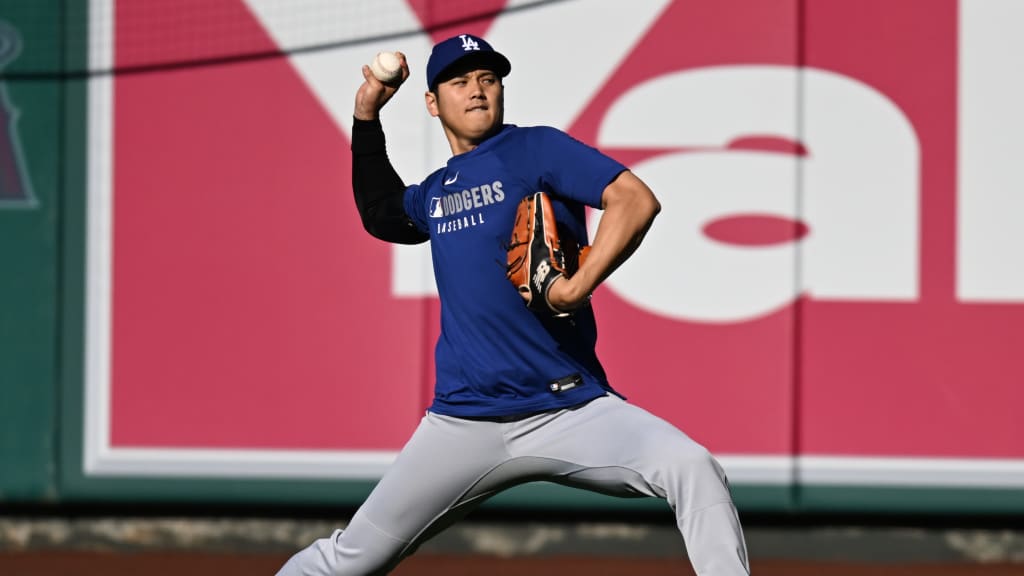
The most anticipated development for the Dodgers remains the return of Shohei Ohtani to the mound. Ohtani, who has been serving as the team’s designated hitter and leadoff batter while recovering from elbow surgery, is inching closer to facing live hitters. Prior provided a detailed update on the two-way superstar’s progress, emphasizing the unique challenges of managing a player who is both an elite hitter and a potential ace. “He’s getting closer,” Prior said. “To put a time on it is probably not prudent. It’s been a very interesting rehab from an experience standpoint. Normally, you’re dealing with a guy who only pitches. You know what their workloads are, when they’re tired or expected to be tired. But as everything would show, he’s unique. He’s an outlier situation.”
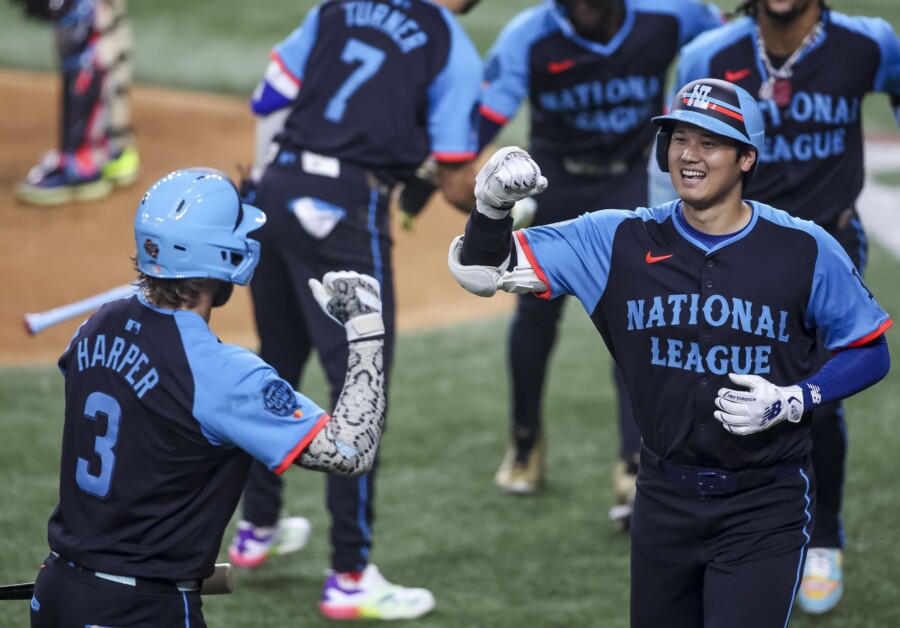
Prior described the delicate balancing act required to manage Ohtani’s workload, given the physical demands of his offensive production. “There are days where he goes four for four and runs around the bases, and he comes in the next day feeling tired and exhausted,” Prior revealed. “The throwing work volume needs to be cut short or tweaked to manage that. It’s been an ongoing learning process for everybody involved.” The pitching coach indicated that Ohtani’s last few bullpen sessions have shown a significant ramp-up in intensity across all his pitches. “I think we’re getting close to where he can start facing some hitters, whether that’s in the next couple weeks or as we turn into June at the latter part of June,” Prior said. “But things are always a little bit TBD just because of what he does on the offensive side of the ball and the stress that takes on his body at times.”
The conversation also turned to Yoshinobu Yamamoto, who has emerged as a true ace for the Dodgers this season. Prior credited Yamamoto’s growth to the lessons learned during last year’s playoff run, particularly his ability to adjust to the nuances of major league hitters. “I think what we saw when he came back off his IL stint in September and through the playoffs was his understanding of the hitters and what the game is like over here,” Prior said. “He’s got above-average pitches, his command is elite, and he can do a lot of different things. That started with him feeling that confidence.” Prior highlighted Yamamoto’s recent performance as a stopper, noting that the pitcher’s ability to get stronger as the game progresses is a hallmark of elite talent. “He might not have it all lined up in the first couple innings, but as the game gets going, he just starts locating and commanding,” Prior said. “It was a really phenomenal performance in a time when we needed length and quality.”
The status of rookie Roki Sasaki was another major topic. The 23-year-old Japanese phenom has been sidelined with a shoulder issue that has hampered his performance and velocity. Prior acknowledged that the injury has played a significant role in Sasaki’s struggles. “You can’t say it’s nothing,” Prior said. “How much of it played a role into his trend down after his opening couple starts is hard to say. But clearly, he was bothered by it last year in Japan, and it’s kind of reared its head again.” Prior outlined a dual path for Sasaki, involving both development and performance at the major league level. “The shoulder thing has something to do with it,” Prior explained. “The velocity continued to trend down, and finally he got to the point where he spoke up. We’re glad he did because it’s something we needed to address. His overall shoulder conditioning and strength are being hammered over these last 10 days.” Once Sasaki is in a good spot, Prior said the focus will shift to fine-tuning his fastball quality, breaking ball mix, and command, which have been a step down from his performance in Japan.
The return of future Hall of Famer Clayton Kershaw has provided a significant boost to the clubhouse, even if his season debut was not perfect. Prior spoke about the intangible value of having Kershaw back in the rotation. “Anytime you get Clayton Kershaw, the name alone starts getting people’s adrenaline going,” Prior said. “You never sleep on the greats because you never know when they’re going to show up and do something masterful.” Prior noted that Kershaw’s stuff ticked up from his minor league outings, and his work between starts has been encouraging. “He can still pitch at this level,” Prior said. “His mind still works at an unbelievable level. He knows how to pitch, he knows what to do, and he knows how to will himself to win ball games. That fires everybody up.”
Looking toward the future, Prior identified several arms within the organization that could provide crucial depth. Jackson Ferris, a left-handed prospect, has impressed with his deep arsenal and ability to throw multiple pitches to both sides. “He’s a guy we’re looking at next year to step in and be one of those younger guys,” Prior said. “I was impressed with the way he throws.” Prior also mentioned Ken Robleski and Bobby Miller as players who could take the next step and provide relief for an overworked staff. “If we can get them over that hump, it provides a huge depth piece that allows us to map out the season and not lean on guys as much as we’d like,” Prior said.
Throughout the interview, Prior maintained a tone of resilience and determination, refusing to succumb to the narrative of victimhood. “It’s not a ‘why is this happening to me’ situation,” Prior said. “I feel very blessed and have a lot of gratitude for the position. We have a lot of really good players. Over the course of the six years I’ve been here, we’ve gone through all of these things before. It’s just about how do we find ways to win.” He pointed to the emergence of Ben Casparius last season as an example of how adversity can create opportunity. “He came out of nowhere and now he’s one of our guys by his own performance,” Prior said. “That’s been a fun story to watch.”
The Dodgers are currently in first place, but the margin for error is razor thin. With a series against the New York Mets looming, the team will need to continue to find creative solutions to its pitching shortage. Prior’s message to fans and the organization is clear: the injuries are real, the challenges are immense, but the fight is far from over. As the team prepares for a critical stretch, all eyes will be on the progress of Ohtani, the development of Sasaki, and the veteran leadership of Kershaw. The path forward is uncertain, but under Prior’s guidance, the Dodgers are determined to navigate the storm.
