The final moments of one of history’s most notorious war criminals were as chaotic and brutal as the life he led. Amon Leopold Goeth, the former commandant of the Krakow-Plaszow concentration camp, was executed by hanging in a Krakow prison on September 13, 1946, following a swift and decisive trial by Poland’s Supreme National Tribunal.
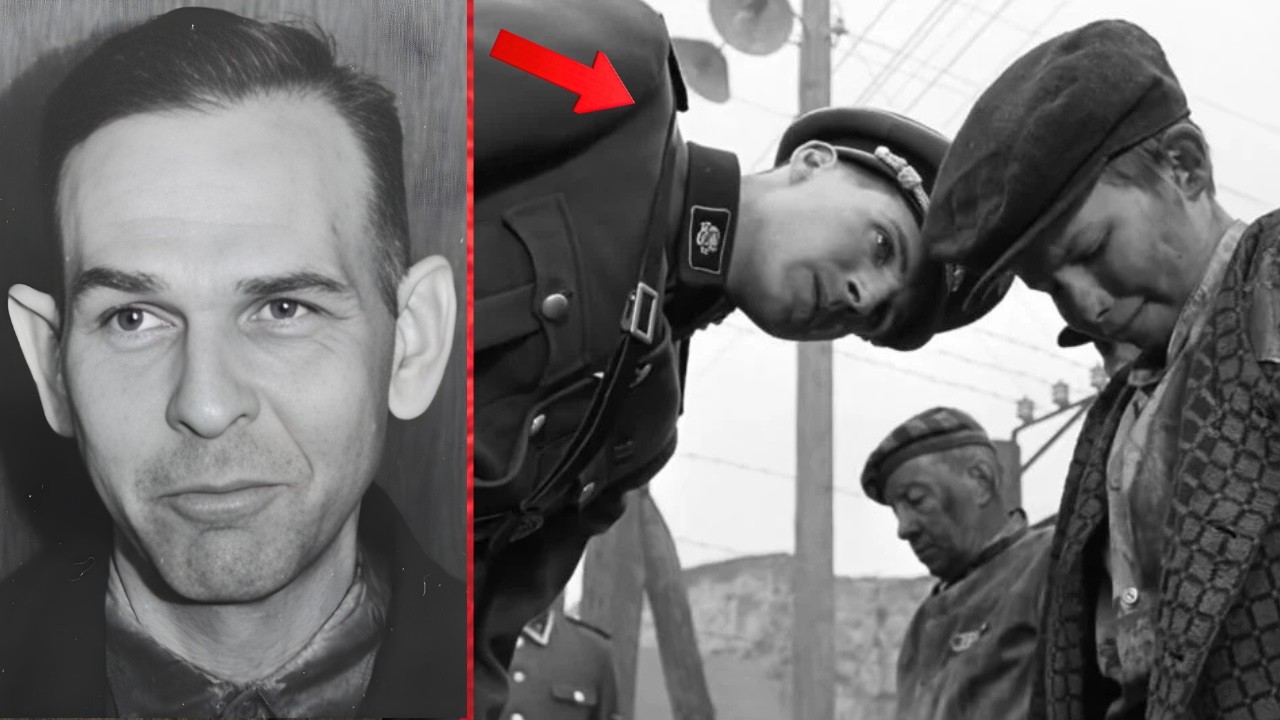 His death, witnessed by officials and journalists, was a protracted ordeal. The executioner miscalculated the length of the rope for the towering, six-foot-tall SS officer. The drop failed to kill him instantly, requiring two additional adjustments before the sentence was carried out. Goeth’s final utterance was a defiant “Heil Hitler.”
The execution marked the end of a rapid nine-day judicial process that found Goeth guilty of crimes against humanity. The charges detailed his direct responsibility for approximately 8,000 deaths at Plaszow, the liquidation of the Krakow and Tarnow ghettos, and the systematic theft of millions in Jewish property. Throughout the trial, Goeth showed contempt, polishing his nails as survivors testified.
The path to the gallows began not with his atrocities, but with his greed. In September 1944, the Gestapo arrested Goeth at his Plaszow villa for embezzling vast quantities of valuables looted from murdered Jews, property legally belonging to the German Reich. His arrest for theft, not murder, removed him from command.
Diagnosed by SS doctors with mental illness, Goeth spent the final months of the war in a psychiatric hospital. There, American forces captured him, finding him disguised in a Wehrmacht uniform. He was swiftly extradited to Poland to face justice for his reign of terror in the occupied nation.

Goeth’s rise to infamy was fueled by early fanaticism. Born in Vienna in 1908, he joined the Nazi Party in 1930, becoming an “old fighter” loyal to Hitler before the 1933 seizure of power. He engaged in underground activities for the banned Austrian Nazi party, smuggling weapons and evading arrest multiple times.
The 1938 Anschluss, which saw Austria absorbed into Nazi Germany without a shot, was Goeth’s moment. He returned to Vienna, joined the SS, and ascended within the genocidal machinery. By 1942, he was involved in deporting Jews to extermination camps from Lublin headquarters.
His most infamous posting came in February 1943: commandant of the newly built Krakow-Plaszow camp. His first address to prisoners set the tone: “I am your God.” He ruled through arbitrary, sadistic terror, personally shooting hundreds from his villa balcony or during camp inspections.

Life under Goeth was a daily lottery of death. Prisoners hid when they saw him don his Tyrolean hat, the signal he was hunting. His dogs were trained to maul inmates. He ordered a woman boiled alive for eating a potato. Survivor Helen Jonas-Rosenzweig testified, “I can’t tell you how people feared him.”
While thousands starved and died, Goeth lived in grotesque luxury within the camp grounds. His villa housed a full staff, including a butler, masseur, and personal physician. He demanded handmade shoes weekly and hosted drunken orgies. A cook was shot for serving soup too hot.
Beyond Plaszow’s wires, Goeth directed the liquidation of entire Jewish communities across southern Poland. In Tarnow, witnesses later testified he personally executed dozens of women and children during the ghetto’s final destruction in September 1943.

The Polish tribunal’s verdict was unequivocal. President Dr. Alfred Eimer pronounced the death sentence, stating Goeth had “exceeded his authority” in a manner constituting “crimes of murder and torture.” The court rejected his defense of following orders, highlighting his personal initiative and cruelty.
Following the botched execution, Goeth’s body was cremated. His ashes were scattered into the Vistula River, denying any physical grave or memorial. No one publicly mourned his passing.
The story of Amon Goeth stands as a stark historical warning. It demonstrates how ideological fervor, combined with absolute power and moral vacancy, can transform an unremarkable man into a architect of everyday horror. His death, though just, could never balance the scales for the thousands he tortured and murdered.
