From the first mushroom cloud in 1945 to the complex global arsenals of today, the story of nuclear weapons is one of power, fear, and fragile balance. Over 80 years, nations have raced, paused, and negotiated their way through a nuclear age defined by secrecy, deterrence, and the ever-present shadow of annihilation.
It all began in 1945, when the United States became the first—and only—nation to use nuclear weapons in war. In the immediate aftermath of World War II, the U.S. held a monopoly on atomic power. But that dominance was short-lived.
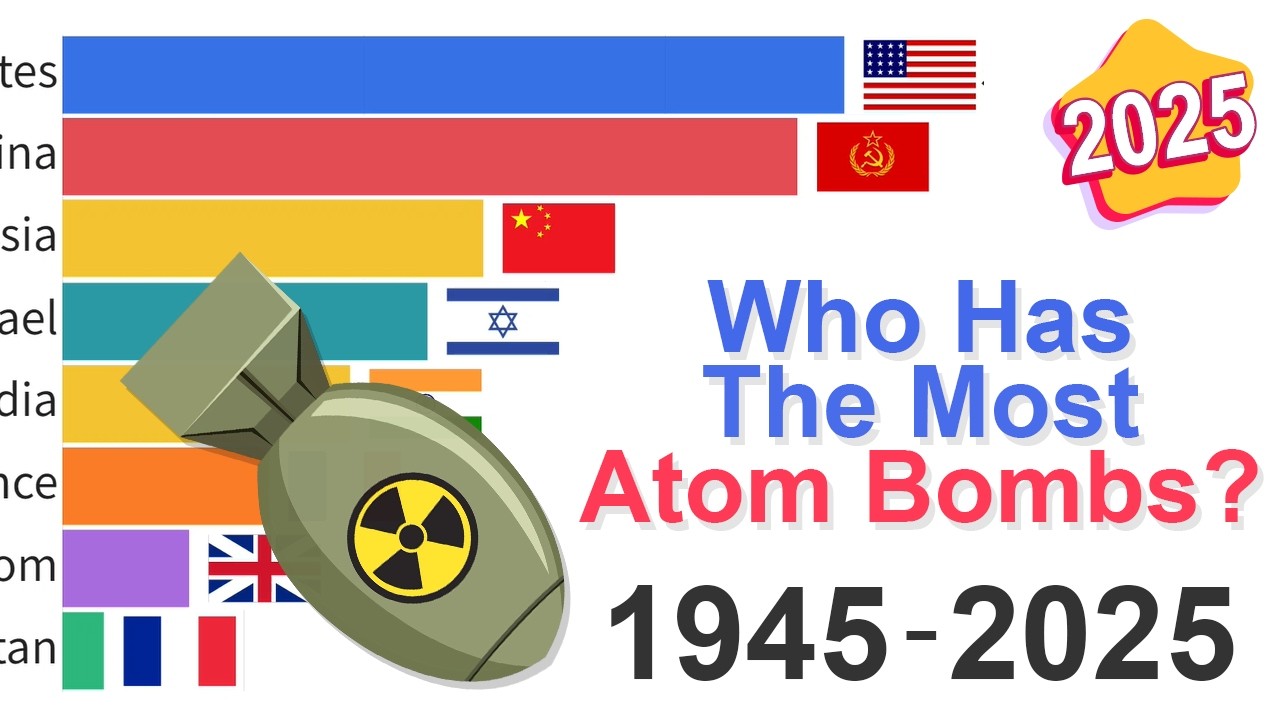
By 1949, the Soviet Union detonated its first nuclear device, setting off the Cold War arms race. Through the 1950s to the 1980s, both superpowers stockpiled warheads at an alarming rate. At its peak in the mid-1980s, the USSR possessed over 40,000 nuclear warheads, while the U.S. arsenal topped 31,000. This era marked the height of Mutually Assured Destruction—a doctrine that paradoxically maintained peace through the threat of total devastation.
The post-Cold War years saw a decline. Arms reduction treaties like START and New START led to significant disarmament by the U.S. and Russia. However, they still maintain the vast majority of the world’s nuclear weapons.
As of 2025, Russia holds the largest stockpile, with approximately 6,000 nuclear warheads, followed closely by the United States with around 5,200. These two nations account for over 90% of global nuclear weapons.
Beyond them, the nuclear club includes:
-
China – rapidly expanding its arsenal, now estimated at 500+ warheads
-
France – around 290
-
United Kingdom – approximately 225
-
Pakistan and India – both with roughly 160–170, locked in a tense regional rivalry
-
Israel – unconfirmed but believed to possess 80–100 nuclear weapons
-
North Korea – estimated at 20–50, with ongoing development efforts despite international sanctions
While total numbers have decreased from Cold War highs, modern nuclear weapons are more powerful, accurate, and mobile. New technologies, such as hypersonic delivery systems, and doctrines like “escalate to de-escalate” have added layers of complexity.
The global nuclear landscape remains precarious. Treaties are being tested, deterrence strategies are evolving, and geopolitical tensions continue to flare. From Hiroshima to hypersonics, the question of “who has the most nukes” is no longer just about numbers—it’s about strategy, stability, and the shared responsibility of preventing the unthinkable.
