The wind that had been the instrument of John Slover’s salvation died as suddenly as it had arrived, leaving the condemned man tied to the stake, the rain-soaked wood at his feet hissing with the remnants of a fire that had been meant to consume him. For a moment, the warriors of the Shawnee and Mingo nations stood in stunned silence, their faces a mixture of fury and superstition, staring at the sky that had betrayed their ritual. The storm had come from nowhere, a violent curtain of water that had extinguished their flames in a matter of minutes, and now, as the sun began its slow descent, they made a new decision.
They would not kill him now. They would wait for the morning, when a full day of daylight would allow them to savor the execution of the white scout who had once been one of their own. John Slover, his arms bound so tightly that the cord had disappeared into the swollen flesh of his wrists, listened to their guttural deliberations and knew that his life now hung on a thread that was fraying by the second.
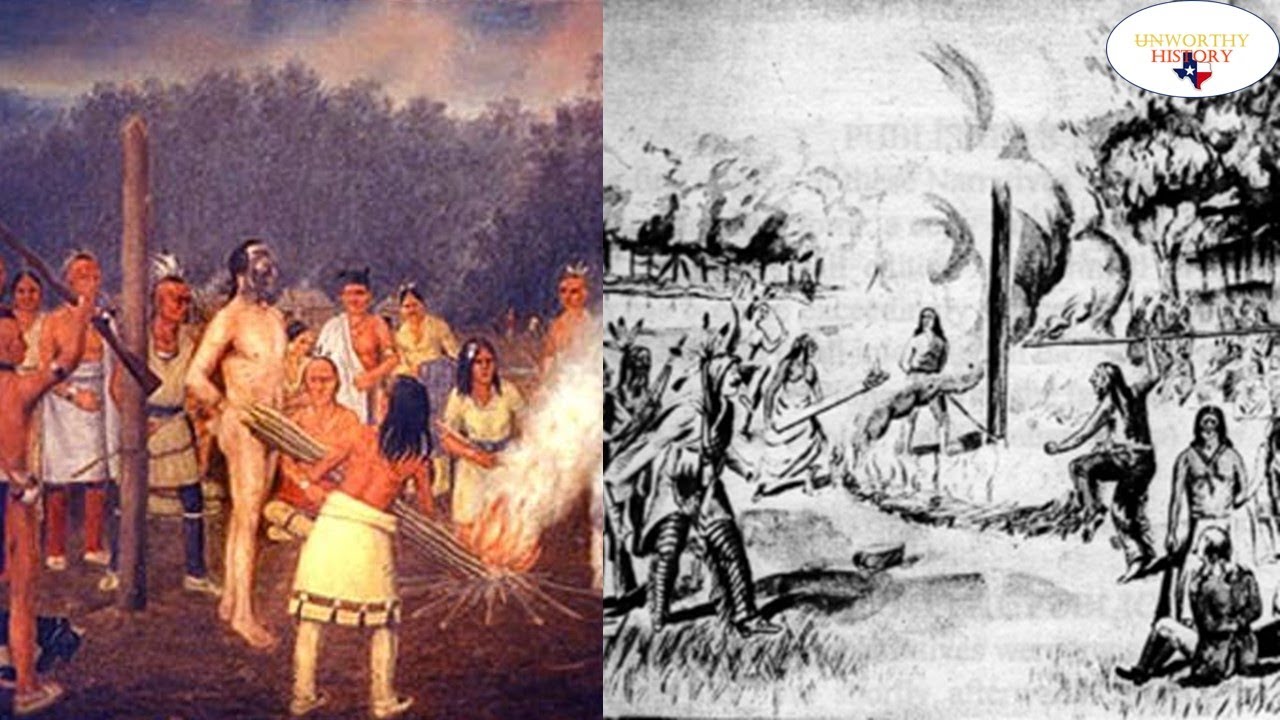 He had been here before, a lifetime ago, a child stolen from his family in the wilds of Virginia, and now, at twenty-seven years old, he was facing the end of a journey that had begun with his capture and was set to conclude with his death. The irony was not lost on him as he was untied from the post and dragged toward a blockhouse, the ropes around his neck and arms still biting into his skin, the promise of a morning of torture echoing in his ears. He had survived twelve years as a captive, fought for the Continental Army, and guided Colonel William Crawford’s ill-fated expedition into the Ohio country, only to find himself at the mercy of the very people who had raised him.
The warriors who danced around him that night, beating him with clubs and tomahawks, were the sons of the men who had taught him to hunt and to speak their languages, and now they were preparing to burn him alive for the crime of returning to the land of his birth. As the hours crawled by and the fire in the blockhouse burned low, Slover’s mind raced, not with fear, but with the strange peace that had settled over him during the failed execution, a peace he attributed to a divine intervention that had spared him once and might, against all odds, spare him again. He was tied to a beam, the rope around his neck allowing him only to lie on a hard wooden board, and the three warriors assigned to guard him took turns tormenting him with questions about how he would like to eat fire in the morning.
They laughed when he did not answer, their voices carrying into the darkness, and they spoke of the other prisoners they had killed, the ones whose carcasses had been fed to the dogs after their limbs had been stuck on poles as warnings to any white man who dared to venture into their territory. Slover listened, his eyes fixed on the embers of the fire, and he thought of the men he had seen die just days before, men like Colonel Crawford, whose fate had been sealed in a similar ritual of fire and blood. He thought of Harrison and young Crawford, whose blackened, mutilated bodies he had seen lying outside the council house, their flesh torn by tomahawks and burned by gunpowder, and he knew that his own body was destined for the same end unless he could find a way to slip his bonds.
The night wore on, and the guards grew weary, their taunts becoming less frequent, their movements slower, and Slover began to test the ropes that held him, feeling the coarse fibers dig into his deadened arms as he worked to loosen them. He had been a prisoner of the Indians for most of his childhood, and he knew their ways, knew that their vigilance often faltered in the hours before dawn, and he prayed that this night would be no different. At last, around an hour before daybreak, two of the warriors lay down, and the third, a man who had been smoking a pipe and asking Slover the same painful questions, finally succumbed to sleep, his snores filling the small room.
Slover, his heart pounding against his ribs, laid himself down on his right arm, which was pinned behind his back, and using the last of his strength, he slipped the cord from his left arm, feeling it slide over his elbow and wrist with a roughness that tore his skin. He froze as one of the warriors stirred, sitting up to poke the fire, and Slover held his breath, certain that his escape had been discovered, but the man simply lay back down, and Slover resumed his desperate work. The rope around his neck was thick, as hard as iron, made from buffalo hide, and he tried to untie the knots with his fingers, but they were numb and useless, and he felt a wave of despair wash over him as he saw the first light of day creeping through the cracks in the walls.
He heard a rooster crow in the distance, and he knew that his time was running out, that the warriors would soon wake and drag him back to the stake, and so he made a second attempt, pulling at the noose with a frantic energy that surprised him. To his astonishment, the rope came loose, the knots giving way as if by magic, and he slipped it over his head, his breath coming in ragged gasps as he stepped over the sleeping bodies of his guards and out into the pre-dawn air. He ran through the town, his bare feet silent on the hard-packed earth, past the council house where his fate had been decided, past the cornfields that bordered the settlement, and he did not stop until he reached the edge of the woods, where he finally allowed himself to look back.
 He saw a squaw and her children sleeping under a tree, and he veered away, knowing that any sound could bring the warriors down upon him, and he continued running until he found a horse grazing in a glade, its rope still attached to a stake. He caught the animal, using the very rope that had bound him as a halter, and he rode off, naked and bleeding, his arms swollen and black from the cords that had cut off his circulation, his only covering a piece of old rug he had found hanging on a fence. He rode for hours, crossing the Sciota River at a place he calculated to be fifty miles from the town, and he pushed the horse hard until it began to falter, its flanks heaving with exhaustion, and then he left it and ran on foot, covering another twenty miles before the sun began to set.
He heard hooting behind him in the evening, the sound of pursuit, and he did not halt until ten o’clock that night, when he collapsed, vomiting from exhaustion, but he forced himself to his feet when the moon rose, and he traveled through the darkness, his body torn by briars and thorns, his skin a canvas of welts and cuts. He had not slept in days, and the mosquitoes were relentless, forcing him to keep moving, to brush them away with handfuls of bushes as he stumbled through the forest, his only goal to reach the Ohio River and the safety of Wheeling. He swam the Muskingum River at Old Cumber Town, the water cold and swift, and he crawled up the opposite bank, his legs barely able to support him, and he continued on, eating nothing but a few raspberries and two small crawfish he found in a stream.
On the fifth day, he came within five miles of Wheeling, and he saw a man on an island in the Ohio River, and he called out, identifying himself as Slover, begging the man to come and fetch him in a canoe. The man was reluctant, suspecting a trap, but Slover named the men who had been on the expedition, and at last, the man paddled across and brought him to the shore, where Slover collapsed, his ordeal finally over. He had escaped the flames that had consumed his comrades, escaped the dogs that had fed on their carcasses, and he would live to tell the tale of his second captivity, a story that would be printed in Hugh Henry Brackenridge’s “Indian Atrocities” and read by a nation hungry for accounts of the savagery of the frontier.
Slover would go on to marry, have children, and die of natural causes in 1813, a rare survivor of a conflict that had claimed so many, but the memory of that night at the stake, of the storm that had saved him, and of the bodies of his friends being dragged away to be fed to the dogs, would never leave him. The campaign had been a disaster from the start, a punitive expedition against the Indian towns on the Sandusky River that had ended in a rout, with Crawford captured and burned alive, and his men scattered across the wilderness, hunted like animals. Slover had been one of the few to make it back, and his account, along with that of Dr.
Knight, who had also escaped, became a testament to the brutality of the war on the frontier, a war that was fought not on the battlefields of the East, but in the forests and glades of the Ohio country, where mercy was a foreign concept. The Indians, for their part, had been following a policy of no prisoners, a directive that had come from Detroit, where the British commander had urged them to take no more captives, as they were a burden on scarce provisions and a source of intelligence for the rebels. Slover had heard the speech delivered in the council house, had seen the warriors of eight nations agree to the policy, and he knew that his survival was a fluke, a miracle of weather and timing that had allowed him to slip away in the confusion.
 He had been born in New River, Virginia, in 1755, and captured by the Miamis when he was just eight years old, spending twelve years among the Shawnee and Delaware, learning their languages and their ways, until he was released at the Treaty of Fort Pitt in 1773. He had enlisted in the Continental Army at the start of the war, served fifteen months, and then returned to civilian life, marrying and joining the church, but when Crawford’s expedition was raised in 1782, he had volunteered as a guide, his knowledge of the country west of the Ohio making him invaluable. It was a decision that nearly cost him his life, and it was a decision that he would relive in his nightmares for the rest of his days, the faces of the men he had seen die, the sound of their screams, the smell of burning flesh.
The story of John Slover is a story of survival against impossible odds, a story of a man who was caught between two worlds, who was raised as an Indian and fought as a white man, and who was condemned to die by the very people who had once called him brother. It is a story that has been largely forgotten by modern historians, relegated to the margins of a history that prefers to focus on the ideals of the Revolution rather than the brutal reality of the frontier, where men, women, and children were slaughtered without mercy, and where the bodies of the dead were fed to the dogs. But for those who seek to understand the full scope of the American experience, the story of John Slover is essential reading, a reminder that the founding of the nation was not a clean and noble affair, but a bloody and chaotic struggle for survival in a land that was already soaked in blood.
The rain that extinguished his fire was seen by Slover as a sign of divine providence, a miracle that confirmed his faith, and he carried that faith with him to his grave, a faith that had been tested in the most horrific way imaginable. He had been ready to die, had felt an assurance of salvation that he had never known before, and when the storm came, he took it as a sign that God had other plans for him, plans that would see him return to his family and live out his days in peace. The warriors who had tried to burn him were left to wonder at the power of the white man’s God, a God who could command the winds and the rain, and they were left to deal with the consequences of their failed execution, a failure that would be remembered in their own stories as a sign of the changing times.
Slover’s escape was a blow to their prestige, and they would spend days tracking him, following his trail through the glades and the forests, but they would never catch him, and he would make it back to Wheeling to tell his tale. The tale would be printed in 1782, in the midst of the war, and it would be read by thousands of Americans, who would see in Slover’s ordeal a confirmation of their worst fears about the savagery of the Indians and the British who armed them. It would also serve as a warning, a cautionary tale about the dangers of venturing into the wilderness, and it would contribute to the growing sentiment that the Indians were a threat that needed to be eliminated, a sentiment that would lead to decades of conflict and displacement.
Slover himself would not participate in any further expeditions, content to live out his life in relative obscurity, but his story would endure, passed down through the generations as a testament to the resilience of the human spirit. The book from which his story is taken, “Indian Atrocities” by Hugh Henry Brackenridge, is a rare and valuable document, a firsthand account of the horrors of the frontier that was published at a time when such stories were in high demand. Brackenridge, a lawyer and writer who had served as a chaplain in the Continental Army, compiled the narratives of Slover and Dr.
 Knight to expose the brutality of the Indians and to argue for a more aggressive policy against them. The book was widely read and went through multiple editions, and it helped to shape public opinion in the years after the war, when the new nation was struggling to define its relationship with the native peoples who occupied its western lands. Slover’s story, with its vivid descriptions of torture and escape, was a powerful piece of propaganda, and it was used to justify the expansion of white settlement into Indian territory, a process that would have devastating consequences for the native peoples.
But for Slover himself, the story was not propaganda; it was the truth of his life, a truth that he had lived and suffered, and a truth that he would carry with him until his death. He died in 1813, at the age of fifty-eight, a relatively old man for his time, and he was buried in an unmarked grave, his story fading into the mists of history. But his narrative remains, a window into a world that has long since vanished, a world of violence and courage, of faith and despair, and it serves as a reminder of the cost of the American experiment.
The men who died with Crawford, whose carcasses were fed to the dogs, are nameless to most Americans, their sacrifice forgotten, but Slover’s account ensures that their memory is not entirely lost. He saw their bodies, black and bloody, lying outside the council house, and he saw their limbs and heads stuck on poles, and he never forgot the sight. He carried it with him for the rest of his life, a burden of grief and horror that he could not shake, and he told their story so that others would know what had happened in the forests of Ohio in the summer of 1782.
It is a story that deserves to be told, a story that is as relevant today as it was two hundred years ago, a story about the limits of human cruelty and the power of the human will to survive. John Slover was a man who was caught between two worlds, and he paid a terrible price for his divided loyalties, but he emerged from the ordeal with his faith intact and his spirit unbroken. He is a figure who deserves to be remembered, not as a hero or a villain, but as a man who endured the unendurable and lived to tell the tale.
And his tale, preserved in the pages of a book published in 1782, is a testament to the power of the written word to keep history alive, even when the historians of today would prefer to forget.
