The air over the Frog Lake settlement in the District of Saskatchewan was thick with the smoke of pillaged buildings and the acrid scent of gunpowder on the morning of April 2, 1885. The quietude of the prairie spring was shattered by the crack of Winchester rifles and the blood-curdling war cries of Plains Cree warriors who had turned on the white residents they had lived beside for years. By noon, nine white men lay dead in the mud and slush, their bodies stripped and mutilated, marking one of the most violent and shocking chapters in the history of the Canadian West.
The rebellion, long simmering under the leadership of the Métis mystic Louis Riel, had now ignited a bloody conflagration among the Cree, and the name of the war chief known as Wandering Spirit would be forever etched in infamy as the architect of the slaughter.
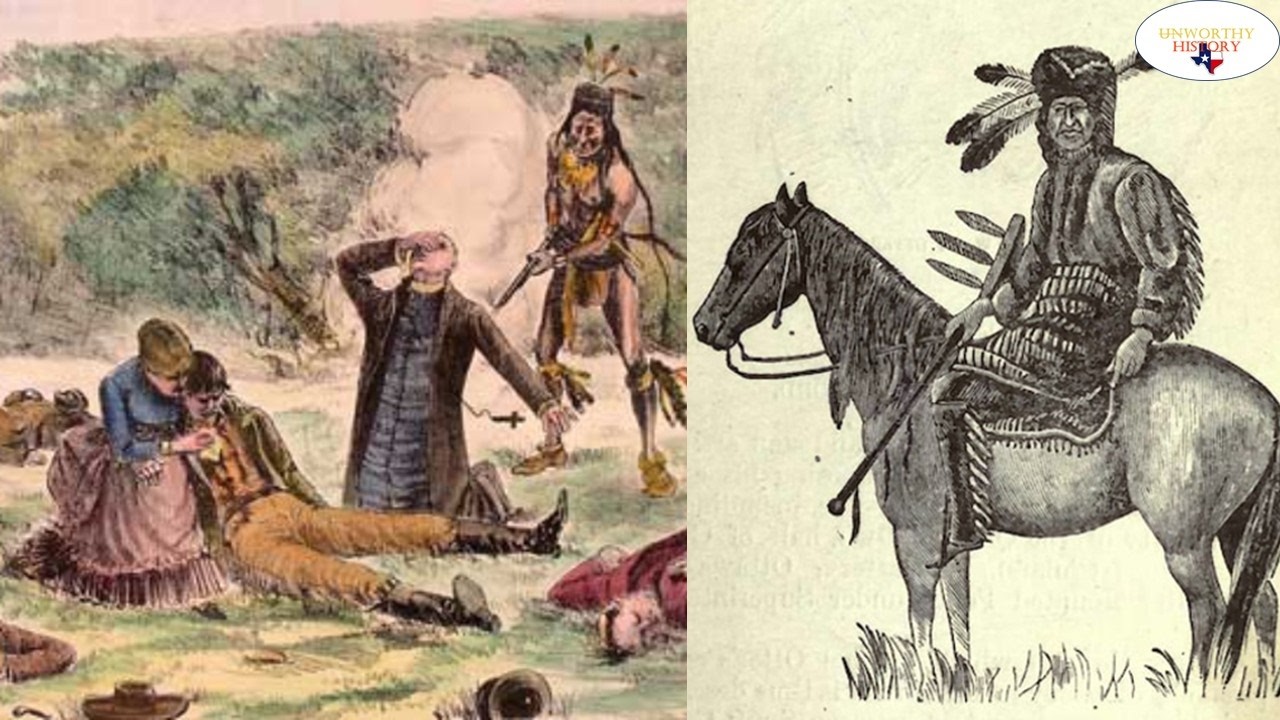 The massacre unfolded with terrifying speed and brutality, shattering the fragile peace that had existed between the Hudson’s Bay Company traders, government agents, and the indigenous population. William Bleasedell Cameron, a young trader for the Hudson’s Bay Company who would become the sole surviving white male witness, later described the scene as the culmination of a “smoldering fire of inherent savagery” that had been stoked by the desperate conditions and incendiary rhetoric of the winter. The events of that day, which Cameron chronicled in his 1926 book “The War Trail of Big Bear,” began not with a sudden ambush but with a calculated, methodical escalation that trapped the white inhabitants in a web of menace and false promises.
The Cree, led by the aging Chief Big Bear, had been under immense pressure from the Canadian government to settle on reserves and abandon their nomadic way of life, a pressure that had driven the band to the brink of starvation and resentment. The arrival of news of Riel’s victory at Duck Lake on March 26, 1885, had electrified the young warriors of the band, who saw an opportunity to strike back at the authorities they blamed for their misery.
The immediate prelude to the massacre was a night of tense councils and ominous portents. On the evening of March 28, Cameron had stumbled upon a secret meeting between Big Bear’s band and the Wood Cree, noting the “tense serious looks” on the faces of the warriors as they smoked the pipe of compact. He witnessed Wandering Spirit, the war chief, rise and speak in a “low impassioned voice” with a “transfixing look in his dark eyes,” exchanging shirts with a Wood Cree leader in a ritual of alliance.
Cameron, sensing the gravity of the moment, left the lodge with a “premonition of evil days at hand.” Three days later, the news of the Duck Lake uprising reached Frog Lake, and the tension became palpable. Indian Agent Thomas Truman Quinn, a man despised by many of the Cree for his strict enforcement of government policies, urged the white residents to flee to Fort Pitt for safety.
However, the Roman Catholic priest, Father Léon Fafard, counseled against leaving, arguing that they must show confidence in the Indians. Quinn, against his better judgment, relented, a decision that would seal his fate and the fate of the others.
The morning of April 1, 1885, known to the Cree as “Big Lie Day,” was a cruel mockery of the impending doom. Wandering Spirit, adorned in his war bonnet, entered the farming instructor’s house and greeted Quinn with a laugh, proclaiming “Big lie day.” The Indians present laughed along, and Quinn, perhaps hoping to defuse the situation, joined in the mirth.
The war chief, however, was merely biding his time, his “wild complex nature” barely contained beneath a veneer of civility. Cameron described Wandering Spirit as a “copper jackal and hind, a savage no more to be trusted than a snake,” with “dark, piercing eyes” that flashed with a “burning intensity.” His hair, unlike the straight locks of other Indians, stood out in thick curls, forming a “somber background” for his cruel features.
He was a man whose “greatest pleasure was in fighting,” a hunter of men who took pride in his record of killing Blackfeet warriors. That night, as Cameron visited Quinn, he found the agent in a resigned but defiant mood. Quinn spoke of his father’s death in the Minnesota massacres and his own narrow escape, boasting, “Well, Cameron, they might kill me, but they can’t scare me.”
It was a tragic boast, for within hours, his courage would be put to the ultimate test.
The conspiracy to kill the whites was hatched in the dead of night. Wandering Spirit, unable to sleep, dispatched four warriors to the house of Isidore Mondion, a Wood Cree minor chief known for his friendship with the whites. The warriors, led by Little Bear, confronted Mondion, accusing him of being “not a true Cree” and warning him not to interfere with their plans.
A struggle ensued, and Mondion was bound and held until near daylight. Meanwhile, at Quinn’s house, two assassins, Imizes and Chaka Pokease, crept through a window and attempted to enter the agent’s bedroom. They were thwarted by Quinn’s wife, a Cree woman, and her brothers, Lone Man and Sitting Horse, who confronted the would-be killers with guns, declaring, “Is not his wife a Cree woman and my niece?
 Let him alone.” The assassins departed, but the threat was far from over. At dawn, Wandering Spirit forced his way into the house and took down the guns hanging in the office.
He called for Quinn to come down, and despite the pleas of Lone Man to stay and defend him, Quinn descended the stairs, surrounded by warriors. Wandering Spirit placed a hand on his shoulder and declared, “You are my prisoner.”
The final act began shortly after sunrise on April 2. Cameron was awakened by a Wood Cree employee named Walking Horse, who urged him to get up, saying, “I think it will be bad today.” The Indians had already seized the horses from the government stables, and the young bucks, their faces daubed with vermilion, were demanding ammunition from the trading post.
Cameron, realizing the gravity of the situation, opened the shop and handed over the small amount of powder he had kept, while the Indians helped themselves to butcher knives and files. Big Bear, who had returned from a hunting trip, attempted to restrain his followers, commanding them, “Don’t touch anything in here without leave.” But his authority was crumbling.
The war chief’s influence was ascendant, and the old chief’s dream of a “spring of blood” spurting through his fingers was about to become a horrifying reality. By 9:30 in the morning, all nine white men—Quinn, the two priests, the farming instructor John Delaney, his wife’s brother George Dill, and others—were gathered at the agency house, effectively prisoners. Wandering Spirit, his eyelids and lips smeared with yellow ochre, demanded to know who was at the head of the whites in the country.
Quinn, with a harsh, forced laugh, replied that it was Sir John Macdonald, the Prime Minister in Ottawa. The war chief then demanded beef, and Quinn, hoping to appease him, ordered the killing of an old ox.
The tension reached its peak when the Indians ordered the whites to the church for mass. As the priests celebrated the holy day before Good Friday, Wandering Spirit entered the chapel, his Winchester clutched in his hand, and knelt in “sacrilegious mockery” before the altar. Cameron, watching in “stupified amazement,” described the war chief as “a demon, a wild animal, savage, ruthless, thirsting for blood.”
The prayers ended, and the whites were allowed to leave, but their reprieve was short-lived. At approximately 10:00 a. m.
, Wandering Spirit ordered Cameron to the farming instructor’s house where the other whites were gathered. As Cameron walked back to the shop with Yellow Bear, a friendly Indian, he was stopped by the war chief, who demanded to know why he had not obeyed his orders. Yellow Bear intervened, explaining that Cameron was helping him get a hat.
The war chief, his eyes burning with fury, let him go, but the message was clear. Minutes later, as Cameron was locking the shop, he heard the first shots. He looked up to see Quinn’s body lying on the hill before the police barracks, lifeless and still.
 The massacre had begun.
The scene that followed was one of pure pandemonium. Dust and smoke filled the air as whoops and shrieks blended with the clatter of galloping hoofs. The “deadly war chant of the plains Cree” swelled from a hundred throats, and Cameron heard Wandering Spirit’s “peculiarly ringing voice” calling on his followers to “shoot the other whites.”
Burst after burst of gunfire sounded the death knell of his friends. Big Bear rushed out of the kitchen, shouting “Tesqua! Tesqua!”
(Stop! Stop!) , but he was powerless to quench the flame of savagery that had erupted.
The war chief himself shot Quinn and one of the priests, while other warriors, including Miserable Man and Papa McKiscich, hunted down the remaining whites. Father Fafard was killed, as was Father Marchand, the missionary who had arrived from Onion Lake the day before. The bodies were stripped and left in the mud, their watches and personal effects taken as trophies by the killers.
Cameron, in a desperate bid to survive, ran toward the Indian camp, following a group of women. He was intercepted by an armed warrior on horseback, who eyed him narrowly before crying, “Go on, go on! I don’t want to shoot you.”
He reached the camp unharmed, where he was taken into the lodge of a Wood Cree family.
For hours, Cameron sat in the lodge, expecting to be summoned for execution. He could hear Wandering Spirit stalking through the camp, proclaiming, “Capada! I killed the Sue Speaker,” a reference to Quinn.
The war chief’s voice carried to every corner of the camp, a triumphant declaration of his bloody deed. Cameron, feeling the weight of his survival, decided he could no longer wait in suspense. He walked out of the lodge and into the brush, where he was met by William Gladue, a Wood Cree who had befriended him earlier.
Gladue placed his arm about Cameron’s shoulder and declared, “My brother, you are not to be killed. Before that happens, they will have to walk over my dead body.” He took Cameron to the tent of Onipahoweh, the head chief of the Wood Crees, where a council was assembled.
 The Wood Crees, along with Yellow Bear and others, spoke of kindnesses Cameron had shown them, and they agreed that he should live. They then confronted Wandering Spirit, who, after a moment of consideration, extended his hand to Cameron and said, “He has done me favors, too.” The war chief warned Cameron to walk about during the day but not to go out at night, and not to attempt escape.
The Frog Lake Massacre was a stark and violent reminder of the deep fractures in Canadian society during the North-West Rebellion of 1885. The Cree, driven to desperation by the loss of the buffalo, the broken promises of treaties, and the specter of starvation, had found in Wandering Spirit a leader willing to unleash their pent-up fury. The massacre was not a spontaneous act of madness but a calculated, cold-blooded execution of the symbols of a government they saw as oppressive and indifferent.
The death toll was devastating: nine white men, including Indian Agent Thomas Quinn, the two priests, and the farming instructors, were killed in a matter of minutes. Their bodies were left to the elements, a grim testament to the hatred that had festered in the hearts of the warriors. The surviving women and half-breeds were taken prisoner, forced to march with the band as they fled from the advancing Canadian militia.
The rebellion, which had begun with Riel’s victory at Duck Lake, would soon be crushed by the arrival of thousands of troops under General Frederick Middleton, but the scars of Frog Lake would remain.
William Cameron, the young trader who had narrowly escaped death, would spend the next several weeks as a prisoner of Big Bear’s band, witnessing the aftermath of the massacre and the slow disintegration of the rebellion. He would eventually be released, and his account of the events, published in 1926, remains one of the most detailed and harrowing firsthand narratives of the North-West Rebellion. His survival was due in large part to the friendships he had cultivated with the Indians during his time at Frog Lake, friendships that transcended the racial hatred that had consumed others.
In his book, Cameron reflected on the tragedy, noting that the Indians had been “reduced to the extremity of want and wretchedness” and that the government’s failure to provide for them had created the conditions for the uprising. He wrote of Big Bear, a man he described as “one of the most eloquent and impressive speakers I have ever listened to,” who had tried in vain to prevent the massacre but was powerless against the “unruly elements” of his following. The old chief, who had dreamed of a spring of blood, lived to see his nightmare come true, and he would spend the rest of his life in prison, a broken man.
The aftermath of the massacre was swift and merciless. The Canadian government, determined to crush the rebellion, dispatched a military force that pursued Big Bear’s band across the prairies. Wandering Spirit and several other warriors were captured and tried for murder.
In a trial that was itself controversial, the war chief was found guilty and hanged at Fort Battleford on November 27, 1885. His last words, according to witnesses, were a warning to his people to avoid the white man’s ways, a final act of defiance from a man who had become the embodiment of the savage resistance to the encroachment of civilization. Big Bear was also convicted of treason-felony and sentenced to three years in prison, a sentence that effectively broke his spirit.
He was released in 1887 but died shortly thereafter, a shadow of the powerful chief he had once been. The Frog Lake Massacre, and the rebellion of which it was a part, marked the end of an era for the Plains Cree and other indigenous peoples of the Canadian West. The dream of a free and independent existence on the prairies was over, replaced by the harsh reality of the reserve system and the relentless march of colonial expansion.
The blood that had been spilled at Frog Lake would not be forgotten, a dark stain on the history of a nation that had promised so much and delivered so little.
