CASTROVILLE, Texas — The Comanche war party came down from the hills like a summer storm, silent until the first arrow tore through the air and buried itself in the chest of a young German settler who had been hammering roof planks into place on his new home along the Medina River. John Huffman never even reached the rifle he had purchased from Big Foot Wallace, the legendary Texas Ranger whose name alone was supposed to be a shield against such attacks. The year was 1852, and the Texas frontier was about to claim another life, but this time, the murder of a 24-year-old homesteader would forge a hunter out of a boy barely old enough to shave.
The body of John Huffman was found stripped naked and scalped, his skull exposed to the Texas sun, his fine eight-shooter rifle gone, and his mule vanished into the brush with the Comanche raiders who had killed him. His younger brother, Jack, was just 14 years old when he heard the news from two Polish travelers on the road back from Bandera Pass, and that moment marked the beginning of a bloody vendetta that would turn a Prussian immigrant child into one of the most feared Indian fighters in the Castroville settlements.
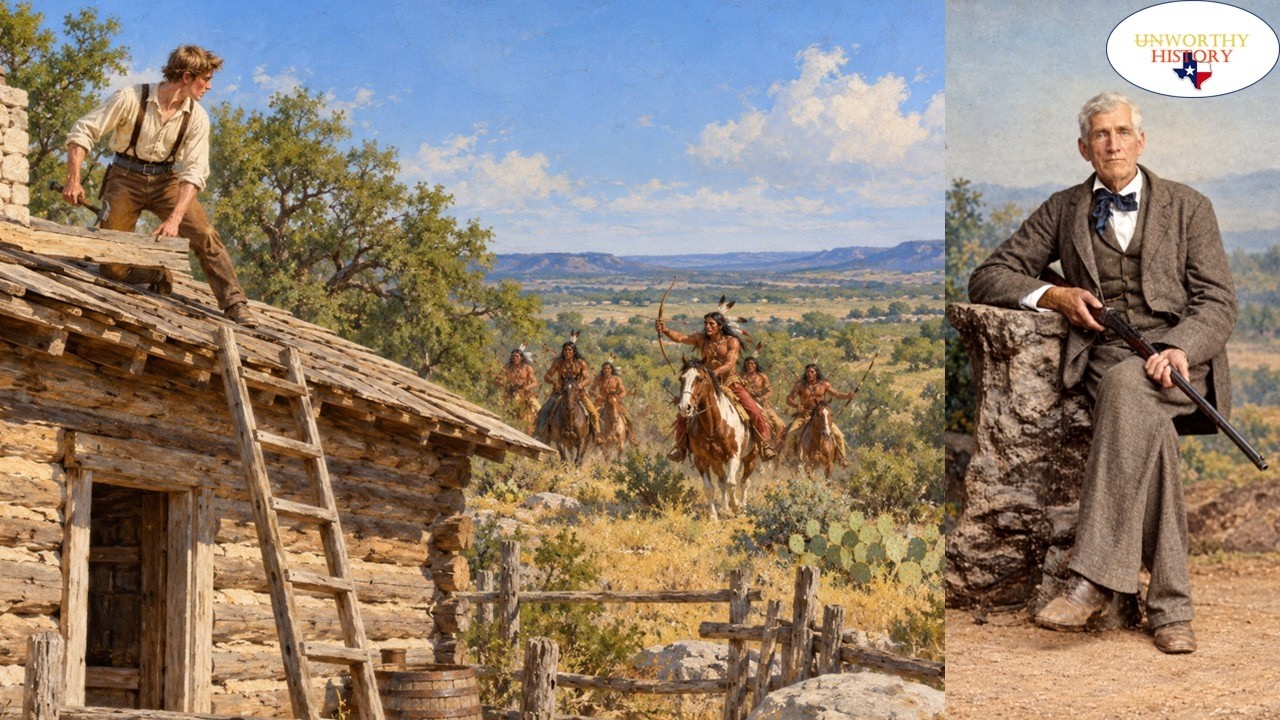 Jack Huffman, born Jacob Hoffman in 1838 in the Prussian town of Hilbringen near the Saar River, had arrived in Texas in 1845 as part of Henri Castro’s German colonization program. The voyage had been harrowing, with storms driving the ship 300 miles back toward the chalk cliffs of England, where they spent ten days making repairs. The young boy had become so skilled at climbing ropes and rigging that the captain begged his parents to let him stay aboard, but they refused, and instead of a life at sea, Jack was destined for a frontier where survival depended on the speed of a reload and the accuracy of a shot.
The family landed at Port Lavaca and were met by Prince Solms, who wore a military uniform and carried a sword, amusing himself and the settlers by killing venomous spiders with the blade as they traveled inland. The wagons were covered with raw hides instead of canvas, and after repeated soakings in rain, they emitted a stench so foul that Mrs. Huffman wept and wished she had never left Germany.
When they finally reached Castroville, the elder Huffman had just five dollars to his name, which he used to buy provisions and plant corn on a small plot three miles above town, where he traded with the 500 Comanche who camped nearby on the Medina River.
For a time, there was peace. The Treaty of Tehuacana Creek had been signed in 1844 between the Republic of Texas and the Comanche, Caddo, Waco, and Tawakoni tribes, and in 1847, John Meusebach had negotiated a separate treaty with the Penateka Comanche on behalf of the German settlers living between the Llano and Colorado rivers. But treaties on the frontier were written in ink and easily washed away in blood, and by 1852, the Comanche were again raiding homesteads with a fury that terrified the scattered German settlements.
John Huffman had been building his home at the foot of the mountains on the Medina River, in an exposed location that made him vulnerable. A man named Dan Turner was helping him with the construction and had gone to the river bottom to fetch an armful of boards when the Comanche appeared. Turner saw the Indians attack John, saw him fall after being struck by a second arrow to the temple, and fled toward the Haby settlements across the river.
The water was high from recent rains, and Turner could not swim, but he plunged in anyway, nearly drowning and losing his rifle in the process. He survived by grabbing a cypress branch and climbing out of the water, then spent two days and nights waiting for the river to recede before fashioning a rope from his torn clothing and pulling himself across to safety.
When Turner finally reached the settlements and told his story, a group of men set out to check on John, who was known to come home on Sundays. They found his body where it had fallen, stripped and scalped, the fine rifle and the mule gone. They carried the corpse back to Castroville for burial, and days later, the mule escaped from the Comanche and returned home on its own, a ghost from a massacre that had already changed the course of a young boy’s life.
Jack Huffman had been working as a ranch hand for Dr. Behr, and in the aftermath of his brother’s murder, he began to hunt. He was still a boy of 15 when he rode out one day to chase wild mustangs and stumbled upon two Comanche warriors lying asleep in the grass, their bows and arrows beside them.
He thought about shooting one, but his muzzle-loading rifle held only a single shot, and he knew the other Indian would likely kill him with arrows before he could escape. He retreated quietly and rode to Castroville for help, but along the way, he found Dr. Behr’s horses and drove them back to safety, fearing the Comanche would steal them.
The alarm bell rang, and four men mounted up with Jack: Chipman, Reinhart, Schwartz, and Turby, along with Tom Alder. They rode back to the spot where Jack had seen the Indians, and when they arrived, the warriors were still lying in the grass. Jack raised his hand to point out the location, and the Comanche saw the gesture, leaped to their feet, and sprinted toward a dense thicket about 200 yards away.
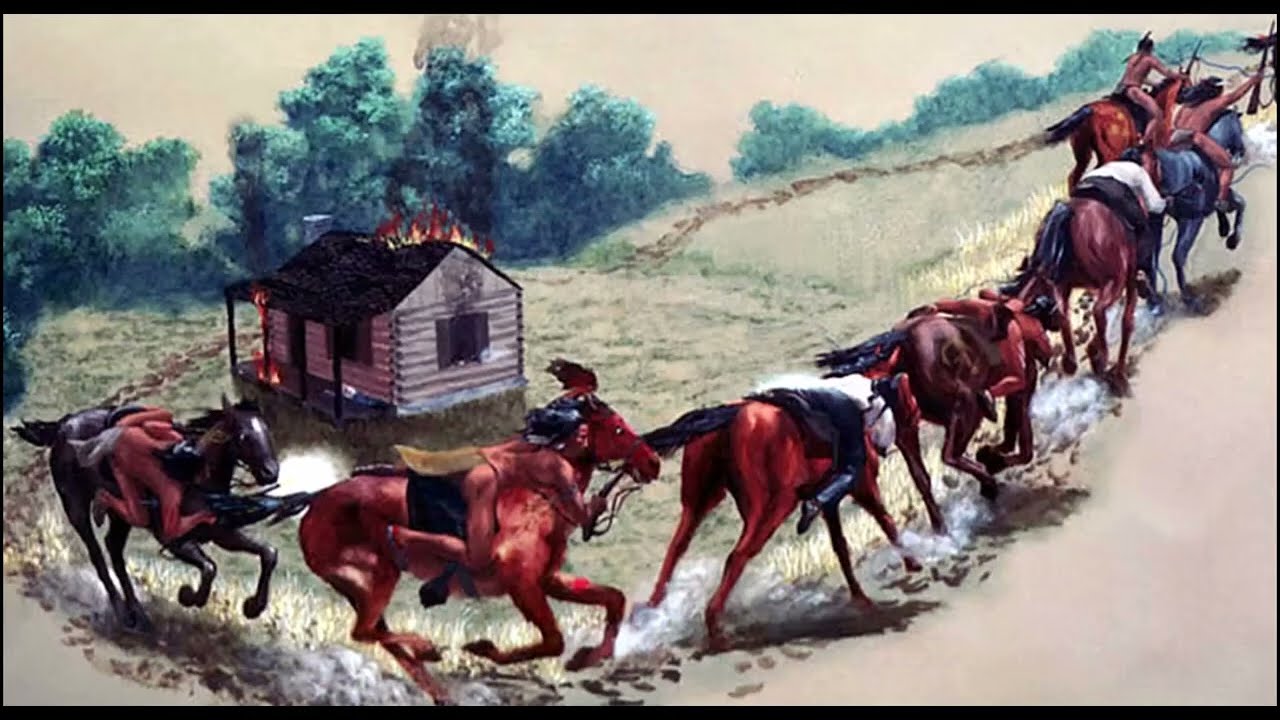 The chase was on, and the men fired their rifles, all except Jack and Chipman, who was a Mormon and seemed hesitant to take a life.
“Jack, you shoot them and I’ll cut them off from the woods,” Chipman said, and the young Huffman understood the value of his single bullet. He dismounted for better aim, fired, and hit one of the Indians, who stumbled but kept running with a strange and terrible sound. Chipman tried to intercept the warriors but was struck by two arrows, minor wounds that nonetheless dampened his enthusiasm for the fight.
He fired at one Indian and missed.
Jack was reloading as fast as he could, and once his rifle was ready, he fired again at the wounded Indian, this time killing him. The warrior fell face-first into a thorn bush. The other men, their guns empty, watched the battle unfold as the boy fought alone.
Jack shouted for someone to catch his horse, which had spooked and was galloping across the prairie, and then he began reloading for a third shot. He yelled at Schwartz to attack the other Indian, who was about to reach the woods, and to shoot him with his small revolver.
“The pistol is no good,” Schwartz said. “I’ve tried it before and it won’t fire.”
“Then don’t let him out of your sight until I get my rifle loaded,” Jack shouted back.
Schwartz chased the Indian but soon tripped over a large rattlesnake and retreated, telling Jack, “I saw the biggest snake I’ve ever seen in my life.”
“Let the snake go to hell and follow the Indian,” Jack replied.
 Schwartz pursued again, but as he passed under a tree, the Indian fired two arrows at him with lightning speed. They would have struck his body had they not hit a small branch first and deflected upward. Jack arrived and fired, hitting the Indian, but the warrior made it into the thicket and disappeared.
The white men regrouped, one of them leading Jack’s horse, and they returned to the dead Indian, taking his bow, arrows, and other possessions before heading back to town, where the gathered crowd looked at young Jacob as a hero.
The next morning, a group returned to the scene and searched for the other Indian but found only his deerskin pants stained with blood, proof that he had been wounded. Days later, Captain Beck from San Antonio came to buy cattle and, while riding through the brush near the fight, found the body of the second Indian not far from where Jack had last seen him. He brought the warrior’s bow, arrows, and rope back to Castroville.
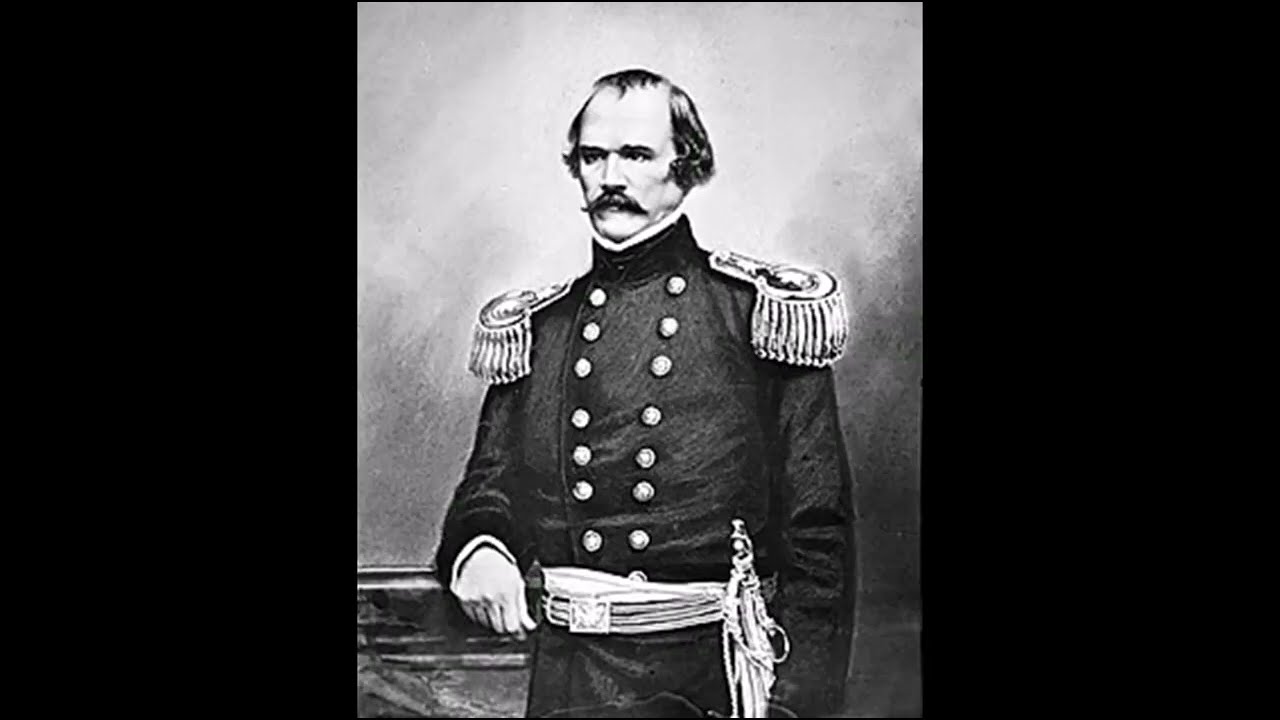
Jack went on many scouting expeditions after that, serving as a guide and tracker for soldiers from San Antonio, but he found the troops slow and their sergeants unwilling to capture Indians, preferring to stop at farms for milk. His second major battle came during a full moon, when he found a dead cow in a place called Government Canyon, named after General Albert Sidney Johnston, who had cut a government road through it toward Fredericksburg. The cow had been recently killed by Indians, as Jack could tell from their tracks, and he hurried to his farm at the Hollows and told his neighbors to tie up their horses and come to his house at dawn for a campaign to hunt the raiders.
Everyone arrived on time, and the group set out: Jack Huffman, John Green, Frank Hoebner, Christian Avis, John Huffman Jr. , Ed Gallagher, Chris Schuhardt, and Garland Odum. They tracked the Indians quickly and caught up with them at four in the afternoon.
When the warriors saw the white men, they stopped on the side of a hill 400 yards away and prepared to fight. Huffman and Green led the charge, advancing to within 80 yards before dismounting and opening fire, expecting the others to join them. But the rest of the men stopped prematurely and began shooting from a distance.
The Indians saw this advantage and charged, screaming and firing at close range. Green was soon badly wounded, his arm shattered by a bullet while he was loading his rifle, and he could do nothing more. Huffman was left to face them alone, and to his frustration, his rifle jammed twice when he had a clear shot at the advancing warrior.
But then the other men began to close in, and one of them ran to Huffman with a rifle. Jack took it and aimed at the face of one Indian, but it didn’t fire. As the warrior turned to flee, Jack aimed at his back, but again the gun failed.
It wasn’t loaded.
 Green lay beside a tree, and the Indians launched another attack, thinking they had beaten the whites. But this time, Huffman’s rifle began to work, and he fired with fury, his Henry rifle spitting rapid shots. He soon dropped one warrior, wounded, but the man got up and ran away.
The initial jamming had been caused by an empty cartridge case stuck in the barrel, and once Jack removed it, the rifle worked perfectly. Schuhardt and Odum reached his side and opened fire, and the Indians fled after four more of them were hit, confirmed by the sight of them throwing away their belongings as bullets struck home.
There were two Indian women in the group, and when the fighting started, they screamed like pigs and fled over the mountain on two horses, one belonging to old man Gilles and the other to Torres, a Mexican. Jack fired two shots at them as they fled up the hill but failed to bring either down. The warriors had fought with guns rather than bows and had fired some accurate shots despite the chaos.
Only ten Indians were seen, including the two women, and they left behind all 63 of their horses, some still saddled.
Green was weak and very sick, but he came to Huffman during the fight and asked him to load his rifle. When Jack turned to do so, he discovered the man had left his gun at the tree where he had been leaning. One Indian left behind a horse with a saddle and canteen, and Huffman grabbed it and led it as they began to leave the area, with Green riding behind him, very ill.
Suddenly, Green said, “Catch me,” and began to fall from his horse. Jack caught him and lowered him gently to the ground, where he lay and asked for water. Jack told him there was no water except what was on the Indian’s horse, and it might be poisoned.
“I don’t care if it is,” the wounded man said. “I’ll die anyway if I don’t get some water.”
The water was given to him, and he soon revived, as it turned out to be good. The other men were gathering the horses and bringing them down from the mountain, with some Indians still in sight. Green recovered from his wound but was later killed by a Mexican.
Jack Huffman continued to live on the frontier, always vigilant, a model of the frontier man. He lived 20 miles west of San Antonio, where he owned a beautiful farm. He killed many mustangs for their fat to grease wagons and ropes, and he knew Big Foot Wallace well, often hunting with him and his famous dog, Rock.
When the dog died, Wallace buried him and covered the grave with wild animal skins. Huffman married Miss Caroline Ernst, also a Castro colonist, who had witnessed many harrowing scenes, including watching a group of Indians gather horses near their farm while her husband was away.
The story of Jack Huffman is one of a boy forced to grow up too fast, leading counterattacks against the Comanche after they murdered his brother and other settlers. Even at just 15 years old, he was the one the others relied on, the one who charged forward when others held back, the one who reloaded and fired while his comrades watched with empty guns. He was a hunter of men before he was a man himself, and his name deserves to be remembered alongside the other forgotten heroes of the Texas frontier, those who carved civilization out of a wilderness that was soaked in blood.
