The peace that settlers along the western Virginia frontier believed they had secured with the end of the French and Indian War was shattered in 1764 by a wave of brutal and coordinated attacks led by Shawnee and Delaware warriors, leaving a trail of scalped bodies, kidnapped families, and burned homesteads in their wake. Acting under the broader influence of Pontiac’s Rebellion, these war parties descended from the Ohio country with a ferocity that stunned communities still reeling from years of conflict, proving that the Treaty of Paris meant nothing to tribes determined to resist English encroachment on their lands.
Eyewitness accounts and historical records from the period detail a campaign of terror designed to drive settlers back across the Alleghenies. In one of the first major incidents of the year, a party of eighteen Delaware Indians crossed the mountains and struck at the South Branch settlements near Furman’s Fort. William Furman and Nimrod Ashby, who had left the safety of the fort to observe a deer lick in the Jersey mountains, were discovered and killed without warning.
 The war party then split into two groups, one of eight moving toward the Cedar Creek settlements and another of ten attacking the neighborhood near Major John White’s residence, where a stockade had been hastily erected as a refuge for terrified families.
The assault on the stockade was swift and merciless. David Jones and his wife were killed outright, along with several members of the Thomas family, while one of the Thomas daughters was carried off into captivity. An elderly man named Lloyd, his wife, and several of his children were slaughtered in the initial onslaught.
Thirteen-year-old Esther Lloyd, struck by three tomahawk blows to the head and scalped, was left for dead among the bodies of her relatives, a testament to the savagery of the attack. Henry Clawson and two of his sons were also killed, but the fate of his wife and daughters was perhaps even more harrowing, as they were marched away into the wilderness.
The captives were forced to endure unimaginable cruelty during their forced march toward the Ohio River. When the youngest daughter of Henry Clawson, a child of only two years old, slowed the group’s progress, her captors dashed her brains out against a tree in full view of her agonized parents. The Indians eventually attempted to cross the Wappatomaka River, but the waters were high and treacherous.
A party of white men firing their guns at a nearby ford spooked the warriors, who hurried across the river, assisting all their female prisoners except Mrs. Thomas, who was left to struggle against the current alone. She was swept downstream but managed to cling to a rock and save herself, a rare moment of survival in a sea of tragedy.
The second party of eight Indians committed further murders on Cedar Creek, likely killing a Mr. Lyle and a Mr. Butler, and took two female prisoners.
Their rampage was cut short when pursuing white men overtook them in the South Branch Mountain, firing upon the warriors and killing one. The surviving Indians fled, abandoning their guns, plunder, and the two prisoners. The pattern of raid and pursuit repeated itself throughout the year, with settlers often arriving too late to save their neighbors but just in time to recover the dead and the stolen property.
Another brutal incident unfolded within two miles of Strasburg, where a party of eight Indians, accompanied by a white man named Abraham Mitchell, killed George Miller, his wife, and two children. The same day, they killed John Dellinger and took his wife and her infant child prisoner. As the group crossed Sandy Ridge west of Capon River, the infant’s cries proved too much of a risk for the warriors, who beat the child’s brains out against a tree.
A party of white men again pursued the raiders, overtaking them in the South Branch mountains and killing one warrior, forcing the others to flee and abandon their captives.
The terror continued into 1765, with attacks occurring even closer to established settlements. In the neighborhood of Woodstock, an old man named George Sigler was killed while trying to reach the safety of the fort with a group of women and children. Shortly before this, two Indians were discovered lurking near Mill Creek, prompting Matthias Painter, John Painter, and William Moore to arm themselves and give chase.
 The pursuit led them to a large fallen pine tree, where an Indian rose up and fired, the ball grazing John Painter’s temple. Moore and Painter returned fire, hitting one warrior, but the second fled. When the white men returned to the fallen pine, the supposedly dead Indian had vanished, taking with him both guns and a large pack of skins.
The wounded warrior was tracked to a sinkhole, where he put up a desperate defense. Using a self-priming musket and a mouthful of bullets, he fired at least thirty times before Moore finally shot him through the head. The dispute over who had inflicted the first wound was settled in Moore’s favor, and he received the bounty for the Indian scalp.
The warrior who escaped, however, continued his reign of terror, capturing a young woman on horseback near New Market. After traveling about twenty miles, the captive collapsed from exhaustion, and the savage beat her to death with a heavy pine knot. Her screams were heard by people living over a mile away, who found her stripped and bleeding the next day.
The brutality extended to even the most isolated settlements. The three Eckerly brothers, members of the Dunker sect, had lived peacefully on Cheat River for years, but their quiet existence was violently ended. When the elder brother returned from a trading expedition with an escort from Fort Pleasant, he found only the half-consumed bodies of his siblings, the cabin destroyed and the destroyer gone.
The suspicion that the Dunkers were allied with the Indians had delayed his return, and the delay proved fatal for his brothers.
On the Monongahela, near the mouth of Decker’s Creek, a party of Delawares cut off several settlers, including Thomas Decker, for whom the creek was named. Only two or three settlers escaped, and one made his way to Redstone Old Fort to raise the alarm. Colonel Gibson, commanding at Fort Pitt, led a rapid pursuit down the river but failed to intercept the main war party.
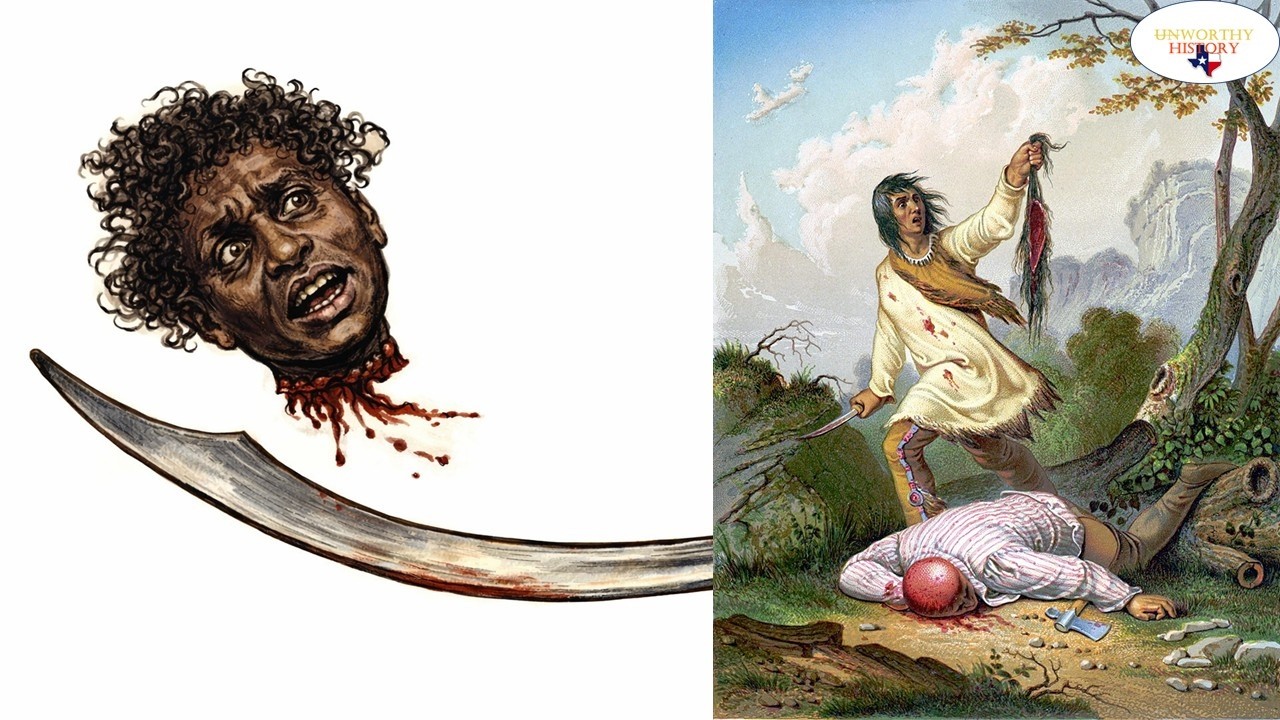
Instead, he stumbled upon a small group of Mingoes encamped on Cross Creek, commanded by a chief named Little Eagle. The chief fired at Gibson, the ball passing through his coat without injury. Gibson sprang upon his foe and, with one sweep of his sword, severed the chief’s head from his body.
This single act of decapitation would have profound consequences for the perception of Virginian fighters. The surviving Mingoes fled, spreading the word that the white captain had cut off the head of their chief with a long knife. From that moment, the term “Long Knives” became the dreaded moniker for Virginians among the western tribes, a name that persisted for generations.
Captain Gibson himself was forever after known as the “Long Knife Warrior,” a title that reflected both the fear and respect he commanded on the frontier.
 The summer of 1761 had already seen a devastating eruption of violence on the James River settlements, involving about fifty Shawnee warriors. On Purgatory Creek, they killed Thomas Perry, Joseph Dennis, and a child, taking Dennis’s wife prisoner. They then moved to the house of Robert Rennick, capturing his wife and five children while Rennick was absent.
Rennick, however, was not safe for long. The warriors found him at a neighbor’s house, where they killed him and a man named Thomas Smith, taking Smith’s wife and a girl named Sally Jew as captives.
The attack was witnessed by three men, George Matthews and two brothers named Maxwell, who rode up to the house and saw the dead bodies in the yard. They wheeled their horses and fled, narrowly escaping a volley of gunfire that wounded one of the Maxwells in the arm. Mrs.
Rennick later recounted that four Indians had taken aim at the approaching riders, but the sudden turn of the horses saved their lives. A party of twenty Indians was dispatched with the prisoners for the Ohio, while the remainder continued their depredations deeper into the country.
A force of twenty-two men, led by Matthews, set out in pursuit and soon overtook the warriors, engaging in a severe fight that forced the Indians to give way. The intense darkness of the night made further pursuit impossible, and the Indians escaped with their prisoners and booty. Nine Indians and three whites were killed in the engagements.
Of the captives, Mrs. Rennick and two of her sons were ransomed in 1766, but one son died in captivity, another intermarried with the Indians and became a chief, and a third settled on the Scioto near Chillicothe, founding an extensive family. Hannah Dennis managed to escape after two years of captivity.
Perhaps the most treacherous attacks of the period occurred in 1763, when two Greenbrier settlements, Muddy Creek and Big Levels, were entirely wiped out. A party of fifty to sixty Shawnees, believed to be headed by the infamous chief Cornstalk, entered the region under the guise of friendship. With no recent hostilities in the area, the inhabitants welcomed the warriors warmly, offering them hospitality and provisions.
The Indians feasted on elk provided by Archibald Clendenin, who had just brought in three fine animals. But the peace was a deadly ruse.
At Clendenin’s blockhouse, a decrepit old woman with an ulcerated limb asked an Indian if he could cure her. He replied “Yes” and immediately sank his tomahawk into her head. This was the signal for a general massacre.
 Every man in the house was put to death, and the cries of the women and children alerted a man in the yard, who escaped to spread the alarm. The settlers at Jackson’s River were loath to believe the report, as the Indians had been so peaceable, but they were soon convinced when the warriors appeared and massacred fleeing families without mercy.
Mrs. Clendenin proved herself a woman of extraordinary courage. Indignant at the treachery, she abused the Indians from the chief down in unmeasured terms.
The savages attempted to intimidate her by flapping the bloody scalp of her dead husband against her face and twirling their tomahawks above her head, but she continued to speak her mind. On the day after her capture, she saw an opportunity to escape, and giving her infant to another woman, she slipped into a thicket. The child began to cry, and an Indian, swearing he would bring the cow to the calf, took the infant by the heels and dashed out its brains against a tree.
Mrs. Clendenin returned to her desolate home and secured the remains of her husband from wild animals.
In October 1764, a party of forty to fifty Mingo and Delaware Indians crossed the Ohio River and ascended the Great Sandy, coming over on New River. They separated into two parties, one heading toward Roanoke and Catawba, the other toward Jackson’s River. Their trail was discovered by three trappers, Swope, Pack, and Pittman, who split up to warn the settlements.
But the Indians moved faster than the warning. The party that came to Jackson’s River traveled down Dunlap’s Creek and crossed the James River above Fort Young unnoticed, killing William Carpenter near his house and taking his son and two sons of Mr. Brown as prisoners.
Captain Paul, commanding Fort Dinwiddie, immediately started with twenty men in pursuit. On Indian Creek, they met Pittman almost exhausted. The pursuit was kept up, but the Indians escaped.
As Paul and his men returned, they accidentally encountered the other party of Indians, who had been to Catawba and committed murders there. The warriors were discovered about midnight in camps on the north bank of New River, lying around a small fire. Paul’s men, not knowing there were captives among them, fired into the camp, killing three Indians and wounding several others.
One wounded warrior drowned himself to preserve his scalp.
Several captives were released, including a Mrs. Gunn, an Englishwoman who had known Captain Paul years before. Recognizing his voice, she called him by name, just as one of his men was about to tomahawk her.
She made no resistance, and when asked why, she replied that her husband was murdered, her children slain, and her parents dead. She had no relation in America and no wishes, hopes, or fears. “I would not have risen to my feet to save my life,” she said, a chilling testament to the deadening effect of these horrors on the human spirit.
