The streets of Tehran were still echoing with the chants of revolution when the first brutal cracks of the whip signaled a new era of state-sanctioned terror. In the spring of 1979, a wave of public floggings swept across Iran, transforming the nation’s squares and marketplaces into theaters of punishment. The euphoria of the Islamic Revolution, which had promised justice and liberation, was rapidly curdling into a nightmare of religious orthodoxy, with women bearing the immediate and violent brunt of the new order.
The transformation was swift and devastating. Just weeks after Ayatollah Ruhollah Khomeini returned from exile on February 1st, 1979, the legal and social framework that had granted Iranian women unprecedented rights was systematically dismantled. The Family Protection Law, which had raised the marriage age to 18 and allowed women to initiate divorce, was scrapped.
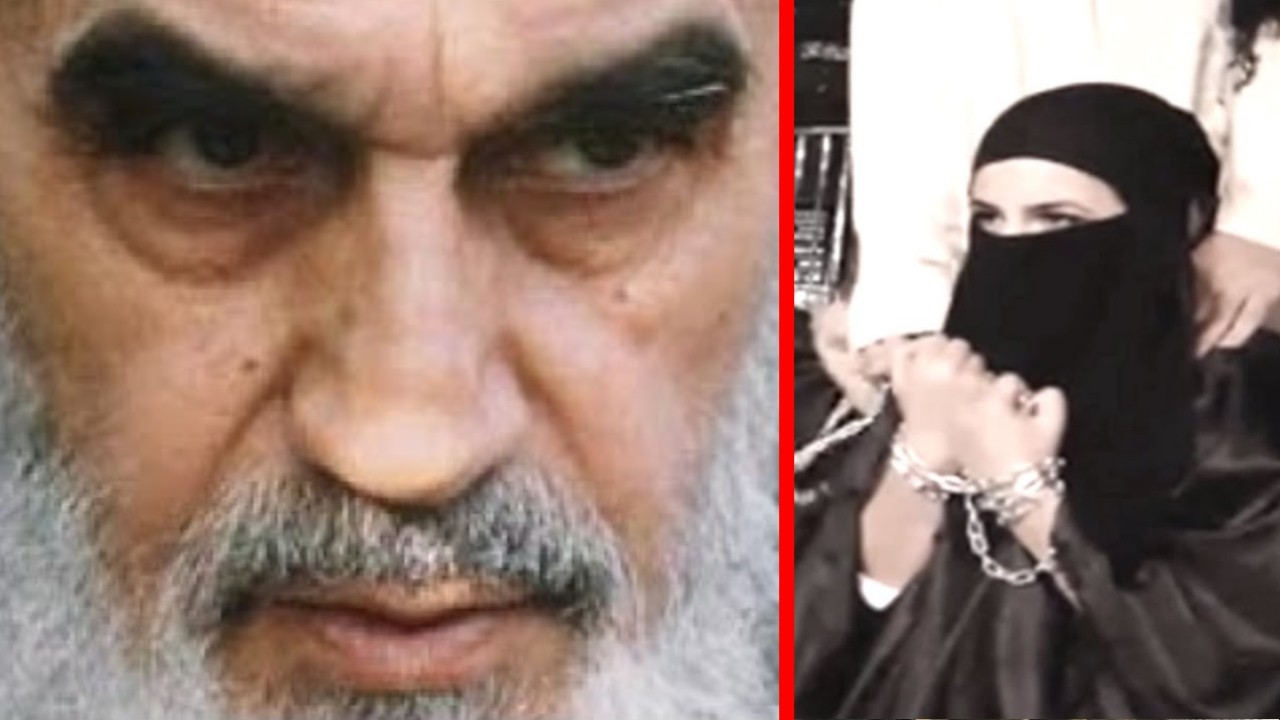 The minimum marriage age for girls was shockingly lowered to 9. Women were purged from judgeships and barred from high political office. The promise of a new era of freedom was exposed as a hollow vessel, quickly refilled with the venom of patriarchal control that viewed women not as citizens, but as vessels of honor requiring strict regulation.
On March 7th, 1979, Khomeini issued a decree that would become the cornerstone of this new oppression: the mandatory hijab for all women working in government offices. He described uncovered hair as a form of nakedness, framing his command as a moral imperative. The impact was immediate and chilling.
Government buildings turned women away at the door, and the state’s machinery of enforcement began to grind into motion. The announcement shattered the illusion that religious dress would remain a personal choice, igniting a firestorm of resistance that would define the coming decades.
The very next day, March 8th, 1979, International Women’s Day, thousands of women flooded the streets of Tehran and Qom in a massive, defiant protest. They marched without hijab, carrying banners and shouting slogans against the decree. The protests were met with violence from pro-Khomeini militiamen, who fired warning shots and hurled threats.
Yet, the women held their ground for six relentless days, from March 8th to March 14th. This was the first major public protest against the new Islamic Republic, a courageous stand that momentarily forced a suspension of the rule. But the pause was a tactical retreat, not a change of heart.
Once the protests subsided, the regime regrouped with a vengeance. By mid-1980, enforcement returned with brutal force, and the focus shifted from debate to punishment. Revolutionary courts and Islamic committees were established across the country, wielding immense power with little oversight.
Their mandate was to police morality, and women were their primary targets. Behavior that had been legal just months earlier—being seen with a man outside marriage, attending a mixed gathering, or showing a strand of hair—now resulted in arrest and public punishment.
 The first documented cases of public flogging were reported just 11 days after the hijab decree. On March 19th, 1979, the newspaper Kayhan reported a case from Rudsar, where a married woman and a man were sentenced to 50 and 100 lashes respectively for an “illegitimate relationship.” The punishment was carried out publicly in the street, with a mother of three whipped before a crowd of onlookers.
Another report from Isfahan detailed a triple flogging on March 8th, where two men and a woman were each given 100 lashes for alleged affairs. These early cases sent a clear message: public humiliation was now a tool of state control.
The Revolutionary Guards and Islamic Committees were given free rein to patrol neighborhoods and public spaces. They arrested men and women for drinking alcohol, having relationships, or showing signs of Western culture. Young couples were beaten for holding hands.
The threat of violence became a constant companion for women, who learned to navigate their cities with a new, paralyzing fear. The sound of the whip cracking in a public square became a terrifying and common noise, a sonic symbol of the regime’s absolute power over the body and spirit.
By 1981, the hijab mandate was expanded beyond government buildings to all public spaces. Checkpoints appeared on streets, where officers would stop women to inspect their clothing. A woman’s ability to move freely through her own city was now contingent on her compliance with the state’s dress code.
In 1983, the consequences were codified into law: a woman whose hair was uncovered could be sentenced to up to 74 lashes. The state also revived severe Islamic punishments for sexual behavior, with charges of adultery and “moral corruption” carrying sentences of hundreds of lashes, and in some cases, execution.
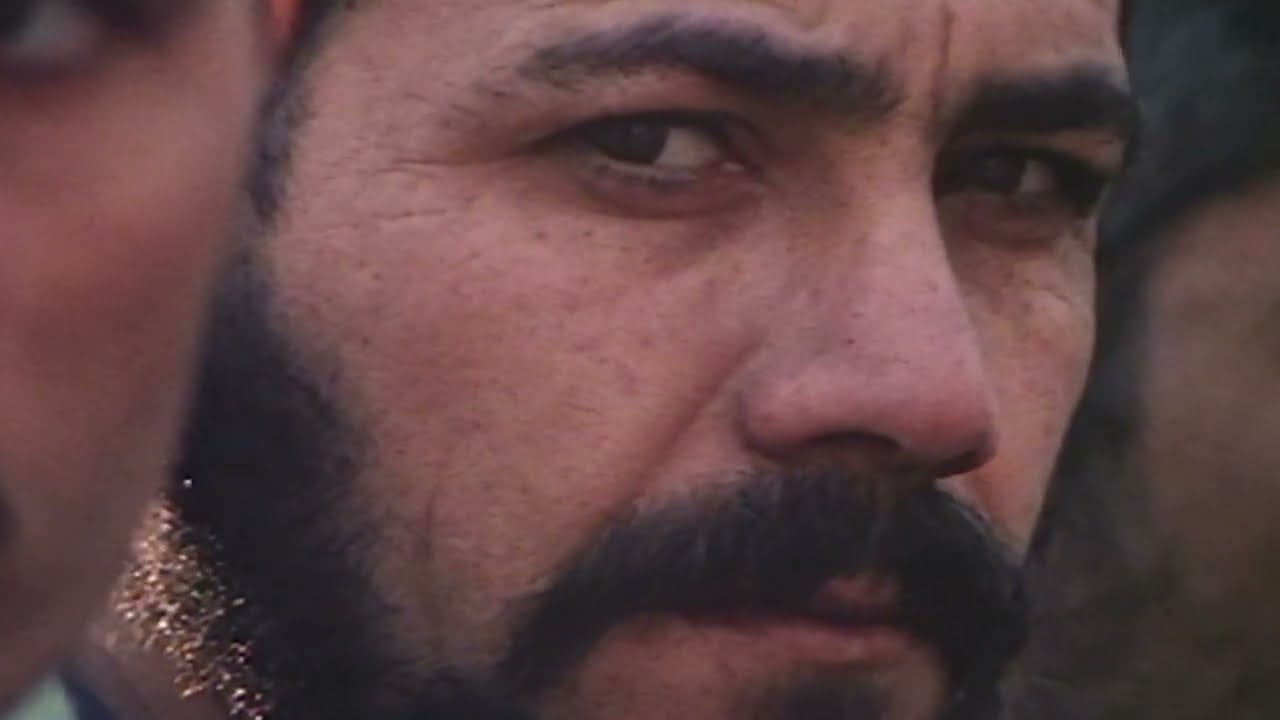 The legal system that delivered these punishments was fast and unforgiving. Revolutionary judges, personally appointed by Khomeini, issued sentences within days of an arrest, often based on confessions extracted under torture. There was little investigation and almost no defense.
An accusation was enough to seal a person’s fate. The regime argued that harsh punishment was necessary to cleanse society, and public executions and floggings became a means of terrorizing the population into submission. The psychological scars left by seeing a neighbor whipped or a relative humiliated in public were deep and lasting.
By the mid-1980s, the enforcement apparatus became even more visible with the rise of the morality police, officially known as the Guidance Patrol. They operated openly in cities, often in plain clothes, making them harder to identify and more frightening. Women were stopped on sidewalks and in marketplaces, their headscarves and coats scrutinized.
A strand of hair or a coat deemed too short could lead to immediate detention. Human rights reports describe women being slapped, stripped, beaten, and dragged into police vans without explanation. Some were seized with catch poles, metal tools designed to grab a person by the neck, a humiliating and terrifying experience.
The education system was reshaped to enforce the new ideology, with girls segregated from boys starting in primary school. Public beaches and parks were segregated or closed to mixed groups. The state’s control extended into the most private aspects of life, turning ordinary social behavior into criminal acts.
In 1986, one of the most infamous cases of the era took place in the village of Koupâyé. A woman named Soraya Manutchehri was accused of adultery by her husband, who wanted to marry a teenage girl. She was sentenced to death by stoning and buried up to her waist in the ground.
 A crowd of villagers, including her own family, threw stones at her until she died. The execution, later documented in the book and film The Stoning of Soraya M. , became a global symbol of the regime’s brutality.
Khomeini defended these laws as just and necessary, claiming they protected families and purified society. But inside homes, the reality was one of private grief and constant fear. Mothers cried in secret, and parents kept daughters home from school out of fear of the patrols.
The Iran-Iraq War had already torn the country apart, and the political purges had filled prisons and execution grounds. For women, daily life had become a careful exercise in avoiding punishment, a survival strategy that required constant vigilance and self-censorship.
When Khomeini died in June 1989, millions mourned publicly, but privately, many reflected on the immense cost of his rule. An entire generation had grown up knowing nothing but these strict laws. The system he built did not die with him; it continued almost unchanged.
The dress codes and morality laws he introduced remained part of Iranian law for decades. In the years after his death, human rights groups documented that thousands of women were still being arrested simply for their clothing. The methods were the same: slaps, beatings, catch poles, and prison sentences.
The punishments were no longer treated as emergencies but as a permanent feature of state control.
The legacy of Khomeini’s campaigns is a culture of fear embedded in the fabric of daily life. The public shaming and violence did not just punish individuals; they damaged trust within families and communities. The laws turned women’s bodies into symbols of obedience and tools of political power.
For many Iranian women, the shadow of that period never fully lifted. It still follows them, step by step, through the streets, a constant reminder of the terrifying cost of rebellion in a system built on the spectacle of punishment.
