For three decades, Kathleen Madigan has been one of the most successful stand-up comedians in America, a road warrior who has headlined thousands of shows and released multiple specials on Netflix and Amazon Prime. But the story of how she got there—and the life she left behind to pursue it—has never been fully told. Until now.
In 1990, Kathleen Madigan received an offer that would change the course of her entire life. The Funny Bone Comedy Club chain wanted to book her for approximately 30 weeks of performances with pay sufficient to make a living telling jokes. At the time, Kathleen was still a reporter in Missouri.
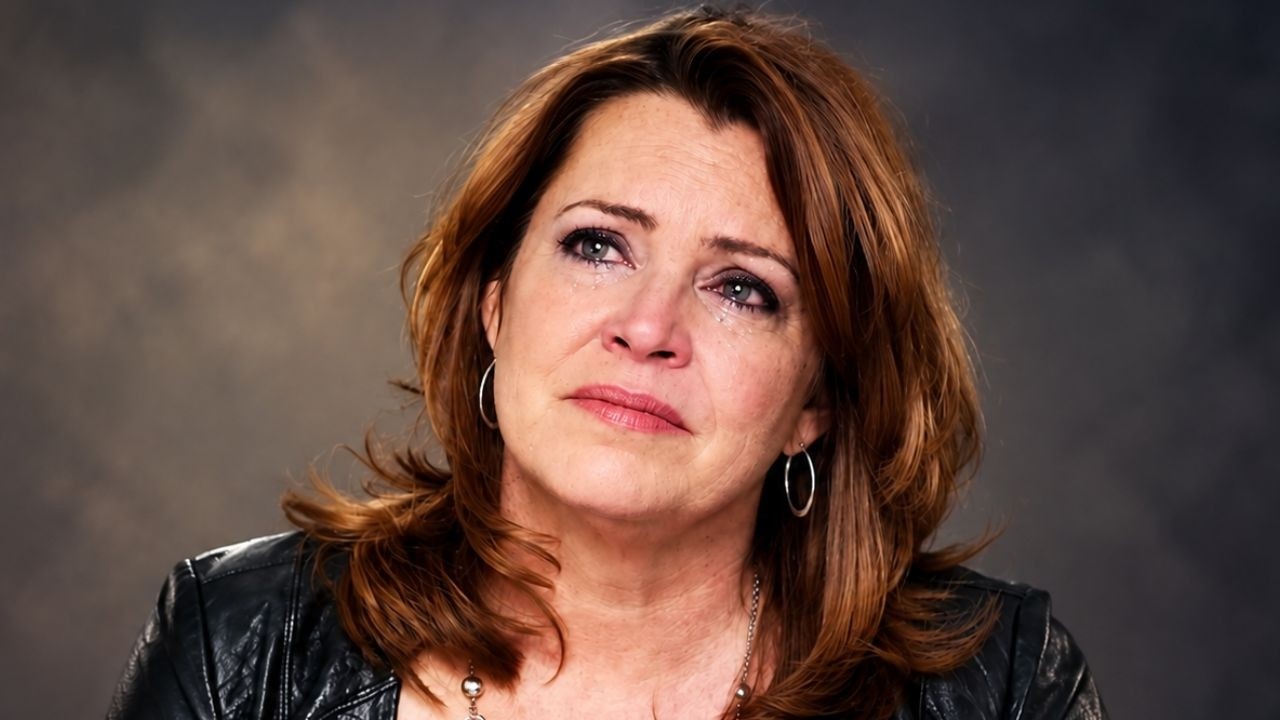 During the day, she wrote stories for a local newspaper, and at night, she drove to comedy clubs to perform at open mic nights. Stand-up comedy was only a side job, while journalism was the profession she had been formally trained for.
But instead of choosing the security of the newsroom, Kathleen quit her job, picked up a microphone, and stepped onto a path whose destination even she could not foresee. It was not a romantic decision at the time. A career in stand-up comedy promised neither fame nor a stable future.
All Kathleen had were a few dozen weeks of scheduled performances and the belief that she could make audiences laugh. If she failed, she could very well lose the career she had spent four years in college preparing for.
Yet Kathleen chose to move forward. From that moment on, her life took an entirely different direction. Few could have imagined that behind what seemed like such an ordinary decision lay a journey spanning more than three decades—one that would take her to stages of every size across the United States, transform stories about her family into artistic material, lead her to make choices that differed from the crowd, and build a career founded almost entirely on perseverance.
What made a young woman raised in a large Catholic family in Missouri willing to give up a secure job to pursue such an uncertain profession? And how did that woman manage to remain devoted to nothing more than a single microphone for over 30 years without ever losing her audience?
Kathleen Madigan was born on September 30th, 1965, in Florissant, Missouri, into an Irish Catholic family with seven children. Her father, Jack Madigan, was a lawyer before becoming a judge, while her mother, Vicky Madigan, worked as a nurse. No one in the family pursued a career in the arts, and no one imagined that one of their children would one day make a living by standing on stage telling jokes.
More than anything else, Kathleen’s parents valued education, hard work, and responsibility to the family. Those values stayed with her from an early age and remained virtually unchanged throughout her life. Most of Kathleen’s childhood was spent in Florissant, a suburb of St.
Louis, although her family also lived for periods in House Springs and the Lake of the Ozarks area. These were all communities deeply rooted in the culture of the American Midwest, where neighbors knew one another, and life moved at a much slower pace than in big cities.
Kathleen grew up surrounded by ordinary, straightforward, and practical people. Years later, after becoming a stand-up comedian, she would often draw inspiration from the very kinds of people she had known since childhood. To Kathleen, the familiar moments of everyday life were always more interesting than any story that had been embellished.
As one of seven siblings, Kathleen quickly became accustomed to sharing everything from her parents’ attention to the space in a house that was always filled with voices and laughter. Family meals often came with lively debates, playful teasing, and one story after another. If a child wanted to be heard, they had to learn how to speak at the right moment and be interesting enough not to be interrupted.
Kathleen never thought of it as a lesson, but many years later, she admitted that her family had been the greatest source of inspiration for most of her material.
Among the people who influenced Kathleen most deeply, her father was always the first to be mentioned. Jack Madigan was a strict man who placed great importance on discipline and a strong work ethic. He expected his children to take responsibility for their own choices and rarely accepted complaints.
It was this style of parenting that helped Kathleen develop the habits of hard work and independence from an early age. When she began experimenting with stand-up comedy years later, her father did not object. Instead, he encouraged his daughter to see just how far she could go.
If her father instilled discipline, her mother was the one who created the family’s joyful atmosphere. As a nurse, Vicky Madigan was accustomed to handling every situation with calmness. But in everyday life, she was well known for her sense of humor, her frank personality, and her sometimes unpredictable nature.
Kathleen has often said that her mother could make the entire family burst into laughter with nothing more than a single remark or an unexpected action.
For the first eight years of her education, Kathleen attended private Catholic schools. The disciplined learning environment with its many strict rules was completely different from the lively atmosphere at home. She later joked that students there always had to think very carefully before opening their mouths.
Even so, those years helped Kathleen develop the habit of observing people and paying attention to life’s smallest details.
Outside the classroom, Kathleen also had a deep love for sports. She played volleyball, competed in track and field, and especially enjoyed basketball. In 1978, when she was about 13 years old and stood only about 4’5″ (1.
35 meters) tall, Kathleen won the Mid-Missouri Hoops Shoot Championship by making 14 of her 15 shots. She became the shortest person ever to win the competition. The achievement did not open the door to a professional sports career, but it showed that Kathleen had never been afraid to challenge herself in places where others assumed she had no advantage.
Kathleen’s years at McClure North High School also reflected her practical personality quite clearly. While many of her classmates looked forward to prom and extracurricular activities, she chose to work part-time at a steakhouse instead. On some evenings, Kathleen earned as much as about $200 in wages, and she later joked that she cared far more about that income than about going to prom.
Developing a habit of working from a young age helped Kathleen become comfortable earning her own money and never afraid of hard work.
After graduating from high school in 1983, Kathleen enrolled at the University of Missouri–St. Louis before transferring to Southern Illinois University Edwardsville. When talking about her time at the first school, she often joked more about the nearly $7,000 in parking tickets she accumulated than about her academic achievements.
At Southern Illinois University Edwardsville, Kathleen majored in journalism, worked on the student newspaper, and spent time interning with the St. Louis Blues Hockey Club.
At that point, every sign suggested that she would become a journalist after graduation. Yet the path that seemed so clearly laid out was about to take a completely different turn when Kathleen stepped onto the stage of an open mic night for the very first time.
In 1988, after earning her journalism degree, Kathleen Madigan began a career in the very field she had been trained for. She worked for the Suburban Journals newspaper system in the St. Louis area while also holding a position in the publishing department of the Missouri Athletic Club.
For a young woman fresh out of college, it was the kind of stable career path many people hoped for. A clear job, steady income, and a future that could be predicted.
Yet whenever the workday ended, Kathleen’s car would leave the newsroom and head toward comedy clubs around St. Louis. There were no private dressing rooms, no manager, and no audience that had bought tickets just to see her perform.
Kathleen had only a few minutes on stage during open mic nights to test the stories she had just written, listen to the reactions of complete strangers, and then quietly revise every detail after the show. By day, she was a reporter. By night, she was an unknown comedian standing with a microphone in front of small audiences.
That period of constantly traveling back and forth between the newsroom and the stage did not bring her fame overnight. But every performance taught Kathleen one important lesson. Audiences did not laugh because a story had been elaborately crafted.
They laughed because they saw themselves in the most ordinary moments of life.
The turning point came when the Funny Bone Comedy Club chain offered Kathleen a performance contract lasting about 30 weeks with pay that was enough for her to make a living as a comedian. For the first time, stand-up comedy presented itself as a clear career path rather than simply something she did after office hours. Kathleen decided to leave her job at the newspaper and become a full-time stand-up comedian.
Perhaps the day she walked away from the place where she had worked was no different from any other. There were no stage lights, no applause, just a woman carrying a decision whose destination even she did not yet know. But from the day she left the newsroom, Kathleen’s evenings no longer ended at her desk.
They began on the roads leading to comedy clubs, where her journey of more than three decades quietly began.
Leaving journalism also meant that Kathleen Madigan no longer had a steady paycheck to rely on. Beginning in 1991, she officially entered the life of a road comic—one of those comedians who spend most of their time traveling from place to place rather than working in Hollywood or television studios. Her schedule was packed almost every week, taking her from one city to another, from small comedy clubs to larger venues.
There were days when Kathleen spent more hours behind the wheel than she did on stage. One show would end late at night and the next morning she would already be back on the road to make it to the next stop. Budget hotels, parking lots behind comedy clubs, and long stretches of interstate highways gradually became familiar parts of her life.
 It was not the kind of career that brought success after only a few performances.
Every night, Kathleen stood before a completely new audience—people who did not know who she was and had no reason to laugh if her stories were not good enough. Some routines were warmly received the very first time she performed them, while others had to be rewritten again and again before she found the right rhythm. On nights when the laughter came more easily, Kathleen remembered exactly what had connected with the audience.
On nights when the room fell silent, she quietly rewrote her material.
Those seemingly repetitive miles on the road became the place where Kathleen refined her style as a performer. In stand-up comedy, there are no shortcuts. Her reputation was built through hundreds of nights on stage, one carefully polished story at a time, and one laugh accumulated after another over the years.
That persistence gradually began to pay off. Kathleen’s name started appearing on national television programs such as the Tonight Show, Late Show with David Letterman, Late Night with Conan O’Brien, and the radio program The Bob and Tom Show. For a stand-up comedian, even a few minutes on those stages could open the door to millions of viewers and listeners.
After each appearance, the phone brought new invitations to perform in cities Kathleen had never visited before.
What was remarkable was that she did not change her style to fit television. Her stories about family, everyday life, and the perspective of a woman who had grown up in the Midwest remained exactly the same. They were simply reaching a much larger audience.
The year 1996 marked Kathleen’s first major milestone when she won the Funniest Female Stand-Up Comic award at the American Comedy Awards. It was the first time that all those years of tirelessly traveling the road had been recognized with a major honor from the comedy industry. The moment Kathleen’s name was announced on stage represented more than just a personal achievement.
It was also confirmation that the decision she had made years earlier to leave the newsroom and pursue a microphone had truly led her onto the right path.
After spending years quietly moving from one comedy club to another, from that day on, Kathleen Madigan’s name began appearing far more frequently on the posters outside comedy clubs.
After her breakthrough at the American Comedy Awards, Kathleen Madigan found herself facing a choice that many stand-up comedians eventually have to consider. Her growing reputation opened doors to sitcoms, films, and television programs with audiences far larger than those of comedy clubs. But Kathleen was in no hurry to leave the path that had brought her this far.
When the studio lights went out, she packed her bags once again and continued the tours that had already been booked months in advance.
To Kathleen, the live stage remained the place where every story was tested instantly by the audience’s laughter, and it was also where she felt she truly belonged. That decision may have made her road to success slower, but in return, Kathleen gradually built a loyal audience without relying on television’s fleeting popularity.
In 1998, Kathleen released her first comedy album titled Simply Kathleen Madigan. For the first time, the stories that had previously existed only for a few hours on stage were preserved, so audiences could take them home and listen whenever they wanted. Two years later, the album was reissued under the title Live, followed by Shallow Happy Thoughts for the Soul in 2002.
What stood out was not the number of albums she released, but the fact that Kathleen’s material remained remarkably consistent. While many comedians constantly searched for controversial subjects to make a name for themselves, she continued patiently telling stories about her family, her travels, everyday life, and the ordinary people she met along the way. That consistency gave audiences the feeling that they were not simply listening to a performer.
They were catching up with an old friend who always had another story to tell.
As Kathleen’s name became more widely recognized, she also appeared on television programs such as I Love the ’80s, I Love the ’90s, Celebrity Poker Showdown, and many other VH1 entertainment shows. Those appearances helped her reach a younger audience and carried the name Kathleen Madigan beyond the world of traditional comedy clubs. But television was never her ultimate destination.
After every taping, Kathleen returned to her demanding touring schedule, continuing to travel from city to city, just as she had in the early years of her career.
It almost seemed that the more well-known she became, the more determined she was to keep her distance from the glamour of Hollywood, so she would not lose the rhythm of life that had always nourished her creative inspiration.
Kathleen’s reputation also continued to grow within the comedy community itself. In 2004 and 2005, Garry Shandling invited her to join the writing team for the Primetime Emmy Awards. It was a very different kind of work from standing on stage.
Every line had to be sharp enough to make millions of television viewers laugh while also being measured enough to suit a live broadcast. Being trusted by a comedy legend like Garry Shandling demonstrated that Kathleen was not only a gifted storyteller before an audience, but also possessed a talent for comedy writing that earned the respect of her peers.
In 2005, Kathleen released the DVD In Other Words, capturing one of her stand-up performances in its entirety. After more than a decade of life on the road, her shows no longer existed only in the memories of the audiences who had been there that night. They began to take on a life of their own, reaching many more people and bringing Kathleen closer to audiences who had never had the opportunity to buy a ticket to see her perform live.
The DVD might have ended after just over an hour, but the following morning, Kathleen was back on the road to her next engagement, just as she had been for so many years before.
By 2006, Kathleen Madigan was no longer an unfamiliar name in the world of stand-up comedy. After more than 15 years on the road across the United States, she had built a large enough following that every tour was booked solid months in advance. Yet instead of using her growing fame to transition fully into television or film like many of her contemporaries, Kathleen maintained the same familiar routine.
During the day, she wrote new stories. In the evening, she brought them to the stage to test them before live audiences, then continued cutting, revising, or rewriting them after every performance.
By the time she released the album In Other Words in 2006, those routines had already been refined through dozens, even hundreds of performances before reaching listeners. Not long afterward, Kathleen competed on Last Comic Standing, NBC’s popular stand-up comedy competition. She did not win the competition, but that did not change the direction she had chosen years earlier.
The show introduced Kathleen Madigan to millions of television viewers for the first time, while to her it was simply another stop along her touring journey. Once filming ended, Kathleen packed her luggage into the car and headed for the next city.
The life of a road comic continued just as before. The only difference was that more and more people were now buying tickets because they had seen her on television.
As her reputation continued to grow, Kathleen also found herself working alongside some of the biggest names in American comedy. She collaborated with Lewis Black on Root of All Evil, where their nearly opposite comedic styles complemented each other naturally. While Lewis Black generated laughter through explosive energy and fierce intensity, Kathleen maintained her slow, calm, and highly observational storytelling style.
Rather than being overshadowed by the contrast, Kathleen’s distinctive voice stood out even more, highlighting the style she had patiently developed over many years.
One of Kathleen’s most memorable experiences during this period did not take place under the lights of a theater, but among military bases in Iraq and Afghanistan. When she received an invitation to join USO tours for American service members, her first reaction was hesitation. War seemed like the last place where a stand-up comedian belonged.
But Kathleen ultimately accepted because she believed that if laughter could help soldiers forget their reality for even one evening, then the trip would be worthwhile.
What awaited Kathleen in the Middle East was unlike any tour she had experienced before. Some days she rode in Blackhawk helicopters traveling between military bases. On other days, the entire group had to wait for sandstorms to settle before continuing their journey.
Sometimes the stage was nothing more than a temporary open space set up inside a military camp with soldiers sitting in front of her who would return to duty as soon as the performance ended. Kathleen later recalled that at one location she was even warned about electrical problems in the shower facilities before going to sleep.
 But when laughter echoed across the desert and the tension gradually disappeared from the faces of the soldiers with each story she told, Kathleen realized that this was no longer simply another performance. It was the first time she truly understood that stand-up comedy could sometimes offer far more than entertainment.
After returning home, Kathleen did not turn those experiences into heroic or dramatic stories. She told them in the same familiar voice she had always used, finding humor even in situations where few people would have imagined laughter was possible. That perspective allowed her trips to Iraq and Afghanistan to become a completely natural part of her storytelling world rather than a separate chapter disconnected from the rest of her career.
In 2011, Kathleen released the Comedy Central special Gone Madigan. After years of audiences having to come to theaters to see her perform, her storytelling style had now reached one of the biggest platforms on American television. The success of the special did not come from Kathleen changing herself to fit television.
On the contrary, she continued telling stories about family, aging, and everyday life in the calm, conversational voice that had become her trademark.
Two years later, Madigan Again further confirmed that her source of inspiration was far from exhausted. While many comedians constantly searched for controversial topics to maintain their appeal, Kathleen could still make an entire theater burst into laughter simply by talking about the ordinary experiences everyone had lived through.
By the middle of the 2010s, Kathleen Madigan had become one of the most consistently successful ticket-selling road comics in the United States. The theaters kept getting bigger. The audiences kept growing.
Yet her life remained almost unchanged. After every performance, her suitcase was loaded back into the car as she headed for the next stop, while her notebook continued filling with new ideas. After all the opportunities television had offered and all the tempting invitations from the entertainment industry, Kathleen still chose the same path that had begun years earlier on open mic nights.
Go wherever the audience was, pick up the microphone, and tell one more new story.
The year 2016 marked the beginning of a new chapter, not only for Kathleen Madigan, but also for the art of stand-up comedy itself. As streaming platforms gradually changed the way audiences consumed entertainment, a comedy special was no longer confined to theaters or cable television. Bothering Jesus premiered on Netflix at precisely that moment, bringing Kathleen’s distinctly Midwestern stories to millions of viewers across many countries.
What was remarkable was that although she had stepped onto an entirely new platform, Kathleen hardly changed her storytelling style at all. She continued talking about family, religion, aging, and the ordinary moments of everyday life in the warm conversational voice that had been with her for years. Rather than Kathleen adapting herself to the streaming era, it was the audience of that era that found its appeal in the authenticity she had always embraced.
Also in 2016, Kathleen appeared on Jerry Seinfeld’s Comedians in Cars Getting Coffee. This was not a show where comedians competed to get laughs, but a series of conversations between people who deeply understood the craft of stand-up comedy. The two talked about the writing process, life on tour, and the experience of standing before audiences night after night.
Being invited by Jerry Seinfeld was not only a reflection of Kathleen’s standing within the stand-up comedy community, but also proof that the path she had pursued so faithfully for more than two decades had earned the recognition of the industry’s leading figures.
By this point, the choice that had once been viewed as rather conservative had become the very thing that set Kathleen apart. While many comedians of her generation moved into sitcoms, films, or large-scale entertainment projects, Kathleen continued spending most of her time on the road. She has admitted that she simply enjoyed being on stage more than any other job.
What excited Kathleen was not waiting for a new acting role or appearing on screen more often, but writing another story, bringing it before an audience, and hearing their reactions that very night. That seemingly simple choice became the foundation of a remarkably stable career, something rarely seen in the world of stand-up comedy.
At the beginning of 2020, that familiar rhythm came to an abrupt halt. The COVID-19 pandemic forced theaters to close. Tours were cancelled, and a schedule that had once been booked months in advance suddenly became completely empty.
For the first time in decades, Kathleen no longer had to pack her bags and head to the next city. The stages that had been part of her life for so many years all went dark at once, and the familiar microphone was set aside temporarily with no one knowing when it could be used again.
But Kathleen did not allow that quiet period to last for long. In August 2020, she launched Madigan’s Pub. At first, it was simply a way to stay connected with her fans during a time when live performances were impossible.
There were no packed theaters or rounds of applause anymore. Instead, Kathleen sat in front of a different microphone, talking about life, her travels, and the stories that continued unfolding around her. Within just a few years, the podcast far exceeded expectations, attracting more than 13 million downloads and streams.
It could never replace the feeling of standing on stage, but it once again proved that what kept audiences connected to Kathleen had never been the venue itself. Whether in a theater or behind a studio microphone, people kept coming back because of her uniquely personal way of telling stories.
When the stages finally came back to life, Kathleen quickly returned to the routine she knew best. In 2023, she released Hunting Bigfoot on Amazon Prime Video. The special continued exploring familiar subjects such as family, travel, and observations from everyday life, but now through the perspective of a performer who had spent more than 30 years living on the stage.
The program received strong reviews from critics and was named Comedy Special of the Year by the Interrobang, demonstrating that Kathleen had maintained her creative strength during a period when many comedians of her generation had slowed their output.
Two years later, the family thread once again brought audiences back to the source of inspiration that had been with Kathleen since the beginning of her career. Parents, siblings, aging, and the ordinary changes that come with life all remained central to her stories. But they were now viewed through the eyes of someone with far more experience.
After more than three decades on stage, Kathleen still had no need to search for sensational subjects to keep audiences engaged. Instead, it was the small moments that everyone had experienced that became her distinctive signature, one that was not easily replaced.
As she entered her 60s, Kathleen Madigan’s way of life remained almost unchanged. Her touring schedule continued to be fully booked. Her podcast was still released regularly, and new stories continued to be written after every trip.
Over more than three decades, the entertainment industry had evolved from cable television to streaming, from theaters to podcasts and social media. Yet every time the stage lights came on, Kathleen still walked out with the same familiar microphone and began telling one more new story. Perhaps that was the one thing that had changed the least throughout her journey and also the reason why generations of audiences continued to come back and listen.
Throughout her decades in the entertainment industry, Kathleen Madigan has almost never become the subject of celebrity gossip or personal life headlines. She has never married, has no children, and has never gone through highly publicized divorces or turbulent romances like many other entertainers. Kathleen rarely speaks publicly about her love life.
In interviews as well as on stage, she has always spent far more time talking about her parents, siblings, and nieces and nephews than about herself.
To Kathleen, her family has never been merely a source of inspiration for her career. It is the place she has always returned to after tours lasting weeks or even months. Not having a family of her own also gave Kathleen more time to remain close to the family she grew up with.
She frequently returned to Missouri to spend time with her parents, her brothers and sisters, and later her nieces and nephews.
In her stand-up routines, audiences can easily recognize that every member of the Madigan family has a very distinct role. There is the strict yet practical father, the strong-willed mother, the siblings who are always ready to argue with one another, and the nieces and nephews who bring an entirely different perspective on life. Kathleen never tries to invent fictional characters.
She simply tells the stories exactly as they happened in her own family, and it is that authenticity that makes audiences feel so connected.
Over time, the stories Kathleen tells have also changed. In the past, she often talked about her parents as the people who enforced discipline in the household. But as both of them grew older, those roles gradually reversed.
Kathleen began observing them through the eyes of a grown daughter, finding them both amusing and quietly moving as she watched the natural changes that came with aging. She once joked that her parents could wake up at 5:00 in the morning just to wait for Home Depot to open, then spend the entire day talking about energy-saving light bulbs or tiny household chores. Those stories always made audiences laugh.
Yet behind the laughter was the image of two people slowly entering the later years of their lives.
 One of the stories Kathleen remembers most vividly was when her mother admitted that she and her husband hardly slept well anymore. It was not because of illness or chronic insomnia, but because each of them feared that the other might pass away while they were asleep. They woke up several times during the night simply to make sure the other person was still peacefully beside them.
Kathleen told that story in her familiar, humorous tone, but she also admitted that it was the moment she realized her parents were no longer young. Audiences laughed at the way the two of them dealt with their fears, but they could also easily sense the quiet love they still shared after so many years together.
Several of Kathleen’s most famous stories also grew out of those very changes. On one occasion, her mother took a pill from a bottle that had no label at all and handed it to Kathleen to swallow. Only after Kathleen had taken it did her mother ask what color the pill had been, because that unlabeled bottle contained all kinds of different medications belonging to various members of the family.
On another occasion, Kathleen discovered that her mother always carried a loaded handgun in her purse because she believed it made her safer. Those seemingly absurd situations were all true stories. Kathleen never laughs at her parents.
Instead, she tells those stories with the affection of a daughter who has long since grown accustomed to their very unique habits.
The Madigan family also changed as nieces and nephews were born one after another. Kathleen has often joked that her parents, who had once been so strict while raising seven children, suddenly became unbelievably soft-hearted around their grandchildren. The rules they had once enforced with their own children seemed to disappear.
The father, who had once been so tough, now simply wanted the whole family to stay together for a few more days, while the mother always found ways to indulge the grandchildren. Kathleen observed those changes with her characteristic sense of humor. But she also understood that this was simply how time quietly transformed every person.
Kathleen Madigan’s life has not been marked by great losses or devastating tragedies that turned everything upside down overnight. The biggest changes came very slowly. So slowly that sometimes they could only be recognized by looking back years later.
Her parents gradually grew older. Her brothers and sisters all built lives of their own. Her nieces and nephews grew up.
And the large family dinners where everyone gathered together became increasingly rare. For Kathleen, these were not dramatic life events, but they were the things that moved her the most. After all, those ordinary people had been by her side through almost her entire life, and they had also become the inspiration for hundreds of stories she would later tell on stage.
Perhaps that is why after more than 30 years of performing before millions of people, Kathleen has never stopped telling stories about her family. It is not because she has run out of new material, but because every time she returns home, she notices another small detail, another memorable remark, or another subtle change in the people she loves. For Kathleen Madigan, laughter has never been a way of hiding emotion.
It is the way she preserves her most precious family memories before time quietly carries everyone along their own different paths through life.
At the age of 60, Kathleen Madigan has not chosen to slow down the way many entertainers of her generation have. After more than three decades on the road, she continues to perform regularly at theaters and casinos across the United States, maintaining a demanding tour schedule. No longer needing to prove her name or chase new opportunities, Kathleen focuses only on what she loves most: writing new stories, stepping onto the stage, and reconnecting with her audiences.
To her, every tour is more than just part of the job. It has become a familiar rhythm of life, one that is difficult to replace with anything else.
Alongside her tours, Kathleen continues to produce Madigan’s Pub on a regular basis. What began as a temporary solution during the pandemic has now become an important part of her career. The podcast allows Kathleen to connect with her audience in a more intimate way than she can on stage.
There are no stage lights, no packed theater, only everyday stories, reflections on life, and new experiences gathered while traveling on tour. It is precisely that natural conversational approach that has helped the podcast continue attracting a large audience while also creating a space where Kathleen can stay connected with the fans who have followed her for many years.
Although she lives in Nashville, Tennessee, Kathleen has maintained a strong connection to the Midwest, where she owns a farm and where her family regularly gathers. After each tour, she makes time to return to her parents, her brothers and sisters, and her nieces and nephews. Unlike many entertainers who are constantly drawn to the excitement of entertainment capitals, Kathleen prefers quiet days spent with her family.
Those conversations around the dinner table, the trips back home, and the most ordinary moments of everyday life continue to provide the inspiration for the new routines she writes.
What is remarkable is that after all these years, Kathleen’s way of life has remained almost unchanged. She still writes all of her own new material, still spends most of her time on the road, and still considers the stage to be where she truly belongs. While the entertainment industry continues to evolve through social media, streaming platforms, and constantly changing trends, Kathleen has never tried to reinvent herself just to keep up.
She simply continues doing what has been part of her life since the days when she was a young reporter in Missouri: observing life, finding humor in the most ordinary moments, and telling those stories in her own voice.
Perhaps that is also why after more than 30 years, Kathleen Madigan has retained such a loyal audience and still steps onto the stage with the same excitement she felt at the very beginning of her career.
Kathleen Madigan did not change the history of stand-up comedy through a groundbreaking television show or a career-defining film role. The path she chose was far quieter. While many comedians viewed Hollywood as the ultimate destination of their careers, Kathleen continued traveling from one city to another with her familiar microphone and a touring schedule that seemed to have no end.
Over more than three decades, that choice has shown that an artist can still build a major reputation without ever leaving the stage that made them.
What sets Kathleen apart is not the subjects she talks about, but the way she looks at life. Her material rarely comes from shocking events or stories about celebrities. Instead, it comes from her parents, her siblings, her travels, Home Depot, a family dinner, or conversations that seemed completely ordinary.
Through Kathleen’s perspective, those small moments become places where audiences can easily recognize their own lives. Perhaps that is why people from different generations and different parts of the country continue to find themselves reflected in stories that began with an Irish Catholic family in the American Midwest.
For more than 30 years, Kathleen has also helped affirm the value of road comics—performers who spend most of their lives on the road rather than in television studios. Her success was not built on a hit sitcom, blockbuster film roles, or scandals that attracted media attention. It was accumulated through hundreds of tours, thousands of performances, and countless stories refined little by little in front of live audiences.
In an industry that changes at remarkable speed, Kathleen has demonstrated that sometimes the most enduring achievements are built in the slowest way.
Kathleen’s influence also lies in her rare consistency. She has never chased controversial personas to maintain her appeal, nor has she constantly reinvented her style whenever audience tastes shifted. After so many years, Kathleen has remained true to her calm storytelling voice, her keen eye for observation, and her belief that ordinary stories are always capable of touching people if they are told with sincerity.
That is also why many younger comedians see her as proof that sometimes the longest road is the one that takes you the farthest.
After more than 35 years on stage, Kathleen Madigan has left behind far more than comedy albums, stand-up specials, or awards. What remains is the image of an artist who devoted almost her entire life to perfecting a craft that seems deceptively simple: standing before an audience with a microphone and telling a story that makes people laugh. In an era when technology continues to transform the way people experience entertainment, that image has remained almost unchanged.
And perhaps it is that steadfast dedication that has become Kathleen’s greatest legacy.
Looking back at Kathleen Madigan’s entire journey, what stands out most is not a single turning point that changed everything overnight. Her career was built through the same choices repeated over more than three decades: continuing to write, continuing to tour, and continuing to stand before audiences, even when there were faster paths to fame. From a young reporter in Missouri who left the newsroom to accept her first performance contract, Kathleen gradually became one of the most respected stand-up comedians in America without ever having to abandon the style that had made her name.
What remains after that journey is more than just the performances, the comedy specials, or the awards. Kathleen has left behind a unique way of looking at life—one in which family dinners, road trips, conversations, and the moments that seem completely ordinary can all become stories that make thousands of people laugh together. In an entertainment industry that is constantly changing, she has never chased whatever was the loudest or most sensational.
Instead, she has patiently found value in the things closest to everyday life.
Perhaps it is that sincerity that has allowed Kathleen to keep her audience across generations. And then, as the lights in the theater come up once again, Kathleen walks out to the familiar sound of applause. The first laugh rises from the audience just as it has on thousands of nights before.
So much has changed since the day she walked away from the newsroom in Missouri. Yet the performance still begins in the same familiar way. Perhaps that is the most beautiful thing Kathleen Madigan has left behind—not only bringing people laughter, but also reminding each of us that the simplest moments in life are sometimes the ones worth remembering most.
