The transatlantic slave trade, a cataclysm that reshaped the modern world, is often taught as a simple narrative of European villains and African victims, but the historical record reveals a far more complex and uncomfortable truth: the institution was deeply entrenched in African societies long before the first European ship arrived, and the active participation of African empires, kings, and merchants was not merely a footnote but a fundamental engine that powered the trade’s horrific scale.
This revelation, drawn from extensive historical analysis, challenges the foundational myths surrounding the era. While the brutality and exploitation inflicted upon millions of enslaved Africans by European colonial powers is undeniable and remains a profound moral scar on Western history, the reality is that the trade was a collaborative, albeit deeply unequal, enterprise. African leaders did not simply have slaves taken from them; they captured, traded, and sold millions of people, often leveraging the system to amass unprecedented wealth and military power, a dynamic that would ultimately destabilize the continent and leave it vulnerable to the very colonization that followed.
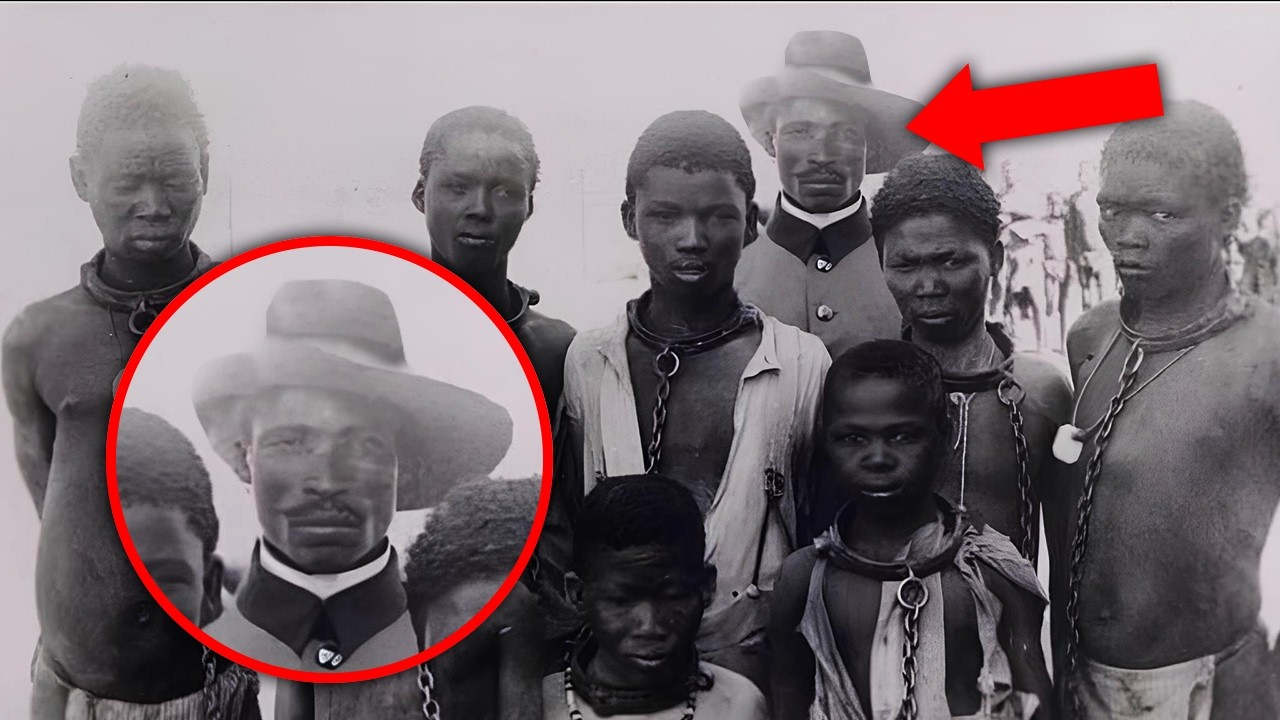 The roots of this system run deep, predating European contact by centuries. From the ancient kingdoms of Egypt and Carthage to the powerful empire of Axum, the practice of enslaving people was normalized and integrated into the fabric of society. Enslaved individuals, often prisoners of war, victims of raids, or those born into servitude, were not just a labor force but a critical component of economic production, infrastructure projects, and military expansion.
Long before the Atlantic routes were established, a vast and sophisticated trans-Saharan slave trade network was already moving hundreds of thousands of enslaved Africans northward to the Middle East and North Africa, a precursor system that would later seamlessly facilitate the Atlantic trade.
In West Africa, the Ghana Empire, flourishing from the 3rd to the 13th centuries, provides an early and stark example of a society that capitalized on enslaved labor for economic gain. Strategically positioned between the desert and the forest, Ghana controlled vital trade routes, trading gold, salt, and slaves to North Africa. Enslaved individuals were the backbone of the empire’s economy, working in grueling conditions in salt mines and serving as porters on arduous desert caravans.
By controlling these routes and ensuring a steady labor supply, Ghana’s leaders cemented their wealth and influence, demonstrating that the exploitation of human beings was a cornerstone of African statecraft long before the Atlantic trade began.
The Mali Empire, which rose to prominence after Ghana, reached its zenith under the legendary Mansa Musa in the 14th century, a ruler renowned for his immense wealth. This wealth was built on the backs of enslaved laborers who extracted and processed gold and salt, the empire’s most valuable resources. Slavery under Mansa Musa and his successors served not only economic but also social functions, with enslaved people working in agriculture, mining, and construction, while some even served in military roles and rose to positions of influence within the court.
For the ruling class, slavery was a mechanism to maintain wealth, reinforce social hierarchies, and expand their dominion, a system that was both brutal and deeply embedded in the political structure.
Following Mali, the Songhai Empire expanded and refined these systems even further, with its leaders using enslaved labor to bolster agricultural production and military strength. Enslaved soldiers, many of them captives from conquered regions, were integral to the empire’s expansionist campaigns. This reliance on enslaved labor in farming, mining, and the military underscored slavery’s deep roots and extensive role in the rise of African empires, adapting to the needs and structures of successive powers.
When European traders began arriving on Africa’s coasts in the 15th century, they did not encounter a continent innocent of slavery, but rather a complex web of societies already intimately familiar with its mechanisms, hierarchies, and economic benefits.
 The arrival of the Portuguese in the mid-15th century marked the beginning of a new, more devastating chapter. What the Europeans found was a pre-existing network of trade routes and economic systems that included the sale of enslaved people. At first, Portuguese traders brought enslaved Africans to Europe, but the demand for labor in the new world colonies of the Americas would soon skyrocket.
Crucially, European traders rarely ventured into the African interior; instead, they relied on African leaders, merchants, and powerful warlords who sold captives acquired from wars, raids, and intertribal conflicts. These captives were sold at coastal ports in transactions that involved negotiation and alliance-building, with Africans receiving goods such as textiles, metalwork, alcohol, and most significantly, firearms.
This exchange of human life for guns created a vicious and destabilizing cycle. The introduction of European firearms radically transformed African politics and warfare, as rival states competed fiercely to acquire them. More guns meant a greater military advantage, leading to more raids and conflicts to capture more people to sell for more guns.
This cycle intensified existing rivalries and drew more and more African communities into the orbit of the Atlantic trade, destabilizing entire regions and making the capture and sale of human beings a primary economic and political strategy.
The Kingdom of the Congo provides a powerful example of the complex and often tragic relationships that developed. By the late 15th century, the Congo had formed a strong alliance with Portugal. King Alfonso I, an early ruler, embraced Christianity and sought to modernize his kingdom, allowing the Portuguese access to the slave trade on his own terms.
He tried to regulate the flow of enslaved people, distinguishing between captives from wars and his own free subjects. However, as European demand grew, Alfonso struggled to maintain control, writing desperate letters to the Portuguese monarchy pleading for fairer trade practices and urging them to limit the enslavement of his own people. The alliance brought wealth and political power but also introduced instability and hardship as the trade spiraled beyond the king’s control, illustrating how even powerful African rulers could become ensnared by the system they helped create.
Further east, the Akan peoples of modern-day Ghana played a central role in the trade, using enslaved labor extensively in their rich gold mines. To maintain a steady supply of labor, they engaged in local conflicts to capture people who were then forced into the mines or sold to European traders. The Akan became vital intermediaries, trading both gold and enslaved captives, a profitable arrangement that allowed them to maintain significant political and economic power while intensifying their role in the trade network.
 Their story is a testament to how deeply the trade became intertwined with local economies and power structures.
The African response to the Atlantic slave trade was far from uniform. While some leaders and empires actively participated, others grappled with the moral and political implications. Some small coastal communities took drastic measures to protect their people, sometimes attacking European slave ships in acts of resistance.
However, these efforts were often futile against heavily armed European ships and their well-armed African intermediaries. The kingdom of Benin offers a compelling example of selective involvement. Initially a participant, Benin’s leaders began to recognize the negative impact on their population and restricted the export of enslaved individuals in the 16th century to protect their population from decline.
This was a strategic and ethical choice, as the kingdom needed its people for its own strength and stability, focusing instead on trading other goods like ivory and pepper. Yet, Benin continued to uphold domestic slavery, reflecting a nuanced stance where abolishing the institution altogether was never an option.
In stark contrast, the kingdom of Dahomey, located in what is now Benin, became one of the most prominent African states involved in the Atlantic slave trade. Founded in the early 17th century, Dahomey grew rapidly, fueled by the wealth generated through the trade of enslaved people. Under powerful kings like Agaja and Ghezo, the kingdom constructed a society deeply intertwined with the slave trade, making it a cornerstone of its economy and military strength.
King Agaja led aggressive military expansions, capturing people to sell to European traders and seizing strategically important ports to dominate the coastal trade. The kingdom’s economy grew heavily reliant on the trade, with a cycle in which raids generated captives, captives were traded for European goods, and those goods further empowered the kingdom’s military capabilities.
Dahomey was unique for its highly organized standing army, which included a fierce group of women warriors known to Europeans as the Amazons. Maintaining this military force required extensive resources, including a labor force of enslaved people to produce food and build infrastructure. Raiding for captives became a primary method of expanding Dahomey’s influence and wealth, with many captives sold to Europeans or integrated into the kingdom’s labor force.
 Some were even kept for ritualistic purposes, sacrificed during ceremonies to honor the kingdom’s deities and ancestors. When European anti-slavery campaigns gained momentum in the early 19th century, King Ghezo resisted calls to abandon the trade, famously stating, “The slave trade is the ruling principle of my people,” as it accounted for the majority of the kingdom’s wealth.
The eventual shift by European powers towards abolition was driven as much by economic and political interests as by humanitarian ideals. The Industrial Revolution had changed Europe’s economic priorities, and Britain, the leading global power, outlawed the transatlantic slave trade in 1807 and abolished slavery across its Empire by 1833. This shift was economically advantageous for Britain, which turned to cheaper industrial forms of labor.
Anti-slavery became a powerful tool for expanding influence in Africa, allowing European powers to frame their colonial ambitions as a mission to civilize and liberate African societies, when in reality it often meant seizing control of resources and establishing political dominance.
The British intervention in Lagos illustrates this complex dynamic. In 1851, Britain attacked Lagos under the pretext of eradicating the slave trade, deposing the Oba who resisted British influence. By 1861, Lagos was annexed as a British colony, officially ending its role in the slave trade, but at the steep price of losing its sovereignty.
The European campaign to end slavery left a complex legacy: it contributed to the abolition of the transatlantic slave trade, but it also became a pretext for the aggressive colonization of African societies. For many African regions, European “liberation” brought a new form of subjugation, as colonial administrators imposed their own laws and economic priorities.
The history of Africa’s role in the slave trade is a history of both victimhood and agency. While countless Africans endured horrific suffering, African empires and leaders also played a role in perpetuating this institution. Recognizing this complex reality allows us to see African societies not as mere victims but as actors within a global system of exploitation.
This uncomfortable truth is essential for a full understanding of the transatlantic slave trade, a tragedy that was not a one-sided crime but a collaborative catastrophe that ultimately paved the way for the colonization of an entire continent and left a legacy of division and instability that persists to this day.
