BAGHDAD — The man who once terrorized Iraq’s Olympic athletes, ordered the beheadings of women accused of violating his moral code, and gunned down a trusted presidential aide in front of foreign dignitaries is dead, killed alongside his brother and a teenage nephew in a ferocious firefight with American forces in the northern city of Mosul.
Uday Hussein, the eldest son of deposed Iraqi dictator Saddam Hussein, was confirmed dead on Tuesday after a six-hour siege that ended with U. S. soldiers storming a fortified villa in the upscale al-Falah neighborhood.
 The 39-year-old, who had spent his entire adult life shielded from consequences by his father’s absolute power, died exactly as he had lived: violently, surrounded by the trappings of a regime that had crumbled around him.
The confirmation came through dental records and other forensic identification methods, military officials said, after they released photographs of the bodies to prove to skeptical Iraqis that the two most feared brothers of the old regime were truly gone. Uday’s younger brother Qusay, 37, who had been groomed as the heir apparent to the Iraqi presidency, also died in the assault, along with Qusay’s 14-year-old son Mustafa and a bodyguard.
For the millions of Iraqis who suffered under the family’s brutal rule, the news was met with a mixture of joy, relief, and disbelief. In the streets of Baghdad, young men fired guns into the air in celebration, while others distributed sweets to passersby. The scenes were a stark contrast to the fear that had gripped the nation for nearly a quarter century under Saddam’s iron fist.
Uday Hussein was born on June 18, 1964, in Baghdad, the eldest of five children born to Saddam and his first wife and cousin, Sajida Talfah. His father was then a young Baath Party operative, a political faction that would seize control of Iraq in a July 1968 coup and eventually place Saddam in the presidency in 1979. Within days of taking power, Saddam called senior party members to a meeting where names were read aloud and approximately 22 men were led away and executed for allegedly conspiring against him.
Uday was just 15 years old when he witnessed that purge. The lesson was not lost on him. He saw what could happen when there were almost no limits to his father’s power, and he internalized that same logic for himself.
Teachers who might have failed him did not. Classmates who might have challenged him chose instead to stay out of his way. Adults who would normally correct a teenager’s behavior remained silent because Uday was the president’s son, and opposing him could cost them their jobs or even their freedom.
He eventually earned an engineering degree from Baghdad University with very high marks, though few believed those grades reflected his true abilities. His younger brother Qusay was different, quiet, cautious, and patient. Saddam slowly began giving Qusay important positions in Iraq’s security apparatus.
Meanwhile, Uday received titles that brought him attention, luxury cars, and access to parties and dignitaries.
While Iraq fought a brutal war against Iran from 1980 to 1988, a conflict that killed hundreds of thousands of Iraqis, Uday remained largely away from the front lines. In 1984, at just 20 years old, he was appointed head of the Iraqi Olympic Committee, the organization responsible for the country’s Olympic sports. He later also took control of the Iraqi Football Association.
This meant that thousands of young athletes were now under the authority of a man who had spent his entire life protected from the usual consequences of his actions.
Four years later, those close to Saddam would publicly witness what that kind of protection could lead to. The Iran-Iraq war ended in August 1988, and Baghdad was in a celebratory mood. On October 18, the Iraqi government held a large reception honoring Suzanne Mubarak, the wife of Egyptian President Hosni Mubarak.
The hall was filled with government officials, security officers, and foreign guests, and Saddam Hussein was also present.
One of the men in the room was Kamel Hana Jajo. He had worked for Saddam for years as a personal assistant and food taster, making him one of the few people trusted to stay physically close to Saddam. Several accounts also suggest he helped arrange aspects of Saddam’s private life, including his relationship with a woman named Samira Shahbandar.
That relationship caused deep humiliation for Sajida, Uday’s mother, and Uday never forgave Jajo for his role in it.
That night, Uday approached Jajo and attacked him with a baton, then stabbed him. Jajo died in front of the guests. The wife of a foreign president had just witnessed the president’s son kill a man during a major official occasion.
Saddam was furious. News soon spread that Uday had been arrested and sentenced to death, but the sentence was never carried out. Saddam could not bring himself to execute his son, but he also could not simply ignore the murder.
Instead, Uday’s punishment was closer to a forced vacation. He was sent to Switzerland, where his uncle Barzan Ibrahim al-Tikriti, Saddam’s half-brother, was serving as Iraq’s representative in Geneva. Uday continued to live in luxury in one of the richest countries in the world.
He reportedly became involved in several disturbances while there, and by 1989, Swiss authorities had expelled him from the country. He then returned to Baghdad.
He returned to a country badly damaged by years of war. Iraq was deeply in debt and owed billions of dollars to other nations, especially after the long conflict with Iran. Saddam needed people he believed he could trust to help keep the government under control.
He feared outsiders might betray him, while family members were less likely to turn against him. Uday was given control of several media outlets, including the newspaper Babel, and a television channel aimed at young people. He also became head of the Iraqi Journalists Union, which represented journalists in the country.
There was no free press in Iraq, meaning reporters could not criticize the government or its leaders freely. Now, a man already involved in a murder had the ability to influence what journalists could write. Even a single sentence that offended Uday could end a journalist’s career or lead to far worse consequences.
 Then came August 2, 1990, when Iraq invaded its small, oil-rich neighbor Kuwait. Iraqi forces quickly captured most of the country’s territory and remained there for about seven months. During the occupation, Iraqi soldiers and officials seized large amounts of property and other goods from Kuwait.
Later accounts from Kuwaiti officials and journalists reported that Uday was among those who took luxury cars from the country. His private garages were notorious for reports claiming he owned hundreds of vehicles, including Rolls-Royces, Ferraris, and Porsches.
The invasion was expensive for ordinary Iraqis. On August 6, 1990, the United Nations imposed strict economic sanctions on Iraq. These sanctions severely limited Iraq’s ability to trade with other countries and purchase many goods from abroad.
Food and medicine became harder to obtain, and many families struggled to survive. Some sold their furniture, jewelry, and other possessions just to pay for basic necessities. A U.
S. -led coalition forced Iraqi forces out of Kuwait in early 1991, but the sanctions remained for more than a decade.
Uday turned the shortage of resources into a business opportunity. He ran smuggling networks that brought cigarettes, alcohol, and other goods across Iraq’s borders, allowing him and his associates to profit from products that were difficult to obtain legally. He was also said to have seized stakes in many private companies.
Later, when Iraq was allowed to sell limited amounts of oil through the United Nations’ Oil-for-Food program, which began in 1996 to help Iraqis obtain food and basic supplies, Uday’s associates were also accused of embezzling part of the system.
While Iraq’s middle class grew poorer and many ordinary families struggled to survive, Uday continued to grow richer. By that time, Uday had money, control over parts of the media, and a private staff that answered only to him. But what he did with the Olympic Committee showed the extent of his power.
Throughout the 1990s, Uday ran the Olympic Committee headquarters in Baghdad almost like a private prison. When the Iraqi national football team lost a match, Uday did not just blame the coach or the team’s tactics. He blamed the players themselves.
Former athletes who managed to escape Iraq described being beaten, locked in cells, and humiliated for missing goals, performing poorly, or failing to show the level of effort Uday expected. The stories of former athletes were strikingly similar. Players described being whipped on the soles of their feet until they could barely stand or walk.
Some were forced to kick heavy concrete balls, which could break toes and leave their legs severely bruised. Others were locked in small cells and given very little food. Some athletes also described being dragged through raw sewage after their wounds were opened, exposing them to serious infections.
Uday also ordered some players’ heads to be shaved as a form of public humiliation. Those who complained or refused to comply were threatened with being sent to the front lines, where Iraqi soldiers faced danger and death.
Sharar Haider, a striker who played for the Iraqi national football team, was one of the athletes who later spoke publicly about these abuses. Weightlifters, runners, and football players all told similar stories. The most disturbing part was how long much of the outside world remained silent.
Rumors of mistreatment reached international sports organizations for years, and human rights groups also raised concerns. But Iraq continued to send athletes to international competitions, and foreign officials continued to meet with Iraqi representatives as if nothing was wrong. Athletes who were allowed to travel abroad often stayed silent because their families still lived in Baghdad.
Speaking out could put those families at risk.
Investigating the full scope of these abuses became much easier after 2003, when Saddam’s government was overthrown. Investigators and journalists were able to enter places previously under the regime’s control and speak more freely with former prisoners and athletes. Their accounts helped confirm what many had feared for years.
While Uday was using his position to terrorize athletes, serious cracks began to appear within his family by 1995. Hussein Kamel al-Majid was Saddam’s cousin and also his son-in-law, having married Uday’s sister Raghad. He had controlled Iraq’s military industries and weapons programs, giving him access to some of the country’s most important military secrets.
Because of his position, he also became a powerful figure within Saddam’s government. Uday and Kamel were bitter rivals, and their struggle for influence within the regime became increasingly hostile.
In August 1995, Kamel shocked the Iraqi government by fleeing to Jordan with his brother Saddam Kamel. They were joined by Raghad and her sister Rana, who was married to Saddam Kamel. Kamel then spoke with Western intelligence agencies and revealed information about Iraq’s weapons programs and the inner workings of Saddam’s government.
His defection was a major embarrassment for Saddam, because one of the closest men to his family had suddenly left the country and begun sharing important information with foreign governments.
 Saddam eventually promised Kamel he would be pardoned if he returned. Kamel believed the promise and returned to Iraq in February 1996. No more than three days passed before he was killed.
On February 23, relatives from Saddam’s clan attacked the house where Kamel and his brother were staying. A gun battle broke out, and both brothers were killed. It was widely believed that Uday supported the anger against Hussein Kamel, though the final decision to deal with him came from Saddam.
Around the same time, Uday was building a force of his own. In 1995, Saddam created a paramilitary organization called Fedayeen Saddam, and placed Uday at its head. The group was separate from Iraq’s regular army and was created mainly to protect Saddam’s rule and intimidate people within the country.
Later reports estimated its membership grew to between 30,000 and 40,000 members. They wore black uniforms, answered directly to Uday, and became another tool for spreading fear among ordinary Iraqis.
By this point, Uday had built a network of money, influence, and people who answered to him. But someone within Saddam’s inner circle finally decided this had gone too far. On December 12, 1996, Uday was driving through the Mansour district of Baghdad, a wealthy area known for its restaurants, shops, and luxury homes.
For some reason, he was traveling with less protection than usual. Gunmen were waiting for him. They opened fire on his car.
Reports indicate Uday was hit by 17 bullets. He was rushed to the hospital where surgeons worked for hours to keep him alive.
He survived the attack, but he was seriously wounded. The injury stayed with him for the rest of his life. One of the bullets caused damage near his spine, making it difficult for him to walk.
He often needed a cane or another person to help him move. Accounts from defectors and doctors said he lived in constant pain and spent months recovering out of sight. Some reports also indicated he was partially paralyzed for a period of time.
No one ever proved who was behind the attack. The Iraqi government blamed an opposition group backed by Iran, while others suspected the attack came from someone within Saddam’s own system. In the weeks that followed, Saddam’s security forces carried out mass arrests.
Many of the people who were later executed were certainly not involved in the shooting. People who knew Uday later said the attack made him more paranoid and violent. He trusted almost no one.
His injuries also seemed to make him more determined to show he was still strong. He became quicker to attack or punish people who annoyed him or made him feel challenged.
The attack also shifted the balance of power within Saddam’s family. Saddam was already leaning toward Qusay as a safer choice to eventually take on more responsibility. Uday’s health problems and increasingly violent behavior only reinforced that view.
Qusay was given control of the Republican Guard, Iraq’s elite military units that protected the regime, and later received a senior position in the Baath Party leadership. But Uday retained control of his militia and his own newspapers. He was about to use that power again.
In 2000, he eventually returned to public life and ran for a seat in the Iraqi parliament, winning by a huge margin of votes. This did not surprise many because elections in Saddam’s Iraq were tightly controlled by the government, leaving voters with limited real choices. The parliamentary seat gave Uday another official position, but his real power still came from the Fedayeen Saddam, the armed group he controlled.
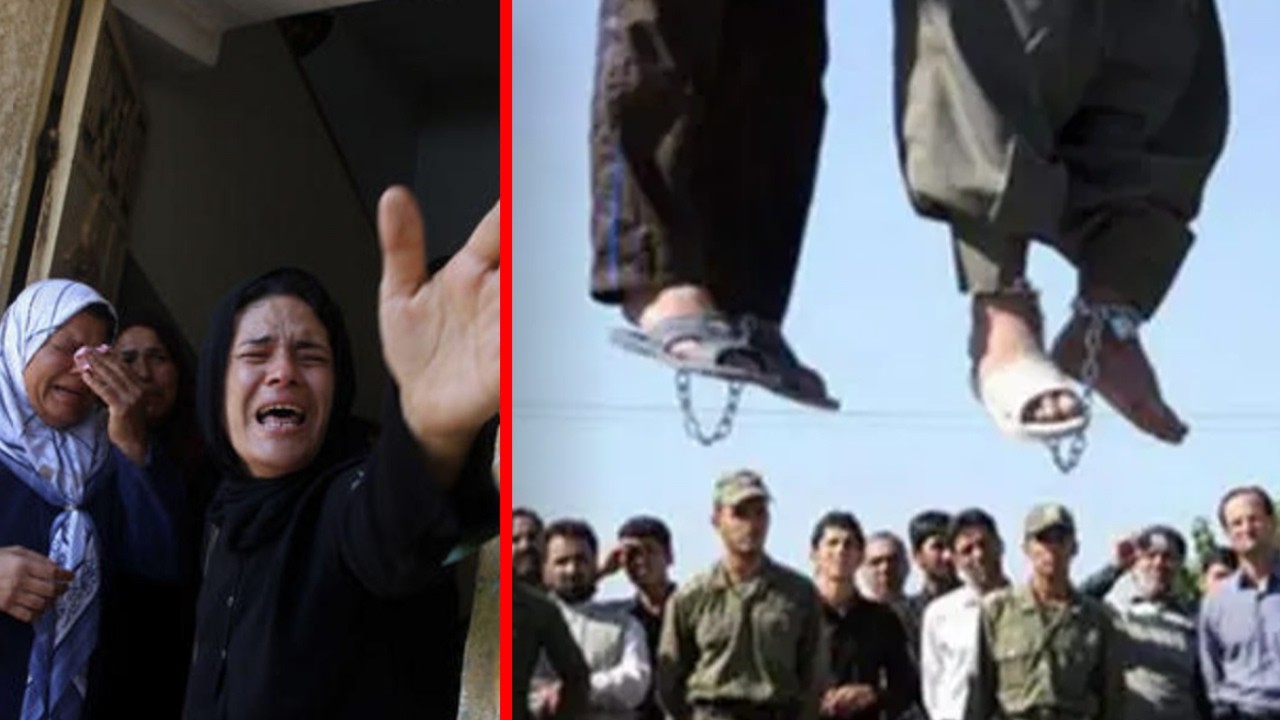
In 2000, Amnesty International and other human rights organizations reported that Fedayeen members had beheaded more than 100 women in Baghdad and other Iraqi cities. The women were accused of prostitution, but many of these accusations appeared false or politically motivated. Some women were reportedly targeted for being relatives of opposition figures or because they had angered someone influential.
In some cases, the killings were carried out in front of the victims’ neighbors or family members, making the violence even more terrifying.
Defectors and former employees also described a broader pattern of abuse against women. They said Uday’s men would sometimes snatch women from crowds, universities, or parties and take them to properties controlled by Uday. Their families usually lacked the power to resist.
Complaining could lead to beatings, imprisonment, or loss of employment. Most of these accounts came from defectors and later interviews rather than court records. So the exact number of victims may never be known.
People who worked near Uday also lived in constant fear. Bodyguards, drivers, servants, and other employees knew that one bad moment or one wrong answer could turn into a beating.
 By 2002, attention had shifted away from Uday’s personal violence toward a much larger threat. The United States was preparing for war with Saddam’s government, and the regime that had protected Uday for most of his life was about to face its biggest crisis. On March 20, 2003, a U.
S. -led coalition invaded Iraq. The main reason given by the U.
S. government was the belief that Saddam’s regime possessed weapons of mass destruction. No such weapons were found after the invasion.
Coalition forces moved quickly toward Baghdad, and on April 9, U. S. troops reached the center of the capital.
Saddam, Uday, Qusay, and many senior officials disappeared from view. The U. S.
military also created a set of playing cards with the faces of wanted senior Iraqi officials. Saddam was the ace of spades, while Uday and Qusay were also among the highest priority targets. The search for the brothers continued.
For several months, Uday and Qusay moved between safe houses and relied on old friends and people still connected to Saddam’s family. By early summer, the brothers had moved north toward Mosul. Mosul is one of the largest cities in northern Iraq.
In the summer of 2003, the city was crowded and tense. Coalition forces were deployed throughout the city. Some residents had strong ties to Saddam’s old government.
For Uday and Qusay, Mosul seemed like a place where they could disappear.
The brothers found a hiding place in a large villa in the al-Falah neighborhood. The house belonged to a wealthy man named Nawaf al-Zaidan. He was a family friend with long-standing ties to Saddam’s inner circle.
He agreed to shelter Uday and Qusay, along with Qusay’s 14-year-old son Mustafa and one personal bodyguard. The four men stayed inside the villa for about two weeks.
But the United States had posted huge rewards for the most wanted members of Saddam’s family. A reward of $15 million was offered for information leading to the capture of each son. The reward for information about Saddam himself was $25 million.
For a man like al-Zaidan, that amount was more than he might expect to earn in several lifetimes. It also offered a possible way out of the danger that surrounded harboring two of the most wanted men in Iraq.
On July 22, 2003, U. S. forces received information about the brothers’ location and surrounded the villa.
About 200 soldiers from the 101st Airborne Division took part in the operation along with special operations forces. When U. S.
soldiers approached the house, gunfire erupted from inside. Several U. S.
soldiers were wounded. The battle lasted about six hours. When U.
S. soldiers entered the damaged home, they found four bodies. They were Uday, Qusay, Qusay’s son Mustafa, and the bodyguard.
People throughout Mosul heard the gunfire. By the end of the day, word spread that Saddam’s sons had been killed. The Americans knew that many Iraqis would not believe the brothers were dead without clear evidence.
So they used dental records and other identification methods to confirm the identities of the bodies. On July 24, officials released photographs of the corpses. For many Iraqis, the news brought relief.
Families who had lost sons in the Olympic Committee’s cells or daughters to Fedayeen violence now knew that Uday would never hurt anyone again.
The brothers were buried in early August 2003 in al-Awja, a village near Tikrit, where their father had grown up. The village, once a stronghold of Saddam’s clan, became the final resting place for two men who had embodied the regime’s darkest excesses. For the Iraqi people, the deaths marked the end of an era of terror, though the scars of Uday Hussein’s brutality would remain for generations.
