The return of Ayatollah Ruhollah Khomeini to Tehran in February 1979 was met with euphoria, but the celebrations masked a meticulously planned transformation that would soon redefine the very fabric of Iranian society. Within weeks of the monarchy’s collapse, the new leadership began implementing a blueprint for social control that had been decades in the making, targeting the most visible symbol of modernity: women.
The ideological foundation for this shift was laid long before the revolution, rooted in Khomeini’s writings from the 1940s. In his 1943 book Kashf al-Asrar, he attacked the moral decline he perceived under the Pahlavi dynasty, particularly the forced unveiling of women in 1936. This humiliation, imposed by Reza Shah, remained a deep wound for conservative religious families, and Khomeini viewed the subsequent modernization efforts as a direct assault on Islamic values.
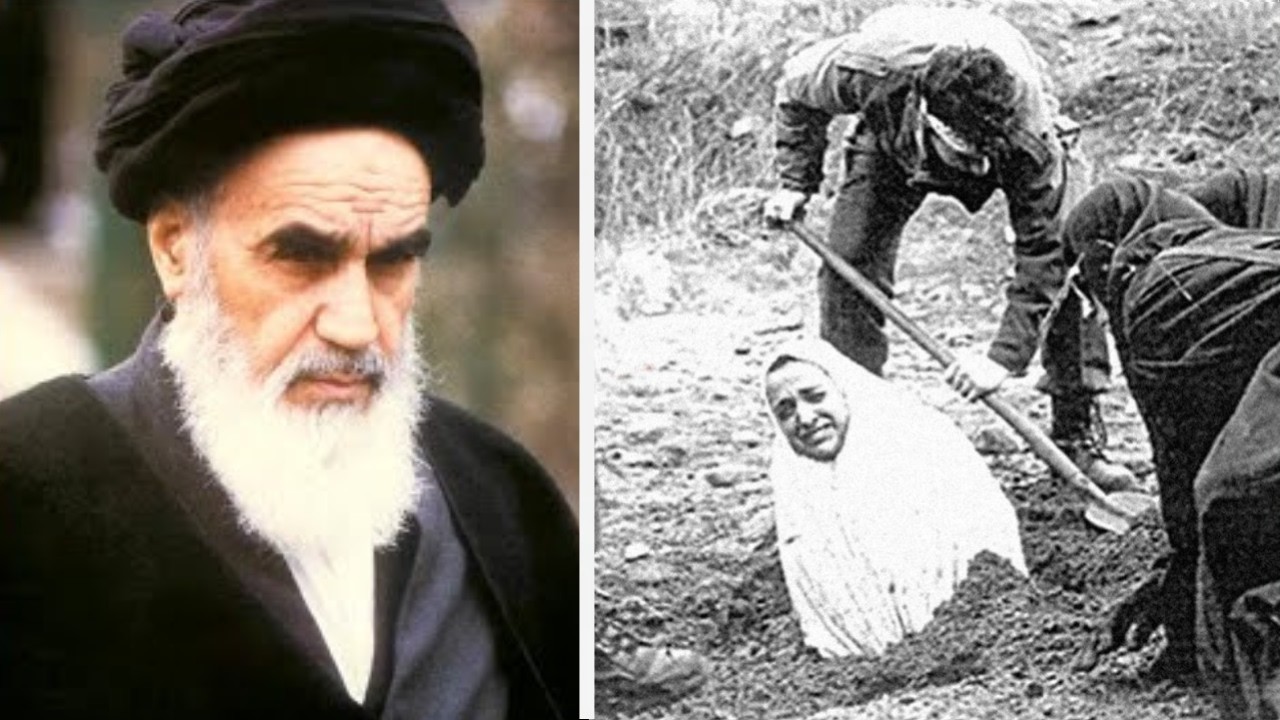 The 1960s and 1970s accelerated the cultural clash. The Shah’s White Revolution granted women suffrage in 1963, and the following decade saw a surge in female education and professional employment. By 1978, women constituted a third of university students, and Tehran’s streets reflected a Westernized aesthetic with cinemas, pop music, and women appearing on television without headscarves.
For Khomeini, this was not progress but a sign of moral corruption invading the nation through fashion and public mixing of the sexes.
His solution was not merely a return to traditional dress but the establishment of a state where public space itself would enforce Islamic law. In his 1970 lectures, later published as Hukumat-e Islami, he argued that an Islamic government must implement religious law in every aspect of daily life. Women, he believed, were the foundation of the family, and the family was the core of the Islamic state; therefore, their visibility in public became the clearest indicator of whether society was truly Islamic or dangerously Westernized.
The first direct move came on March 7, 1979, when Khomeini declared that women should observe Islamic dress in government offices. The timing was stark, landing just one day before International Women’s Day. Instead of celebration, Tehran erupted in protests as thousands of women, many of whom had supported the revolution, took to the streets from March 8th to 13th, fearing that the mandate for government employees would soon expand to all public spaces.
These protests were met with hostility from revolutionary groups, who insulted and threatened the demonstrators, labeling them agents of the West. The revolutionary committees, armed and active, created an atmosphere of intimidation that moved faster than any legislation. The visual shift was immediate; within days, state buildings, television broadcasts, and newspapers reflected a transformed society, establishing the impression that the revolution was fundamentally moral rather than merely political.
The informal pressure soon became codified law. In 1983, the Islamic Consultative Assembly passed amendments to the penal code that made hijab mandatory for all women in public, with violations punishable by up to 74 lashes. This transformed what was social pressure into a criminal offense against the state, giving police and revolutionary committees the legal authority to detain, question, and punish women for their clothing choices.
 In the early 1980s, flogging for moral crimes was not rare, and public punishments were a deliberate tool of revolutionary justice. The state understood that visibility multiplied impact; punishing a few women in open spaces created a fear that spread faster than any written decree. This approach was designed to ensure that millions would adjust their behavior, reinforcing the idea that modesty was not a personal preference but a public duty essential to the nation’s moral health.
Khomeini’s worldview placed the burden of societal virtue squarely on women. He argued that men are visually influenced, and if women appeared in Western fashion, temptation and sin would follow. Consequently, the system focused on controlling women’s appearance as a shield to protect society from corruption, treating a woman showing her hair not as an individual choice but as a public act challenging Islamic authority.
The onset of the Iran-Iraq War in September 1980 hardened this stance further. With hundreds of thousands of casualties, the leadership framed the conflict as a sacred defense of Islam, making internal discipline non-negotiable. Public morality laws grew stricter, with state media portraying veiled mothers as symbols of home-front sacrifice.
Dress violations were framed as disrespectful to soldiers dying at the front, and public punishment reinforced the message that the revolution would not compromise its principles even under invasion.
By the time the war ended in 1988, a generation had grown up knowing only strict public codes. When Khomeini died on June 3, 1989, many expected a softening, but the structure he created was already institutionalized in the constitution and penal code. It no longer depended on one man; it had become a permanent feature of the state, with Ali Khamenei succeeding him and the legal requirements for hijab remaining firmly in place.
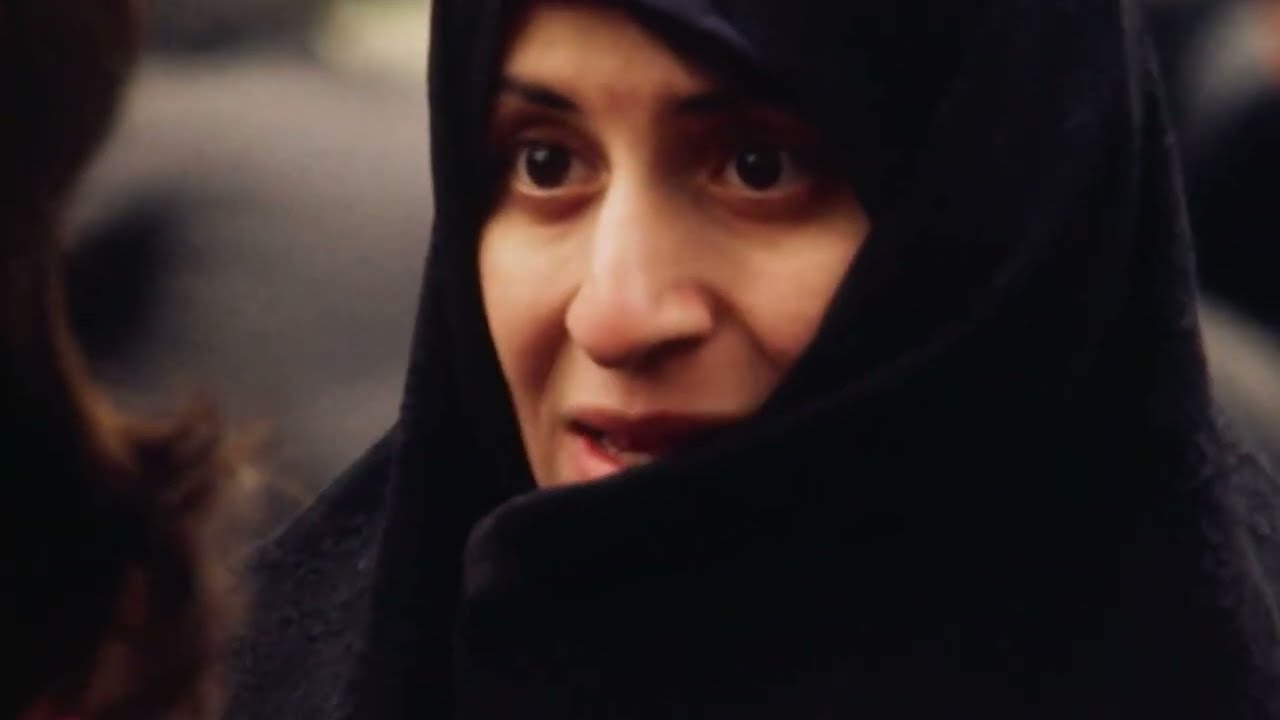 The style of enforcement evolved over the decades. After a period of relative social relaxation under President Mohammad Khatami in the late 1990s, the election of Mahmoud Ahmadinejad in 2005 brought a resurgence of aggressive policing. The Guidance Patrol, or Gasht-e Ershad, became highly visible, with vans patrolling streets and shopping centers, stopping women for headscarves that revealed too much hair or clothing considered too tight or colorful.
These stops were deliberately public and humiliating. Women were questioned on sidewalks, taken into vans, and transported to detention centers where they might be forced to sign pledges or contact family for more appropriate clothing. Official reports from the mid-2000s mention tens of thousands of women being stopped each year, not for long-term imprisonment but for visible correction.
The arrest itself was the message, demonstrating the state’s reach into the most intimate aspects of personal life.
The logic of this enforcement remained consistent with Khomeini’s original vision: morality must be supervised where society lives its daily life. Streets, universities, and buses were not neutral spaces but reflections of Islamic identity. For generations born after 1979, the sight of morality patrol vans became normal, and young girls grew up knowing that clothing choices could lead to public confrontation.
The public punishment of women was never about fabric or hair; it was about authority. Every revolution needs daily proof of power, and regulating the clothing of millions of women provides an unavoidable, visible demonstration of state control. It tells citizens that the government controls not just borders and taxes but behavior itself.
 A city filled with covered women signaled that the Islamic Republic was intact, while widespread non-compliance would signal erosion.
This core structure, established in 1979 and formalized in 1983, never disappeared. It adjusted in intensity but not in principle. By the 2010s and 2020s, younger generations who had grown up entirely under mandatory hijab began openly challenging it, with social media making resistance more visible.
Videos of confrontations with morality patrols circulated widely, forcing a reckoning with a system that had defined its identity through visible moral control.
The state’s dilemma is that loosening enforcement risks looking like weakness, which could invite broader challenges to its authority. This is why public punishment persisted long after the revolutionary chaos faded. The system built by Khomeini embedded control into the daily visual landscape, and retreating from that control threatens the very foundation of the state’s legitimacy.
The dark reason for public punishment was, and remains, the preservation of a political order that sees women’s bodies as the ultimate battleground for the soul of the nation.
