The world stood at the precipice of an abyss in the spring of 1945, and when the Allied armies finally tore down the barbed wire fences of the Third Reich’s network of terror, they did not simply liberate prisoners; they uncovered a systematic machinery of death so profound that it forever altered the human understanding of evil. As Soviet and American troops pushed deep into German-occupied territory, they were confronted not with a battlefield, but with the skeletal remains of millions, forcing a stunned global population to bear witness to the industrialized slaughter that had been hidden in plain sight for over a decade. The liberation of camps like Majdanek, Auschwitz, and Buchenwald revealed a horror that transcended the imagination, confirming that the rumors of mass extermination were not just propaganda, but a grim and devastating reality.
The origins of this catastrophe were not born in the chaos of war, but in the calculated political maneuvers of a dictator who rose to power on a platform of hate. When Adolf Hitler assumed the chancellorship of Germany in January 1933, the nation was fractured and humiliated by its defeat in the First World War. Almost immediately, the Nazi party moved to consolidate absolute control, targeting anyone who posed a threat to their ideology.
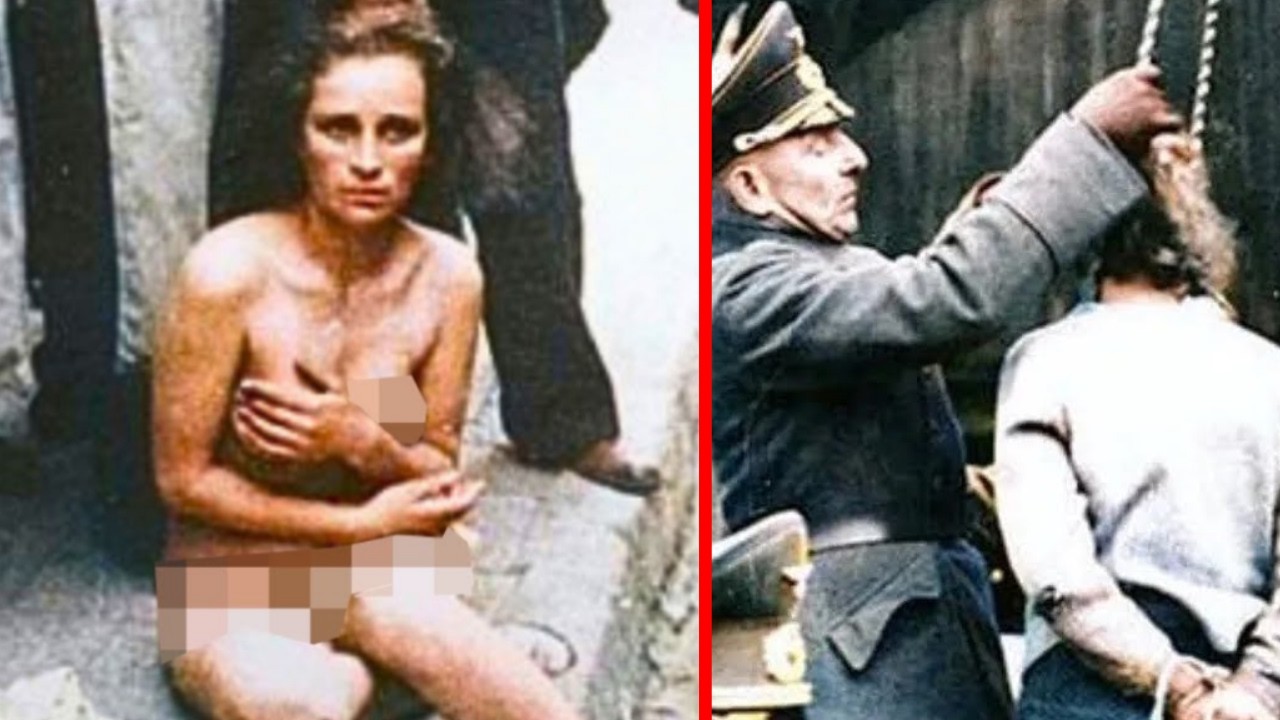 They did not seek debate or dissent; they sought to erase it entirely. Within weeks of taking power, the regime began arresting political opponents, socialists, communists, and journalists, dragging them from their homes and silencing their voices in a brutal crackdown on civil liberties. The goal was to create a climate of terror, ensuring that the German populace would remain silent and compliant in the face of Nazi rule.
By March 1933, a mere two months after Hitler’s ascension, the regime established the first concentration camp in the town of Dachau, just outside Munich. Initially, this camp was not conceived as a site of mass murder, but rather as a tool of intimidation, a place to break the spirit of those who dared to oppose the state. The first inmates were political prisoners, trade union leaders, and intellectuals who had warned the public about the dangers of Nazism.
Inside Dachau, the brutality was immediate and unrelenting. Guards were trained to exhibit zero mercy, and prisoners were subjected to constant beatings, verbal abuse, and exhausting forced labor. The commandant, Theodor Eicke, codified a set of draconian rules that permitted guards to punish prisoners at will, with even minor infractions like stealing a scrap of food or failing to work fast enough resulting in execution.
This system of cruelty became the blueprint, and Dachau was designated as the model for all future camps, exporting its brutal methods across the expanding Reich.
Throughout the late 1930s, the camp system grew exponentially, mirroring the Nazi regime’s increasing confidence and aggression. By 1939, six major concentration camps had been established across Germany, including Sachsenhausen, Buchenwald, and Mauthausen, each designed with the same chilling efficiency. These camps were fortified with barbed wire, guard towers, and a permanent atmosphere of violence.
The prisoner population shifted from purely political dissidents to include those the Nazis deemed socially undesirable, including Roma, Jehovah’s Witnesses, homosexuals, and the disabled. The persecution of Jewish people, however, intensified with the passage of the Nuremberg Laws in 1935, which stripped them of their citizenship and legal rights, legally segregating them from the rest of society. This legal discrimination laid the groundwork for the physical violence that would soon follow, culminating in the state-sanctioned pogrom of Kristallnacht in November 1938, where synagogues were burned and thousands of Jewish men were arrested and sent to camps like Dachau, marking a terrifying escalation in the regime’s genocidal trajectory.
The outbreak of World War II in September 1939 transformed the camp system from a tool of political repression into a vast network of forced labor and extermination. As the German army blitzkrieged across Europe, millions of civilians fell under Nazi control, and the camps expanded into occupied territories. In 1940, the SS established a new camp complex near the Polish town of Oswiecim, known to the world as Auschwitz.
 Initially a detention center for Polish political prisoners, Auschwitz was rapidly expanded into a massive industrial complex that would eventually become the epicenter of the Holocaust. The invasion of the Soviet Union in 1941 brought with it the Einsatzgruppen, mobile killing squads that massacred Jews, Roma, and Communist officials in mass shootings, but the Nazi leadership soon sought more efficient methods of murder. In January 1942, senior officials met at the Wannsee Conference to coordinate the “Final Solution,” a euphemism for the deliberate and systematic annihilation of the entire Jewish population of Europe, estimated at around 11 million people.
To implement this plan, the Nazis constructed dedicated extermination camps in occupied Poland, designed specifically for industrial-scale murder. These killing centers, including Treblinka, Sobibor, Belzec, and Chelmno, were not places of imprisonment but factories of death. Victims were transported in overcrowded cattle cars, often traveling for days without food, water, or sanitation.
Upon arrival, they were subjected to a brutal selection process, where SS doctors and guards separated those deemed fit for forced labor from the majority who were sent directly to their deaths. The unsuspecting victims were told they were being taken to showers for delousing, a cruel deception designed to prevent panic. They were herded into large, sealed chambers disguised as shower rooms, and once the doors were locked, poison gas, either Zyklon B or carbon monoxide, was released.
Within minutes, everyone inside was dead, their bodies later burned in crematoria or massive open-air pits.
Auschwitz-Birkenau became the most infamous of these death camps, combining the functions of a labor camp and an extermination center. More than 1. 1 million people, the vast majority of them Jews, were murdered within its walls.
The camp’s gas chambers and crematoria were constantly operating, processing thousands of victims daily, particularly during the mass deportation of Hungarian Jews in 1944. The killing was indiscriminate, sparing no one, with children, the elderly, and the sick murdered immediately upon arrival. The camp was also the site of horrific medical experiments, where Nazi doctors like Josef Mengele conducted sadistic procedures on prisoners without anesthesia, treating human beings as disposable laboratory specimens.
 The cruelty extended beyond the gas chambers, as prisoners forced into labor were subjected to a regime of “extermination through work,” where they were starved, beaten, and worked to the point of death in nearby factories and quarries.
Life within the concentration camps was a relentless assault on human dignity and survival. Prisoners were woken before dawn for roll call, forced to stand motionless in freezing temperatures for hours while guards counted them repeatedly. Any sign of weakness was met with violence or death.
The daily routine consisted of brutal, often pointless labor, designed to exhaust and kill. At Mauthausen, prisoners were forced to carry heavy stone blocks up 186 steep steps, a task that killed thousands. Food was a starvation ration of watery soup and a scrap of bread, wholly insufficient for the physical demands placed on the prisoners.
Disease, particularly typhus and dysentery, ran rampant through the overcrowded, filthy barracks, and medical care was virtually nonexistent. The camps were designed to strip away every shred of humanity, reducing individuals to mere shells, their identities erased and their lives deemed worthless by their captors.
As the tide of war turned against Germany in 1944 and 1945, the Nazis attempted to conceal their crimes. With the Soviet army advancing from the east and the Allies from the west, the SS began evacuating the camps, forcing prisoners on brutal “death marches” towards the interior of Germany. These marches were characterized by extreme cold, starvation, and summary executions of anyone who could not keep up.
Thousands died on these roads, their bodies left to rot in ditches. The Nazis also attempted to demolish the evidence of their crimes, destroying gas chambers and crematoria, but the sheer scale of the horror made it impossible to fully erase. When the Soviet army liberated Majdanek in July 1944, they found a largely intact extermination camp, providing the first undeniable proof of the Nazi’s industrial murder.
 The world was beginning to see the truth, but the full extent of the tragedy was yet to be revealed.
The liberation of the camps in early 1945 brought the horror into stark, undeniable focus. When British troops entered Bergen-Belsen in April 1945, they were met with a scene of unimaginable horror: thousands of unburied corpses lying in heaps, and thousands more prisoners so emaciated and diseased that they were beyond help. The soldiers were overwhelmed by the stench of death and the sight of living skeletons.
A week later, American forces liberated Dachau, finding over 30,000 survivors in appalling conditions, alongside freight cars filled with decomposing bodies. General Dwight D. Eisenhower, anticipating that the world might one day deny these atrocities, ordered that the camps be documented extensively.
He insisted that journalists, photographers, and even local German civilians be forced to witness the evidence, ensuring that the memory of these crimes would be preserved for posterity. The liberation was not a moment of pure joy, but a confrontation with the absolute depths of human depravity.
The legacy of the Nazi concentration camps is a permanent scar on human history, a testament to the dangers of unchecked hatred and totalitarian power. The survivors who emerged from these camps were freed from their physical imprisonment, but they carried the psychological trauma of their experiences for the rest of their lives. The world was left to grapple with the staggering numbers: six million Jews murdered, along with millions of others, including Roma, disabled individuals, and political prisoners.
The camps were not an accident of war, but the result of a deliberate, bureaucratic plan to annihilate entire populations. The footage and photographs taken during the liberation remain some of the most powerful and disturbing images ever captured, serving as a stark warning of what can happen when humanity is stripped away and replaced with ideology. The gates of the camps are now open, but the shadows they cast continue to haunt the conscience of the world, a grim reminder that the horrors of the past must never be forgotten.
