The quiet rhythm of the sea at Praia da Boraceia gave no hint of the monstrous history that was about to end in its waters. On a sweltering afternoon in February 1979, a frail, aging man waded into the surf, seeking relief from the oppressive Brazilian heat. He was known to his companions as Wolfgang Gerhard, a reclusive Austrian émigré with a penchant for complaining about his health.
But the man who collapsed in the shallow water, felled by a massive stroke, was not Gerhard at all. He was Josef Mengele, the infamous “Angel of Death” of Auschwitz, a man whose name had become synonymous with the most depraved medical experiments ever conceived. The world had spent decades hunting him, but as he was pulled lifeless from the ocean, his identity remained a secret, plunging his final chapter into a macabre mystery that would take six years to unravel.
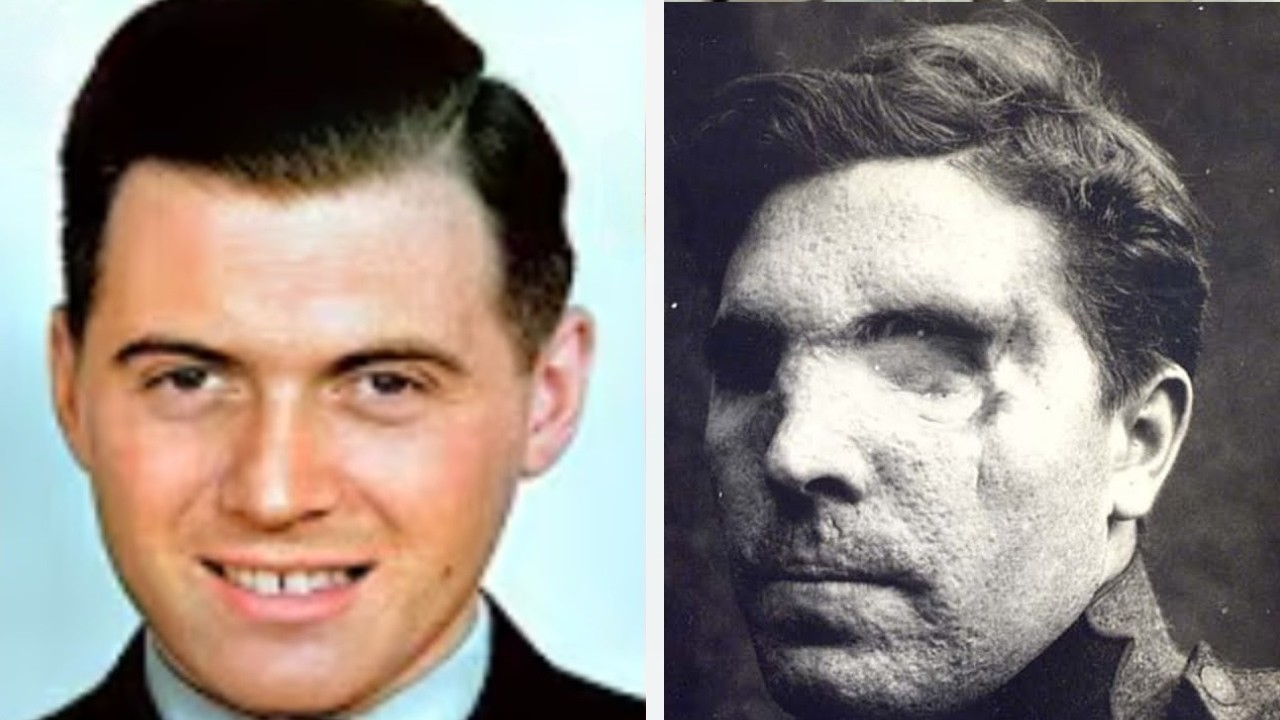 The man who died on that Brazilian beach was born on March 16, 1911, in the quiet Bavarian town of Günzburg. The son of a prosperous farm machinery manufacturer, Mengele grew up in a world of privilege and academic promise. He was a brilliant student, earning a PhD in anthropology from the University of Munich in 1935 and a medical degree from the University of Frankfurt in 1938.
On paper, he was the epitome of a trusted, educated professional. But his intellect was twisted by a fanatical devotion to Nazi racial ideology, which he embraced not merely as a political cause but as a pseudo-scientific crusade. He joined the Nazi party in 1937 and the SS in 1938, convinced that he could unlock the biological secrets of heredity and prove the superiority of the Aryan race.
In May 1943, at the age of 32, Mengele was assigned to Auschwitz-Birkenau, the largest and most lethal of the Nazi concentration camps. It was there that his academic ambitions morphed into a reign of terror. He developed a pathological obsession with twins, dwarfs, and those with hereditary anomalies.
When transport trains arrived at the infamous selection platform, Mengele was often present, impeccably dressed in his SS uniform, sometimes whistling a tune as he gestured with a gloved hand. His casual, almost bored flick of the wrist sent thousands directly to the gas chambers, while others were condemned to brutal forced labor. Survivors later recalled that his calm demeanor was more chilling than the overt violence of his peers, a chilling display of bureaucratic evil.
His interest in twins was particularly sinister. He would order them separated from their families, offering them marginally better food and living conditions not out of compassion, but to keep them alive for his experiments. Between 1943 and 1944, he conducted horrific procedures on an estimated 1,500 pairs of twins.
He injected chemicals into their eyes in attempts to change their color, sewed siblings together to create artificial conjoined twins, and infected one twin with a disease before killing the other to perform comparative autopsies. He operated without anesthesia, removed organs, and subjected living prisoners to studies on starvation and hypothermia. He documented all of this with meticulous, cold precision, sending samples to colleagues in Berlin, framing his sadism as legitimate science.
As the Soviet Red Army advanced in January 1945, Mengele fled Auschwitz, taking his research files with him. He was 33 years old, and remarkably, he slipped through the cracks of the collapsing Third Reich. He was captured by Allied forces in June 1945, but using a fake identity, he was released, unrecognized as a major war criminal.
 For years, he hid in plain sight in Bavaria, working as a farmhand under the name Fritz Hollmann. His wealthy family, the owners of the Karl Mengele & Sons company, quietly funded his escape and maintained a protective network that would shield him for decades. In 1949, armed with a forged Red Cross passport under the alias Helmut Gregor, he boarded a ship bound for Argentina.
In Buenos Aires, under the permissive regime of Juan Perón, Mengele found a haven. He lived surprisingly openly, often using his real name within the German expatriate community, and even having his name listed in the city’s phone directory. He remarried in 1958, to his brother’s widow, and seemed to have successfully reinvented himself as a successful businessman.
This comfortable existence shattered on May 11, 1960, when Mossad agents captured Adolf Eichmann, the architect of the Holocaust, on a Buenos Aires street. The capture sent a shockwave through the Nazi exile network. Mengele, who knew Eichmann socially, panicked.
He fled to Paraguay, where he had acquired citizenship, and then crossed into Brazil in 1961, disappearing into a life of increasing isolation and paranoia.
His life in Brazil was a stark contrast to his earlier years. He stayed on a farm in Serra Negra, owned by a Hungarian couple, Gitta and Geza Stammer, who were initially told he was a former German soldier hiding from prosecution. He worked manual labor, a humiliating fall for a man who had once held absolute power of life and death.
The arrangement soured over time, with the Stammers finding him arrogant, demanding, and impossible to live with. He wrote self-pitying letters to his son, Rolf, complaining about his circumstances, but never once expressing remorse for his crimes. By the late 1960s, his health was deteriorating, and his paranoia was consuming him.
 Every knock on the door could be Israeli agents; every stranger a hunter.
In 1975, after being forced out of the Stammers’ home, Mengele moved into a small house in Eldorado with Wolfram and Liselotte Bossert, a German-Brazilian couple who, again, were told he was merely a fugitive soldier. His physical condition worsened rapidly. He suffered a stroke in 1976 that left lasting damage, and he battled severe depression.
The man who had performed brutal experiments on others became terrified of his own mortality, obsessively recording his symptoms and visiting doctors under false names. While he withered in obscurity, the world continued its hunt. Simon Wiesenthal publicly insisted Mengele was alive, and West Germany renewed extradition requests.
The international community was still looking for a man who had already been buried.
On February 7, 1979, Mengele, then 67, joined the Bosserts and friends for a rare outing to the coastal resort of Bertioga. He was enjoying a swim at Praia da Boraceia when the massive stroke struck. He was pulled from the water, but it was too late.
The Angel of Death died on a public beach, far from a courtroom, far from his victims, and far from justice. The Bosserts, faced with the impossible task of reporting the death without exposing their secret, buried him on February 10, 1979, in the municipal cemetery of Embu das Artes under the name Wolfgang Gerhard. For six years, the world believed Mengele was still at large, while his bones lay in an unmarked grave in Brazil.
 The secret finally broke in June 1985, when a joint investigation by West German authorities, the Simon Wiesenthal Center, and American Nazi hunters raided properties connected to the Bosserts and Stammers. They found letters and photographs that confirmed Mengele’s death. Brazilian authorities exhumed the body from the grave in Embu das Artes.
An international team of forensic experts, including American dental and skeletal specialists, examined the remains. On June 21, 1985, they announced with confidence that the skeleton was that of Josef Mengele. Still, doubt lingered.
The idea that he had escaped justice so quietly seemed impossible to accept.
Those doubts were extinguished in 1992 when German authorities conducted DNA testing, comparing mitochondrial DNA from the skeleton with a blood sample from Mengele’s son, Rolf. The match was conclusive. The world finally had to accept that Josef Mengele had died in 1979, a free man.
For survivors like Eva Mozes Kor, who had endured his twin experiments, the news was a devastating injustice. She and her sister Miriam had suffered at his hands, and Miriam later died from kidney damage linked to the experiments. The closure of a trial, the chance to confront him, was denied to them forever.
Mengele’s son later stated that his father showed no remorse, still believing his actions were scientifically justified.
Mengele’s remains were not returned to his family. Instead, his skeleton was donated to the University of São Paulo Medical School, where it is still used for forensic anthropology studies. The man who treated human beings as disposable research material became a specimen in a lab.
His personal research files from Auschwitz have never been fully recovered, with historians believing they were either destroyed or hidden. His final residence in Eldorado remains unmarked, and the beach where he died has no memorial. The story of Josef Mengele is not one of justice served, but of a monstrous individual who managed to evade accountability, dying a quiet death while the world was still searching for him, leaving behind only the haunting memory of his brutal last hours and the unresolved pain of his victims.
