The two American military officers sat in a cramped office in Washington, D. C. , in the late summer of 1945, staring at a National Geographic map.
They had roughly thirty minutes to decide the fate of a nation they had never visited. Their task was to establish a dividing line for the impending Soviet and American occupation of the Korean peninsula. Dean Rusk and Charles Bonesteel drew a line across the 38th parallel, a decision made in haste, without a single Korean in the room.
 In that half-hour, a country of 25 million people was split in two, setting the stage for the most brutal and isolated totalitarian state the modern world has ever known.
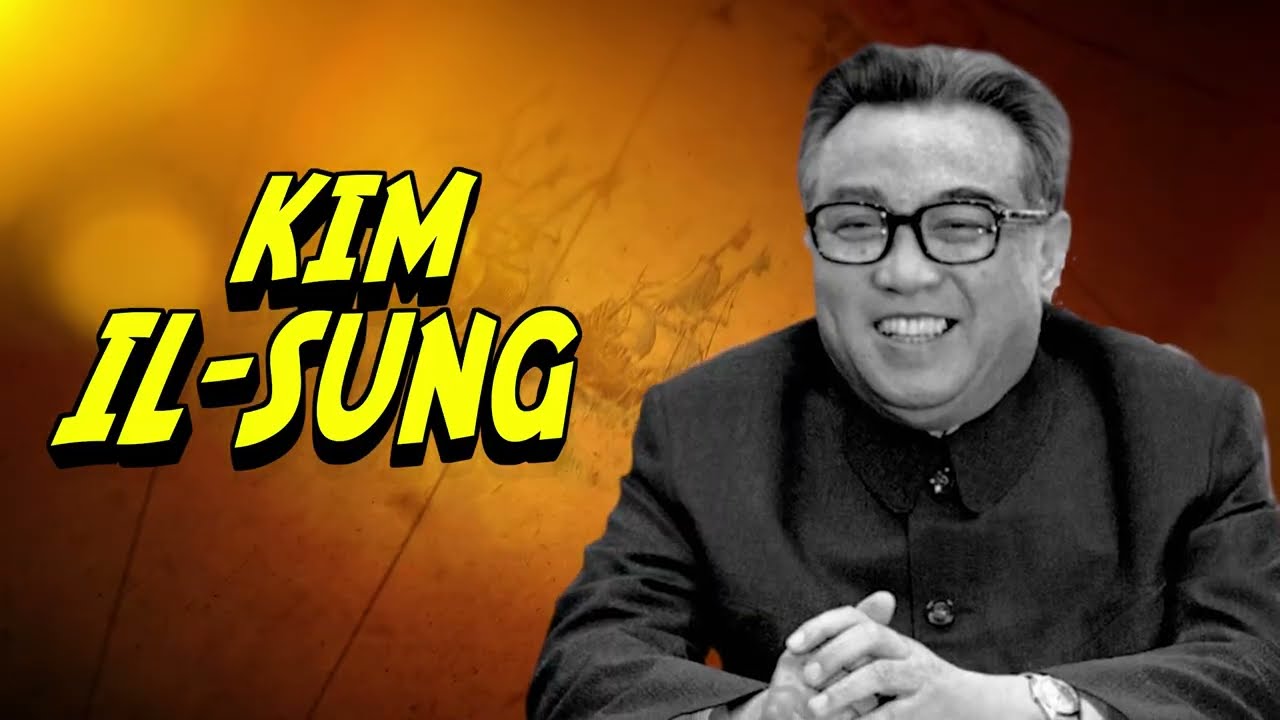
The Soviet Union immediately consolidated control over the northern half, installing a 33-year-old anti-Japanese guerrilla fighter named Kim Il Sung as their proxy. He was not chosen by the Korean people, but by Moscow, and he had spent years studying Stalinist methods of control. By 1948, he had declared the Democratic People’s Republic of Korea and was rapidly dismantling any semblance of civil society.
He understood that fear alone was insufficient to rule; the population needed to believe in something greater than themselves. He constructed a quasi-religious ideology called Juche, or self-reliance, which officially promised independence from foreign powers but in reality meant total submission to his will.
His portrait was hung in every home, and children were taught to bow to his image before eating. Teachers were instructed to credit him for good harvests and even clear weather. This was not a spontaneous cult of personality; it was a meticulously planned, top-down system of psychological control that worked with terrifying efficiency.
However, belief was not enough to secure absolute power. The regime needed a mechanism to identify, isolate, and punish entire families for generations, creating a permanent underclass of enemies to justify the state’s brutality. In the early 1950s, Kim Il Sung introduced the songbun system, a social classification that branded every citizen based on their family’s perceived loyalty.
The system originally contained 51 categories but was simplified into three main groups: core, wavering, and hostile. The hostile group included families who had owned land before the revolution, anyone with relatives in South Korea, religious families, and anyone accused of disloyalty since 1945. This classification was inherited; a judgment made against a grandfather could condemn his grandchildren to a life of persecution.
There was no appeal, no legal challenge, and no way to escape the label. By the late 1950s, Kim Il Sung had begun eliminating political rivals not through trials or exile, but through simple disappearance. The regime needed a physical location to send those it could not execute publicly and could not safely release, a place that would spread terror without anyone being allowed to speak of it.
That place became the kwanliso, the political prison camp system, which was fully operational by the early 1960s. By the 1980s, at least six major camps existed across North Korea’s remote mountain regions, built far from cities and hidden from the outside world. Camp 14, near Kaechon, covers approximately 155 square kilometers, making it larger than Washington, D.
C. Camp 22, near the Chinese border, held an estimated 50,000 prisoners at its peak. None of these camps appear on official North Korean maps, and the government still denies their existence to this day.
A person does not need to commit a crime to enter these camps; under the principle of Yeon-jwa-je, or guilt by association, three generations of a family can be punished for the actions of one person.
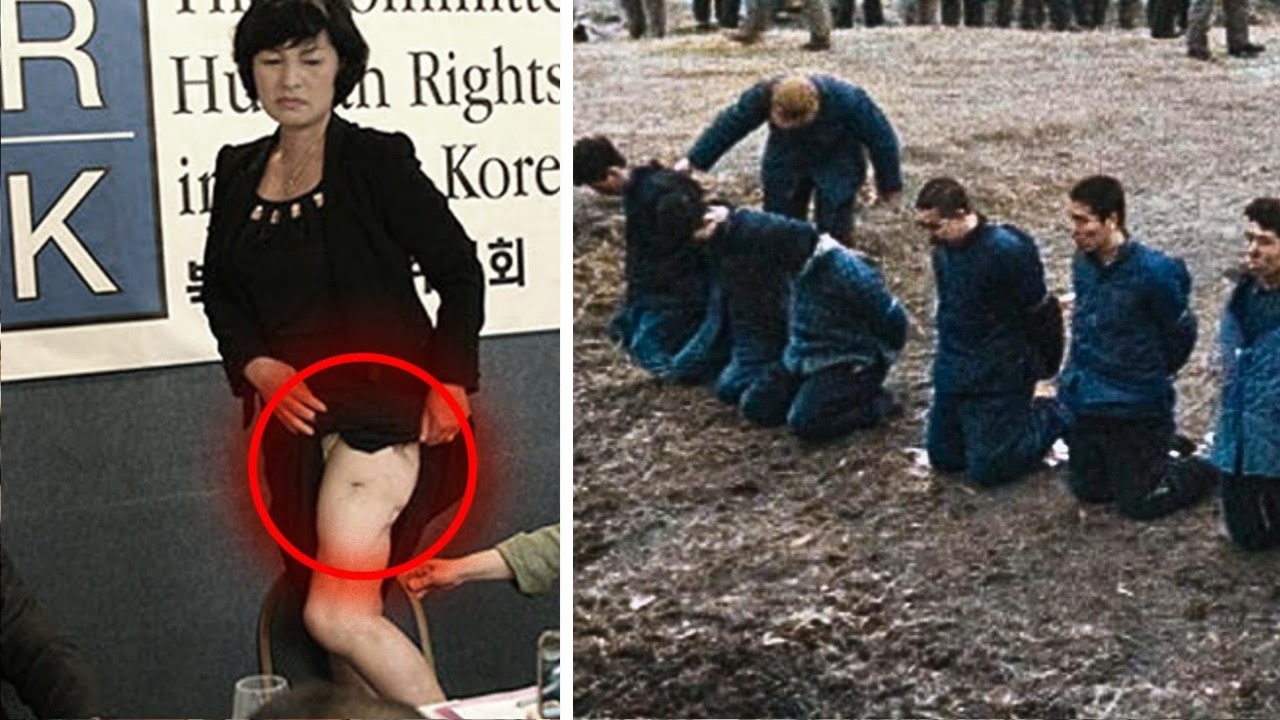
 A man makes a careless comment criticizing the government, and within days, his wife, children, and parents may all be arrested. They may have done nothing wrong and know nothing about what he said. The most harrowing account of life inside a kwanliso comes from Shin Dong-hyuk, who was born inside Camp 14 in 1982.
He did not know the outside world existed; for him, the camp was the entire world. From childhood, he was taught that prisoners existed only for work. Food was rationed according to the amount of work a person completed, creating a system designed to slowly destroy people through starvation and exhaustion.
A former guard, Ahn Myong-chol, who escaped in 1994, described prisoners being beaten with iron rods, starved as punishment, and forced to watch public executions inside the camps.
In 2013, the United Nations created a commission of inquiry to investigate human rights abuses in North Korea, led by former Australian judge Michael Kirby. The final report, released in February 2014, was 372 pages long and compared North Korea’s prison camp system to the atrocities committed in Nazi Germany and the Soviet gulag. The report estimated that between 80,000 and 120,000 people were being held in political prison camps at that time.
Public executions are not sudden events; they are carefully planned spectacles designed to maximize terror. Notices are given days beforehand, and citizens in the area are ordered to attend. Schools bring students in groups, and factory workers are marched from their workplaces.
The Database Center for North Korean Human Rights in Seoul has recorded more than 1,300 confirmed public executions between 1970 and 2020, with researchers believing the real number is much higher.
The crimes that lead to public execution reveal exactly what the regime fears most. Distributing South Korean media has been punishable by death since 2012, and owning a Bible can result in a death sentence. Contacting the outside world through an unauthorized phone can lead to execution, as can attempting to escape the country.
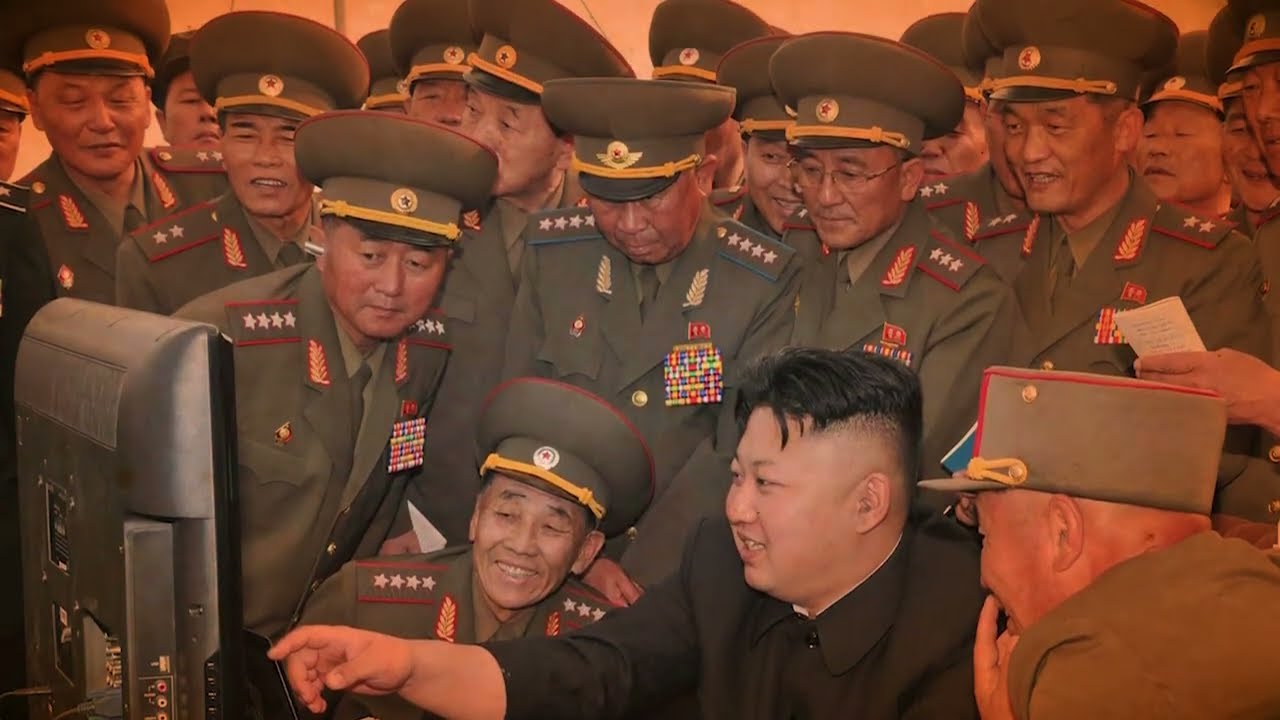
In December 2013, Kim Jong Un ordered the execution of his own uncle, Jang Song Thaek, who had been one of the most powerful men in the country. He was arrested during a Politburo meeting and executed four days later, sending a clear message to the ruling elite that no one was untouchable. In 2014, Hyon Yong Chol, the Minister of the People’s Armed Forces, was reportedly executed with an anti-aircraft gun, a deliberate choice of weapon to ensure nothing remained of his body.
Every form of control in North Korea depends on one thing: the population must not know that another way of life exists. All media belongs to the state, and the country’s three television channels broadcast only content approved by the Propaganda and Agitation Department. Foreign reporters are rarely allowed into the country, and when they are, every part of their visit is controlled.
 The internet, as most people know it, barely exists; instead, the country uses a closed network called Kwangmyong, which provides access only to approved sites. Radios sold legally in North Korea are physically modified so they cannot receive foreign broadcasts, and every device must be registered with local authorities. For many years, this system was extremely effective, but the first major crack appeared along the Chinese border during the late 1990s.
Smuggled media began entering the country, first VHS tapes, then DVDs, and later tiny SD cards that could be hidden almost anywhere. The most popular content was South Korean television dramas, which showed ordinary people living in modern homes, driving cars, and speaking freely. That image was more threatening to the regime than any political speech.
The government’s response became much harsher during the 2010s, with special surveillance teams carrying out surprise home searches looking for foreign media. In 2020, the Reactionary Thought and Culture Rejection Act made the distribution of South Korean content punishable by death, with simply watching it resulting in up to 15 years in a labor camp. A second law passed in 2021 made it illegal for young people to use South Korean slang, meaning the government was now policing the way people talked.
There is no legal way to leave North Korea. The border with South Korea is one of the most heavily fortified places on Earth, lined with mines, fences, watchtowers, and sensors. Instead, people flee north across the Tumen or Yalu rivers into China, where they face shoot-to-kill orders from North Korean soldiers.
Many drown, many are shot, and those who reach China often face a different danger. China does not recognize North Koreans as refugees, classifying them as illegal economic migrants and returning them directly to North Korean security officials. Survivors describe brutal interrogations involving beatings and sleep deprivation.
Women are especially vulnerable, with an estimated 70% of North Korean women entering China experiencing some form of trafficking. Women who become pregnant by Chinese men and are later returned to North Korea have reported forced abortions and the killing of babies with Chinese fathers.
For those who avoid capture, the route to freedom usually continues through Southeast Asia, often with help from underground networks run by missionaries and defector groups. The number of defectors living in South Korea rose steadily between 1998 and 2012, but after Kim Jong-un took power, border security was strengthened, and the numbers dropped sharply. In 2021, only 63 people reached South Korea.
By early 2024, around 34,000 North Korean defectors had resettled in South Korea since the late 1990s. But reaching Seoul does not end the struggle. Defectors suddenly find themselves in a fast-moving society filled with choices and freedoms they had never experienced, and depression, trauma, and social isolation are common.
The 2014 UN Commission of Inquiry report confirmed what researchers and survivors had been reporting for years, describing crimes against humanity carried out over decades under the authority of the North Korean leadership.
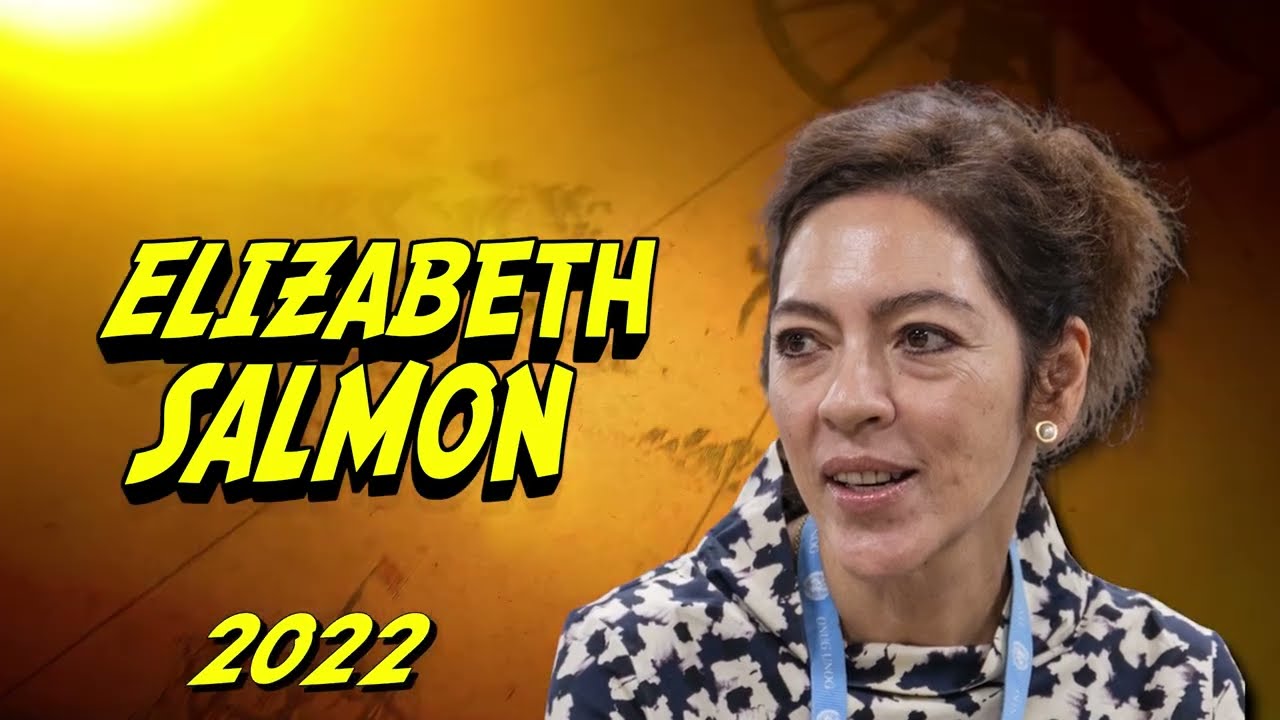 Judge Michael Kirby recommended referring North Korea to the International Criminal Court, but China and Russia blocked the effort. Kim Jong-un never faced any legal proceedings. The United Nations has passed resolutions condemning North Korea’s human rights record every year since 2005, but North Korea rejects them as political attacks.
Sanctions have been the main tool used by Western governments, but North Korea’s response was to accelerate its missile program, carrying out 37 ballistic missile tests in 2022 alone. For Kim Jong-un, nuclear weapons are not a bargaining tool; they are a survival strategy. He watched Muammar Gaddafi give up Libya’s weapons programs and later die, and he drew his own conclusion: nuclear weapons are what keep him alive.
China remains the one country with real leverage over North Korea, supplying around 90% of its imported energy, but Beijing sees a stable North Korea as preferable to a collapse that could send millions of refugees into China.
The generation that grew up after the famine of the 1990s is different from the generation before it. They were raised around the Jangmadang markets and learned to trade and negotiate in areas the state could not fully control. Many have watched South Korean television, and some have spoken with Chinese traders or relatives who escaped years ago.
Kim Jong-un understands this, and the anti-culture laws and restrictions on South Korean speech point to a leadership that feels threatened. Governments do not ban words unless those words are already spreading. The defector community in South Korea has also become more visible, with people like Yeonmi Park speaking before the UN and Thae Yong-ho, a former diplomat, becoming a member of South Korea’s National Assembly.
Groups in South Korea continue sending information into North Korea through balloons carrying USB drives and shortwave radio broadcasts, and Pyongyang reacts strongly to these efforts.
In 2023, a South Korean court issued an arrest warrant for Kim Jong-un and other officials over crimes committed against defectors. The warrant cannot realistically be enforced, but it became part of a growing legal record. The UN, South Korean courts, and human rights organizations continue collecting testimony and preserving evidence.
Today, the prison camps still exist, public executions still happen, and the border remains one of the most dangerous in the world. More than 26,000 people continue living inside this system, trying to survive one day at a time. For more than 70 years, the regime has tried to hide these realities from the world, but defectors, survivors, journalists, and researchers have kept documenting what happened.
The idea that nothing can be done is not true; people are doing something, slowly, imperfectly, and often at great personal risk. The harder truth is that it is still not enough.
