The Soviet Union’s rise to power in 1917 was heralded by many as the dawn of a new era of justice and equality, a promise that quickly curdled into one of the most brutal chapters in human history. Within months of seizing control, the Bolshevik government began constructing a shadow system of repression designed to eliminate anyone who did not fit its rigid ideological vision. What began as a handful of makeshift detention centers in monasteries and barracks metastasized into the Gulag, a sprawling archipelago of forced labor camps that would consume millions of lives and redefine the meaning of state-sponsored terror.
The genesis of this horror can be traced to a single, chilling document signed on September 5, 1918. Vladimir Lenin’s decree on the Red Terror granted the fledgling Soviet state the absolute authority to arrest, imprison, and execute any individual deemed a threat to the revolution. This was not framed as a temporary wartime expedient but was enshrined as official state policy, a foundational principle that would govern the country for decades.
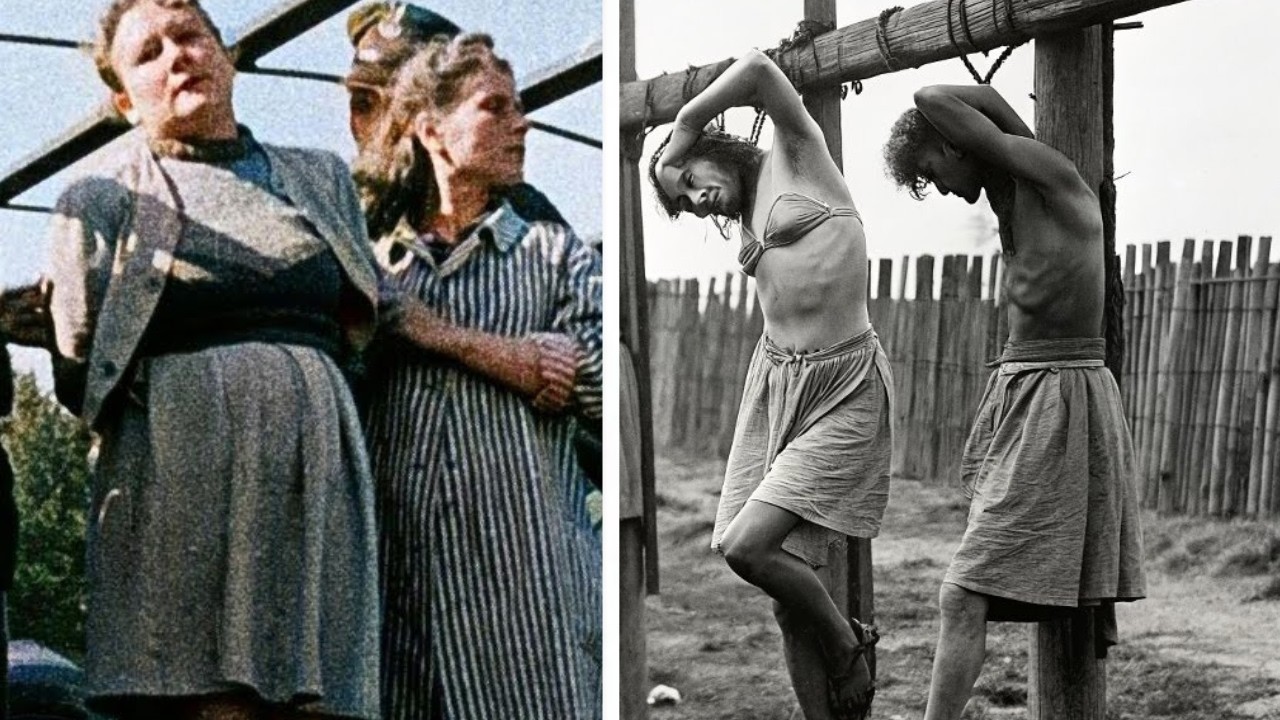 The decree was carried out with terrifying efficiency, transforming the abstract concept of political repression into a concrete, industrialized machinery of death.
By November 1918, the Cheka, the secret police force founded by Felix Dzerzhinsky, had established forced labor camps across the expanse of Soviet Russia, often within the walls of old monasteries, factories, and military barracks. These early institutions were openly referred to as concentration camps, a term that predated their more infamous Nazi counterparts. The fundamental premise was simple and brutal: prisoners were not merely incarcerated but were expected to serve as a captive labor force, digging trenches, felling timber, and extracting coal.
The camps existed to generate resources for the state, with human suffering treated as a mere operational cost.
The Solovetski Islands in the White Sea became the proving ground for the entire system, evolving into the Soviet Union’s first major camp complex by 1922. Known as SLON, this camp housed former tsarist officers, priests, political dissidents, and common criminals together within a frozen monastery complex. It was here that guards developed the methods of psychological and physical torment that would later be replicated across the entire Gulag network.
Solovetski was not an anomaly; it was the blueprint, a laboratory for cruelty where the tactics of dehumanization were perfected before being scaled to a continental level.
The system received its official bureaucratic identity on April 25, 1930, when Joseph Stalin created the Main Administration of Corrective Labor Camps, or GULAG, as part of the OGPU. With this administrative stroke, the camps gained directors, budgets, production targets, and official paperwork, transforming arbitrary terror into a rationalized, state-run enterprise. The horror was now institutionalized, governed by quotas and ledgers that quantified human misery in terms of output and efficiency.
The Gulag was no longer a series of ad hoc prisons; it was a permanent, self-sustaining pillar of the Soviet state.
The machinery of arrest was designed to maximize psychological devastation, with the majority of detentions occurring between two and four in the morning. NKVD officers understood that the human mind is at its most vulnerable and disoriented in the pre-dawn hours, a time when a knock on the door signaled the end of the world. Two or three men in dark coats would arrive, sometimes with a warrant, often with only a blank form.
The accused were given minutes to dress, frequently told they would return soon, a lie that most would never live to see exposed.
In 1937 alone, the NKVD arrested approximately 1. 5 million people, executing around 681,000 of them. These were not wartime casualties but peacetime arrests carried out by the Soviet government against its own citizens.
The arrests were driven by Order No. 00447, signed by NKVD chief Nikolai Yezhov, which assigned each region specific arrest quotas. Category 1 meant immediate execution, while Category 2 meant a decade in the camps.
Local officials competed to exceed their targets with the same zeal as factory managers racing to surpass production goals, turning human beings into mere statistics in a macabre numbers game.
Following arrest, prisoners were funneled into holding prisons like Moscow’s Lubyanka, the headquarters of the NKVD, which processed thousands during the Great Terror. Butyrka prison became so overcrowded in 1937 and 1938 that prisoners reportedly slept in shifts due to a lack of floor space. The Soviet legal system demanded a confession, a rule that dictated the brutal reality inside interrogation rooms.
 In January 1937, Stalin personally approved the use of physical pressure, sanctioning a wave of torture that would break the minds and bodies of countless innocents.
The most common method of extracting confessions was sleep deprivation, known as the conveyor. Interrogators worked in rotating shifts, keeping prisoners awake under blinding lights for days on end. Some interrogations lasted 48 hours, while others stretched beyond a hundred.
After several days without sleep, the brain begins to fracture; prisoners would hallucinate and lose their grip on reality, becoming highly susceptible to suggestion. Interrogators exploited this state to implant false memories of meetings, conspiracies, and crimes, until many prisoners began to believe the fabricated stories themselves.
Alexander Weissberg, an Austrian physicist arrested in 1937, later described how four days without sleep left him unable to trust his own memory. His interrogators insisted he had attended secret meetings, and eventually, he began to believe them, signing a partial confession before later recanting. Most prisoners never regained that clarity, their minds permanently broken by the relentless assault.
Violence was a constant companion to sleep deprivation, with prisoners beaten with rubber batons, metal rods, and fists, or subjected to falanga, the brutal beating of the soles of the feet.
Cold was also weaponized, with prisoners in northern prisons stripped naked and left in freezing cells or outdoor yards during winter. At that point, even a blanket or a warm cup of water became leverage for interrogators. The confessions produced were often absurd, yet they were used to justify the execution of the nation’s elite.
Nikolai Bukharin, one of Lenin’s closest allies, confessed to terrorism and spying, while Marshal Mikhail Tukhachevsky, a top military commander, confessed to working for Germany before his execution in 1937.
After the confession came the sentence, and after the sentence came transport. Prisoners were moved in Stolypin rail cars, modified prison wagons with barred windows, no heating, and terrible ventilation. They were packed so tightly that many could not lie down simultaneously, forced to endure journeys lasting weeks with limited water and overflowing buckets for toilets.
The train ride from Moscow to Vladivostok could take three weeks, a hellish prelude to the even greater horrors that awaited. For those headed to Kolyma, the journey continued by sea on old cargo ships.
In 1933, the ship Dzhurma became trapped in Arctic ice while carrying more than 3,000 prisoners, and Soviet authorities never released the true death toll. Another disaster occurred in 1939 when the Indigirka sank near Japan with around a thousand prisoners from Kolyma, drowning roughly 740 people who were locked inside the cargo hold. Prisoners arriving at Magadan, the gateway to Kolyma, first passed through overcrowded transit camps where many slept on the open ground.
Large numbers died before even reaching their final camps, their deaths never included in official records.
By the time prisoners reached their assigned camps, they had already survived months of arrest, interrogation, and brutal transport. Many were starving, carried injuries from torture, and were entirely unprepared for the forced labor that followed. One of the first giant projects built by Gulag labor was the White Sea Canal, constructed from 1931 to 1933 with around 126,000 prisoners working at its peak.
 The 227-kilometer canal was dug mostly by hand through hard Karelian rock, with prisoners using only pickaxes, shovels, and wheelbarrows. Soviet records admitted around 12,000 deaths, though historians believe the true number was at least 25,000.
The Kolyma gold mines became the deadliest part of the Gulag, with mining beginning in 1932 under Dalstroy, a state organization that controlled both the mines and the camps. By 1937, around 500,000 prisoners were spread across dozens of camps in the region, mining gold in temperatures that often dropped below minus 50 degrees Celsius. Officially, the workday lasted ten hours, but in reality, prisoners often spent 14 to 16 hours outside once the long marches through deep snow were included.
Prisoners who collapsed on the march were dragged back by other inmates because guards needed every prisoner accounted for at roll call, alive or dead.
In the logging camps of Siberia and the Ural Mountains, prisoners cut forests with two-man saws while wearing poor clothing and broken boots. Missing quotas meant less food, and trees crushed prisoners regularly, while medical stations had almost no supplies. Gulag labor was also used on giant construction projects, with more than 200,000 prisoners helping to build the Moscow-Volga Canal.
The mining city of Norilsk, now one of the world’s biggest nickel centers, was built almost entirely by Gulag prisoners beginning in 1935.
The food system was one of the Gulag’s main tools of control and death. A prisoner who met the daily work quota received around 800 grams of bread and balanda, a thin soup made from water, rotten cabbage, and fish scraps. This provided roughly 1,500 to 2,000 calories a day, but heavy labor in extreme cold required closer to 4,000 or even 5,000 calories just to survive.
The system guaranteed slow starvation from the start, with a penalty ration of as little as 400 grams of bread for those who failed to meet their quotas. Some camp doctors estimated that prisoners kept on these rations for more than three weeks usually died.
Malnutrition destroyed the body slowly, with pellagra causing cracked skin, diarrhea, and mental collapse, while scurvy made gums rot and wounds reopen. Prisoners near death from starvation were called dokhodyagi, meaning the dying ones, recognized by their slow shuffle, swollen legs, and severe exhaustion. To survive, prisoners searched constantly for extra food, trading clothing for bread or stealing from kitchens despite the risk of brutal punishment.
The camp administration didn’t always need to terrorize political prisoners directly, as the system already had another layer of violence built into it.
Soviet authorities deliberately mixed political prisoners with violent criminals, creating a brutal social hierarchy. Political prisoners were called 58ers, named after Article 58 of the Soviet criminal code, and were often victimized by the criminal prisoners known as the blatnye. In exchange for easier work and better treatment, these criminals helped control other prisoners through intimidation and violence.
At the top were the Vor v Zakone, or thieves in law, who rejected cooperation with the state and controlled daily life in the barracks, deciding who slept near the stove and gambling with other prisoners’ clothing, bread, or even lives.
New prisoners were usually tested within hours of arrival, with political prisoners like teachers, engineers, and doctors often losing their coats, boots, and food on the first night. The camp authorities allowed this because weaker prisoners became easier to control and easier to work to death. Political prisoners were trapped between violent criminals below them and the camp administration above them, with complaining to guards rarely helping.
 Women entered the Gulag through the same system as men but faced additional forms of punishment, including the charge of “member of a traitor’s family.”
If a man was arrested, his wife was often arrested soon afterwards, even if she had committed no crime, with their children usually taken away during the arrest. Children under 12 were sent to NKVD orphanages, while older children were sometimes arrested as well. Pregnant women were not protected from arrest or transport, and women gave birth inside poorly equipped camp medical units.
Babies were usually separated from their mothers within weeks and placed in camp nurseries so the mothers could return to labor, with infant death rates between 30 and 50 percent in some nurseries during the early 1940s.
Sexual violence was widespread, as guards had total power over female prisoners, and historians have found almost no records of guards being punished for sexual assault during Stalin’s rule. Some women entered relationships with guards or camp officials because it improved their chances of survival, with extra food or lighter work meaning the difference between life and death. One of the harshest punishments inside the Gulag system was the Shizo, a punishment isolator, a tiny cell kept barely warmer than the outside air.
In Kolyma winters, that could mean temperatures close to minus 40 degrees Celsius inside the cell itself, with prisoners receiving only around 300 grams of bread and water each day.
A standard sentence in the Shizo lasted ten days, which could easily cause permanent frostbite, nerve damage, or death. Another common punishment was transfer, allowing camp authorities to move prisoners to harsher camps or deadlier work assignments without any court review. One of the cruelest psychological punishments involved false promises of release, where prisoners nearing the end of a ten-year sentence were told they were finally going home.
Then, on the expected day of release, the prisoner was handed new paperwork with another sentence attached, often another ten years.
This became especially common after World War II, as Soviet authorities feared surviving political prisoners had become dangerous simply because they’d lived through the camps and seen too much. Between 1945 and 1950, many prisoners who expected freedom instead received fresh sentences, and some broke completely after hearing they would never leave. The Gulag system finally began shrinking when Joseph Stalin died on March 5, 1953, after suffering a stroke four days earlier.
On March 27, 1953, only weeks after Stalin died, the Soviet government announced a major amnesty that released around 1. 2 million prisoners, but political prisoners were excluded.
What followed was not immediate freedom but resistance, with around 16,000 prisoners at Norilsk going on strike in the summer of 1953. The strike lasted 67 days before Soviet authorities ended it through negotiation and force, and more uprisings followed. Prisoners rebelled at Vorkuta in 1953, and at Kengir in Kazakhstan, prisoners held control of the camp for over 40 days in 1954 before Soviet troops entered with tanks, killing around 500 prisoners.
On February 25, 1956, Nikita Khrushchev delivered his famous secret speech to Communist Party officials, openly describing many of Stalin’s crimes, including torture, false confessions, and executions.
Between 1956 and 1958, large numbers of political prisoners were finally released, but many returned home to discover their apartments had been given to other people. Their jobs were gone, their families destroyed, and the Soviet government offered no real compensation. Most survivors only received a document stating that their original conviction had been unjustified, then were expected to continue living as if nothing had happened.
The Gulag wasn’t built by monsters alone; it was built by administrators, paperwork, quotas, and ordinary officials following orders inside a massive bureaucracy, which is what makes it so disturbing. Not just the horror itself, but how normal the system looked while it was happening, and systems built by ordinary people can always be built again.
