The body of Benito Mussolini, the dictator who ruled Italy for over two decades through fear and violence, swung lifelessly from a steel girder at a Milan gas station on April 29, 1945, as thousands of Italians screamed their fury at the corpse of the man who had plunged their nation into ruin. The spectacle in Piazzale Loreto was not merely an execution—it was the violent, visceral closing chapter of a brutal era, witnessed by a public that had finally been freed from his iron grip.
Mussolini’s final hours were a desperate, chaotic flight from the justice he had long evaded. For over twenty years, from 1922 to 1943, he had controlled every facet of Italian life, demanding absolute loyalty while his secret police imprisoned, tortured, and murdered anyone who dared to oppose him. His image hung in offices, schools, and homes, a constant reminder of his omnipotence.
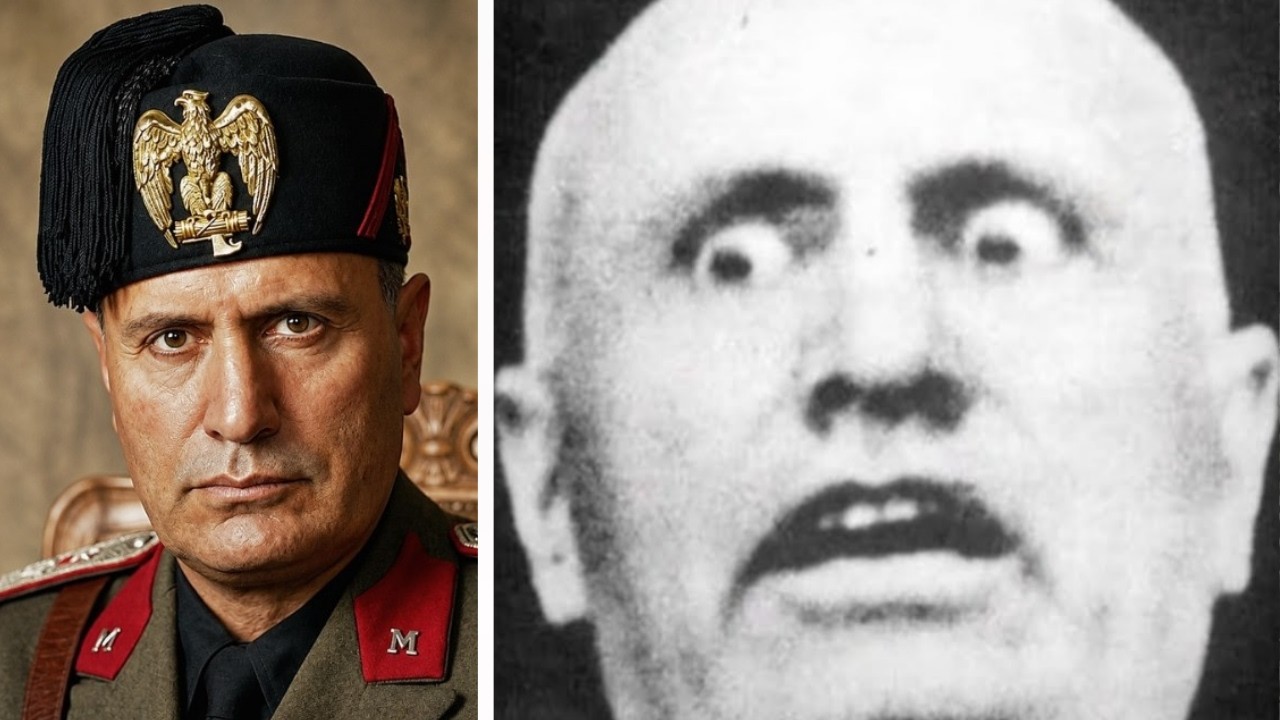 Yet, the empire he built on bravado and terror crumbled when he dragged Italy into World War II alongside Nazi Germany in 1940, believing he could resurrect the glory of ancient Rome.
The war exposed the profound weakness of his military. Italian soldiers fought with courage but lacked the weapons, equipment, and supplies necessary to sustain a modern conflict. They suffered catastrophic defeats in North Africa, Greece, and the Soviet Union.
As the war dragged on, Italian families starved, cities were reduced to rubble by Allied bombing, and the hollow promises of the Duce began to ring empty. By July 1943, the nation had reached its breaking point. The Allied invasion of Sicily that month triggered a political crisis, and on July 25, the Grand Council of Fascism voted to remove him from power.
King Victor Emmanuel III ordered his arrest, and the man who had once commanded absolute authority was led away in a military car, dazed and defeated.
But his story was not over. Adolf Hitler, his steadfast ally, refused to let him fall so easily. In September 1943, German commandos, led by SS officer Otto Skorzeny, executed a daring rescue mission dubbed “Operation Oak.”
They landed gliders on the remote mountain hotel where Mussolini was being held in the Gran Sasso range and, without firing a single shot, freed him and flew him to safety in Germany. Hitler then installed him as the figurehead of a new fascist state, the Italian Social Republic, based in the small town of Salò on Lake Garda. However, this was a mere shadow of his former empire.
Mussolini was now a puppet, entirely dependent on German support, ruling over a country split in two: the Allied-controlled south and the German-occupied north.
By 1945, this puppet state was disintegrating. German soldiers were exhausted and losing battles on every front. Italian partisans—local resistance fighters—rose up in every city and village, ambushing German convoys and fascist officials.
The once-proud Italian army had collapsed. Food was scarce, streets were dangerous, and fear permeated daily life. Mussolini himself had transformed.
The man who once stood tall and confident now appeared older, weaker, and deeply paranoid. His speeches were rare, and when he did speak, his voice lacked its former power. He spent most of his time in his villa near Lake Garda, heavily guarded by German soldiers, more a prisoner than an ally.
His closest friends and ministers were either dead, in hiding, or had already switched allegiances. He knew the end was approaching, haunted by the thought of falling into the hands of the people he had ruled with such cruelty.
On April 25, 1945, Mussolini attended what would be his final meeting in Milan. The once-mighty leader sat surrounded by fear, confusion, and defeat. The room was filled with senior fascist officials, men who had once sworn loyalty to him but were now desperate to save themselves.
Many begged him to surrender to the Allies, believing it was the only way to avoid further bloodshed. Others wanted to flee before the partisans reached the city. Mussolini, still wearing his black uniform, remained silent for most of the meeting.
He looked tired, his eyes sunken, his voice carrying no authority. For years, his speeches had filled stadiums; now, his words fell flat, even among his own followers. Deep down, he knew it was over.
The partisans had completely surrounded Milan, and German forces were preparing to withdraw. Even German commanders advised him to escape before it was too late.
That very evening, Mussolini made his decision. He would flee north, hoping to cross into Switzerland. From there, he dreamed of reaching Spain, where dictator Francisco Franco might offer him protection.
Some reports suggest he even hoped to fly to Germany to plead with Hitler one last time. He still believed, in some distant way, that he could rebuild something from the ruins. But in reality, there was nothing left to rebuild.
By his side was his mistress, Clara Petacci. She was only thirty-three years old, young, passionate, and fiercely loyal. Despite the danger, she refused to leave him.
Her family begged her to stay, but she chose to face whatever was coming with Mussolini. For her, he was not just a political leader; he was the man she loved. She did not realize that their journey would end in tragedy just two days later.
Late that night, they left Milan in a small convoy. They were joined by Mussolini’s remaining guards and some loyal officials, forming a column of about fifty vehicles, mostly belonging to the German 52nd SS Brigade under Lieutenant Fritz Birzer. The roads were dark and tense, filled with retreating soldiers, abandoned vehicles, and the echo of distant gunfire.
The Allies were approaching, and partisans had set up checkpoints everywhere. Mussolini disguised himself as a German soldier, wearing a heavy coat, oversized boots, and a steel helmet that sat uncomfortably on his head. To anyone taking a quick glance, he looked like any other exhausted soldier.
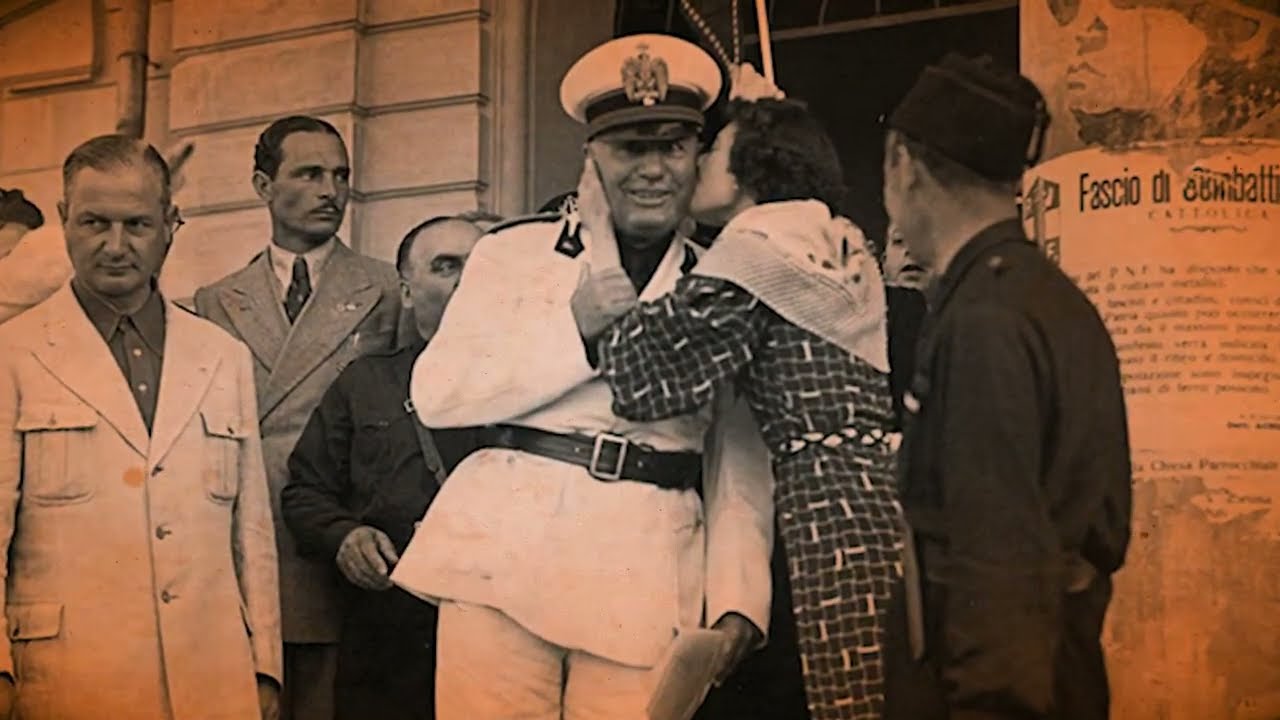 But his face was pale and his expression empty. He had lost a lot of weight, his hair had grayed, and his once-confident posture was gone. As the convoy moved north, it followed winding roads along Lake Como, passing through small villages where residents watched nervously from behind windows.
Every few miles, German soldiers stopped to check for ambushes, but partisans had already taken control of many areas around the lake. Skirmishes broke out nearby, and gunfire echoed in the mountains. The Germans realized they were surrounded in enemy territory.
Mussolini’s convoy continued toward the Swiss border, only about eighty kilometers away, but reaching it was nearly impossible. Partisans had closed most of the mountain passes. Rumors spread that Mussolini was among the fleeing Germans, and resistance groups were on high alert.
By the morning of April 27, the convoy reached the village of Musso, just outside Dongo. The mood was grim. Soldiers were tired, roads were muddy, and everyone felt that something was about to happen.
Here, partisans from the 57th Garibaldi Brigade stopped the convoy, a group of determined resistance fighters led by Pier Luigi Bellini delle Stelle and Urbano Lazzaro. They had set up a barricade on the narrow road. The German commander, Lieutenant Birzer, got out to negotiate.
The partisans agreed to let the German forces continue their retreat, but they insisted on searching the vehicles. One by one, they searched every truck. Most carried soldiers, weapons, and supplies.
But when they reached a certain truck near the end of the column, something caught their attention. Inside, under a cover, they noticed a figure sitting rigidly. He wore dark glasses and a large helmet that did not quite fit his head.
His uniform was German, but his demeanor was different. When the cover was removed, the resistance fighters froze in their tracks. They recognized him immediately.
Mussolini was finally, and irrevocably, a prisoner.
He was taken with Clara Petacci to the Dongo town hall under heavy guard. It was a small town on the lake shore, but it became the center of Italy’s attention that day. News of his capture spread faster than anyone could have imagined.
Within hours, people from neighboring villages flocked to see for themselves if it was true. For years, they had suffered under his rule, hiding from bombs and starving in silence. Now, the man responsible for their misery was sitting just a few meters away, no longer protected by soldiers or power.
Outside the town hall, crowds began to gather. Resistance fighters guarded the place with their rifles, unsure of what to do next. Some demanded immediate justice, calling for Mussolini to be executed on the spot.
Others argued that he should be handed over to the Allied forces, who were only days away from reaching northern Italy. They believed a fair trial would reveal to the world the crimes he had committed. The atmosphere was charged with anger, tension, and uncertainty.
Inside, the scene was entirely different. Mussolini sat quietly on a wooden chair, surrounded by guards. He barely uttered a word.
His voice, which once commanded, was now silent. His face looked pale and lifeless. He seemed to have accepted the fact that there was no escape this time.
Clara Petacci sat beside him, refusing to leave. She held his hand tightly, whispering softly and begging the guards not to hurt him. The resistance fighters guarding them did not know how to behave.
Many of them had lost friends and family to Mussolini’s regime. Some had been tortured by the fascist police. Others had witnessed their homes destroyed by bombing.
Now, they stood face to face with the man responsible for all of it. Every minute that passed, the decision grew heavier. As evening approached, local leaders sent urgent messages to the higher resistance authorities in Milan.
They needed clear instructions on what to do with Mussolini.
The National Liberation Committee, which led the resistance in northern Italy, was aware of the risks. If they handed him over to the Allies, there was a chance he might somehow escape punishment. There were still loyal fascists and German officers nearby who might try to rescue him.
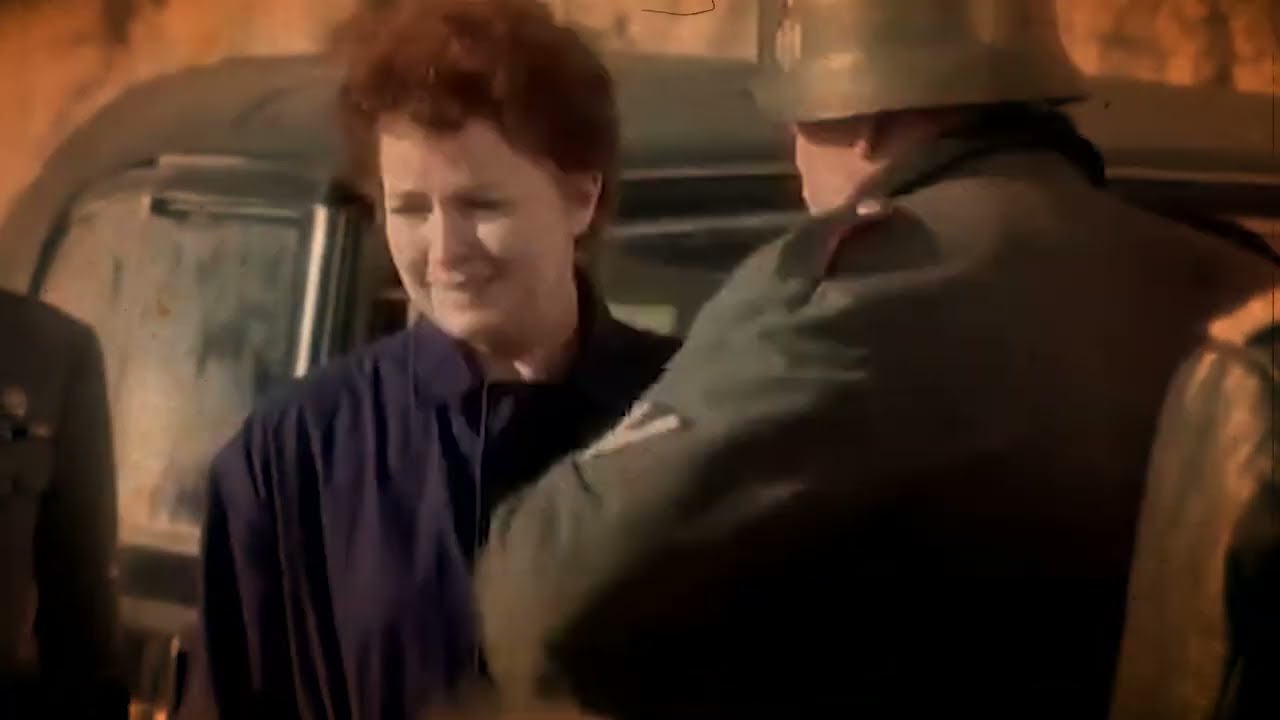 They feared that if he fell into Allied hands alive, he might use his political influence to save himself. That night, the decision was made. Walter Audisio, a resistance commander known by his code name “Colonel Valerio,” received secret orders from the National Liberation Committee in Milan.
His mission was to execute Mussolini and all the senior fascist officials captured with him immediately. Mussolini and Petacci were quietly moved out of Dongo under the cover of darkness. They were taken to the small village of Mezzegra, a few kilometers away, to a stone farmhouse owned by a family named De Maria.
The weather was cold and rainy. Guards placed them in a small upstairs room. Mussolini sat heavily on a bed and removed his white shoes.
He asked no questions. He did not beg for mercy. He looked tired and lost in thought.
The empire he had dreamed of was nothing but ruins. He stared at the ceiling, knowing that dawn would bring the end.
It was April 28, 1945. The morning was cold and gray. At dawn, Walter Audisio arrived in Mezzegra with two other men, Aldo Lampredi and Michele Moretti.
They carried papers signed by the National Liberation Committee with official execution orders. Mussolini and Clara Petacci were to be shot that very day. Mussolini was told to prepare.
He put on a gray coat, a white scarf, and his black hat. His hands trembled slightly, but he offered no resistance. Petacci followed closely, wearing a long coat.
She was crying, but she refused to leave his arm. When a guard tried to separate them, she screamed and held on to him even tighter. She said she would die with him, and everyone knew she meant it.
They were placed in the back of a small truck and driven through the quiet countryside toward the village of Giulino di Mezzegra. After a short journey, the truck stopped near the entrance of Villa Belmonte, a small villa surrounded by stone walls and a metal gate. It was a quiet spot, hidden from the main road.
Audisio got out first and ordered Mussolini and Petacci to follow. They walked slowly, holding hands. Audisio read the death sentence aloud.
Mussolini said a few short words, but his voice was barely audible. Then, at 4:10 PM, the order was given. Audisio raised his submachine gun and fired a burst of bullets.
Mussolini fell to the ground instantly. Petacci screamed and rushed toward him. But before she could reach him, more gunfire rang out.
She fell beside him. The sound of gunfire had barely faded when partisans gathered around the lifeless bodies of Mussolini and Clara Petacci. The dictator who once demanded respect and obedience was now just a dead body on the ground, covered in dust and blood.
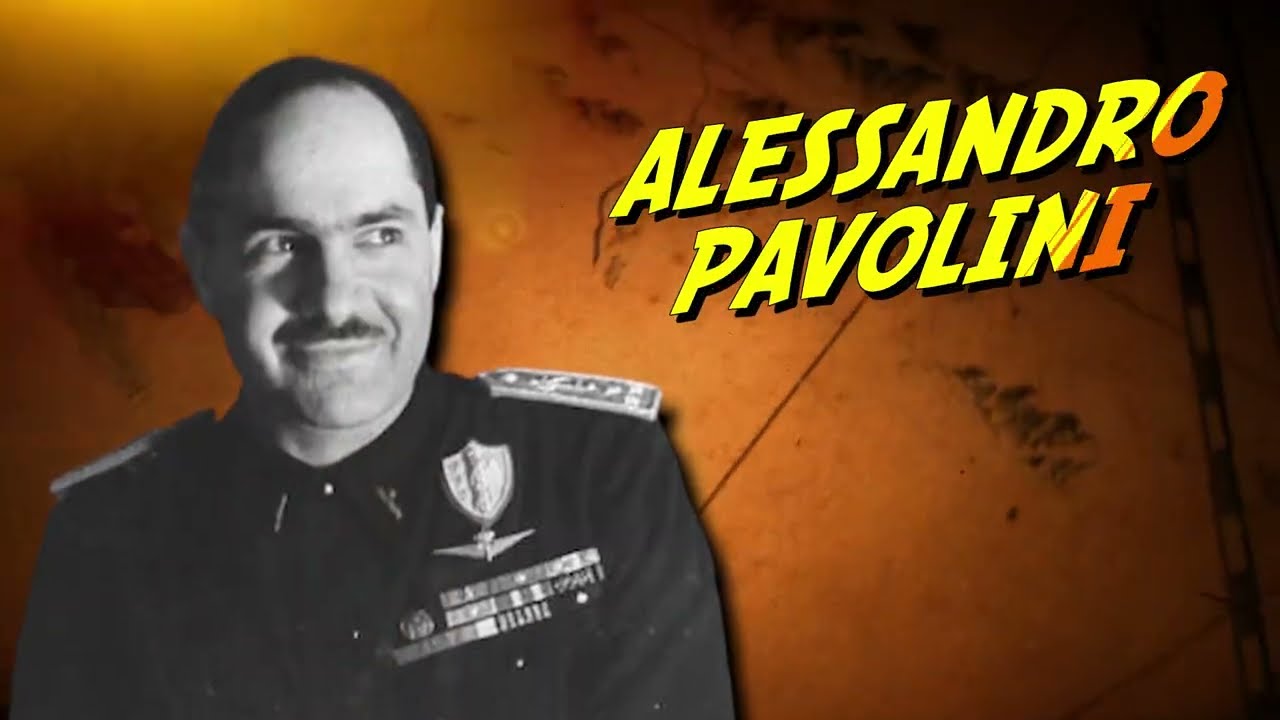
Beside him lay the bodies of other fascist leaders captured in Dongo, including Achille Starace, Alessandro Pavolini, and several ministers of the Italian Social Republic. These men had remained loyal to Mussolini until the end. They paid the same price for it.
The partisans worked quickly. They loaded the bodies onto a military truck and drove from Mezzegra back toward Dongo. News of Mussolini’s death spread rapidly.
Within hours, messages were passing between villages. Finally, people who had lived in fear of his police and propaganda allowed themselves to cheer. But others were in complete shock.
By the time the truck returned to Dongo that evening, hundreds of locals had gathered. Some shouted insults. Others spat at the truck as it passed.
Many had lost family members during the war, killed in bombings or by fascist soldiers. Their anger was deeply personal. The partisans did not stay in Dongo long.
They knew the world would soon learn of Mussolini’s death, and they wanted to send a message that could not be ignored. Their plan was to take his body to Milan. They believed that displaying his corpse publicly would be the true end of fascism in Italy.
 The journey from Dongo to Milan was slow. The roads were full of rubble, burning vehicles, and scattered German weapons. Along the way, villagers came out to see the convoy.
Some cheered for justice, while others threw stones or sticks. Even children participated, not fully understanding who he was, but knowing he had brought pain to their families. In the early hours of April 29, the truck finally reached the outskirts of Milan.
The city was damaged and broken. Buildings were half-destroyed by bombing, and smoke was still rising from recent fighting. Yet, despite the destruction, word spread quickly, and Milan wanted to see.
At dawn, the truck stopped at Piazzale Loreto. Within an hour, a massive crowd had formed, including men, women, and children. Everyone was pushing forward to see a sight that was almost unbelievable.
Piazzale Loreto was not chosen by chance. Less than a year earlier, in August 1944, fifteen partisans had been executed there by fascist soldiers under Mussolini’s rule. Their bodies had been left in the street for days, humiliated and exposed.
Now, the same square would witness the fall of the man responsible.
The partisans unloaded the bodies from the truck one by one. The crowds moved closer, screaming and cursing. Some spat on the bodies.
Others hit them with sticks. Years of anger and loss exploded in that square. To prevent the crowd from tearing the bodies apart, the partisans decided to hang them upside down from a metal beam at a nearby gas station.
They tied the bodies by their feet using wire and rope. The sight was shocking. Mussolini’s body hung above the crowds, lifeless and still, while people stared in disbelief.
For many Italians, it was the ultimate symbol that the dictator’s reign was truly over. Throughout the morning, thousands came to see the spectacle. Some came out of hatred.
Others out of curiosity. Reporters took photos that quickly spread around the world. By evening, the square was packed with uncontrollable crowds.
The Allies soon intervened and ordered the bodies to be taken down to restore order. They wanted to examine the remains to officially confirm Mussolini’s death. His body and the others were taken to the city morgue, where doctors performed autopsies.
The cause of death was confirmed as multiple gunshot wounds.
Afterward, Mussolini’s body was secretly buried in a cemetery near Milan. The government feared that his supporters would try to find the grave and turn it into a symbol of fascism. They wanted everyone to forget him.
But a year later, on Easter Sunday, April 27, 1946—exactly one year after his death—his remains were stolen from the unmarked grave in the Musocco cemetery. The news spread across Italy within hours. Police were baffled.
The theft was carried out by three men, including Domenico Leccisi, a former fascist supporter, and two friends. They considered themselves loyal followers who wanted to save their leader’s remains. For months, they hid the body in various locations before finally moving it to a monastery near Milan.
The monks there, who did not know the full truth, allowed them to keep it hidden inside one of their walls. When the government finally found the body in August 1946, it caused a wave of embarrassment and anger. Police quietly recovered the remains, and the body was placed under state protection.
For the next eleven years, Mussolini’s remains were kept secret. Only a few officials knew the location.
It was not until 1957 that Italy’s Prime Minister, Adone Zoli, made a decision that surprised many. He allowed Mussolini’s body to be returned to his widow, Rachele Mussolini, as a gesture of reconciliation. The remains were transferred to Predappio, Mussolini’s birthplace in Emilia-Romagna, where they were placed in the family crypt.
Mussolini’s death did not just end a man’s life; it destroyed the last symbol of fascist power in Europe. Two days after his execution, on April 30, 1945, Adolf Hitler committed suicide in his Berlin bunker. His empire was collapsing, and the Third Reich fell shortly after.
In Italy, German forces in the north surrendered to the Allies on May 2, 1945. The war in Europe was over, but the cost was unimaginable. Italy lost nearly half a million people.
Mussolini’s dream of a new Roman empire had ended in catastrophic failure.
