The final chapter of Benito Mussolini’s life was not written in a courtroom, nor was it sealed with the stroke of a judge’s pen. It was etched into the concrete of a Milanese square, where the corpse of the man who had ruled Italy with an iron fist for over two decades was strung up by its heels like slaughtered livestock. The public execution and subsequent desecration of the Duce’s body on April 28, 1945, was a raw, visceral act of collective vengeance that shocked the world and signaled, in the most brutal terms possible, that the era of fascism was over.
The road to that gruesome spectacle began not with a trial, but with a desperate flight. By April 1945, the Axis powers were crumbling, and the Allied advance had pushed deep into the Italian peninsula. The Gothic Line, the last major German defensive stronghold in the north, was collapsing under relentless pressure.
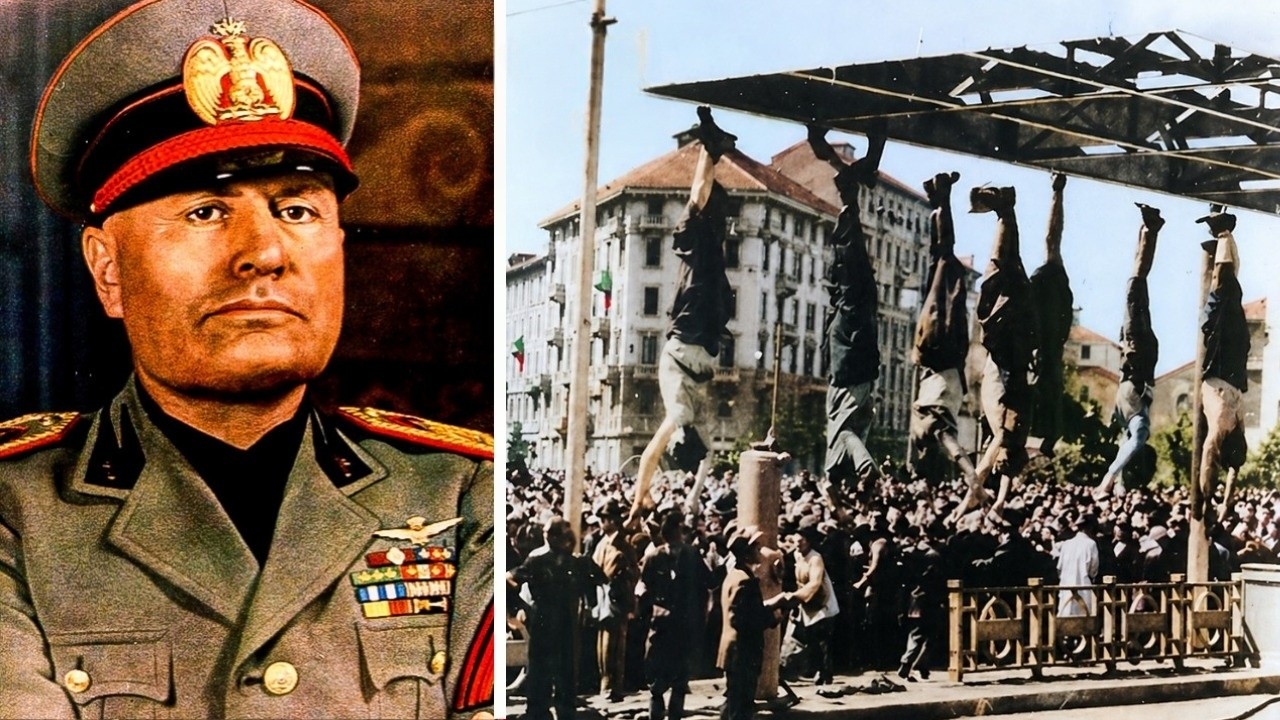 Mussolini, who had been installed as the head of the German-backed Italian Social Republic, or Salò Republic, in 1943, was a leader without a country. His regime was a puppet state, entirely dependent on German military might, and as that might faltered, so too did his authority. The partisans—a diverse coalition of communists, socialists, and other resistance fighters—were surging, seizing control of cities like Milan and Turin in a general uprising declared on April 25th.
With the walls closing in, Mussolini made his final, futile gambit. On April 25th, he fled Milan, accompanied by his mistress, Clara Petacci, and a retinue of loyal fascist officials. Their goal was to reach Switzerland, a neutral haven that promised safety.
To avoid detection, Mussolini donned a German military uniform and helmet, attempting to disappear among the retreating Wehrmacht soldiers. The convoy, moving along the western shore of Lake Como, was a moving target, navigating a landscape now teeming with partisan checkpoints and informants. Every village, every roadblock, was a potential death sentence.
The end came on April 27th, near the town of Dongo. A group of partisans, led by the local commander Pier Luigi Bellini delle Stelle, stopped the German convoy for inspection. The soldiers were separated, and the Italians were questioned.
It was a routine check that turned extraordinary when a partisan recognized the man in the German greatcoat. Despite the disguise, the face was unmistakable. Mussolini was pulled from the truck, his cover blown.
Clara Petacci, who refused to leave his side, was also detained. They were moved to a farmhouse in the nearby village of Giulino di Mezzegra, where they were held under heavy guard, their fate now in the hands of the resistance.
The decision on what to do with the captured dictator was made quickly and without mercy. The Committee of National Liberation for Northern Italy (CLNAI) was the political body coordinating the resistance. While some argued for handing Mussolini over to the Allies for a formal trial, the prevailing sentiment was one of profound distrust and rage.
The memory of 1943, when Mussolini was rescued from captivity by German commandos, was still fresh. There was a palpable fear that a trial would provide a platform for fascist rhetoric, or worse, become a rallying point for a resurgence. More than anything, there was a deep-seated, visceral need for immediate justice—a justice that had been denied to thousands of Italians who had been tortured and executed without due process under his regime.
 The order was given: execute him.
On the morning of April 28th, a partisan commander known as Walter Audisio, operating under the alias Colonel Valerio, arrived at the farmhouse with a small squad. They took Mussolini and Petacci outside, driving them a short distance to the gates of Villa Belmonte. The atmosphere was tense, but there was no grand speech, no final declaration.
It was a cold, methodical act of war. Audisio read out the sentence, and as he raised his weapon, it jammed. A moment of mechanical failure, a breath of hesitation, but the outcome was inevitable.
Another partisan stepped forward, and a burst of gunfire cut down both Mussolini and Petacci. The dictator, who had once commanded the Italian people from a balcony, died against a villa wall, his body riddled with bullets.
But the execution was only the beginning of the spectacle. The partisans understood that a quiet death in a remote village would not satisfy the hunger for retribution that burned across Italy. They needed to show the world, and more importantly, the Italian people, that the tyrant was truly dead.
The bodies were loaded onto a truck and driven through the night to Milan. Their destination was Piazzale Loreto, a square that held a special, painful significance. It was there, on August 10, 1944, that fascist forces had executed 15 partisans, leaving their bodies on display as a grim warning.
Now, the square would serve as the stage for the final act of revenge.
 On the morning of April 29th, the truck backed into the square. The bodies of Mussolini, Petacci, and several other executed fascist leaders were dumped unceremoniously onto the ground. The news spread like wildfire, and within hours, a massive, seething crowd had gathered.
These were not passive observers. They were people who had endured years of war, occupation, and fascist terror. They had lost sons, fathers, and brothers.
They had starved and suffered. All that pent-up fury exploded in a frenzy of violence. People surged forward, kicking, spitting, and screaming.
Some fired pistols into the lifeless corpses, a final act of defiance against a man who had once seemed untouchable.
The desecration reached its horrific peak when the bodies were dragged to a nearby Esso gas station. There, a steel girder was used to hoist the corpses upside down, suspended by their feet. Mussolini hung alongside his mistress, their bodies swaying grotesquely in the morning air.
The image, captured by photographers and newsreel cameras, became one of the most iconic and disturbing photographs of the 20th century. For the crowd, it was a cathartic release, a visible confirmation that the nightmare was over. For the world, it was a shocking display of mob justice, a raw and unfiltered glimpse into the chaos that followed the fall of a dictatorship.
The public display served multiple purposes. It was revenge, pure and simple. It was a warning to any remaining fascist sympathizers that the same fate awaited them.
 And it was a political act, designed to ensure that Mussolini could never become a martyr. By denying him a trial and a dignified death, the partisans stripped him of any heroic narrative. They reduced him to a broken, bloodied object of contempt, ensuring that the legacy of fascism would be forever associated with this image of utter humiliation.
The square, once a site of fascist terror, was reclaimed as a symbol of liberation and retribution.
After the frenzy subsided, the authorities stepped in. The bodies were taken down and transported to the Milan morgue, where an autopsy confirmed the cause of death as multiple gunshot wounds. The government, wary of creating a pilgrimage site, buried Mussolini in an unmarked grave in a Milan cemetery.
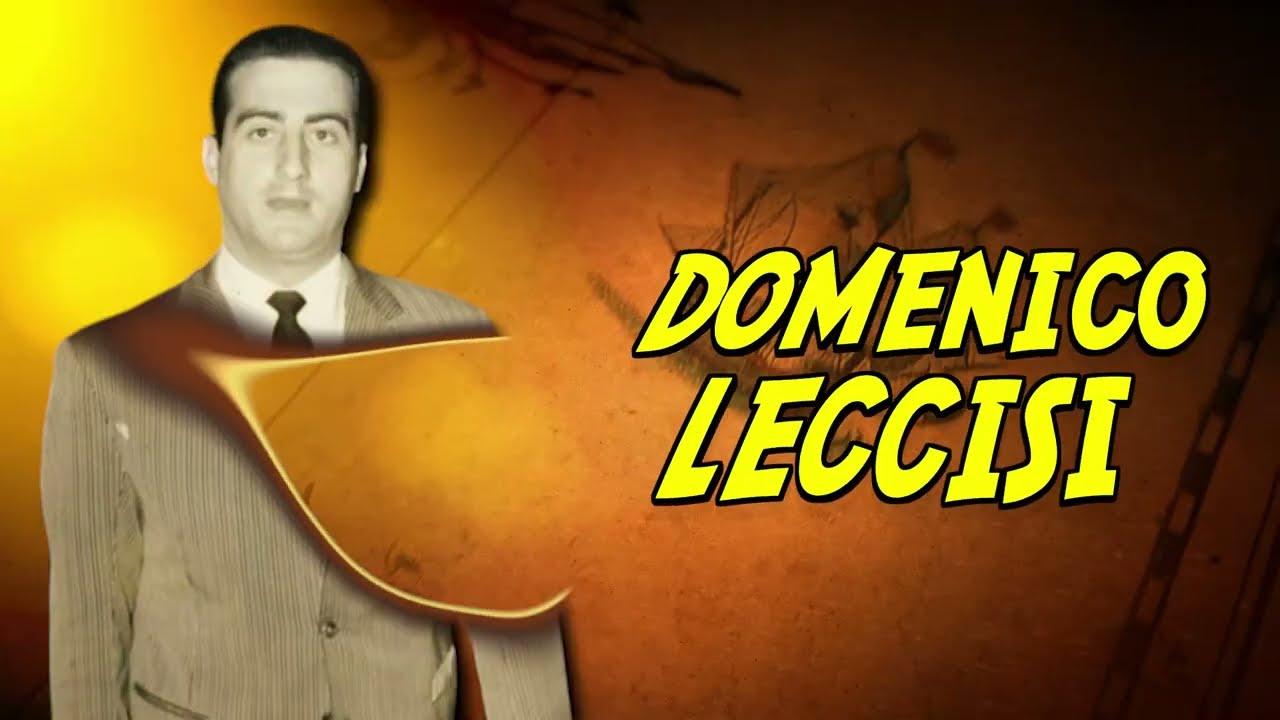
The secrecy was intended to prevent his grave from becoming a shrine for his remaining followers. However, the controversy was far from over. In 1946, a group of fascist loyalists, led by Domenico Leccisi, stole the body from its grave, sparking a nationwide manhunt.
The body was recovered months later, hidden in a small trunk, and the government kept it in hiding for over a decade to prevent further incidents.
It was not until 1957 that Mussolini’s remains were finally returned to his family. He was reburied in the family crypt in his hometown of Predappio, where he was born in 1883. The site has since become a contested location, attracting both history enthusiasts and far-right sympathizers who still view him with reverence.
The controversy surrounding his memory persists, a testament to the deep scars he left on the Italian psyche. The execution at Giulino di Mezzegra and the public display at Piazzale Loreto were not just the end of a man; they were the brutal, unvarnished conclusion to one of the darkest chapters in modern European history. The image of his body hanging upside down remains a stark reminder that history is often written not in ink, but in blood and rage.
