The first Soviet soldiers to push through the dense pine forest north of Berlin on that late April morning in 1945 were not prepared for the silence that followed the gunfire. They had fought through the ruins of a collapsing empire, but what they found behind the fence at Ravensbrück was a different kind of devastation, one that had been carefully engineered for years. The Red Army units of the 49th Army reached the camp on April 30th, the very day Adolf Hitler took his own life in a bunker miles away, and what they encountered was not a battle, but a revelation of systematic horror that would force the world to confront the depths of Nazi cruelty against women.
The camp itself had been a secret in plain sight for nearly six years. Established in May 1939, Ravensbrück was built deliberately in a remote, forested area near the town of Fürstenberg, roughly 90 kilometers from Berlin. Heinrich Himmler, the architect of the SS empire, personally selected the location.
 It needed to be isolated enough to escape casual notice, yet close enough to the capital for efficient administration. The first prisoners arrived on May 18th, 1939, a group of 867 women, mostly Germans and Austrians. They were political dissidents, Jehovah’s Witnesses, women labeled asocial, and those who simply defied the rigid social norms of the Third Reich.
The camp was constructed by male prisoners from Sachsenhausen, who built the very barracks and walls that would soon confine tens of thousands of women in conditions that defied human dignity.
By the time the war expanded across Europe, Ravensbrück had transformed from a detention center into a massive labor and extermination complex. The prisoner population exploded as women from Poland, France, the Soviet Union, Belgium, and the Netherlands were swept into the system. The camp’s capacity was designed for a few thousand, but by late 1944, it held between 45,000 and 50,000 women.
Barracks meant for 150 people were crammed with 400 or more. Sleeping in shifts became a survival necessity. Sanitation collapsed entirely, and typhus, dysentery, and tuberculosis ravaged the population.
Every morning, prisoners stood for roll call in the freezing air, often for hours, and those who collapsed were beaten or shot. The work details were brutal, with women forced into 10-hour shifts at the Siemens factory producing electrical components for the German war machine, receiving no pay and minimal food.
The medical experiments at Ravensbrück represent one of the most harrowing chapters in the camp’s history. Beginning in the summer of 1942, SS physicians, including Karl Gebhardt, Himmler’s personal doctor, conducted procedures on healthy women without consent. They made deliberate incisions in legs to study gas gangrene infections that plagued German soldiers on the battlefield.
They removed sections of shin bones and muscle tissue to test transplantation and nerve regeneration. Many of the women subjected to these procedures were as young as 16. Those who survived were left with permanent disabilities, recurring infections, and deep scarring.
The Polish women who endured these experiments became known after the war as the Ravensbrück rabbits, a term that captured the dehumanization they suffered. Some were given a choice between the operating table and execution, a choice that was no choice at all.
As the Soviet Army pushed westward in early 1945, the Nazis accelerated their murderous operations. A gas chamber was constructed at Ravensbrück, beginning operations in late January 1945. Between 5,000 and 6,000 women were gassed in just a few months.
 The SS doctors conducted selections, marking those too weak to work for transfer to a so-called rest camp. Many women suspected the truth and tried to pinch their cheeks or apply makeup to appear healthier during inspections. Others were too sick to resist.
The gas chamber was used as recently as the last week of April 1945, just days before liberation, and was then partially dismantled in a rushed attempt to hide evidence. Documents were burned, and the SS guards fled, leaving behind a camp filled with the sick, the dying, and the dead.
On April 27th and 28th, with Soviet forces just days away, the SS forced between 20,000 and 25,000 remaining prisoners on a death march westward. The guards shot those who fell behind. Many died of exhaustion, starvation, and exposure in the forests of northern Germany.
Commandant Fritz Suhren fled on April 28th, taking a small group of prisoners as hostages in a desperate attempt to negotiate his own survival. He was captured, tried, and executed in 1950. Behind him, he left a camp that was still holding thousands of women in critical condition.
When the Soviet soldiers arrived, they found between 2,000 and 3,000 women in the main camp, many unable to stand. The soldiers shared their rations, though this act of kindness posed a medical risk, as refeeding severely malnourished people too quickly can cause fatal complications. Soviet medical units set up field hospitals, but the needs vastly exceeded their capacity.
The local German civilian population in Fürstenberg presented a complicated and troubling picture. Many had lived within sight of the camp for years. The smoke from the crematorium had been visible from town, and the smell had been unmistakable.
Prisoners had been marched through local streets to work details. The claim that residents had no idea what was happening inside the camp is almost impossible to accept, yet it was widely made in the years after the war. The Soviets forced some local Germans to enter the camp and witness the conditions, a practice also used by American forces at camps like Dachau and Buchenwald in the same weeks.
This confrontation with the reality of the camp was part of a broader effort to document the atrocities and hold the perpetrators accountable.
 In the days and weeks after liberation, investigators from multiple Allied nations began the painstaking work of piecing together the full scope of what had happened at Ravensbrück. The Nazis had tried to destroy evidence, but documents survived, some hidden by prisoners and others simply left behind in the chaos of the German collapse. Soviet investigators photographed the barracks, the medical facilities, the punishment bunker, and the remnants of the gas chamber.
They interviewed survivors and compiled testimony. British investigators arrived as well, particularly because a number of British nationals, mostly women agents from the Special Operations Executive, had been held and killed at Ravensbrück. Among these were Violette Szabo, Noor Inayat Khan, Lilian Rolfe, and Denise Bloch, all executed at the camp in early 1945.
Their cases became some of the most well-documented examples of the camp’s brutality and helped drive British interest in prosecuting those responsible.
What the investigators gradually uncovered was the staggering scale of the camp’s history. Ravensbrück had held somewhere between 130,000 and 150,000 women and girls over its six years of operation, drawn from over 30 countries. Somewhere between 30,000 and 90,000 of them had died there.
The Ravensbrück trials followed, taking place in Hamburg between December 1946 and July 1948. The first trial concluded on February 3rd, 1947, with 16 defendants tried and 11 sentenced to death. They were executed by hanging on May 2nd, 1947, at Hamelin Prison.
Subsequent trials focused on different groups, including the doctors who had conducted medical experiments. Karl Gebhardt was tried and sentenced to death at the Nuremberg Doctors Trial and executed in June 1948. Fritz Fischer, another doctor involved in the experiments, was sentenced to life imprisonment but was released in 1954 as part of a broader amnesty that many survivors found deeply upsetting.
Not everyone responsible was ever brought to justice. Many guards and SS personnel fled, changed their identities, or were simply never found.
Surviving Ravensbrück did not mean the suffering ended. For many of the women who walked out of that camp, the years and decades that followed were marked by poverty, illness, trauma, and a frustrating lack of recognition. The political geography of post-war Europe complicated almost everything.
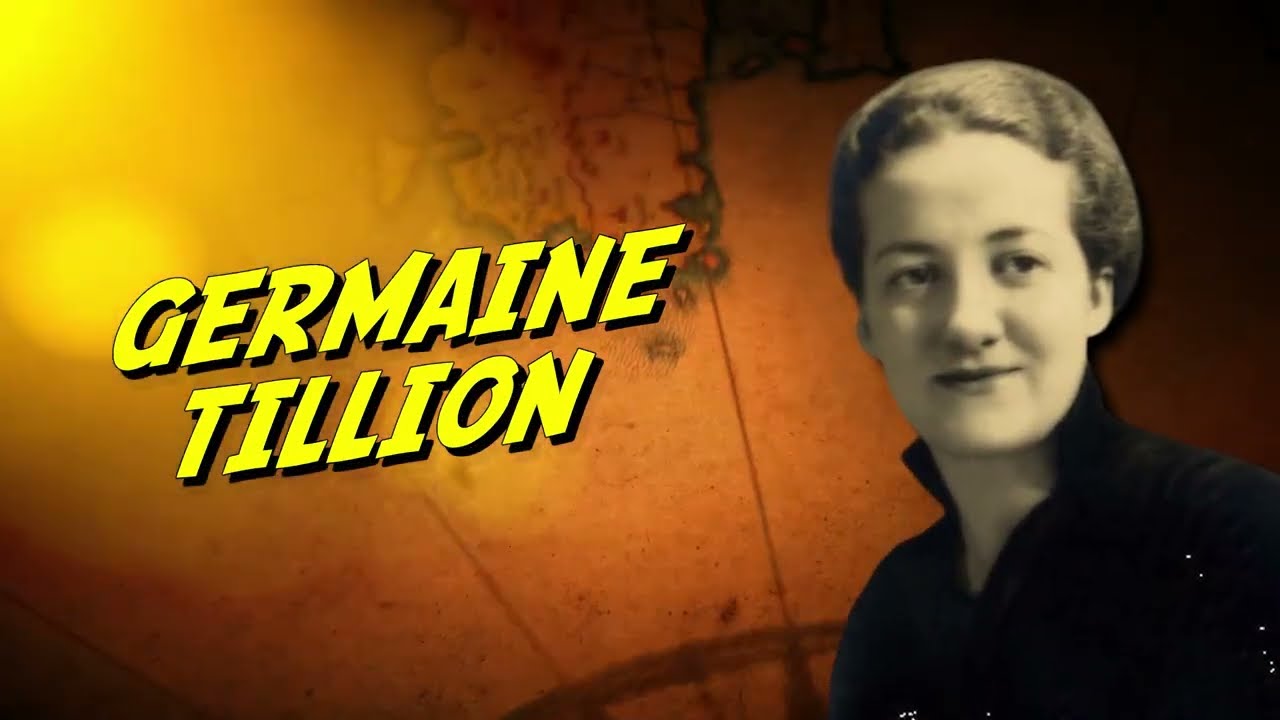 Polish survivors who had been arrested for activities connected to the Western-backed Polish government in exile sometimes found it difficult to get official recognition in post-war Poland. French survivors had a somewhat different experience, as France took considerable pride in its resistance movement, and French women who had been deported to Ravensbrück for resistance activities were celebrated as heroines. Germaine Tillion, a French anthropologist and resistance member who survived the camp, became one of the most important advocates for memory and justice.
She spent decades researching and writing about the camp, producing scholarly work that is still considered essential today. She lived until 2008, dying at the age of 100.
For many survivors across all nationalities, the physical aftermath of the experiments and the years of malnutrition, exposure, and disease meant lives marked by chronic illness. Women who had had bones removed struggled with mobility for the rest of their lives. Those who had suffered severe infections during wound experiments dealt with recurring problems for decades.
The psychological damage was profound and largely unaddressed. The concept of psychological trauma as a medical condition requiring treatment was barely developed in 1945, and the resources simply weren’t available even if the knowledge had been. The question of compensation was a long, painful, and often humiliating process.
West Germany established a reparations program in the 1950s, but survivors had to apply individually, prove their imprisonment, and navigate a bureaucratic system that many found re-traumatizing. Survivors from communist countries often couldn’t access these programs at all due to Cold War barriers. Children born to prisoners at Ravensbrück faced a particularly harsh post-war reality.
Some babies had been born in the camp, and a small number survived infancy, which was remarkable given the conditions. These children, raised in the shadow of their mothers’ trauma, often grew up knowing very little about what their mothers had been through because many survivors simply could not speak about it.
Today, Ravensbrück stands as one of the most important memorial sites connected to women imprisoned under Nazi rule. The camp’s legacy is not just one of horror, but of the resilience of the women who endured it and the ongoing struggle to ensure that such atrocities are never forgotten. The discovery of the camp by Soviet soldiers on that April day was not the end of the story, but the beginning of a long and painful reckoning that continues to this day.
The women who died there, and those who survived, left behind a testament to the depths of human cruelty and the strength of the human spirit. The world must remember Ravensbrück, not just as a place of suffering, but as a warning of what happens when hatred is allowed to govern and when human life is deemed expendable. The silence of the forest around Fürstenberg now holds the memory of tens of thousands of women whose voices were silenced, but whose stories must never be lost.
