The systematic destruction of the ancient Assyrian civilization during World War I remains one of the most under-reported chapters of modern history, a calculated campaign of extermination that erased entire communities from lands they had inhabited for millennia. As the Ottoman Empire crumbled under the weight of military defeat and nationalist fervor, its leaders transformed a centuries-old system of discrimination into an industrial-scale operation of mass murder, targeting Assyrian Christians with a brutality that the world has largely failed to acknowledge. The evidence, drawn from missionary reports, diplomatic cables, and the harrowing testimonies of survivors, paints a picture of coordinated violence that meets every modern definition of genocide, yet the story of the Sayfo, meaning “the sword,” remains obscured by the shadow cast over the larger Armenian tragedy.
The Assyrian people, whose ancestors built the great empires of Nineveh and Ashur centuries before the Roman Empire existed, had endured conquest, displacement, and persecution for thousands of years, but nothing prepared them for the horror that unfolded between 1915 and 1918. Living primarily in the mountainous regions of Hakkari, the plains of Tur Abdin, and the cities of Urmia, Mosul, and Diyarbakir, these Christian communities had maintained their distinct identity through language, faith, and tribal structures that predated Islam. Their churches, some dating back to the first centuries of Christianity, served as the spiritual and cultural anchors of a people who had survived the rise and fall of countless empires, only to face extinction at the hands of their own government.
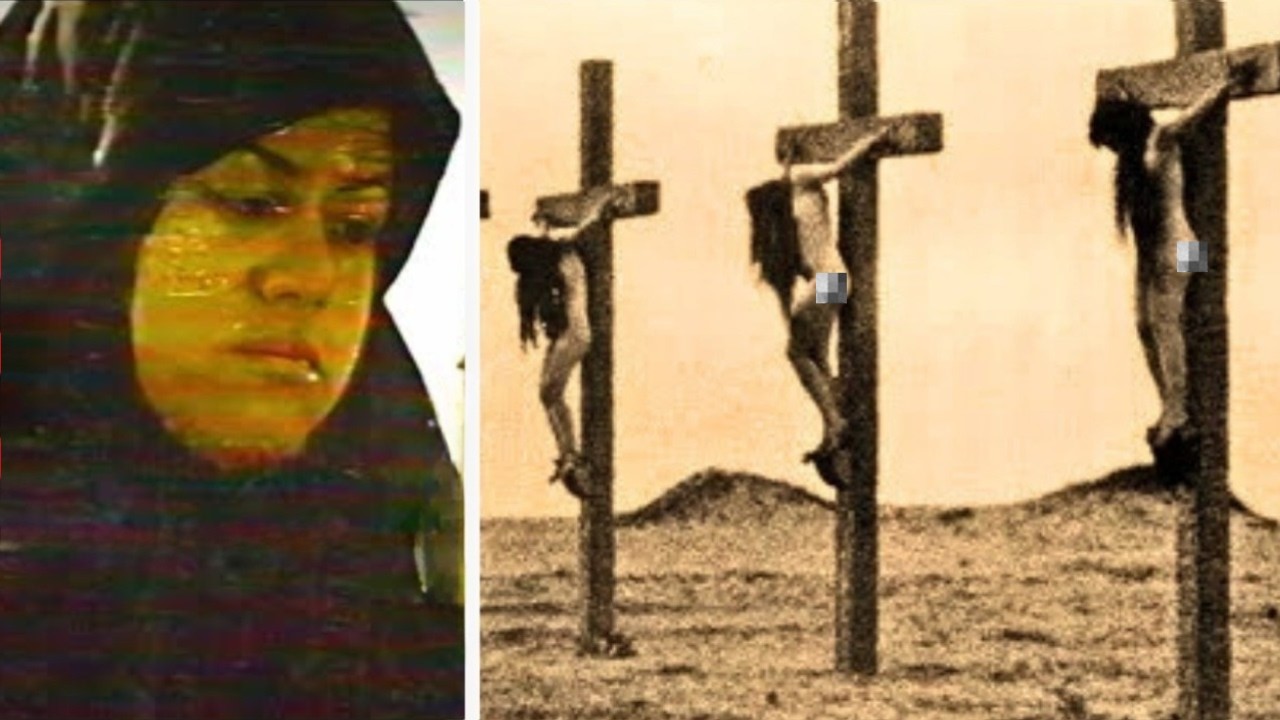 The Ottoman millet system had long relegated Christians to second-class status, imposing extra taxes, legal restrictions, and social humiliation, but it had also provided a framework for survival that allowed these communities to persist for centuries. That fragile equilibrium began to shatter in the late nineteenth century as the empire, weakened by territorial losses in Europe and the Balkans, grew increasingly paranoid about the loyalty of its Christian subjects. The Hamidian massacres of 1894 to 1896, which killed hundreds of thousands of Armenians and targeted Assyrian villages in Diyarbakir and Tur Abdin, served as a terrifying preview of what was to come, signaling that the old protections were gone forever.
The seizure of power by the Young Turks in 1908 initially raised hopes among minority communities that reform and equality might finally arrive, but those hopes were brutally crushed as the Committee of Union and Progress embraced an increasingly radical Turkish nationalist ideology. Leaders like Mehmed Talat Pasha and Ismail Enver Pasha viewed Christian minorities not as citizens but as internal enemies who might ally with Russia or other foreign powers to tear the empire apart. The influx of millions of Muslim refugees from lost Balkan territories, many of them angry and desperate, further inflamed tensions and created a volatile atmosphere of resentment that Ottoman leaders were all too willing to exploit.
When Archduke Franz Ferdinand was assassinated in Sarajevo in June 1914, the resulting chain reaction plunged Europe into war, and the Ottoman Empire’s decision to join the Central Powers transformed Eastern Anatolia into a killing field. The catastrophic Ottoman defeat at the Battle of Sarikamish in January 1915, where tens of thousands of soldiers froze to death in the Caucasus mountains, provided the pretext for the violence that followed, as officials blamed Christian communities for supposedly aiding the Russian advance. The disarming and execution of Christian soldiers in labor battalions, followed by the arrest of Armenian intellectuals in Constantinople, marked the beginning of a campaign that would soon engulf the Assyrian population.
In the spring of 1915, Ottoman authorities, Kurdish tribal fighters, and irregular militias launched coordinated attacks against Assyrian villages throughout Hakkari, Tur Abdin, and the surrounding regions, operations that bore all the hallmarks of deliberate extermination. Entire settlements were burned to the ground, churches were desecrated and looted, and civilians were massacred without regard for age or gender, with men often separated and executed first while women and children were deported, abducted, or killed. The Assyrian Patriarch Shimun XIX Benyamin, who had tried to maintain neutrality between the warring empires, watched helplessly as his people were driven from their ancestral mountain homes into a desperate flight for survival.
The brutality was not limited to remote villages but extended to urban centers where ancient communities had flourished for centuries, with the province of Diyarbakir becoming one of the bloodiest theaters of the genocide under Governor Mehmed Reshid. Death squads moved systematically from village to village, and witnesses described scenes of unimaginable horror as families were separated, executed, and their bodies left unburied along roads and rivers. The ancient monasteries of Tur Abdin, some of which had stood for over a thousand years, were emptied of their monks and congregations, their priceless manuscripts and sacred objects destroyed or scattered to the winds.
American missionaries stationed in Persia and Eastern Anatolia documented the catastrophe in heartbreaking detail, describing streams of starving refugees arriving in terrible condition, many with severe wounds, frostbite, and disease. Children arrived alone after losing entire families, and the roads were lined with corpses, while abandoned villages stood as silent monuments to communities that had existed for generations. The missionaries’ reports, along with those of diplomats and aid workers, provided the outside world with glimpses of the horror, but the chaos of World War I meant that information traveled slowly and received little attention amid the focus on European battlefields.
 Many Assyrian refugees initially believed that Persia, particularly the region around Urmia, might offer safety, and Russian military presence there provided some hope of protection. But the war in Persia quickly descended into chaos as Russian forces moved in and out, Ottoman armies launched offensives across the border, and Kurdish tribal fighters raided vulnerable communities with impunity. By late 1915 and early 1916, hundreds of thousands of displaced people crowded into the Urmia area, where food became scarce and typhus and cholera killed enormous numbers of people even without direct violence.
The Russian Revolution of 1917 proved catastrophic for the Assyrian cause, as the disintegration of the Russian army removed one of the few remaining military forces that could offer protection. Ottoman forces and allied militias quickly moved back into the region, and panic spread among Christian refugees who remembered the massacres of previous years. Assyrian military leader Agha Petros organized volunteer fighters who achieved several battlefield victories against Ottoman units, but these successes proved temporary and could not reverse the larger disaster unfolding around them.
The assassination of Patriarch Shimun XIX Benyamin in March 1918, during what was supposed to be a negotiation with Kurdish leader Simko Shikak, devastated Assyrian morale and convinced countless refugees that no promises could be trusted. The murder of their spiritual and political leader symbolized the complete breakdown of any possibility of protection or negotiation, and soon after, full panic erupted across the Urmia region. As Ottoman forces advanced, tens of thousands of Assyrians and Armenians fled southward to Hamadan alongside retreating Allied units, beginning one of the deadliest refugee marches of the entire war.
The journey became a nightmare of extreme heat, hunger, and constant attacks, with families walking for weeks through terrain that offered no shelter or sustenance. Survivors described roads lined with corpses, children dying from dehydration in their parents’ arms, and elderly refugees collapsing and being left behind because the columns could not stop. Bandits and militias attacked the refugees repeatedly, abducting women, stealing supplies, and leaving sick people to die by the roadside, and thousands perished during this single exodus alone.
The destruction of the Assyrian genocide was not merely measured in the death toll, which historians estimate at between 250,000 and 300,000 people, but in the annihilation of communities that had existed for nearly two thousand years. Entire cultural worlds vanished during the war, as regions like Hakkari and Tur Abdin, once filled with Assyrian villages connected through churches, monasteries, schools, and tribal networks, were emptied of their populations. The demographic map of entire regions transformed almost overnight, and in many areas of Southeastern Anatolia, Assyrian populations that had existed for centuries simply ceased to exist after the war.
 The violence of the Sayfo was deeply personal, occurring face-to-face as villages were attacked directly and civilians were massacred by soldiers, militias, and armed groups moving through local areas. Neighbors sometimes turned against neighbors, and the war created an atmosphere where fear, revenge, propaganda, and survival instincts mixed together in terrifying ways. Some Muslim families risked their own lives to hide Assyrians during the massacres, while others participated in killings or property seizures, leaving scars that lasted for generations.
When World War I finally ended in 1918, the Ottoman Empire had collapsed, and Allied forces occupied parts of Anatolia and Mesopotamia, leading many to hope that the violence would finally stop. But for Assyrian survivors, peace brought no stability, as the Middle East was being divided by foreign powers through mandates and colonial agreements that drew borders with little understanding of the ethnic and religious communities living there. The Assyrians found themselves scattered across several new states, with large refugee populations settling in British-controlled Iraq while others remained in Syria, Iran, or Soviet territory.
Many Assyrian leaders believed that their cooperation with Allied forces against the Ottomans would lead to international support, but those hopes were largely ignored during post-war negotiations. The Turkish War of Independence between 1919 and 1923 created even more instability, and violence against remaining Christian communities continued in several regions during this period. By the time the modern Republic of Turkey was established in 1923, most surviving Assyrians had either fled or been permanently displaced from many ancestral areas, and the ancient homeland of the Assyrian people had been effectively emptied.
Refugees in Iraq faced new problems, as British authorities recruited some Assyrians into military units known as the Assyrian Levies, which helped defend British interests but also increased tensions with Arab and Kurdish communities who viewed them as collaborators with colonial rule. The situation became extremely dangerous after Iraq gained independence in 1932, and the following year, the Simele massacre in August 1933 shocked the Assyrian population as Iraqi forces and irregular fighters attacked civilians around the town of Simele in northern Iraq. Hundreds, possibly thousands, were killed, and the massacre terrified survivors who realized that the cycle of violence had not truly ended after World War I.
The legal concept of genocide itself was influenced partly by these events, as Raphael Lemkin studied the massacres of Armenians and Assyrians when developing the term during the twentieth century. The destruction of these communities helped shape the world’s understanding of systematic extermination, yet one reason many people know very little about the Assyrian genocide today is because the survivors themselves were scattered and weakened after the war. Unlike larger populations with established nation-states, the Assyrians had no country representing them internationally, and their tragedy often disappeared inside broader discussions about the collapse of the Ottoman Empire.
 The historical records themselves became fragmented, as some documents survived through missionary reports, diplomatic archives, church records, and survivor testimonies, but many local Assyrian communities that could have preserved detailed histories had been wiped out entirely. Political tensions in the Middle East further complicated the issue, as modern Turkey has long rejected the idea that the Ottoman government carried out deliberate genocide against Armenians or Assyrians, describing the deaths instead as part of wider wartime chaos, famine, disease, and civil conflict. However, many historians strongly disagree with that explanation, arguing that research into Ottoman archives, eyewitness accounts, and demographic changes provides clear evidence of systematic targeting of Christian minorities, including Assyrians.
In recent decades, more scholars have begun using the term Assyrian genocide or Sayfo openly, and several countries and organizations have officially recognized it, with some parliaments in Europe acknowledging the genocide during the 2000s and 2010s. Assyrian activists and historians have worked intensely to preserve survivor stories before they disappear forever, recognizing that the last living witnesses are dying and that their testimonies represent an irreplaceable record of human cruelty and endurance. The Assyrian diaspora, scattered across the United States, Europe, Australia, and the Middle East, has kept the memory of the Sayfo alive through commemorations, educational efforts, and demands for recognition, even as the community faces new threats in Iraq and Syria from the Islamic State and other extremist groups.
The horrors of the Assyrian genocide serve as a stark reminder of how easily civilization can be destroyed when governments decide that certain peoples do not deserve to exist. The ancient churches that once dotted the mountains of Hakkari and the plains of Tur Abdin now stand empty or in ruins, their congregations murdered or scattered to the winds, and the Aramaic dialects that were spoken in those villages for millennia are now spoken by only a fraction of their former numbers. The world’s failure to recognize this genocide, to acknowledge the suffering of the Assyrian people, and to hold the perpetrators accountable represents a continuing injustice that echoes through the generations of survivors and their descendants.
As the last survivors of the Sayfo pass away, the responsibility falls on historians, journalists, and the international community to ensure that their stories are not lost to history. The evidence is clear, the testimonies are compelling, and the scholarly consensus is growing, yet political sensitivities and diplomatic considerations continue to prevent full acknowledgment of what occurred. The Assyrian genocide was not a spontaneous outbreak of violence but a calculated campaign of extermination carried out by a government determined to reshape its population along ethnic and religious lines, and it must be remembered as such.
The world owes the Assyrian people not only recognition of their suffering but a commitment to ensuring that such horrors never happen again, to any people, anywhere.
