The first Soviet soldiers to push through the gates of the Stutthof concentration camp in May 1945 were not prepared for the silence. It was a silence broken only by the wind rattling the barbed wire and the weak, desperate moans of the living. They had fought their way across a continent ravaged by war, but what they found behind those fences was not the aftermath of a battle; it was the meticulously organized machinery of human annihilation.
The discovery of Stutthof, one of the first and longest-operating Nazi camps on Polish soil, would provide the world with some of the most horrifying, undeniable proof of the Holocaust ever captured on film.
 The liberation of Stutthof did not occur in a single, dramatic moment of combat. Instead, it was the grim culmination of a brutal winter of evacuations and the collapse of the Third Reich. As the Red Army advanced, the SS had attempted to erase the evidence of their crimes, but the sheer scale of death left behind made that impossible.
The soldiers who entered the camp on May 9, 1945, found a landscape of horror that defied comprehension. Hundreds of prisoners were still alive, but they were living skeletons, their bodies ravaged by starvation, typhus, and dysentery. They were too weak to stand, their eyes hollow, their skin stretched taut over protruding bones.
The scenes were so extreme that even hardened veterans, who had witnessed the worst of the Eastern Front, were visibly shaken by the sight of the dead stacked inside barracks and scattered across the muddy grounds.
The camp’s history began on September 2, 1939, just days after the German invasion of Poland ignited World War II. Initially, it was a civilian internment center designed to eliminate the Polish intelligentsia, teachers, priests, and political leaders who might organize resistance against the occupation. The Nazis understood that to control Poland, they had to decapitate its leadership.
Over the following years, Stutthof evolved from a regional prison into a vast industrial complex of suffering, encompassing over one hundred subcamps that supplied forced labor to factories and workshops across the region. The prisoner population swelled with Jews deported from ghettos across Europe, Soviet prisoners of war, and resistance fighters from the Baltics, Hungary, and Germany. It became a microcosm of the Nazi racial and political war, a place where people from dozens of nations were systematically stripped of their humanity.
Death at Stutthof was a constant, grinding presence. The daily rations were calculated to ensure a slow, agonizing decline into starvation. Prisoners worked in freezing temperatures on construction sites and in armaments factories, their bodies fueled by nothing but watery soup and a scrap of bread.
Disease was a silent executioner, with typhus epidemics sweeping through overcrowded, vermin-infested barracks, killing thousands. The guards enforced a regime of casual brutality, beating prisoners for the smallest infractions and executing them for attempting to escape. As the war progressed, Stutthof was integrated into the “Final Solution,” with a gas chamber constructed where prisoners were murdered with Zyklon B.
Others were killed by lethal injections of phenol directly to the heart, their bodies then cremated in the camp’s ovens.
 By late 1944, the reality of Germany’s impending defeat sent a wave of panic through the SS leadership. They knew that the advancing Soviet army would eventually reach the camp, and they were determined to prevent the world from seeing what they had done. The evacuation of Stutthof began on January 25, 1945, in the depths of a brutal winter.
Nearly 50,000 prisoners were forced onto the roads, their columns stretching for miles through snow-covered terrain. The so-called “death marches” were a final, desperate act of murder. Prisoners, already weakened by years of abuse, were driven westward with almost no food, water, or adequate clothing.
They wore thin, striped uniforms and wooden clogs that offered no protection against the freezing temperatures. Those who stumbled, collapsed, or could not keep up were shot on the spot by the SS guards, their bodies left to freeze in the ditches alongside the roads.
The marches were a hellish gauntlet of exhaustion and violence. Survivors later described roads littered with corpses, the snow stained with blood, and the constant crack of gunfire as the guards executed the weak. The columns were pushed north toward the Baltic coast, where German authorities desperately tried to ship prisoners away from the advancing front.
Thousands were herded onto barges and cargo ships, packed so tightly into holds that they could not sit down. These vessels became floating death traps, where disease and dehydration killed hundreds before they even left port. The most catastrophic of these evacuations culminated in the Cap Arcona disaster in May 1945.
The passenger liner, along with the Thielbek, was packed with concentration camp prisoners from Stutthof and other camps. British aircraft, unaware that the ships were carrying prisoners rather than fleeing SS troops, attacked them in Lübeck Bay. The resulting fire and sinking killed an estimated 7,000 people, a maritime tragedy that remains one of the deadliest in history.
When the Soviet forces finally arrived, they found not just the living and the dead, but the physical evidence of a bureaucratic killing machine. The crematorium stood as a grim monument to the camp’s purpose, its ovens still containing the ashes of the last victims. Warehouses were filled with mountains of stolen belongings—shoes, eyeglasses, suitcases, and clothing—stripped from prisoners upon arrival.
 The camp’s records, partially destroyed in a frantic attempt to hide the truth, still revealed the names and fates of thousands. Military cameramen were brought in to document everything. Their footage, showing the skeletal survivors, the piles of bodies, and the industrial facilities built for murder, would be shown to the world as undeniable proof of Nazi atrocities.
It was a visual record that left no room for denial, a stark testament to the depths of human cruelty.
The aftermath of liberation was a desperate struggle for survival. Soviet and Polish medical teams worked tirelessly to save the living, but for many, it was too late. Their bodies had been pushed beyond the point of recovery, and they died even as the war officially ended.
The survivors, however, began to speak. Their testimonies painted a detailed picture of daily life inside the camp, a world of roll calls that lasted for hours in freezing weather, of random beatings, of selections for the gas chamber, and of the constant, gnawing hunger. They spoke of the “beautiful specter,” a female guard named Jenny-Wanda Barkmann, who was notorious for her cruelty.
They described the horrific experiments and the processing of human remains, including the production of soap from human fat, a detail that would shock investigators and the public alike.
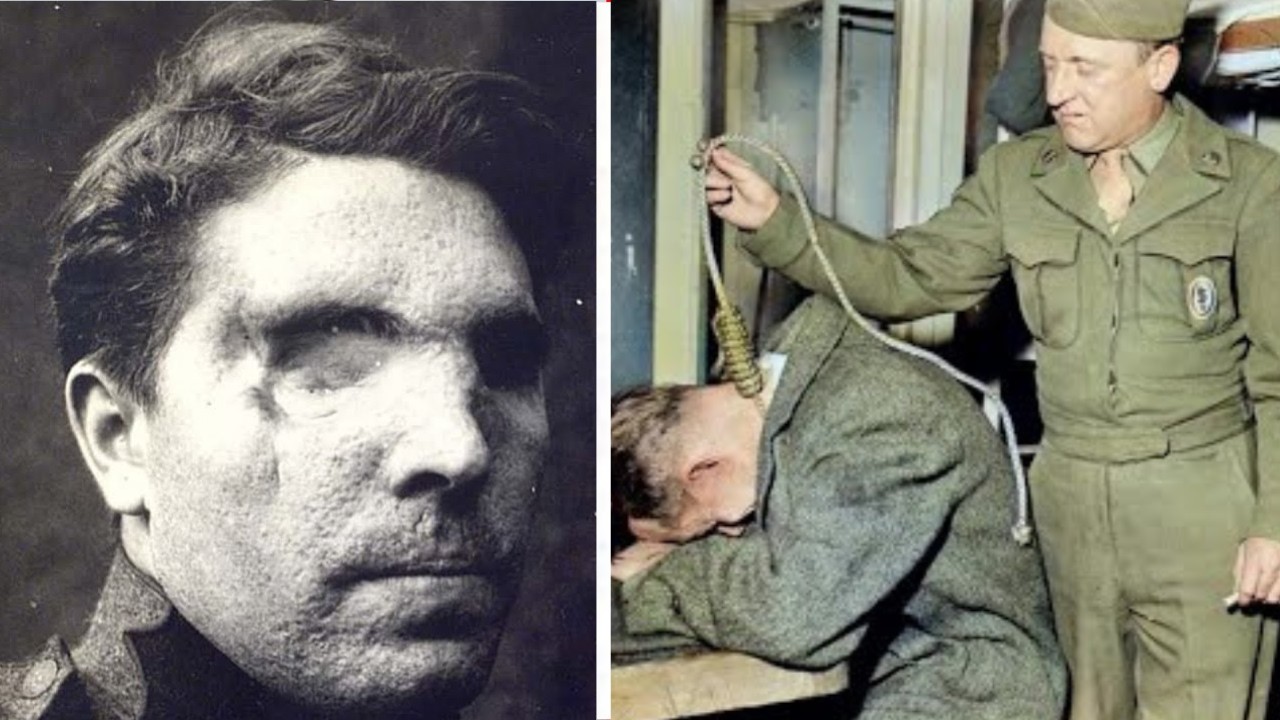
Justice for the victims of Stutthof was swift, though incomplete. The first war crimes trials began in Gdansk in 1946. Former guards, kapos, and administrators were brought before Polish courts, where survivors confronted their tormentors.
The trials were emotional and harrowing, as the full scope of the camp’s horrors was laid bare. Several defendants, including Barkmann, were sentenced to death and publicly executed. However, the chaos of post-war Europe allowed many perpetrators to escape.
 Some fled to South America, others changed their identities and melted back into civilian life. The hunt for these individuals would continue for decades, a slow, painstaking process of tracking down the men and women who had staffed the camps.
In a testament to the enduring pursuit of justice, the Stutthof case saw prosecutions well into the 21st century. The trial of Bruno Dey, an SS guard who served at the camp as a teenager, concluded in 2020 with a conviction for complicity in thousands of murders. His case established a legal precedent that simply being present and serving as a cog in the machine of murder was enough for guilt.
This was followed by the trial of Irmgard Furchner, a 96-year-old former secretary to the camp commandant. Her 2022 conviction sent a powerful message that even those who sat behind desks, typing orders and managing paperwork, were complicit in the crimes. These late trials were not about punishing old, frail people; they were about acknowledging the scale of the crime and ensuring that history could never be rewritten.
Today, the site of Stutthof stands as a memorial and museum, a silent guardian against forgetting. The wooden barracks, the watchtowers, and the barbed wire fences have been preserved, their ordinary appearance making the history they represent even more chilling. Visitors walk the same paths as the prisoners, seeing the same sky, and trying to comprehend the unimaginable suffering that occurred there.
The numbers are staggering: over 110,000 people were imprisoned in the Stutthof system, and at least 65,000 died. The camp remains a vital piece of the historical record, a place where the abstract concept of the Holocaust becomes a tangible, visceral reality. The footage shot by Soviet cameramen in May 1945 is not just historical artifact; it is a warning.
It is a reminder of where unchecked hatred, totalitarian power, and bureaucratic indifference can lead. The silence that greeted the liberators was the silence of a world that had failed to listen, and the images they captured are a permanent, haunting plea that we never allow it to happen again.
