The military pantheon of the Second World War is crowded with legendary figures, yet the name Hermann Balck remains conspicuously absent from the roster of celebrated commanders. While historians and enthusiasts alike revere Erwin Rommel for his desert exploits, Heinz Guderian for his theoretical genius, and Erich von Manstein for his operational brilliance, a growing chorus of military experts argues that Balck, a master of armored warfare who fought from the Meuse to the Chir River, may have been the most gifted Panzer commander of them all. Now, newly surfaced analyses of his campaigns and post-war consultations with the US Army are forcing a dramatic reassessment of a general who, despite his staggering battlefield record, faded into obscurity, overshadowed by politics, personal tragedy, and a self-imposed silence that lasted until his death.
Balck’s story begins not in the halls of the General Staff, but in the crucible of the trenches, a fact that would define his entire command philosophy. Born into a distinguished military family—his father, Wilhelm Balck, was a prominent tactical writer and Pour le Mérite recipient—Hermann seemed destined for a career in arms. Yet, unlike his contemporaries who climbed the ladder through staff positions, Balck’s formative years were spent leading men in the most brutal conditions imaginable.
 Joining the Hanoverian Rifle Battalion as a cadet in 1913, his education was shattered by the outbreak of the First World War, which catapulted him into active service as a mountain infantry officer. Over the next four years, he commanded a machine gun company across the Western, Eastern, Italian, and Balkan fronts, suffering seven wounds and earning the Iron Cross First Class for his conspicuous valor. He was on the verge of receiving the Pour le Mérite in October 1918, but the armistice nullified the nomination, a portent of the recognition that would continually elude him.
The interwar period saw Balck make a series of choices that would cement his status as a soldier’s soldier, but which ultimately stunted his rise to fame. As one of the elite 4,000 officers retained in the Reichswehr, Balck was twice offered a prestigious post on the German General Staff, a position considered an essential stepping stone to high command. In a stunning display of his priorities, he declined both offers, choosing instead to remain a line officer, serving for twelve years with the 18th Cavalry Regiment.
This decision was rooted in a philosophy instilled by his father, who taught him a profound sense of understanding for the lowest-ranking troops. “I grew up and was educated as a soldier,” Balck later recalled, “but I also learned something else from my father, something even more significant, a deep sense and understanding for the lowest-ranking troops and the mistakes of our social class.” This connection to the common soldier would become his trademark on the battlefield, allowing him to inspire extraordinary feats from his men.
When war broke out in 1939, Balck was thrust into the heart of the Panzer revolution, serving as a staff officer in the Inspectorate of Motorized Troops under the Oberkommando des Heeres. His mission was to refit and reorganize the burgeoning armored forces, a task that placed him at the center of Germany’s new military doctrine. By October, he had taken command of a mechanized regiment within the formidable 1st Panzer Division, positioning himself at the spearhead of the coming Blitzkrieg.
When the Battle of France erupted in May 1940, Balck’s regiment was at the vanguard of Guderian’s Panzer Corps, daringly leading the charge across the Meuse River and securing a critical bridgehead on the far bank. His masterful execution of the breakthrough at Sedan enabled Guderian’s tanks to encircle the British Expeditionary Force at Dunkirk, a maneuver that stunned the world and sealed the fate of France.
Despite the overwhelming success, Balck was not content to rest on his laurels. He scrutinized the tactical flaws exposed during the campaign and envisioned an innovative strategy for infantry and tanks to collaborate within Kampfgruppen, or battle groups. This insight, born from his frontline experience, redefined how Panzer divisions engaged in combat, ushering in a new era of military tactics that emphasized flexibility and decentralized command.
He had the opportunity to put these ideas into practice during the Battle of Greece, where he commanded the 3rd Panzer Regiment. Leading from the front amidst the challenging mountainous terrain, Battle Group Balck secured a remarkable victory over Allied troops at Platamon Ridge on the Aegean coast, clearing the path to Athens and demonstrating that armor could dominate even in the most inhospitable geography.
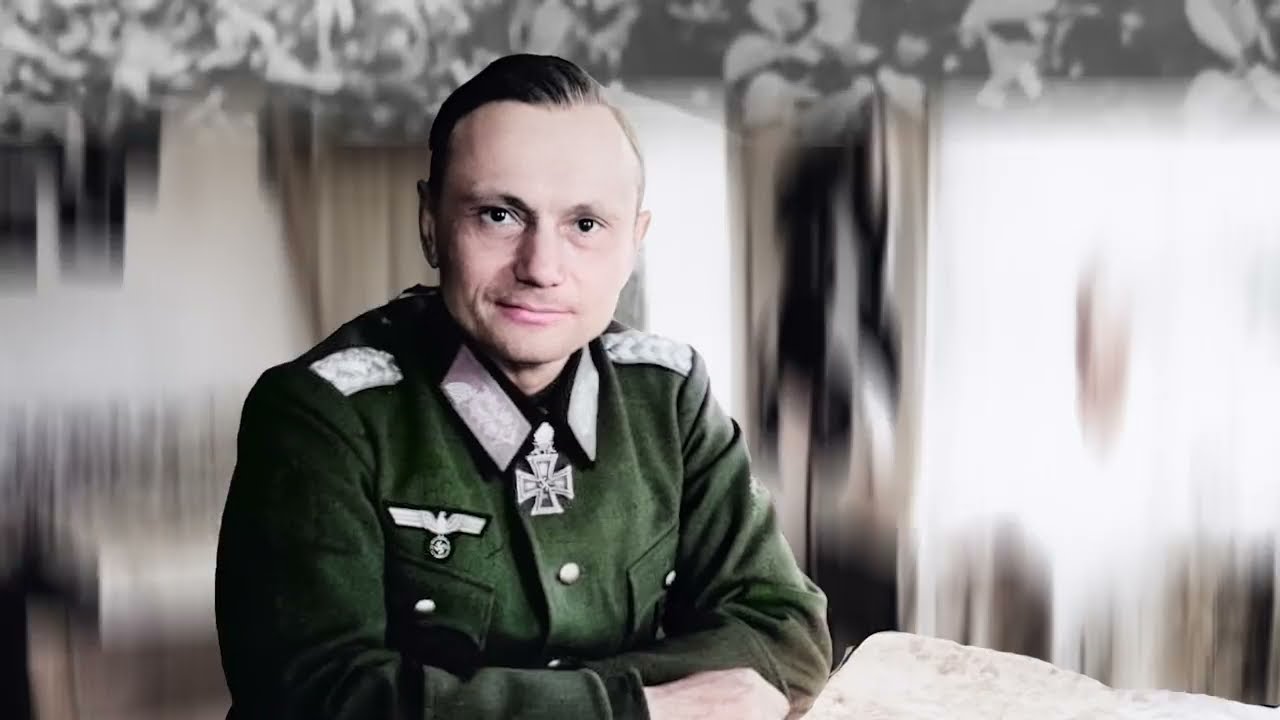 It was on the Eastern Front, however, that Balck truly earned his legendary status among his peers, performing feats of arms that bordered on the miraculous. In 1942, he took command of the 11th Panzer Division, leading its operations in Ukraine and Southern Russia. Under his dynamic leadership, the division booked remarkable victories, most notably during the fierce battles along the Chir River in December 1942.
In a stunning display of defensive warfare, Balck, commanding a single Panzer Division, nearly annihilated the Soviet 5th Tank Army, decimating an entire Soviet Tank Corps and throwing back a massive offensive aimed at relieving Stalingrad. His ability to read the battlefield, anticipate enemy movements, and launch counterattacks with devastating precision earned him the respect of even his adversaries. His extraordinary performance earned him the Knight’s Cross with Oak Leaves, Swords, and Diamonds, one of the most prestigious honors bestowed upon military officers during the war, an award given to only 27 officers in the entire German Army.
Balck’s career continued to be marked by a series of high-stakes commands and desperate defensive battles. In September 1943, he took command of the 14th Panzer Corps in Italy, facing off against the Allied landing at Salerno, where his counterattacks threatened to throw the invasion force back into the sea. His journey soon led him back to the Eastern Front, where he commanded the 48th Panzer Corps on a daring, albeit unsuccessful, mission to reclaim Kiev.
By August 1944, Balck was briefly at the helm of the 4th Panzer Army before being appointed to lead Army Group G in France a month later. During this tumultuous period, he skillfully delayed the advance of General George Patton’s American 3rd Army in Lorraine, conducting a masterful fighting withdrawal that frustrated the American juggernaut. His ability to hold together a crumbling front with a fraction of the enemy’s strength was a testament to his tactical acumen, though the strategic situation was hopeless.
Yet, even as he fought with brilliance, Balck’s career was plagued by the brutal realities of a regime in collapse. In late December 1944, he was relieved of command of Army Group G after getting into the crosshairs of Heinrich Himmler, a victim of the SS’s growing paranoia and influence. Heinz Guderian, then Chief of the General Staff, ensured that Balck did not remain benched for long, reassigning him almost immediately as commander of the 6th Army on the Eastern Front.
It was during this period that a dark chapter in his history unfolded, one that would tarnish his legacy and lead to his post-war prosecution. On November 28th, 1944, near Saarbrücken, artillery commander Lieutenant Colonel Johann Schöttke failed to provide crucial support due to his inebriation on duty. Acting decisively, Balck bypassed the usual military tribunal and ordered Schöttke’s execution by firing squad.
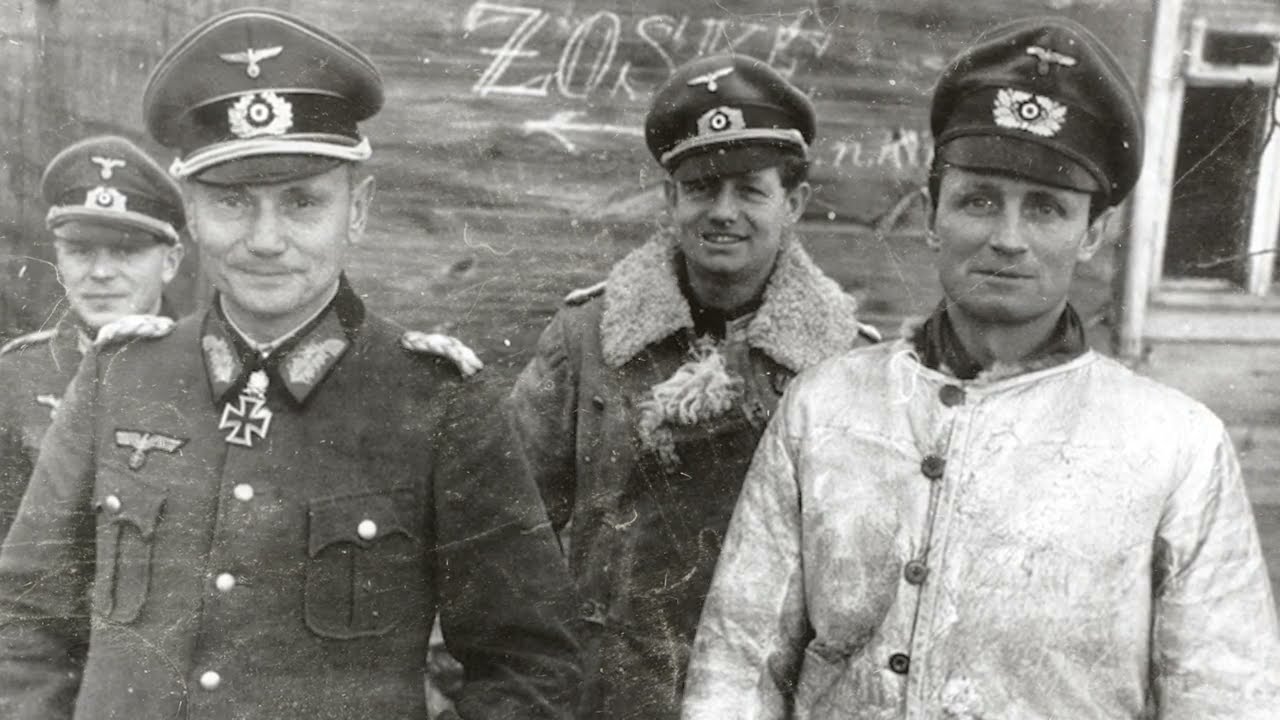 This summary execution, while justified by some as necessary for discipline, was a clear violation of military law and would haunt him for the rest of his life.
Following Germany’s surrender on May 8th, 1945, Balck’s unit capitulated to the US 20th Corps in Austria, and he became a prisoner of war. He was held until 1947, but his past caught up with him in 1948 when he was arrested for the murder of Schöttke. Convicted of manslaughter, Balck was sentenced to three years in prison, of which he served eighteen months.
His legal troubles were not over, as a French military court in Colmar imposed a 20-year hard labor sentence for his involvement in the scorched earth operation Waldfest, though he was never extradited to serve his sentence. These convictions, combined with his association with the Nazi regime, effectively erased him from the public consciousness in Germany, where the narrative of a “clean Wehrmacht” was being constructed by generals eager to absolve themselves of guilt.
The question of why Balck remains unknown while Rommel, Guderian, and Manstein became household names is a complex one. Unlike his contemporaries, Balck remained silent after the war, refusing to pen the self-serving memoirs that solidified the reputations of others. While Guderian’s Panzer Leader and Manstein’s Lost Victories became bestsellers that shaped the historical narrative, Balck chose to work as a depot worker to support his family, declining an invitation to participate in the US Army Historical Division’s study of the war.
His obscurity also partly resulted from the fact that he spent most of the war on the Eastern Front, making a name for himself in battles mostly unknown to people in the West. The few historians who did address him often depicted him as a fervent Nazi, a label that stuck despite his complex relationship with the party.
However, Balck’s legacy was not entirely forgotten. In the late 1970s and early 1980s, following the United States’ loss in the Vietnam War, Army reformers sought advice from experts with a track record of success against a numerically superior enemy. They turned to Balck and his former subordinate, General Friedrich von Mellenthin, who had chronicled their battles in his book Panzer Battles.
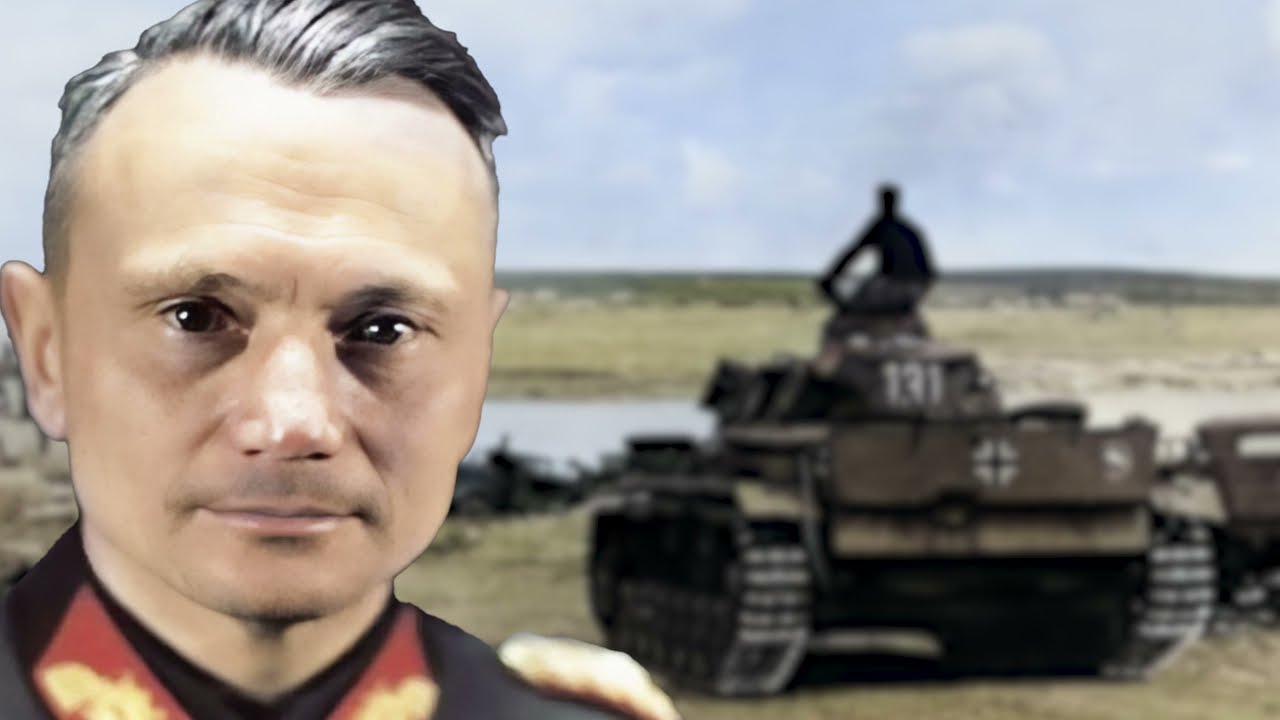 The seasoned veterans visited America as military consultants, participating in symposiums, conferences, and war games. Their insights left a profound impression on the American military, with General William E. DePuy, then commander of Training and Doctrine Command, famously describing Balck as “the best division commander in the German Army.”
Balck’s vivid accounts of his battles on the Eastern Front captivated audiences and influenced the development of AirLand Battle doctrine, which emphasized maneuver and deep strikes to counter Soviet numerical superiority.
In his later years, Balck finally broke his silence, meticulously compiling his journals from both World Wars into a memoir, Ordnung im Chaos, Erinnerungen. Unlike Guderian, Manstein, and Mellenthin, who often blamed Hitler or circumstances for their defeats, Balck took personal responsibility for his mistakes. He wrote, “We lost Stalingrad, Africa, and the Caucasus campaign because these campaigns were conducted beyond secured supply lines.
And when this error became apparent, we did not abort in time.” This admission of fault, rare among his peers, adds a layer of credibility to his account and offers a more honest assessment of the German military’s failures. His willingness to confront his own errors, rather than shifting blame, stands in stark contrast to the self-exculpatory narratives that dominated post-war literature.
Hermann Balck passed away in 1982, largely forgotten by the public but revered by a select group of military professionals who recognized his genius. His story is a study in contrasts: a man of extraordinary tactical skill and deep compassion for his troops, yet one who could order a summary execution without hesitation; a commander who achieved near-impossible victories against overwhelming odds, yet who ended his career in disgrace and obscurity. As historians continue to sift through the archives and analyze the Eastern Front campaigns, Balck’s reputation is undergoing a significant rehabilitation.
He is increasingly viewed not just as a master of armored warfare, but as a complex figure whose life and career offer a stark, unvarnished look at the nature of war on the Eastern Front, far removed from the sanitized narratives of the “clean” Wehrmacht. The debate over whether he was the greatest German general no one ever heard of is likely to continue, but his place in the annals of military history is now secure, not as a footnote, but as a central figure in the study of operational art.
