The military world has long debated the nature of genius, but few figures have provoked as much fascination and controversy as Erich von Manstein, the aristocratic Prussian field marshal whose operational brilliance on the battlefield was matched only by his moral ambiguity in the service of a genocidal regime. As new historical analyses continue to emerge, the legacy of this master strategist remains a lightning rod for debate, forcing a reckoning with the uncomfortable truth that tactical perfection and ethical bankruptcy can coexist within a single command.
Born into the Prussian military aristocracy in Berlin on November 24th, 1887, Manstein was destined for a life in uniform from his first breath. His lineage, steeped in the traditions of the German officer corps, provided him with an education that emphasized duty, discipline, and the science of war. By the outbreak of World War I, he was serving as a young lieutenant, experiencing the brutal realities of the trenches on both the Eastern and Western Fronts, an experience that would shape his understanding of modern warfare and the necessity of mobility over attrition.
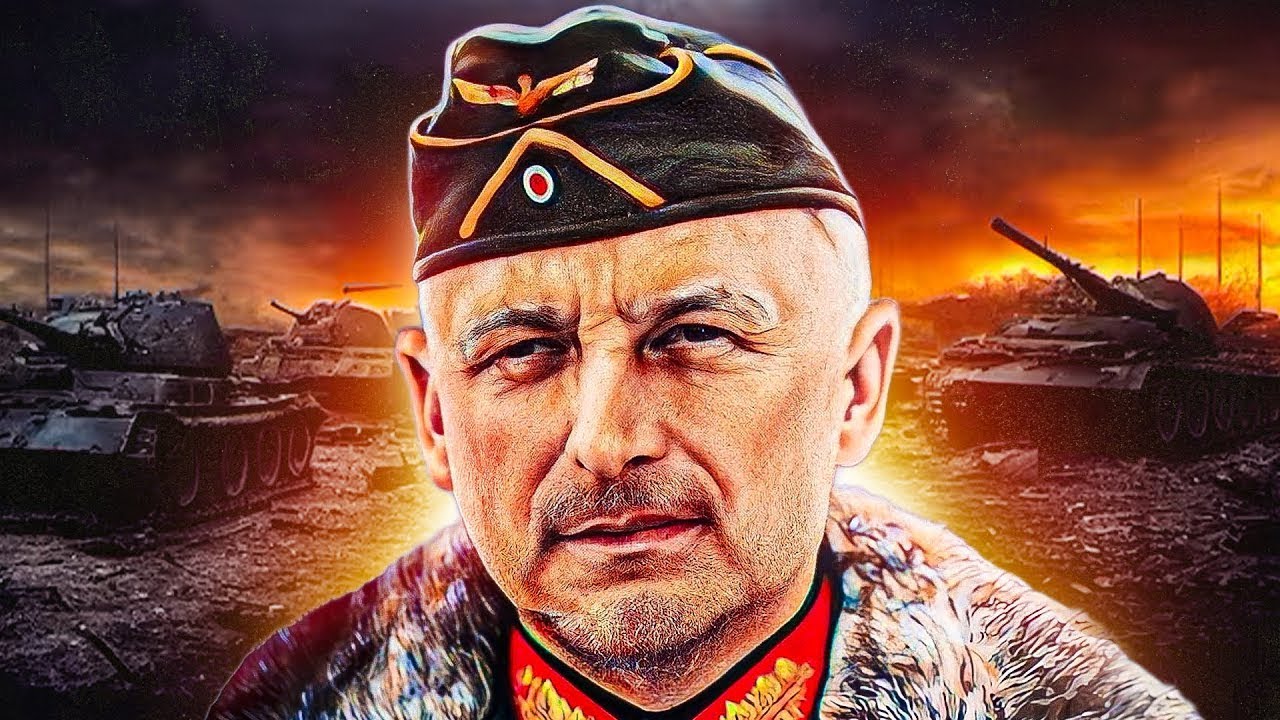 The interwar period proved to be a crucible for Manstein’s tactical philosophy. As Germany rebuilt its defeated military, he rose steadily through the ranks, becoming a colonel by 1932. It was during this time that he began to formulate the radical ideas that would later define the Blitzkrieg.
Recognizing the potential of armored warfare, Manstein collaborated with pioneers like Heinz Guderian, advocating for a transformation that prioritized speed, surprise, and the concentration of panzer forces to achieve decisive breakthroughs, a vision that often clashed with the conservative leadership of the army high command.
His innovative thinking led to the creation of the Sturmgeschütz, or assault gun, a self-propelled artillery piece designed to provide direct fire support for infantry. This weapon system, born from a compromise with traditionalists, would become one of the most effective and cost-efficient tools in the German arsenal, proving Manstein’s ability to translate abstract theory into practical, devastating military hardware. This period solidified his reputation as a forward-thinking officer, one who understood that the next war would be won by those who could move and strike faster than their enemies.
When World War II erupted, Manstein’s theories were unleashed upon the world with terrifying efficiency. During the invasion of Poland, his command demonstrated the devastating power of coordinated mechanized forces, executing rapid encirclements that shattered the Polish defense. However, it was his audacious plan for the invasion of France in 1940 that cemented his place in military legend.
While the high command favored a re-run of the Schlieffen Plan, Manstein proposed a daring thrust through the supposedly impassable Ardennes Forest, a move that would outflank the Allies’ strongest defenses and strike at their center of gravity.
The plan, initially dismissed as reckless, was eventually adopted after Manstein’s insistence brought it to Hitler’s attention. The result was a stunning victory that saw France fall in a matter of weeks. The panzer divisions, slicing through the Ardennes and racing to the English Channel, trapped the British Expeditionary Force and the French army in a massive pocket.
This victory, a testament to Manstein’s strategic audacity, demonstrated that the Blitzkrieg was not merely a tactic, but a new form of operational art that had rendered the static defenses of the previous war obsolete.
Manstein’s genius was further tested on the vast expanses of the Eastern Front, where the scale of the conflict dwarfed anything seen in Western Europe. As commander of the 11th Army in the Crimea, he orchestrated the capture of the fortress of Sevastopol, a siege that showcased his mastery of combined arms and his ability to overcome formidable natural and man-made obstacles. His subsequent operations during the advance into the Soviet Union, particularly the encirclement battles around Kiev, demonstrated his understanding of the need for fluid, mobile warfare to destroy the Red Army’s massive forces.
 Perhaps his most celebrated, and tragic, moment came in the winter of 1942-43. With the German Sixth Army encircled and dying in the ruins of Stalingrad, Manstein was tasked with a desperate relief operation, codenamed Winter Storm. He launched a ferocious counteroffensive with limited resources, driving deep into the Soviet lines in an attempt to break through to the trapped army.
Despite his tactical brilliance and the near-success of the operation, the relief failed, and the Sixth Army was annihilated, a catastrophe that marked a turning point in the war. Manstein’s role in this tragedy remains a subject of intense scrutiny.
In the aftermath of Stalingrad, Manstein displayed his defensive genius during the Third Battle of Kharkov. In a stunning reversal, he launched a series of mobile counterattacks against the overextended Soviet forces, inflicting a crushing defeat and recapturing the city. This victory, often cited as one of the greatest operational achievements of the war, stabilized the German front and bought the Wehrmacht a temporary reprieve.
However, it was a fleeting success, a brilliant flash of light in the gathering darkness of Germany’s strategic decline.
Despite his successes, Manstein found himself in a constant state of conflict with his supreme commander, Adolf Hitler. Manstein advocated for a flexible, mobile defense on the Eastern Front, arguing that the army should be willing to trade territory for time, drawing the Soviets into overextended positions where they could be counterattacked and destroyed. Hitler, however, insisted on a rigid policy of holding every foot of ground, a strategy that Manstein believed was leading to the army’s piecemeal destruction.
Their relationship deteriorated into a bitter struggle over the very conduct of the war.
The breaking point came in early 1944. Manstein’s repeated objections to Hitler’s orders, and his public suggestion that the Führer should relinquish control of the army to professional strategists, sealed his fate. On March 31st, 1944, Hitler relieved Manstein of his command, replacing him with the loyalist Walter Model.
 While he was awarded the Swords to his Knight’s Cross, a high honor, it was a clear dismissal. The man who had crafted Germany’s greatest victories was now sidelined, a casualty of his own strategic foresight and Hitler’s paranoid grip on power.
Manstein’s relationship with the resistance against Hitler remains a complex and troubling chapter. While he was aware of the growing discontent within the officer corps and had contact with several key plotters of the July 20th assassination attempt, he refused to join them. He famously stated that Prussian field marshals do not mutiny, a declaration that highlighted his deep-seated commitment to the oath of loyalty he had taken.
He chose to remain bound by duty, even as he recognized the catastrophic path his Führer was leading the nation down, a decision that would define his post-war legacy.
Following the war, Manstein was arrested by British forces and faced trial for war crimes. He was charged with, among other things, complicity in the implementation of the Commissar Order, which mandated the execution of Soviet political officers. During his trial, Manstein maintained that he had refused to carry out such orders, claiming he was unaware of the Holocaust and the atrocities committed in the concentration camps.
His defense, which painted him as a soldier who had merely followed orders while remaining ignorant of the regime’s crimes, was met with skepticism by the tribunal.
The court found him guilty of war crimes and sentenced him to 18 years in prison. However, he was released in 1953, a decision influenced by the Cold War and the need to rehabilitate West Germany’s military. His release marked the beginning of a new phase in his life, one where he would actively shape the narrative of his own legacy.
He became a key advisor to the West German government in the creation of the Bundeswehr, and his memoirs, “Lost Victories,” published in 1955, became a bestseller, presenting his version of events to a receptive public.
 In his memoirs, Manstein crafted a narrative that absolved the German high command of responsibility for the Holocaust, portraying them as professional soldiers who were victims of Hitler’s irrational leadership. He focused exclusively on the military aspects of the war, ignoring the political and moral implications of the regime he served. This selective memory, historians argue, was a deliberate attempt to create a myth of a “clean Wehrmacht,” a myth that has since been thoroughly debunked by decades of historical research.
Despite the historical evidence, the myth of Manstein as a military genius, a master of operational warfare who was untainted by the crimes of his government, has persisted. He has been elevated to a cult figure, a general of almost mythical prowess, celebrated in military circles for his tactical brilliance. His name is often invoked as the gold standard of German military leadership, a testament to the enduring power of his strategic legacy, even as the dark shadow of the regime he fought for remains.
The debate over Manstein’s true legacy is a microcosm of the larger struggle to understand the German military’s role in World War II. Was he a brilliant soldier who was simply doing his duty, or was he a willing participant in a criminal enterprise? His actions on the battlefield were undeniably brilliant, his operational art studied in military academies to this day.
Yet, his refusal to confront the moral rot at the heart of the Nazi regime, and his subsequent efforts to whitewash his own history, complicate any simple assessment of his character.
His final years were spent in relative obscurity, living in Munich, where he passed away on June 9th, 1973, following a stroke. He died a respected figure in some circles, a pariah in others, leaving behind a complex and contradictory legacy. He was a master of war who served a criminal state, a strategic genius whose brilliance was ultimately used in the service of genocide and destruction.
The question of whether he was Germany’s greatest general is almost beside the point; the more pressing question is what his story tells us about the dangers of separating military professionalism from moral responsibility.
As we continue to analyze his campaigns and his decisions, the figure of Erich von Manstein remains a haunting reminder of the immense power of military genius and the catastrophic consequences that can arise when that genius is divorced from humanity. His life forces us to confront the uncomfortable reality that the architects of some of history’s most brilliant military victories were often the same men who enabled its greatest atrocities. The study of Manstein is not just a study of tactics, but a study of the moral compromises that war demands and the enduring scars they leave on history.
