The formal cessation of hostilities on September 2, 1945, did not signal an immediate return to peace for the millions of men who had served the Empire of Japan. Instead, it marked the beginning of a protracted, often brutal odyssey through prisoner-of-war camps, Siberian labor colonies, and, for a stubborn few, a decades-long denial of the war’s end. The fate of the Imperial Japanese soldier was dictated not by a single policy but by the geography of their surrender, the ideology of their captors, and the shifting priorities of a world transitioning from total war to an uneasy Cold War.
The foundational document governing the behavior of these men was the Senjinkun, or the “Code of Battlefield Conduct,” issued in 1941. This military edict institutionalized a culture where surrender was not merely a tactical failure but a profound moral transgression. The code explicitly prohibited capture, framing death in combat as the ultimate fulfillment of duty.
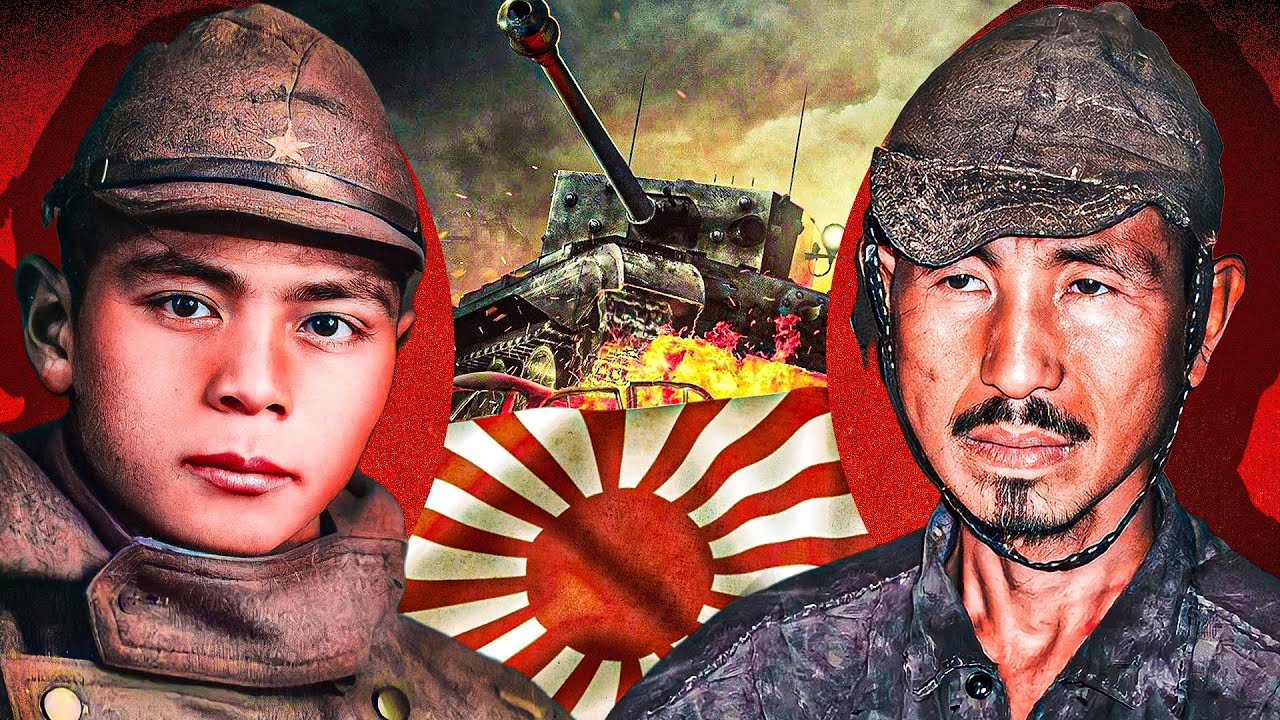 This doctrine was reinforced by a propaganda machine that glorified self-immolation and instilled a visceral terror of Allied captivity, which was depicted as a fate worse than death, promising torture and execution. While the Imperial Navy did not issue an identical document, the expectation of resistance to the death was equally pervasive among its ranks. The psychological weight of this code cannot be overstated; it compelled many soldiers to fight to the last bullet, while others, facing the impossibility of their situation, chose suicide over the perceived dishonor of capture.
However, the Senjinkun was not universally embraced. As the war turned decisively against Japan, morale crumbled, and the efficacy of Allied propaganda, which promised humane treatment in accordance with the Geneva Convention, began to take root. By the final years of the conflict, a significant number of soldiers, exhausted and disillusioned, were willing to surrender.
This created a stark division: those who capitulated before the official surrender were often treated as prisoners of war, while those who laid down arms after the Emperor’s broadcast were classified differently. To prevent chaos and resistance, the Imperial Headquarters inserted a clause in the surrender proclamation stating that servicemen who fell into enemy hands after the declaration would not be considered prisoners of war. This legalistic maneuver had profound consequences, particularly for those captured by the Soviet Union, as it allowed captors to deny them the protections of the Geneva Convention, classifying them instead as internees or laborers.
The Western Allies, having witnessed the horrific treatment of their own soldiers in Japanese camps, made a concerted effort to treat Japanese prisoners according to international law. By 1943, reports of the Bataan Death March and the brutal conditions of POW camps had galvanized Allied policy. Japanese soldiers captured by U.
S. forces after September 1942 were typically interned by Australia or New Zealand, while those captured in the Central Pacific or possessing intelligence value were held in American facilities. These camps were largely orderly, with escape attempts being a rarity.
The British, however, took a more pragmatic approach. In South and Southeast Asia, they held back thousands of prisoners to assist in dismantling military installations and even deployed armed Japanese surrendered personnel to support Dutch and French efforts to reassert colonial control in the Dutch East Indies and Indochina. This use of former enemy combatants was a controversial but effective strategy to maintain order in regions where Allied manpower was stretched thin.
The repatriation process was slow and often politically motivated. The United States retained nearly 70,000 prisoners until late 1946 to help dismantle military installations in the Philippines, Okinawa, and the Central Pacific. The British held back 13,500 out of approximately 750,000 prisoners until 1947, with the last groups from Burma and Malaya finally returning to Japan in October of that year.
 Tragically, at least 81,900 Japanese personnel died in Allied-held territories and China before they could be repatriated, victims of disease, malnutrition, and the harsh conditions of the immediate postwar period.
In China, the surrender of approximately 1. 2 million Japanese soldiers to Nationalist forces under Chiang Kai-shek took an unexpected turn. Despite fears of brutal retaliation for the atrocities committed during the occupation, the Nationalists treated the Japanese with surprising respect.
This was a calculated decision driven by pragmatism. The Nationalists wanted to secure as many weapons as possible, maintain security after the Japanese military’s departure, and, crucially, prevent the Japanese from aligning with the Chinese Communists. While most prisoners were sent back to Japan within months, the Nationalists retained over 50,000, particularly those with technical skills, until late 1946.
The situation became even more complex as the Chinese Civil War intensified. It was later discovered that tens of thousands of Japanese prisoners had joined the Chinese Communist military forces by August 1946, with over 60,000 remaining in communist-controlled areas until April 1949. Many of these men tragically lost their lives fighting for the People’s Liberation Army, a final, ironic twist in a war they had started.
The Chinese Communist government eventually began repatriating prisoners, though some faced trials for war crimes and served prison sentences before being allowed to return. The last Japanese prisoner to be repatriated from China did not return until 1964, nearly two decades after the war’s end.
The most harrowing fate awaited the Japanese soldiers who surrendered to the Soviet Union. In the final stages of the war, the Soviet Red Army swept through Manchuria, capturing a massive number of Japanese troops. The Soviets reported capturing 594,000 prisoners, though Japanese estimates suggest the number was closer to 850,000.
 These men were systematically transported to concentration camps in Siberia, where they were subjected to conditions that mirrored the worst of the Gulag system. Forced to work in freezing temperatures without adequate clothing, food, or medical care, they died in staggering numbers from cold, disease, and starvation. The bleak, icy landscapes of Siberia became the final resting place for an estimated 60,000 Japanese prisoners, though American historians suggest the death toll could be as high as 250,000.
The Soviets, viewing the Japanese as war booty and a source of cheap labor, refused to recognize them as prisoners of war, a stance enabled by the Japanese government’s own declaration that they were not POWs.
From 1946 to 1950, many of these prisoners were gradually freed, but those who remained were often convicted of various crimes, including sabotage and counter-revolutionary activities, and were subjected to a series of amnesties between 1953 and 1956. The last significant repatriation occurred in 1956, following the normalization of Soviet-Japanese relations. However, a small number of prisoners remained in the Soviet Union for decades, some building families and lives in a country that had once been their enemy.
These men did not return to Japan until the 1990s, and some chose to remain in Russia permanently, their identities forever split between their past and present.
Beyond the official channels of surrender and repatriation, there existed a shadowy group of soldiers who refused to accept the war’s end. These “holdouts” or “stragglers” remained hidden in remote jungles and islands across the Pacific and Southeast Asia, either because they did not receive word of the surrender or because they chose not to believe it. The most famous of these was Hiroo Onoda, a second lieutenant in the Imperial Japanese Army who surrendered on Lubang Island in the Philippines in March 1974—nearly 30 years after the war had ended.
Onoda, who had been deployed in 1944 as an intelligence officer and guerrilla tactics instructor, was under explicit orders to neither surrender nor commit suicide, but to persist until reinforcements arrived. He and his companions survived by hunting animals, pilfering rice, and occasionally killing local cattle for dried beef. They engaged in sporadic clashes with local police and military forces, treating the post-war world as a continuation of their mission.
 One of his companions escaped in 1950, another was killed in 1954, and a third died in a confrontation in 1972. Onoda only finally accepted the war’s end when his former commander, Major Yoshimi Taniguchi, was flown to the island to personally issue new orders. The motivations of these holdouts varied; some were driven by a fanatical sense of duty, while others feared returning home to face the shame of surrender or punishment for their actions.
The legal reckoning for Japan’s wartime conduct was swift and severe. Military leaders and personnel suspected of committing war crimes, including atrocities against prisoners of war and civilians, were subject to prosecution. The most notable of these trials was the International Military Tribunal for the Far East, commonly known as the Tokyo War Crimes Tribunal.
Several high-ranking Japanese military and political leaders were tried, with some executed and others imprisoned for various terms. These trials, while controversial, served to document the extent of the atrocities committed and to establish a legal precedent for international justice. For the vast majority of soldiers who had not committed war crimes, the process of demobilization and reintegration into civilian life was a difficult struggle.
Japan was occupied by Allied Forces, primarily led by the United States, from 1945 to 1952. During this period, the Allies implemented a series of reforms to transform Japan into a democratic and peaceful nation. This included the drafting of a new constitution in 1947, which renounced war as a means of settling international disputes and limited the role of the Japanese military to self-defense.
Many former soldiers faced immense challenges in finding employment and rebuilding their lives in a country that lay in ruins. The psychological trauma of the war, combined with the physical hardships of captivity, left deep scars. However, over time, many were able to reintegrate into Japanese society.
Some veterans participated in the postwar economic recovery, contributing to Japan’s rapid industrialization and economic growth. The Japanese government and various organizations provided support and assistance to veterans who faced physical or psychological challenges resulting from their wartime experiences. The legacy of these soldiers is complex.
They were instruments of an imperialist war, yet they were also victims of a brutal system that demanded their absolute sacrifice. Their stories, from the Siberian labor camps to the Philippine jungles, serve as a stark reminder of the human cost of war and the long, difficult road to peace. The last of these soldiers, like Onoda, returned to a world that had moved on without them, their sacrifices rendered meaningless by the passage of time and the transformation of their homeland.
