Ludwig Beck, a decorated German general who once championed Hitler’s military resurgence, spent his final years as the quiet architect of a resistance that would end in his own execution. His transformation from a loyal servant of the state to its most prominent internal enemy is a chilling study in moral awakening, a story that culminated in the failed July 20th plot of 1944. Beck’s journey was not one of instant rebellion but a slow, agonizing realization that his oath to the nation demanded a higher loyalty than his oath to its leader.
Born in 1880 into a family with deep military roots, Beck’s early career was unremarkable in its brilliance but notable for its dedication. He served with distinction on the Western Front during World War I, earning a reputation as a meticulous staff officer who understood the grim calculus of modern warfare. The Treaty of Versailles, which crippled the German military, became the backdrop of his professional life, and like many of his peers, he saw the limitations imposed on the Reichswehr as a national humiliation that needed to be overturned.
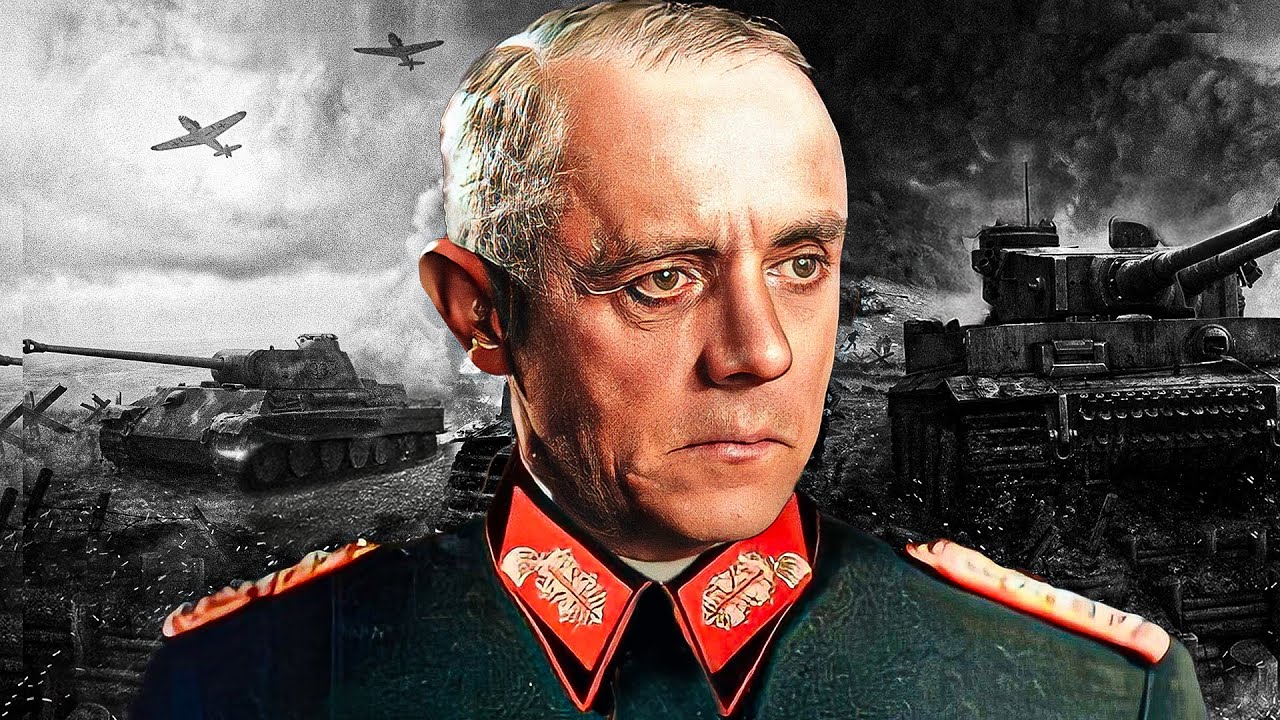 In the interwar years, Beck rose through the ranks, becoming a central figure in the development of the Reichswehr’s tactical doctrine. His 1933 manual, Truppenführung, was a revolutionary document that emphasized decentralized command, initiative, and speed. It was a manual that would later be credited with enabling the Blitzkrieg tactics that stunned Europe, but Beck saw it as a purely defensive framework, a way to protect Germany from encirclement, not to launch wars of conquest.
He believed in a professional army that served the state, not a political tool for a single man.
When Hitler came to power in 1933, Beck was initially optimistic. He saw the Nazi regime as a bulwark against communism and a force that could restore Germany’s national pride and military strength. He supported rearmament, believing it was necessary to secure the nation’s borders.
This optimism, however, was short-lived. By 1935, when he became chief of the General Staff, Beck began to witness the chaotic and aggressive nature of Hitler’s foreign policy. The Führer’s disregard for military advice and his penchant for risky gambles started to alarm the cautious, methodical general.
The turning point came in 1937 and 1938, as Hitler began to aggressively push for the annexation of Austria and the dismantlement of Czechoslovakia. Beck, who had access to intelligence reports, understood that Germany was not prepared for a major European war. He knew that the French army was still a formidable force, and he feared that Britain would not stand idly by.
He saw Hitler’s plans not as a restoration of German power but as a reckless gamble that would lead to national catastrophe. This was not a matter of political ideology for Beck; it was a matter of professional competence and strategic reality.
In May 1938, Beck took the unprecedented step of writing a memorandum that directly challenged Hitler’s plans to invade Czechoslovakia. He argued that such an action would trigger a general European war that Germany could not win. He cited the strength of the French military, the likelihood of British intervention, and the fragility of the German economy.
 This was not a document of dissent from a political opponent; it was a military assessment from the nation’s top soldier, warning of certain defeat. When his warnings were ignored, he escalated his resistance, urging his fellow generals to consider a mass resignation as a means to force Hitler to back down.
His plea to his colleagues was a defining moment. He argued that a soldier’s duty extended beyond blind obedience, that he had a higher responsibility to the German people. He declared that extraordinary times demanded extraordinary actions.
This was Beck’s moral line in the sand. He was no longer just a general; he was a patriot who saw his country being led to ruin by a madman. His attempt to rally the military leadership failed.
At a summit in August 1938, Hitler berated him and convinced most of the other generals to fall in line. Beck resigned in protest, a lonely figure who had chosen conscience over career.
His resignation was kept secret at Hitler’s request, but Beck was stripped of his command and placed on the retired list. He was a man without a position, but not without a purpose. From his home in Berlin, he began to build a network of like-minded officers and civilians who shared his conviction that Hitler had to be removed.
This was not a spontaneous decision but a calculated move. Beck understood that the military was the only institution with the power to overthrow the Nazi regime, and he used his reputation and connections to cultivate contacts within the Wehrmacht.
 The resistance group that formed around Beck was a strange coalition of conservative aristocrats, disillusioned soldiers, and even some members of the intelligence services. They were not democrats in the modern sense; many of them hoped to install an authoritarian government that would be more stable and honorable than the Nazi regime. But they were united by their belief that Hitler was destroying Germany.
Beck, with his gravitas and moral authority, became the natural figurehead for this movement, the man who would lead the country in the aftermath of a coup.
As the war progressed and Hitler’s military victories mounted, the resistance became more desperate. The conspirators knew that a military defeat was the only way to end the regime, but they also knew that such a defeat would leave Germany at the mercy of its enemies. They began to plan for an assassination attempt, hoping that killing Hitler would create a power vacuum that they could fill and then negotiate a peace settlement.
Beck, despite his earlier reservations about the morality of assassination, came to see it as a necessary evil.
The plan that emerged was codenamed Operation Valkyrie, a contingency plan for the army to take control of the government in the event of a breakdown in civil order. The conspirators planned to use this plan as a cover for their own coup, seizing control of key communication centers and arresting Nazi leaders in the hours after Hitler’s death. Beck was designated to become the head of state in the new government, a testament to the respect he commanded even among those who disagreed with his cautious approach.
On July 20, 1944, Colonel Claus von Stauffenberg carried a briefcase containing a bomb into Hitler’s headquarters at the Wolf’s Lair. He placed it under the table near the Führer and left the room. The explosion ripped through the wooden hut, killing several officers and leaving the room in ruins.
 But Hitler survived, shielded by a heavy table leg that deflected the blast. The conspirators in Berlin, including Beck, were initially unsure of the outcome. They waited for confirmation, but when they heard that Hitler was alive, their plan began to unravel.
Beck, believing that the coup had to proceed regardless, gave the order to initiate Operation Valkyrie. But the confusion and lack of decisive action in the critical first hours proved fatal. Loyal army units were slow to respond, and the SS quickly reasserted control.
By the evening, the coup had collapsed. The conspirators were hunted down, and the Bendlerstrasse, the army headquarters in Berlin, was surrounded by troops loyal to Hitler. Beck, knowing what awaited him, attempted to take his own life.
His first shot only grazed his head, leaving him wounded but alive. A second attempt also failed. Finally, a sergeant was summoned to finish the job, ending the life of the general who had risked everything.
Ludwig Beck’s legacy is a complex one. He was not a hero in the traditional sense, nor was he a flawless man. He was a conservative nationalist who initially supported Hitler because he thought it would benefit Germany.
But when he saw the true nature of the regime, he chose to act, even at the cost of his own life. His story is a powerful reminder that the line between complicity and resistance is often blurred, and that the courage to stand up to tyranny can come from the most unexpected places. His defiance, though ultimately unsuccessful, proved that not all of Germany followed the Führer blindly.
