The quiet life Jan Smithers built for herself stands in stark contrast to the legacy she left behind, a legacy that continues to resonate with millions of viewers who watched her transform from a shy, bespectacled wallflower into a confident journalist on one of television’s most beloved sitcoms. For decades, the woman who played Bailey Quarters on WKRP in Cincinnati has been a ghost, a figure of immense public affection who chose utter privacy, leaving fans to wonder what became of the gentle soul who stole their hearts without ever raising her voice.
The search for Smithers in 2016 was a testament to her complete withdrawal from the public eye. A reporter from Newsweek, tasked with finding the former cover girl, spent months navigating a labyrinth of dead ends, making dozens of phone calls to track down a woman who had effectively vanished from the cultural landscape. When the reporter finally made contact, Smithers’ reaction was telling; she laughed, genuinely amused that anyone would still be looking for her, and admitted that the people in her daily life have no idea she was ever an actress.
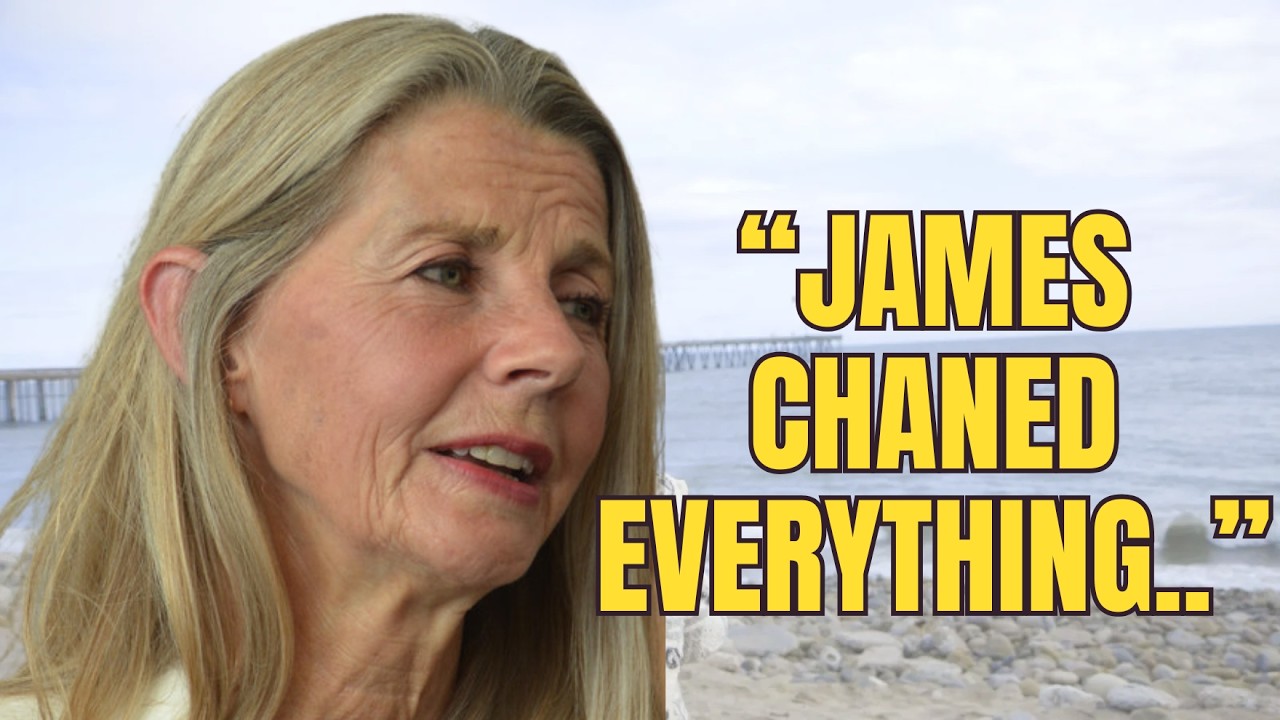 It was a revelation that perfectly encapsulated her journey from a sun-kissed teenage cover model to a Hollywood star, and finally, to a woman who found her greatest fulfillment far from the klieg lights.
Her story begins not on a soundstage, but in the suburban comfort of Woodland Hills in the San Fernando Valley. Born Karen Jan Smithers on July 3rd, 1949, she was one of four daughters in a middle-class household where her father practiced law and her mother managed the home. It was an ordinary upbringing, yet it was shadowed by a profound tragedy that would shape her perspective on life.
Her eldest sister was killed in a car accident at the age of 21, a loss that settled into the family’s foundation and never quite dissipated. This undercurrent of grief perhaps explains the introspective, dreamy quality that defined young Jan, a girl who preferred drawing to homework and often felt overwhelmed by the world around her.
That internal turmoil was laid bare for the entire nation to read when, at just 16 years old, she landed on the cover of Newsweek. The opportunity arose from a single act of teenage rebellion. Skipping school to watch a boy surf, she was approached on the beach by two men who looked, as she later described them, “like little pencils walking down the beach.”
They were reporters working on a story about American teenagers, and they found their subject. The resulting cover, featuring a blonde, sunburned Smithers perched on a motorcycle, became an overnight sensation, catapulting her into a world she never expected to enter. While most kids got detention for skipping class, Jan Smithers got a national magazine cover.
The fallout was immediate and overwhelming. The Smithers family phone rang off the hook with agents eager to sign the new “It” girl. Her mother, acting as her manager and protector, drove her from meeting to meeting, often sleeping in the car between appointments.
This whirlwind led to commercials, print ads, and a brief stint as a rock singer with a band called Hot Cup of Friends, but her true calling arrived in 1978 when a former advertising man named Hugh Wilson began casting a new sitcom about a failing radio station in Cincinnati. Wilson had created the character of Bailey Quarters, inspired by his own wife, a soft-spoken woman of few but meaningful words. He needed an actress who could embody that genuine shyness, not just perform it.
 Many actresses auditioned, and several read the lines better than Smithers. But Wilson saw something authentic in her; she wasn’t playing shy, she was shy. He made her a promise: Bailey would start out quiet, and as Jan grew more confident, the character would grow right along with her.
It was a unique pact that resulted in one of the most organic character arcs in television history. In the first season, Jan lingered on the edges of scenes, observing and learning. By the show’s end, Bailey Quarters had evolved into a sharp, determined reporter, and Jan Smithers had evolved into a confident actress, the two growing up together in front of millions of viewers.
WKRP in Cincinnati premiered on CBS on September 18th, 1978, and became an instant classic. The ensemble cast was a perfect alchemy of talent, from Gary Sandy’s cowboy-booted program director to Howard Hesseman’s brilliant, burned-out DJ, Dr. Johnny Fever.
The show was populated with unforgettable characters, including the bumbling newsman Les Nesman, the sleazy but lovable salesman Herb Tarlek, and the glamorous receptionist Jennifer Marlowe, played by Loni Anderson. While Anderson was the bombshell who adorned every young man’s poster, Smithers’ Bailey was the girl next door, the one who felt real and attainable. She was the quiet role model for a generation of women entering the workforce, proving that competence and intelligence didn’t require shouting.
The show’s writing was sharp, often tackling social issues with a surprising progressive bent. They even borrowed from Smithers’ real-life convictions, including her passion for clean energy and distrust of nuclear power. In one memorable episode, Bailey wonders if a nearby nuclear plant is responsible for the men in a small town going bald—a line that was pure Jan, not just acting.
Despite its critical acclaim and devoted fanbase, the show struggled in the ratings due to constant schedule changes by CBS. After 90 episodes and four seasons, the network cancelled it in 1982, but the show found a massive new audience in reruns, cementing its place in pop culture history, particularly for the legendary Thanksgiving episode where live turkeys are dropped from a helicopter.
 Following the show’s end, Smithers continued to work steadily, appearing in guest spots on popular series. It was during a guest role on the Aaron Spelling drama Hotel that she met James Brolin, the handsome leading man. Their connection was immediate and sincere, growing out of a moment where she realized the big star was more nervous than she was.
They married in 1986, and Smithers suddenly found herself a stepmother to Brolin’s two teenage sons, including a young Josh Brolin. In 1987, she gave birth to her daughter, Molly Elizabeth Brolan. She had planned to take six months off before returning to work, but holding her baby girl changed everything.
She looked at her daughter and thought, “You need me.” At the height of her fame, with a hit show still in reruns, Jan Smithers walked away from Hollywood without a farewell tour or a press conference.
It was an almost unthinkable decision in an industry fueled by ambition, but for Smithers, it was simple math. She chose motherhood over stardom, trading scripts for lullabies. The marriage to Brolin, however, could not withstand the pressures of his demanding career and their diverging desires for the future.
They divorced in 1995, and Smithers later described the marriage as good, until they simply began to wander apart. The following year, Brolin was set up on a blind date with Barbra Streisand, and they married in 1998. Through the tabloid frenzy, Smithers remained silent, never uttering a bitter word publicly.
She moved as far from Hollywood as she could, even spending time in Nova Scotia, and dedicated herself to raising Molly.
 When Molly reached high school, Smithers began a new chapter, joining a charitable group on a trip to India. The poverty and hardship she witnessed, coupled with the extraordinary warmth of the people, shook her to her core. She realized she could make a difference and returned again and again for 16 years, learning to meditate and finding a profound sense of purpose.
For decades, she remained almost completely out of sight, but on June 4th, 2014, she made a rare public appearance at a Paley Center for Media reunion celebrating the show’s 35th anniversary. She sat on stage with Loni Anderson, Howard Hesseman, Tim Reid, and creator Hugh Wilson, swapping stories and looking like old friends, as if the last episode had wrapped only weeks before.
That reunion now serves as a poignant time capsule, as the cast has since been diminished by time. Gordon Jump passed away in 2003, Hugh Wilson in 2018, Frank Bonner in 2021, and Howard Hesseman in 2022. In August 2025, just days before her 80th birthday, Loni Anderson also passed away.
Of the main cast and creator who shared that stage, only Jan Smithers and Tim Reid remain. Now, Bailey carries the memory for both Jennifer and herself. Now 77, Smithers lives quietly in Southern California, spending her days with meditation, yoga, and charitable causes.
She remains amazed at how it all turned out, calling her career destiny and dumb luck. She is a woman who skipped school once, ended up on the cover of Newsweek, and then walked away from fame the moment she found something she loved more. The question remains for the rest of us: were you a Bailey fan or a Jennifer fan, and do you still remember where you were when those turkeys fell from the sky?
