The air in the room turned glacial, a sudden, palpable chill that had nothing to do with the central air conditioning. Dame Judi Dench, the undisputed sovereign of British stage and screen, had just been told to leave the thinking to others. The man across the table, Harvey Weinstein, had made a catastrophic miscalculation, mistaking her legendary grace for passivity.
In that single, condescending sentence, he had not just insulted an actress; he had dismissed a formidable intelligence that had navigated the treacherous waters of the entertainment industry for decades. The meeting was over, and so, in that instant, was any possibility of a working relationship. It was a quiet, decisive end, a precursor to a pattern of silent, absolute severance that would define her later career.
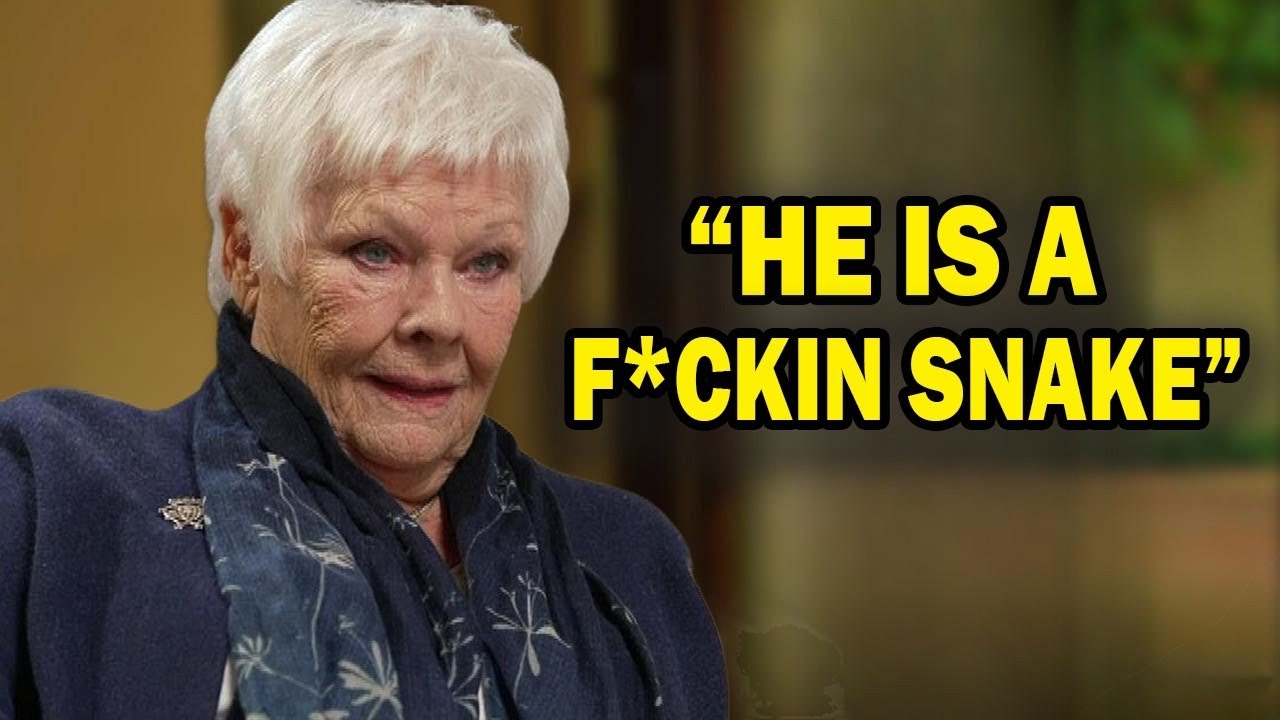 For years, the public image of Dame Judi Dench was one of serene invincibility, a national treasure who floated above the petty squabbles and ego-driven conflicts that plague the acting world. She was the woman who could command a room with a single, knowing glance, who could deliver a line of Shakespeare with such devastating clarity that it felt like a personal revelation. The idea that she could be humiliated, dismissed, or diminished by her peers seemed not just unlikely, but almost sacrilegious.
Yet, as she approached her tenth decade, a more complex, more human portrait began to emerge, one that revealed a woman who, while never raising her voice, was capable of a finality that was more absolute than any public feud.
The incident with Weinstein, which occurred in the early 2000s during an awards season strategy meeting, was the first major fracture. Dench had questioned the framing of her campaign, which she felt was built on a narrative of fragility and age rather than her formidable craft and power. Weinstein’s response, a lazy, arrogant dismissal of her agency, was the final proof she needed.
She did not shout or threaten; she simply stood, ended the meeting, and from that moment on, treated him with a cool, professional distance that was more damning than any outburst. She quietly declined projects with his fingerprints on them, a silent embargo that insiders noted with shock, but which she never explained. She had seen the monster before the world did, and she had simply, irrevocably, closed the door.
This quiet capacity for absolute severance was not reserved for industry titans alone. It extended to her peers, even those she ostensibly respected. The experience with Daniel Day-Lewis, a co-star whose commitment to method acting was legendary, proved to be a profoundly isolating ordeal.
His refusal to break character on set meant he would not acknowledge her as a person, avoiding eye contact and ignoring her attempts to discuss the nuances of their scenes together. When she calmly reminded him, “Daniel, I’m speaking to you, not the character,” he remained silent, a wall of unyielding intensity that left her feeling less like a collaborator and more like a prop. Her later, devastatingly precise summary of the experience, that she found it difficult when people refuse to acknowledge you as a human being, was a quiet, lethal judgment that ended any chance of a future collaboration.
 The rupture with Kenneth Branagh was different in nature but cut just as deeply, striking at the very heart of her professional identity. During a rehearsal for a Shakespeare project, at the height of his rising fame as a wunderkind director, he chose to publicly dismiss her interpretation of a role in front of the entire cast and crew. His implication was clear: her careful, disciplined, and deeply considered approach belonged to an older, less dynamic generation.
The moment was a public power play, a subtle but brutal assertion of his own authority at her expense. Dench, who had spent a lifetime building her reputation on the bedrock of her craft, felt not debated but deliberately diminished. She did not argue or protest; she simply withdrew, without drama, without a public statement, and never worked with him again.
Perhaps the most painful fracture of all was with Maggie Smith, the woman long considered her theatrical twin, a peer and a friend who understood the unique pressures and triumphs of their shared world. Theirs was a relationship of immense mutual respect, a rivalry forged in admiration. But a single, sharp comment during a tense rehearsal shattered the foundation of their bond.
When Smith snapped, “If you want to direct the play, Judy, just say so,” it landed not as the witty, acerbic barb it might have been intended as, but as a public accusation of overstepping her bounds. The room froze, and in that frozen silence, a friendship that had seemed unbreakable quietly began to die. They would continue to perform together flawlessly, offering each other polite public praise, but the warmth was gone, replaced by a permanent, unspoken distance.
The final, and perhaps most telling, severance was with Steve Coogan, a comedian whose improvisational style and humor clashed fundamentally with Dench’s meticulous approach to emotional structure. During a table read, his joking remarks repeatedly brushed aside her careful questions about a character’s motivation, reducing her work to the level of “overthinking.” The situation escalated when he suggested trimming her monologue because the project needed “less lecture.”
 It was a dismissal of her entire artistic process, a public reduction of her craft to something verbose and unnecessary. Dench’s response was characteristically understated and absolute. She closed her folder, ended her participation, and withdrew completely, leaving behind not a trace of anger, but a profound, unbridgeable distance that never closed again.
These were not loud feuds or public meltdowns, the kind of tabloid fodder that defines other celebrity conflicts. They were small moments, witnessed by full rooms, comprised of single sentences that revealed a fundamental lack of respect. For Dench, respect was the non-negotiable currency of any professional relationship.
Once it was gone, she saw no value in fighting to reclaim it. She did not believe in public battles or airing grievances. Her power was not in confrontation, but in the absolute finality of her departure.
She walked away quietly, permanently, and without a single regret, leaving the men and women who had crossed her to contemplate the void they had created in their own professional lives.
Her career, which has spanned over six decades and earned her every accolade imaginable, is a testament to her talent and her resilience. But it is also a testament to her unwavering standards. She has never been a diva in the traditional sense, never thrown a tantrum or stormed off a set in a fit of pique.
 Her form of protest was far more elegant, and far more devastating. It was the quiet closing of a door, the gentle but absolute severing of a tie. It was a refusal to engage with anyone who did not treat her, and her craft, with the reverence she felt it deserved.
This is the true story of her power, a power that lies not in the volume of her voice, but in the finality of her silence.
The legacy of Dame Judi Dench is not just one of extraordinary performances, but of an extraordinary professional integrity. She has demonstrated that one can navigate the brutal, ego-driven landscape of the entertainment industry without compromising one’s own standards. Her method was not to fight, but to disengage.
She understood that some battles are not worth fighting, that some people are not worth the energy. Her quiet departures were not acts of weakness, but of immense strength, a declaration that her self-worth was not dependent on the approval of others. She is a master of the art of the exit, a woman who knows that sometimes the most powerful thing you can say is nothing at all, and the most powerful thing you can do is simply walk away.
In the end, the stories of these severed relationships reveal a woman of profound principle. They show that her legendary grace was not a sign of passivity, but a shield for a deeply held code of conduct. She demanded to be seen, heard, and respected as a human being and as an artist.
When that demand was not met, she did not negotiate; she vanished. Her career is a masterclass in navigating power dynamics, not by accumulating power, but by refusing to cede her own. She is a testament to the idea that true strength is often quiet, that the most unbreakable resolve is often found in a gentle voice, and that the most permanent mark one can leave is not in a loud confrontation, but in a silent, dignified, and absolute departure.
