Jonathan Winters, the improvisational genius who transformed American comedy with nothing more than a shifting voice and a twisted expression, lived a hidden double life that few understood until the final years of his life—a existence split between uproarious laughter and crippling mental anguish that he concealed from audiences for decades.
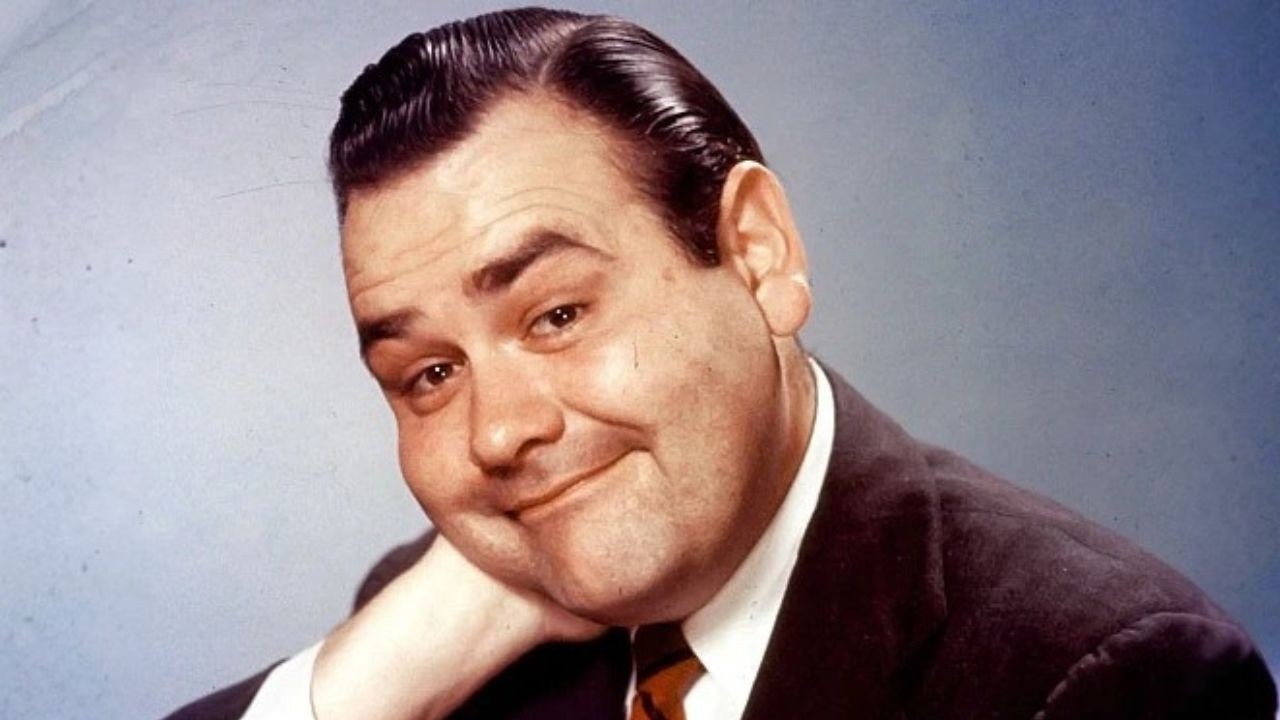
The comedian, who died in 2013 at age 87, was revealed through his own writings and later interviews to have battled bipolar disorder, spent time in psychiatric hospitals, and used comedy not merely as entertainment but as a survival mechanism against the darkness that threatened to consume him.
Born Jonathan Harshman Winters III on November 11, 1925, in Dayton, Ohio, into a family connected to Winters National Bank, the future comedy legend entered a world that would soon crumble around him. The Great Depression devastated his family’s stability, and his father’s struggles with alcohol and employment created an atmosphere of tension and unpredictability that marked Winters’ earliest memories.
When Winters was approximately seven years old, his parents divorced. His mother took him to Springfield to live with his grandmother, an environment that proved quieter but emotionally colder. Winters later reflected that his parents never understood him, and he never understood them—a feeling that followed him throughout his entire life.
In the classroom, young Jonathan performed poorly. Teachers labeled him slow, and he lived in constant fear of being called to the blackboard. The laughter that would later define his career began not as ambition but as a defensive reflex.
If the class laughed at his antics, no one would notice the terrified boy underneath.
As an only child with no siblings and no stable family foundation, Winters retreated into his bedroom, where he created entire worlds. He changed his voice, interviewed himself as multiple characters, imitated race cars at the Indianapolis Speedway, and conversed with imaginary people. What America would later call improvisational genius was, at the time, simply a lonely boy trying to make his room feel less empty.
The absence of his father made Winters a target for other children’s ridicule. He engaged in fights but often fled, crying alone beside trees or in building corners. Even after achieving fame, he kept marbles, a baseball glove, toy soldiers, and an old .
22 rifle close—relics of a childhood he never truly left behind.
At seventeen, Winters dropped out of high school and joined the United States Marine Corps, serving approximately two and a half years in the Pacific Theater during World War II. The military proved an ill-fitting environment. Winters later admitted he felt afraid during his service and rarely understood what fellow soldiers were thinking.
Yet within the barracks, he began developing the characters and voices that would later form the foundation of his revolutionary comedy style. He imitated an old woman, shifted voices mid-conversation, and slipped into characters without warning. Some soldiers found him amusing; many others considered him strange.
When Winters returned to Ohio after the war, he asked his mother a question that revealed the depth of his psychological wounds: “Where are my toys?” His mother informed him she had given them away long ago, believing he would never return alive from the war. That moment, Winters later recalled, severed the last remaining piece of his childhood.
 After his military service, Winters studied at the Dayton Art Institute with aspirations of becoming a cartoonist. He married Eileen Shauder in 1948, and the couple endured severe poverty while Winters cycled through numerous jobs—movie theater usher, Coca-Cola bottle inspector, potato picker, corn gatherer, bartender, and night shift cook at Yellowstone.
The turning point came from a lost wristwatch. Unable to afford a replacement, Eileen read about a local talent contest with a watch as the prize and encouraged her husband to enter. Winters took the stage, changed voices continuously, improvised jokes, and won.
The victory led to radio work at stations in Dayton and Springfield, where his strange voices began infiltrating weather reports and song introductions.
By the early 1950s, Winters left Ohio for New York with less than fifty-seven dollars in his pocket, promising Eileen he would return within a year if he failed. He rented a cheap room in Greenwich Village and began appearing in small nightclubs, quickly abandoning conventional comedy structures for something entirely unprecedented.
National television appearances followed on programs including “Chance of a Lifetime,” NBC Comedy Hour, and Omnibus. Hosts like Jack Paar, Steve Allen, and Garry Moore recognized that Winters operated unlike any comedian of his era. He needed no clear narrative structure—just a single small idea that could spawn dozens of characters within minutes.
In 1956, NBC gave Winters his first national television program, “The Jonathan Winters Show.” Taping sessions frequently ran longer than expected because he rarely stopped at the precise moment crews anticipated. Producers never knew whether he would follow prepared routines or veer into completely uncharted territory.
Behind the scenes, however, Winters’ mental health was deteriorating. In 1959, after weeks of virtually no sleep, he entered a private psychiatric hospital. His mind raced constantly between ideas, characters, and thoughts that refused to cease.
The voices that had once served his comedy began appearing offstage, blurring the line between performance and survival.
Doctors later diagnosed him with bipolar disorder. In 1961, he suffered another collapse and was hospitalized again. Throughout the early 1960s, Winters seemed to exist in a state of being pulled between studios, hotels, alcohol, and hospitals.
By day, he performed with chaotic energy; behind cameras, he struggled to control his own mind.
Hollywood at that time almost never accepted artists speaking openly about mental illness. Networks and producers viewed such disclosures as risks that could destroy a star’s image. Winters rarely spoke directly about his condition, but he never completely hid it either, referencing psychiatric hospitals in roundabout ways during his routines.
In 1963, Winters entered the biggest phase of his career with his role as Lennie Pike in “It’s a Mad, Mad, Mad, Mad World.” The film assembled nearly every famous comic face in America, yet Winters still seemed more uncontrollable than anyone else. His performance earned a Golden Globe nomination and elevated him from television personality to one of America’s most famous comedians.
Television remained his strongest medium. In 1967, CBS gave him “The Jonathan Winters Show,” a primetime variety program where he took direct suggestions from studio audiences and transformed simple premises into extended improvisational pieces. A scene lasting minutes could stretch to twice its length simply because Winters discovered another direction in his mind.
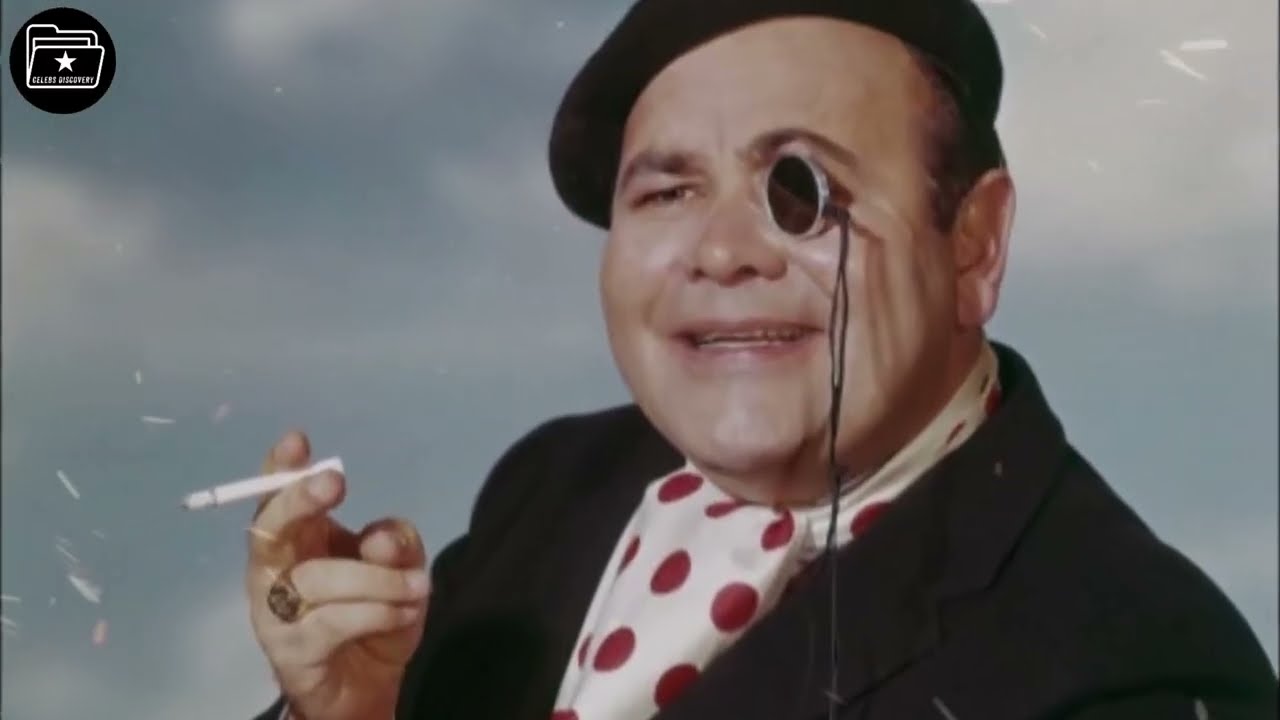
In the early 1970s, he returned with “The Wacky World of Jonathan Winters,” which aired from 1972 to 1974. But American television comedy was rapidly evolving toward more minimalist styles and stronger social observation. A new generation of comedians emerged with different sensibilities, and Winters began to feel like an artist from an older era.
Yet his influence within the performance community grew stronger than ever. Steve Martin, Lily Tomlin, Billy Crystal, and Johnny Carson all cited Winters as a pivotal figure who opened paths for modern television comedy. Jim Carrey acknowledged growing up with Winters’ improvisations and strange characters on screen.
When Robin Williams appeared in “Mork & Mindy” with seemingly boundless energy, industry observers recognized Winters’ shadow behind it. For Williams, Winters was living proof that comedy could exist outside television’s ordinary structures. When Winters joined the show as Mirth, the alien child who aged backward, the set became a meeting place for two generations of comedy.
By the mid-1980s, Winters’ voice began appearing in animated programs more frequently than major variety shows. He voiced Grandpa Smurf in “The Smurfs,” then continued in “Pound Puppies,” “Scooby-Doo,” “Frosty Returns,” and “Animaniacs.” Even behind the microphone, his familiar way of performing persisted—laughter, animal sounds, and other characters could slip in at any moment.
In 1987, Winters published “Winter’s Tales,” a collection of short stories, poems, and recollections written across many years. The book appeared on bestseller lists as Winters continued moving through American television more quietly than during his earlier peak.
In the early 1990s, he appeared in “Davis Rules” as Gunny Davis, earning an Emmy Award for Outstanding Supporting Actor in a Comedy Series. Throughout his career, he received eleven Grammy nominations and two wins for “The Little Prince” and “Cranky Calls.”
By 1999, Winters received the Mark Twain Prize for American Humor at the Kennedy Center, becoming only the second person in history to receive the award. Robin Williams watched from the audience like a student observing the teacher who had opened an entirely different way of doing comedy.
Throughout Winters’ life, Eileen Shauder Winters remained the person who saw him before America knew who he was. Their marriage lasted more than sixty years—something extraordinarily rare in American entertainment. She lived beside a man who rarely switched off from his characters, enduring sleeplessness, paranoia, mental breakdowns, and psychiatric hospitalizations.
On January 11, 2009, Eileen passed away at age 84 after nearly twenty years of fighting breast cancer. After her death, Winters continued appearing publicly for a few more years, still joking and changing voices. But those around him noticed more silence between his sentences.
The woman who had kept him tethered to ordinary life for more than half a century was gone.

In his final years, Winters lived quietly near Santa Barbara, California, in Montecito. He moved through art exhibitions, antique fairs, and local galleries, often appearing detached from the entertainment industry. Old age slowed his body noticeably, though he unexpectedly returned to new generations through the voice of Papa Smurf in the 2011 “Smurfs” film.
Winters continued recording for “The Smurfs 2” in the final months of his life. He completed his dialogue and passed away only nine days later. The film was dedicated to his memory.
On April 11, 2013, Jonathan Winters died of natural causes in Montecito at age 87. His body was cremated and his ashes returned to his family. Immediately after his death, comedians and actors across America spoke of his profound influence.
Robin Williams wrote that Winters had been his idol, mentor, and comedy Buddha. Fans brought flowers to his star on the Hollywood Walk of Fame. At the 2013 Emmy Awards, Williams stood on stage to pay tribute before the entire American television industry.
The legacy of Jonathan Winters does not rest on famous jokes or catchphrases. What made him endure was the way he stepped onto stages with almost no one—including himself—knowing what would happen next. Long before improv comedy became familiar in American television and theater, Winters was already living entirely within that form of performance.
His characters carried the speaking rhythms, moods, loneliness, and chaos of people he had observed since childhood in Ohio. He almost did not perform characters in the ordinary sense; audiences sometimes felt he was being pulled along by those people rather than fully controlling them.
Beyond comedy, Winters was among the first American celebrities to speak publicly about mental illness during an era when Hollywood almost always tried to hide it. He referenced psychiatric hospitals, paranoia, insomnia, and the chaos inside his mind directly on stage through his dark and strange humor.
For Winters, those things did not stand outside comedy—they went straight into it. He did not merely tell jokes. He stepped onto the stage like a mind turning its own chaos into performance before the audience’s eyes.
Even as he grew old, Winters kept small objects from childhood—marbles, toy soldiers, a baseball glove, and an old . 22 rifle. Some part of the little boy who once sat alone in Ohio never truly disappeared.
It simply grew up, stepped into American television, and continued talking to the entire country for many decades afterward.
