Debra Winger, the actress who became a defining screen presence of the 1980s and then walked away from Hollywood on her own terms, has once again addressed the decades-old tension with Richard Gere that followed both stars for more than forty years, offering a reflection that is far more complicated than the single insult that survived it.
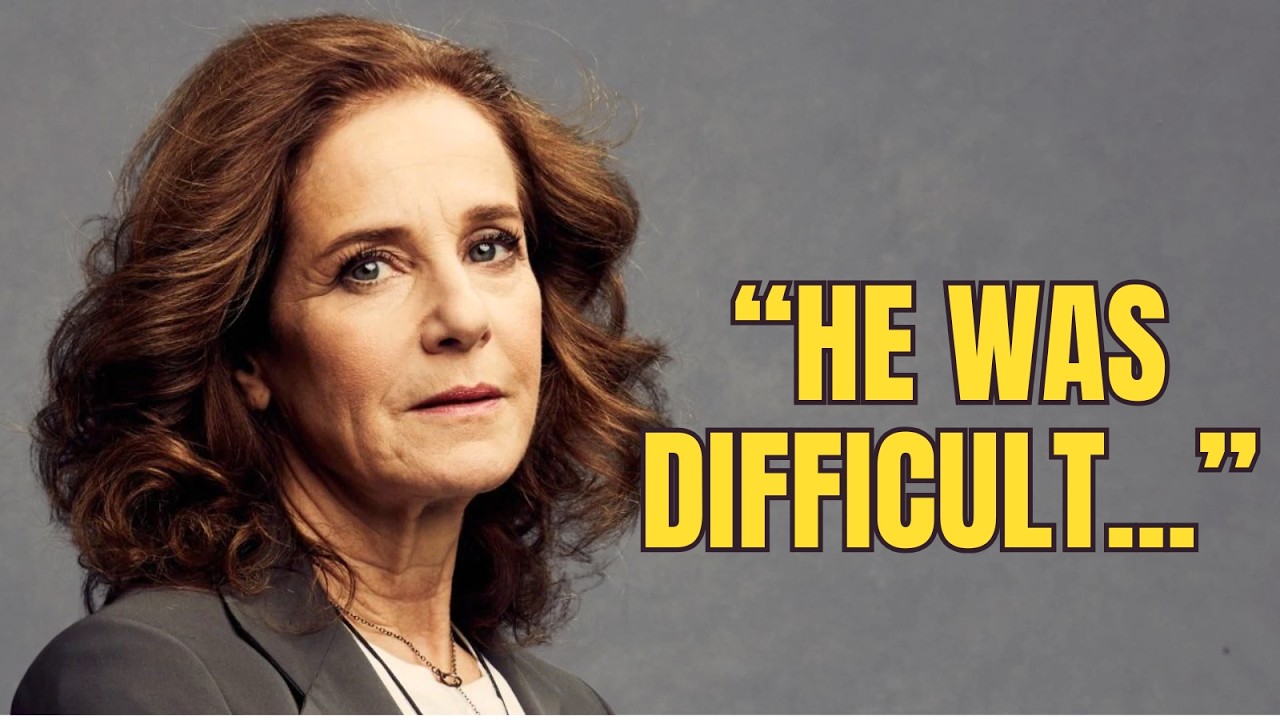
Winger, now 71 and living quietly on a farm in upstate New York with her husband, actor and director Arliss Howard, has never fully retracted her famous description of Gere as a “brick wall,” a line she first uttered publicly during the press cycle for their 1982 film “An Officer and a Gentleman.”
But in interviews spanning the past several years, including a 2021 conversation with The Telegraph, Winger has softened the framing without erasing the memory, acknowledging she probably could have come up with something nicer while confirming that Gere has never once let her forget it.
According to Winger, Gere greeted her decades later with a half-joking question: “Are you still saying those things about me?” The exchange captures what those close to both actors describe as a relationship defined less by genuine hostility than by two young, guarded performers colliding at the height of their fame.
The film that bound them together remains one of the most romantic in American cinema history. Directed by Taylor Hackford and shot largely around Fort Worden in Washington State, “An Officer and a Gentleman” cast Winger as Paula Pokrifki, a tough working-class factory worker from a Navy town, and Gere as Zack Mayo, a closed-off aviation officer candidate.
Their on-screen chemistry was so combustible that the final image of Gere carrying Winger out of the factory floor in his dress whites, past a room full of stunned co-workers, became one of the defining images of 1980s film. Off-screen, the dynamic was markedly different.
According to the memoir of the late Louis Gossett Jr., who won the Academy Award for Best Supporting Actor for his performance as Sergeant Foley, the two leads barely spoke once cameras stopped rolling, maintaining visible distance whenever they were not required to be close.
Gere has never fully denied the tension. He later admitted only that there had been real friction between them and that he himself had been, in his own word, “complicated” back then, a young star still learning how much of himself he was willing to give away to a co-star or a camera.
Winger earned her first Academy Award nomination for the role and then refused to do a single day of press for the film, a decision that told Hollywood almost as much about her as the performance itself did. It was an early signal of a career she would conduct entirely on her own terms.
Born Mary Debra Winger on May 16, 1955, in Cleveland Heights, Ohio, she was raised in a working-class Jewish household. Her father, Robert, a meat packer, named her after his favorite actress, Debra Paget, apparently hoping some of that stardust might rub off.
The family moved to Southern California when Winger was still a child. She graduated high school at 15 and enrolled at Cal State Northridge to study criminology, about as far from a Hollywood trajectory as a teenager could plot. In her late teens, she traveled to Israel.
For years, she let interviewers believe she had trained with the Israel Defense Forces on a kibbutz. Even then, she seemed to understand that the more sensational version of her own story was not the honest one, and she would rather tell the truth than the legend.
The real turning point came back in California, where she was working at an amusement park and suffered a serious accident that left her partially paralyzed and blind for close to ten months. She was 18. Doctors could not promise her sight would ever fully return.
Lying in a hospital bed, staring at a ceiling she could not see, she made herself one promise: that if her vision came back, she would move to Los Angeles and become an actress. It came back. She kept the promise.
Her early years gave no hint of what was coming. By her own account, she never once treated any of it like a career being carefully built, describing her path into acting as something closer to an accident than a plan, insisting she has never believed in careers at all, only in work.

She did commercials, describing herself later with characteristic bluntness as the all-American face, the one selling dairy milk and life insurance and fast food. A face, she said, that simply did not matter. She landed a recurring role as Drusilla, Wonder Woman’s younger sister, on the campy 1970s ABC series.
She never especially loved the job, even though the show’s star, Lynda Carter, has said publicly the two got along fine and that she tried to look out for the younger actress like a big sister. Small parts kept trickling in, including a sexploitation film called “Slumber Party ’57” and a guest spot on “Police Woman.”
Then a producer and director casting a film about Texas oil workers who spent their nights riding a mechanical bull at a honky-tonk bar called Gilley’s put her up against roughly 200 other actresses for the lead. She got it. She was 24.
“Urban Cowboy” hit theaters in 1980 opposite John Travolta, fresh off “Saturday Night Fever.” It was Winger’s raw, funny, unglamorous energy that stopped critics cold. She had a scratchy voice that sounded like it belonged to someone twice her age and a physical presence the camera simply could not look away from.
She earned a BAFTA nomination and two Golden Globe nods, and Hollywood suddenly understood it had found somebody unusual. The very next year brought “Terms of Endearment” and a second feud, arguably the more famous of the two.
Director James L. Brooks cast Winger as Emma Horton, a young woman whose marriage is dissolving as she dies of cancer, opposite Shirley MacLaine as her impossible, controlling mother. The two actresses, by nearly every account, did not get along.
MacLaine later wrote in her own memoir that during one tense moment on set, Winger turned, lifted her skirt, and broke wind directly in her face. Winger has flatly denied it ever happened, telling one interviewer years later that she had never known Shirley to tell the truth about anything.
She added that her own children would laugh the story out of the room, since she is usually the one enforcing manners in her household. Bette Davis, watching the whole dynamic from the outside, offered her own verdict to Barbara Walters in 1986, saying she saw a great deal of herself in a young actress who had already earned a reputation for being difficult simply because she cared about the work.
“Terms of Endearment” swept the Oscars that year. When Liza Minnelli read MacLaine’s name aloud as the winner for Best Actress over Winger, MacLaine did something nobody quite expected. Before she ever reached the podium to declare, unforgettably, that she deserved it, she crossed the aisle first and pulled Winger’s face into her hands, kissing her and whispering something only the two of them ever heard.
It was one genuinely tender gesture buried inside a rivalry that both women would keep publicly sparring about for the next forty years. The film won Best Picture that night, and Winger walked away with the National Society of Film Critics Award for Best Actress and a clear standing at 28 years old as one of the five or six best actresses working anywhere in the world.
Success on that scale should have opened every door in Hollywood, and for a while it did, though not always happily. In 1986, Universal paired her with Robert Redford in the big-budget thriller “Legal Eagles,” directed by Ivan Reitman, a film the studio was betting nearly $40 million on.
The shoot ballooned from a planned ten weeks to nearly four months, and Winger later described the whole experience as something close to a nightmare, saying bluntly that she was politically opposed to that kind of money being spent on a film unless it was a genuine epic, and that she simply took her salary and left with no interest in reliving it. The picture underperformed.
The following year brought “Black Widow,” a tighter, stranger psychological thriller built around a cat-and-mouse dynamic with Theresa Russell. In 1988, she took on “Betrayed,” a genuinely uncomfortable political thriller from director Costa-Gavras in which she played an FBI agent falling for a man she suspects of being a white supremacist, opposite Tom Berenger.

It did not break through commercially, but it proved something about her that box office numbers never quite captured: that she was willing to sit inside genuinely disturbing material at a moment when most leading women her age were being steered toward far safer roles.
That pattern, brilliant work paired with a very public willingness to say exactly what she thought, started to cost her almost immediately in ways that are easy to trace with hindsight. She turned down the female lead in “Raiders of the Lost Ark,” a role that went to Karen Allen and became a piece of movie history.
James L. Brooks wrote “Broadcast News” specifically with her in mind, and she passed because she was pregnant with her son Noah, watching Holly Hunter earn an Oscar nomination in the part instead. A bicycle accident broke her back and knocked her out of “Peggy Sue Got Married” just as she had begun preparing for it.
In 1990, having spent three full months training alongside the Chicago Cubs to prepare physically for “A League of Their Own,” she watched Madonna get cast in the film and walked away entirely, later explaining flatly that she considered it an Elvis picture, a comment about star power crowding out substance that the studio by her account quietly agreed with, since they let her keep her full salary anyway.
Geena Davis stepped into the role, and the film became a beloved hit without her. Each walkout, each blunt public comment, each refused press junket got filed away by an industry that was at the exact same moment calling male stars with identical reputations demanding rather than difficult.
Winger never really argued the point was unfair so much as she simply refused to change her behavior because of it, a stance that got quietly more expensive with every passing year of the 1980s. By the early 1990s, the phone calls for major studio roles had slowed to something close to silence, though her actual talent had never dimmed.
She went to the Sahara Desert to shoot “The Sheltering Sky” opposite John Malkovich for director Bernardo Bertolucci, an adaptation of Paul Bowles’s novel shot in punishing heat and near-total isolation, with Winger in nearly every frame.
She gave a devastating, restrained performance as Joy Gresham, the wife of C. S. Lewis, opposite Anthony Hopkins in 1993’s “Shadowlands,” earning a third Oscar nomination that once again did not turn into a win, for a role that reportedly paid her $2 million and left critics insisting she could still act circles around nearly anyone working.
In between, in 1995, she starred in Billy Crystal’s romantic comedy “Forget Paris,” lighter and warmer than almost anything else in her filmography, proof she could do gentle just as easily as raw. Then she traveled to a small village in Ireland to shoot “Divine Rapture” alongside Marlon Brando and Johnny Depp.
It was an almost unbelievable cast list for a small independent production. Two weeks into filming, the money simply ran out and the whole thing collapsed, unfinished and unpaid. Winger later said what genuinely devastated her was not her own lost paycheck but the local villagers who had opened their homes to a film crew that then vanished overnight.
Then in 1995, at 40 years old, she made a decision that stunned the industry far more quietly than any walkout ever had. She had a new marriage to Howard, wanted another child, and looked at the math of spending three more months of her life on a film set at exactly the age when Hollywood traditionally starts writing women off.
“It’s time to go,” she remembers thinking. And she went, moving to a farm in upstate New York, homeschooling her older son, taking care of her own mother at the end of her life, and staying almost entirely out of movies for nearly six years, an eternity for someone who had once been one of the five best actresses working anywhere in the world.
The world did not forget her, even in the silence. In 2002, actress Rosanna Arquette released a documentary literally titled “Searching for Debra Winger,” using her absence as the symbolic center of a much larger film about how Hollywood discards women the moment they turn 40. It screened at Cannes and put her back into the cultural conversation, not as someone who had failed, but as a name that stood for an entire industry’s failure.

She eased back in on her own schedule. There was a quietly devastating, Emmy-nominated performance in the television film “Dawn Anna,” playing a mother grieving a child lost in the Columbine shooting, and a small but extraordinary supporting turn as Anne Hathaway’s estranged mother in Jonathan Demme’s “Rachel Getting Married” in 2008.
In 2012, at 57 years old, she made her Broadway debut in David Mamet’s “The Anarchist,” a playwright who had first worked with her 25 years earlier on “Black Widow” and clearly never stopped believing in her. In 2016, she joined the Netflix sitcom “The Ranch” opposite Sam Elliott, staying four full seasons and doing a kind of broad multicamera comedy she had genuinely never attempted before, simply because she had never done it. Novelty always mattered more to her than safety.
And then came Rome. On November 4, 2011, at the Rome Film Festival, Debra Winger sat on the jury and personally presented Richard Gere with the Marc’Aurelio Lifetime Achievement Award. The two of them stood together on a stage neither had shared in decades.
She thanked him in front of the room for all his kindnesses over the years and called him a great human citizen of the world, a description about as far from “brick wall” as language allows. Gere brought the reunion up himself the following year in an interview, admitting he had not seen her in a long, long time and that it had simply been nice.
He added that she had, in his words, a really interesting quality as a performer, a compliment thirty years overdue and clearly meant. Louis Gossett Jr. , who had lived through the original tension close enough to earn what he jokingly called a hairline fracture in the ribs from the physical demands of playing opposite Gere, later put the whole dynamic best.
He and Gere, he said, never had a single cross word during filming. “Debra Winger took care of that.”
Gere’s life today looks almost nothing like the guarded, complicated young actor Winger once described. He married Spanish publicist Alejandra Silva in 2018 and relocated the family to Madrid in 2024 to be closer to her relatives and to work on ending homelessness across the country.
By every account from his wife, he spends his days as a devoted, present father to their two young sons, playing guitar in the kitchen while she cooks and reading bedtime stories most nights he is home. He has said simply that they are happier than they have ever been.
Winger’s own version of that same peace arrived on a farm in upstate New York rather than an estate in Madrid, but it arrived just the same. She taught at Harvard for a stretch, published a book of personal essays and poetry called “Undiscovered” in 2008, and has said in interviews that she is, somewhat to her own surprise, one of the happiest people she knows.
A strange place to land, in her own words, for a kid who grew up quietly depressed in a Jewish working-class household in Ohio. She has described the moment she actually stopped chasing Hollywood’s phone calls not as a loss but as something closer to liberation, saying nothing compares to the relief of no longer waiting on anyone else’s judgment.
No more auditions. No more permission required. At 71, living quietly with Howard, still occasionally acting, still fiercely private, still unwilling to perform gratitude she does not feel, she has never walked back the brick wall line entirely, and she has never needed to.
The truth she actually tells about Richard Gere, once you sit with the whole story rather than the one insult that survived it, was never really about him being difficult. It was about two very young, very guarded people thrown into one of the most famous love stories Hollywood ever filmed, who each spent the next four decades slowly, separately becoming the kind of people capable of standing on a stage together and meaning it.
That, in the end, is a far better ending than the one everyone remembers.
