The 20th of October, 1990, marked the quiet end of an era in American cinema, a date chosen by fate with a precision that seems almost scripted. Joel McCrea, the actor who became the stoic face of the American frontier in nearly one hundred films, died of pneumonia at the age of 84. He passed away on the 57th anniversary of his wedding to fellow actor Frances Dee, a statistical anomaly that closed a life that had always resisted the dramatic conventions of the industry in which he worked.
Known for decades as the unshakeable, low-key cowboy who rode through Hollywood’s golden age, McCrea died not at a premiere or a studio gala, but in a hospital room at the Motion Picture Country House in Woodland Hills. The public, fed on a diet of his calm demeanor and unwavering moral compass on screen, rarely understood that for most of his life, the real story was not the movie being filmed but the one he was living away from the cameras. His long-held private mission was not to conquer the box office, but to secure his independence from it.
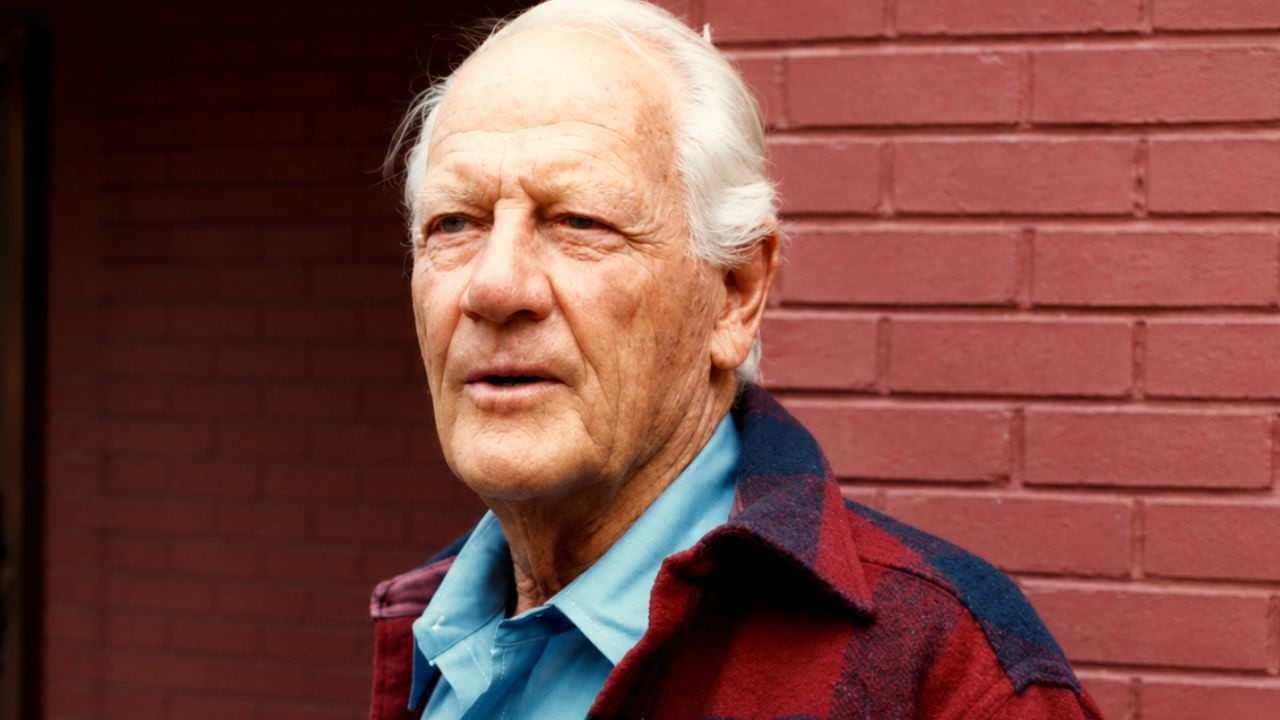 The archives of American cinema reveal a figure who was less of an actor and more of a landowner with an exceptional talent for sincerity. McCrea was born in South Pasadena, California in 1905, when the film industry was hardly a blueprint at all, just a series of tents and wooden stages scattered around a dusty suburb. His proximity to the film industry in his youth gave him a unique, detached perspective on Hollywood.
He would see it as a job, a tool, long before he ever saw it as a driving ambition.
As a young boy, McCrea was not dreaming of acting, but working as a stable hand and riding horses for stars like Tom Mix and William S. Hart. While other children learned their arithmetic, the young McCrea was internalizing the physical logic of the West, the weight of a saddle, the scent of dust, the calm required to remain on a beating horse.
These formative years outside the soundstages built a foundation of realism that would later define his screen persona, a man who seemed to genuinely know the West rather than just costume it. He delivered newspapers to Cecil B. DeMille’s mansion, a first hand look at studio power long before he ever held a starring contract.
It was a proximity that demystified the magic of cinema, turning it into a logical business of motion rather than a dream.
Joel’s early film career was slow, a series of uncredited extras and small roles, coming at the same time when Hollywood was making the leap to Talkies. He was not a personality yet, merely a tall, striking face with good posture. He worked around film sets, slowly understanding how the industry moved.
His 1929 role in The Jazz Age was his first real step into the public eye. Yet, these early steps drove home the opposite of the glitz; they showed him the factory nature of the film industry where actors are just moving parts. He knew he had to become more valuable than the next man in line.
In the early 1930s, at MGM and later RKO, McCrea began to gain the trust of the front offices. But this ascent came at the cost of his own calm. The studio system entirely consumed actors, managing their days and their images, but they did not manage his soul.
Unlike the artisan, McCrea’s private life and passions were for land, horses, and quiet living. While he was making films with women like Greta Garbo or Delores del Río—public spectacles of desire—he was internally calculating his next move that would allow him to save enough money to buy more ranch land. This dual existence, the public hero and the private farmer, was a secret he created to remain whole.
In 1933, he married Frances Dee. This was not just a marriage in Hollywood, it was a rebellious alliance. While studio press agents insisted their stars be seen as eligible and publicly available for romance to keep the fan magazines buzzing, McCrea went in the opposite direction.
He married. Instead of seeking bachelor domain, he sought the comfort of unbreakable security. The marriage was a fortress against the artificial world.
They tried to live as simple people, staying outside the tabloid matrix. He was building a parallel world, the world they did not see. The Hollywood life was just the shadow; the ranch was the substance.
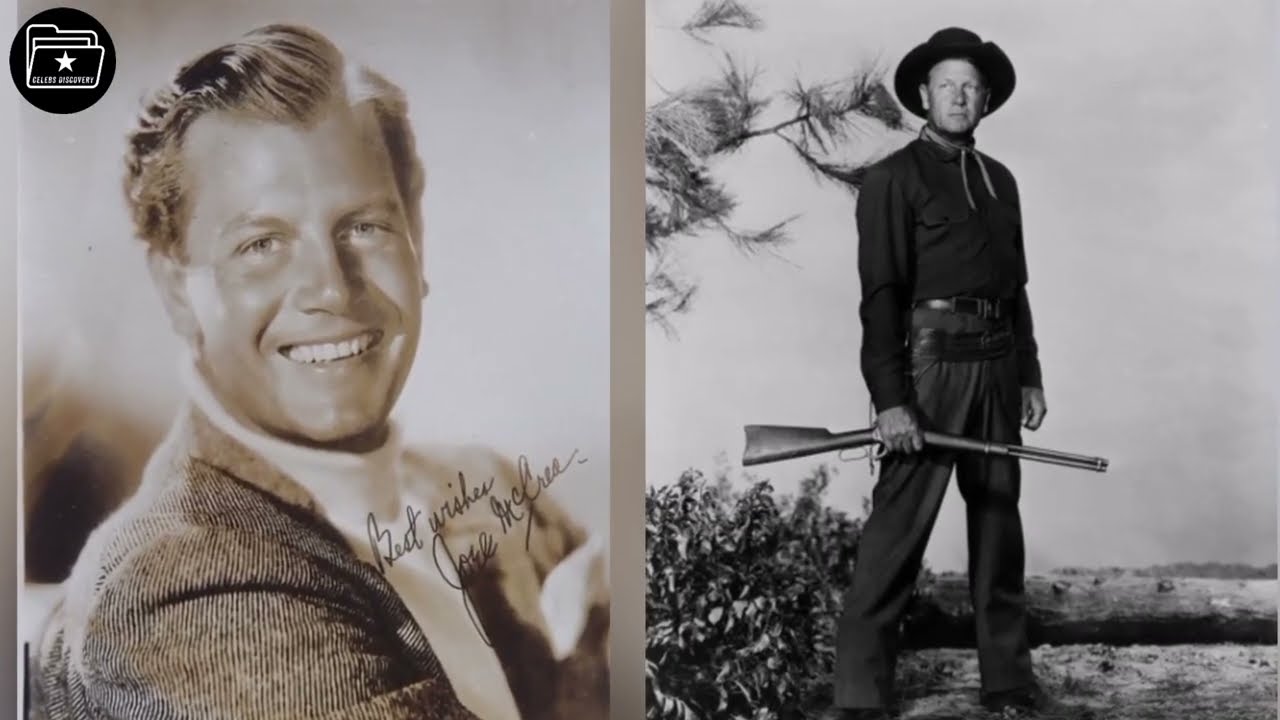 His friendship with Will Rogers warped his long-term outlook on the industry, Ros. Rogers gave him practical advice that shaped the rest of his mundane life: save your earnings. McCrea would, without fail, save every cent he could from his Hollywood salaries and put them into land.
While other actors spent money on luxury items and lavish, addictive parties, McCrea deployed his earnings into worthless property that he saw value in. He was laying the groundwork to escape Hollywood while he was still good at it. The public never knew of this constant escape planning; they saw the confident hero on the screen, not in world view of the man paying attention to the price of cattle.
His career took a huge leap with Alfred Hitchcock’s Foreign Correspondent (1940) (that he was provided the role of the rescuer) followed by Preston Sturges’s Sullivan’s Travels in 1941. These roles should have defined him as Hollywood’s versatility star. But the true, hidden life of McCrea was defined by a different logic.
He was more interested in making movies that allowed him to return to the solitude of the range. While he received offers for the great dramas of the era, he turned down numerous established projects, including The Postman Always Rings Twice because he didn’t like the central character. It was not about how good the script made him look; it was about how in line the film’s world was with his personal value system.
Through the war years, he was not a hawk. He refused to play battlefield heroes because he felt the physical reality of being the wrong age for the draft excluded him from earning that realistic theater. The public saw a male icon, but they did not see a man troubled with his own authenticity.
He compensated by spending more and more time of his life in camps and on the land, becoming the rancher he claimed to be in reality. The screen acted as a way to fund the ranch, and the ranch was the center of his life. That inverts the usual Hollywood relationship: cinema wasn’t life; the West was.
For nearly two decades, he was not just an actor; he was a top earner. By the mid-1940s, he was receiving a handsome $10,000 per week, a salary reserved for true leading men. He was living in the most competitive dream factory on Earth, and everything about him was rational.
He invested his salary carefully, building up the McCrea Ranch, a massive property in Ventura County. While many studios had complete control over their actors’ lives, McCrea held the real control in his ability to walk away, a power he legally held with that paycheck. The double life is less about scandal, and more about priority: he directed all of his blocking to keep a rank.
When critics and directors pushed him towards hard realism of war films or romantic cinematic successes, he instead, chose to move into the Western, much to the confusion of those who credited the studio as the highest force. Westerns were not a genre to him; they were a comfortable way to use his true talents. He was not pretending to be a cowboy; he just, by a certain point, was a cowboy.
The roles softened, often in to character of a calm man trying to live off the land, the epitome of the true spirit of classic cowboy. It was his natural life, transferred to the silver screen. He did not have to convince anyone of the cowboy aesthetic; he had perfected the aesthetic for decades.
This got more real when he created the ceremony for Ride the High Country (1962) with Sam Peckinpah. By 1962, with Hollywood turning away from Westerns, McCrea and Randolph Scott stepped into their purpose to portray old lawmen walking to the end of their era. It was a searching film about aging and honor.
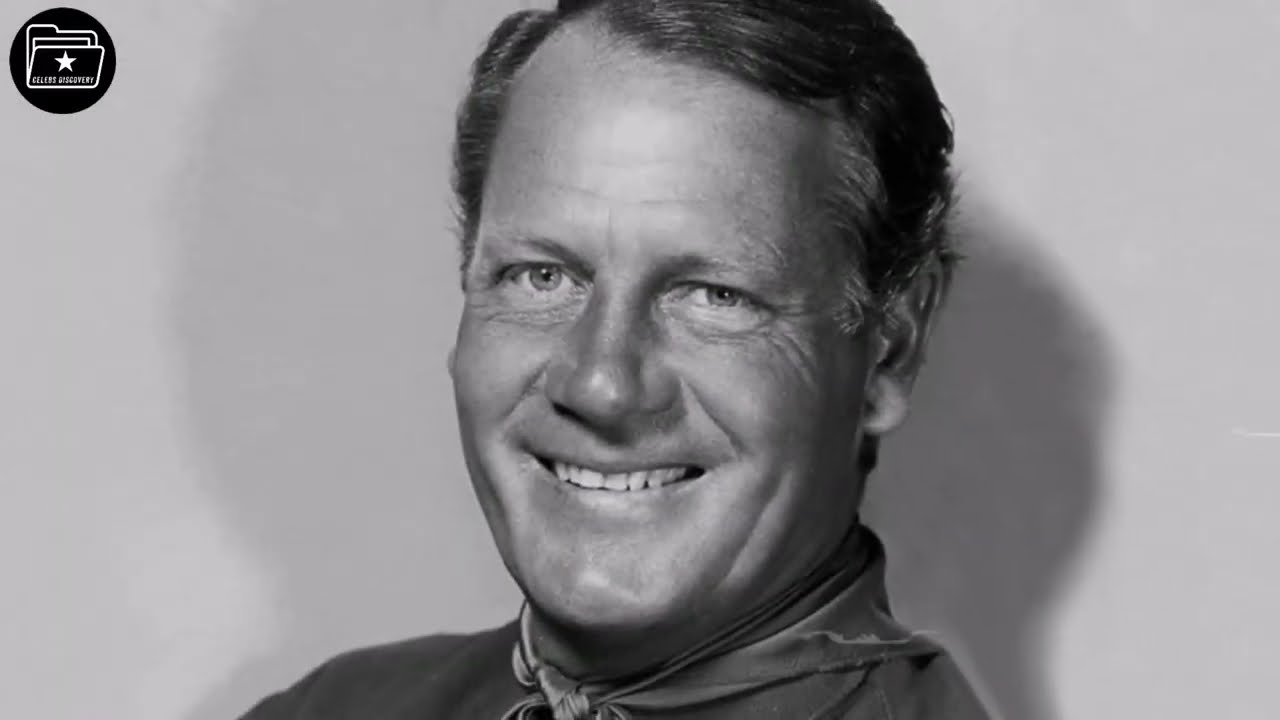 As McCrea often joked, it was “two over-the-hill actors playing two over-the-hill lawmen.” But this sort of humor masked the truth. It was the first time he fully allowed the audience to see the spectacle of the American male, incomplete, slower, worn out by a changing world.
The film was not an immediate box office hit, but became a critical rediscovery in later years, and is now widely regarded as one of the best Westerns ever made.
Behind this, his biggest secret to his longevity is that his life was unbearably private. The gossip industry of the mid-20th century demands that actors have dark secrets. McCrea’s double life was not comprising of affairs or addictions, but a life of normalcy.
While other actors attended parties in Hollywood, he was at home with Frances, doing the physical work of a daily. While studios would have loved for him to be linked with his co-stars, he was quietly building a functioning partnership with his wife for the small, one-lifetime. Stay unique.
The public never knew the substance of his life as a real man, family, only the fake world he presented them of the cinema. This “double life” is the most radical of all: the refusal to be spectacular in a society that demanded it.
But growing old in the 60s was a difficult time for Hollywood actors, a time when prime life ended for women and the image of the classic hero was breeded against a new generation of artists. For McCrea, the aging was not the problem. The problem was that Hollywood was becoming more and more artificial, and he had no place in that.
The cowboy had left the stage for good. He was a man only on the screen, but off-screen he lived his true legacy. His fame came to be overshadowed by his investment in land, and the legacy we that he intentionally build for his family, the ranch.
The final piece of his career was Mustang Country (1976), after which he silently walked away from the industry. No distorted announcement, no long interview. He just stopped.
He admitted his own regret later, saying he wished he had been a better actor, a confession that made little sense to the public but made perfect sense to McCrea, for whom realism always trumped spectacle. He chose sincerity over success, but somehow got both, and in the end, he chose to be land over being a star. He had spent almost the entirety of his life granting this persona to the en banks in the place.
Olivists. When they stopped, he got free.
A legacy exists in the physical world of the California landscape. After his death, his family gave large sections of the McCrea Ranch to the community and nature conservation organizations. The wildlife preserve which bears his name keeps the California land as it was.
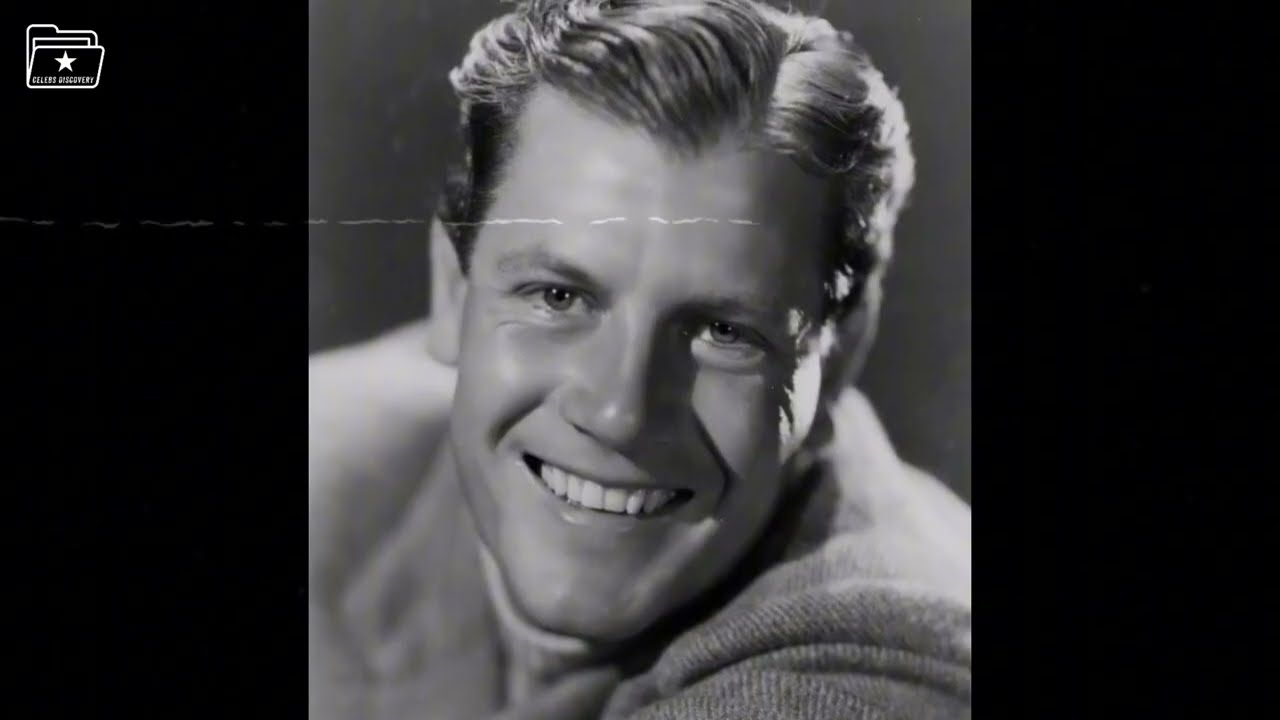 He did not just play a natural role; he was the person who save the land. The star at the Walk of Fame becomes a part of Hollywood’s systems, but the Rolling terrain ensures that part of his legacy is real, not fake. The line between his fiction and his reality had been thin throughout his life, and after he died, it dissolved completely.
He turned himself into the role as a man.
The tragic, or perhaps beautiful, ending of his life, came just right before he died, he attended a political rally. Three weeks later, he was forced to see a doctor. His body failed him only after the last movie had been completed, and the rate of his death seemed almost miraculous.
He died on the same calendar date he had chosen to be married. The symmetry is so perfect that it seems like a cinematic closure. It could have been played as the tragedy of an actor who never believed himself to be one.
The actual cause of death was breathing, but the headline was where the story got immortalized.
We now look back at the man who could be, for many people, an icon. But he was merely pointing to a way of life that was always in public view. The professional actor has always had to live a double life: one is the screen, and one is their real.
McCrea’s unique life was that for the first time, the screen life took second place to the real life. He sacrificed the higher peaks to support a stable, lower ground. He used his movie money to buy the future.
While he could have dominated the screens, he chose instead to dominate a piece of land. In this country, the desire to own land and be detached from corruption respects the ideal living which determines the entire life.
As we report the news of his death, we are announcing the end of a unique, unethical Hollywood archetype. He was not a rebel, but he did not walk the path. He wasn’t a thief, but he stole his moments from the machine.
He was a quiet accountant of his life, ensuring his sole would not be compromised. The headline of his double life being uncovered is wrong; it was never kept secret, it was very public, but we did not look. It is a story live under the camera’s light: a man who in film continues to find himself, even as he was supposed to be lost in the industry.
