The shot that ended Spider Sabich’s life on March 21st, 1976, did more than silence a celebrated Olympic skier in his Aspen, Colorado home. It shattered the carefully constructed public persona of Claudine Longet, the soft-spoken French singer and actress who had charmed American audiences for over a decade. Within hours, the name of the woman once known for her gentle voice and elegant style was splashed across front pages nationwide, not for her music, but as the central figure in a fatal shooting investigation that would captivate the country for years.
The ambulance that sped away from the residence carried not only the mortally wounded Sabich but also the beginning of a new, tragic chapter for Longet. Sabich, who had been living with Longet and her three children from her marriage to Andy Williams, died from blood loss en route to the hospital. The only other person present at the time of the shooting was Longet herself, who claimed the incident was a tragic accident involving a gun she did not understand.
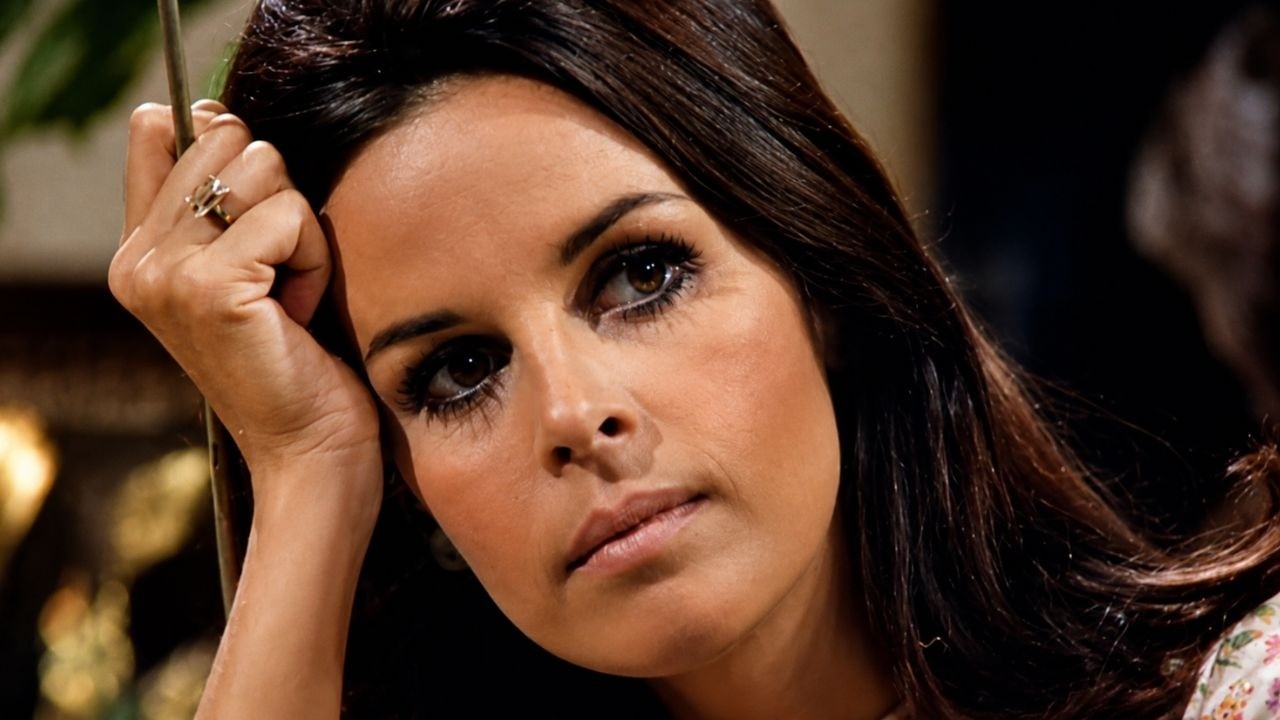 This single, devastating moment would irrevocably alter the trajectory of her life and legacy.
Longet’s story, however, began in a world far removed from the legal battles and media frenzy that would define her later years. Born in Paris on January 29th, 1942, during the German occupation of France, her early life was largely unremarkable and private. Her mother was a doctor, and her father worked in the manufacturing of X-ray equipment.
Unlike many Hollywood figures, Longet left behind few public recollections of her childhood, making it difficult to piece together the experiences that shaped her. What is known is that she possessed a natural talent for singing and dancing from a young age.
This talent became her passport out of Paris and into the glittering world of American entertainment. In 1960, at the age of 18, her life took a pivotal turn when American impresario Lou Walters, the father of Barbara Walters, spotted her performing on French television. Walters, who was associated with the Folies Bergère show at the Tropicana Hotel in Las Vegas, was scouting for new talent.
He offered the young dancer an opportunity that would change everything, inviting her to cross the Atlantic and perform on one of the most famous stages in the world.
Arriving in Las Vegas, Longet joined the Folies Bergère troop, a world away from her life in Paris. It was in this vibrant, high-energy environment that she would have a chance encounter that would fundamentally alter her personal and professional life. She met Andy Williams, the immensely popular singer who was on the cusp of even greater fame with his own television variety show.
The two began a whirlwind romance and married in December 1961, just over a year after they first met. This marriage instantly connected Longet to the upper echelons of the American entertainment industry.
While her marriage to Williams provided a platform, Longet began to forge her own path in Hollywood. She started appearing in television series such as McHale’s Navy in 1963, followed by roles in Combat! , 12 O’Clock High, and Mr.
Novak. These were largely guest roles, but they established her as a recognizable face on American television. Her distinctive French accent and charming demeanor made her memorable, even if the roles themselves were not leading parts.
She also became a familiar presence on her husband’s show, The Andy Williams Show, where she would sing and perform, further endearing herself to millions of viewers.
The public’s perception of Longet was inextricably linked to her famous husband, a paradox that would follow her throughout her career. While her appearances on his show increased her visibility, they also made it difficult for her to be seen as an independent artist. The press consistently referred to her in connection with Williams, even as she took on her own projects.
This dynamic, however, was about to shift dramatically in 1966, when a single guest appearance on the series Run for Your Life would launch her into a new and unexpected career as a recording artist.
In the season finale of Run for Your Life, Longet played a young woman and, for the first time, showcased her singing voice on television, performing Antonio Carlos Jobim’s bossa nova classic “Meditation” in both English and French. The performance was a revelation. Her thin, soft, almost whispering vocal style was a stark contrast to the powerful, technically demanding singers of the era.
 It was this unique, intimate quality that captivated viewers, including one very important person: Herb Alpert, the legendary trumpeter and co-founder of A&M Records.
Alpert was so impressed by Longet’s performance that he personally offered her a recording contract. This was a surprising move, as Longet had never been professionally known as a singer. Alpert, however, saw a unique potential in her delicate vocal tone, her subtle interpretation of songs, and her elegant image.
Rather than competing on vocal power, A&M Records positioned Longet as an artist who would win over listeners with her artistic personality and intimate style. Her first single for the label was “Meditation,” the very song that had caught Alpert’s attention.
The gamble paid off spectacularly. In August 1967, A&M released her debut album, Claudine. It was a commercial triumph, climbing to number 11 on the Billboard Top LPs chart and number nine on the Cashbox chart.
The album was soon certified gold by the Recording Industry Association of America, signifying sales of over 500,000 copies. This success transformed Longet from a familiar television face into a bona fide recording star in her own right, proving that her appeal was not a fleeting phenomenon but the beginning of a lasting career.
Her follow-up album, The Look of Love, released in 1967, solidified her position in the music industry, peaking at number 33 on the Billboard chart and number 23 on Cashbox. A&M continued to cultivate her image as a leading figure in the easy listening genre, a sophisticated style of pop music aimed at adult listeners who preferred romantic ballads to the increasingly dominant rock sound. Her singles also performed well on the Billboard Adult Contemporary chart, with “Hello” reaching number eight, becoming her most successful single on that chart.
Her renditions of songs like “Here, There and Everywhere” and “Small Talk” also charted well.
Longet’s success was not without its critics, who argued that her vocal technique was limited and her range too narrow. However, what some saw as a weakness became her signature. Her commitment to a soft, intimate, almost whispering style of singing created a distinctive identity that set her apart in an increasingly competitive market.
By 1968, she had reached the apex of her career, releasing new music, appearing in a major Hollywood film, and maintaining a constant presence on television. Her third album, Love Is Blue, climbed to number 29 on the Billboard chart, further confirming her commercial viability.
That same year, director Blake Edwards cast her in his classic comedy The Party, starring Peter Sellers. Longet played Michelle Monet, a French singer who provides a gentle, understated counterpoint to the film’s chaotic comedy. Her performance was natural and restrained, leaving a lasting impression without needing to be showy.
The film also featured the Henry Mancini and Dory Langdon Previn composition “Nothing to Lose,” which Longet performed in the movie. The song became one of the most memorable of her career, perfectly capturing her fragile and intimate vocal style.
The year 1968, however, was also marked by a profound tragedy that deeply affected Longet and her family. She and Andy Williams were close friends with Senator Robert F. Kennedy and his wife Ethel.
 On the night of June 4th, 1968, they were waiting at the Ambassador Hotel in Los Angeles after the California primary when they heard the shots that mortally wounded Kennedy. Longet and Williams rushed to Good Samaritan Hospital, where they remained until Kennedy died. The event left a deep mark on them, leading them to name their youngest son, Robert, in honor of their fallen friend.
By the end of 1968, Claudine Longet was at the very peak of her fame. She was the embodiment of French chic, an elegant and understated beauty with a captivating presence. In music, she was a leading figure in the easy listening scene.
In film, she had a memorable role in a classic comedy. The world seemed to be at her feet. However, the cultural landscape was shifting.
The rise of rock, psychedelic music, and a new generation’s sound began to dominate the charts, and the gentle style of music Longet pursued started to lose its commercial advantage.
As the 1970s began, Longet’s career began a slow, steady decline. Her albums no longer achieved the same chart success, and no major new single emerged to create another breakthrough. After Run Wild, Run Free, her relationship with A&M Records ended.
She moved to Barnaby Records, the label founded by her husband, but her recordings there, including a version of the Carpenters’ “We’ve Only Just Begun” and a soft-pop take on the Rolling Stones’ “Let’s Spend the Night Together,” failed to reignite her commercial fortunes. A planned album was shelved after the master recordings were lost, only to be rediscovered and released years later.
Her personal life was also undergoing significant changes. In 1970, after nearly a decade of marriage, Andy and Claudine separated. The split was handled with discretion, and they remained connected through their three children.
The marriage officially ended in divorce in 1975. Following the separation, Longet became involved with Spider Sabich, a professional skier and Olympic competitor who was closely associated with Aspen, Colorado. She eventually moved with her children to live with Sabich in Aspen, a move that took her further away from the Los Angeles entertainment scene.
The relationship between Longet and Sabich, however, was not without its difficulties. Testimony and documents from the subsequent investigation and trial would indicate that they had experienced problems in the months leading up to the shooting. On March 21st, 1976, inside their Aspen home, Sabich was shot in the abdomen with a .
22 caliber handgun. Longet accompanied him in the ambulance, but he died from blood loss on the way to the hospital. From the beginning, Longet maintained that the shooting was an accident, claiming she had found the gun and asked Sabich how to use it, believing the safety was engaged when it discharged.
The investigation that followed was fraught with procedural errors. Some evidence, including a sample of Longet’s blood and her personal diary, was deemed inadmissible at trial due to how it had been obtained. This significantly narrowed the evidence that could be presented to the jury.
The trial began in Aspen in January 1977, with Longet facing a charge of felony reckless manslaughter. After four days of testimony and just over three hours of deliberation, the jury found her not guilty of the felony charge but guilty of the lesser misdemeanor of negligent homicide.
 The verdict was met with a mix of relief and outrage. On January 31st, 1977, Longet was sentenced to 30 days in jail, two years of probation, and a $250 fine. Throughout the ordeal, Andy Williams publicly stood by his former wife, appearing as a witness for the defense and helping to cover her legal expenses.
He maintained his belief that Sabich’s death was an accident. The legal saga, however, was not over. Sabich’s family filed a civil lawsuit against Longet seeking $1.
3 million in damages. The case was ultimately settled out of court for an undisclosed amount, with a key provision that prohibited Longet from ever publicly speaking or writing about Sabich or the incident.
This settlement effectively imposed a lifetime of silence on Longet regarding the most defining event of her life. After the trial, she almost completely withdrew from public life. She released no new albums, took on no new acting roles, and gave no major interviews.
Her withdrawal was nearly absolute. The woman who had once graced television screens and record charts across America retreated into a private existence in Aspen, a world away from the Hollywood spotlight she had left behind.
In 1985, Longet married Ronald Austin, one of the attorneys who had been part of her defense team. They built a quiet life together in Aspen and Hawaii, far removed from the entertainment industry. She made one of her very few public appearances in 2003, contributing her voice to an A&E biography program about Andy Williams, but she did not appear on camera.
She recalled how people would still recognize her and talk about Williams’ Christmas specials. It was a rare, poignant glimpse into the life of a woman who had chosen to remain silent for decades.
Longet’s family life was touched by tragedy again in 2019 when her son Christian Williams died in Costa Rica at the age of 54. As with most of her life after the trial, she kept her grief private. She continued to live with her husband, maintaining the seclusion she had chosen.
On May 14th, 2026, Claudine Longet died in Aspen, Colorado, at the age of 84. Her family confirmed her death but did not disclose the cause. The news brought her name back into headlines, prompting a flood of retrospectives that revisited her music, her film career, and the trial that had overshadowed everything else.
Claudine Longet’s legacy is a study in contrasts. She was an artist whose delicate, intimate vocal style defined an era of easy listening music. Her recordings, such as “Meditation” and “Nothing to Lose,” continue to be discovered and appreciated by new generations of listeners, particularly in Japan where her albums were reissued.
Her performance in The Party remains a beloved moment in a classic film. Yet, for a much larger segment of the public, her name is forever linked to the death of Spider Sabich and the sensational trial that followed.
She did not spend her final decades trying to reclaim her fame or explain her past. She did not write a memoir or seek a comeback. Instead, she chose silence, a silence that lasted until the end of her life.
While the press, books, and documentaries continued to tell her story, Longet lived in Aspen, almost entirely outside of those narratives. When she died, a significant part of her story was still known only through the accounts of others. After a life that had once been lived before so many cameras, the final thing Claudine Longet managed to keep for herself was her silence.
