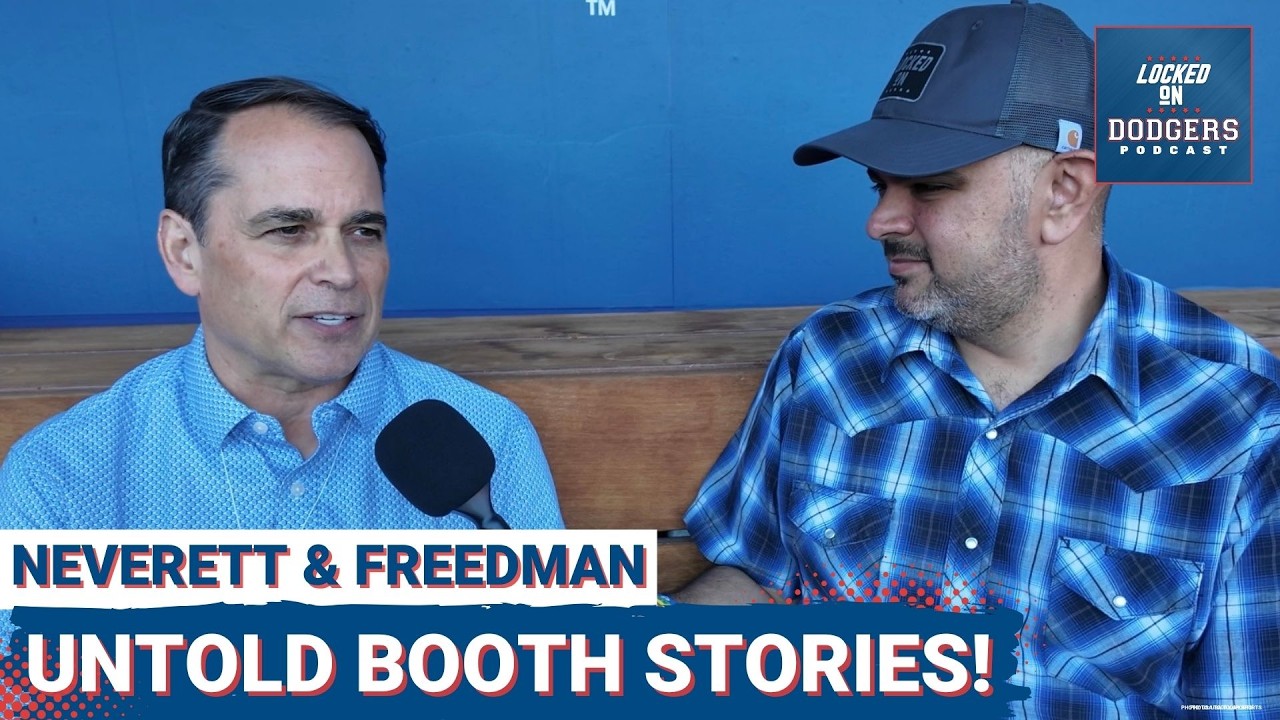
The voice of the Los Angeles Dodgers, Tim Neverett, revealed in an exclusive interview that he carries a piece of history with him everywhere he goes, sharing his four World Series rings with fans in a gesture of gratitude that underscores a career defined by championship excellence and an enduring connection to the game. In a rare, in-depth conversation on the Locked On Dodgers podcast, Neverett opened up about his journey through baseball broadcasting, the surreal experience of winning a World Series, and the profound impact of the legendary Vin Scully, offering a glimpse into the moments that have shaped one of the most respected voices in the sport.
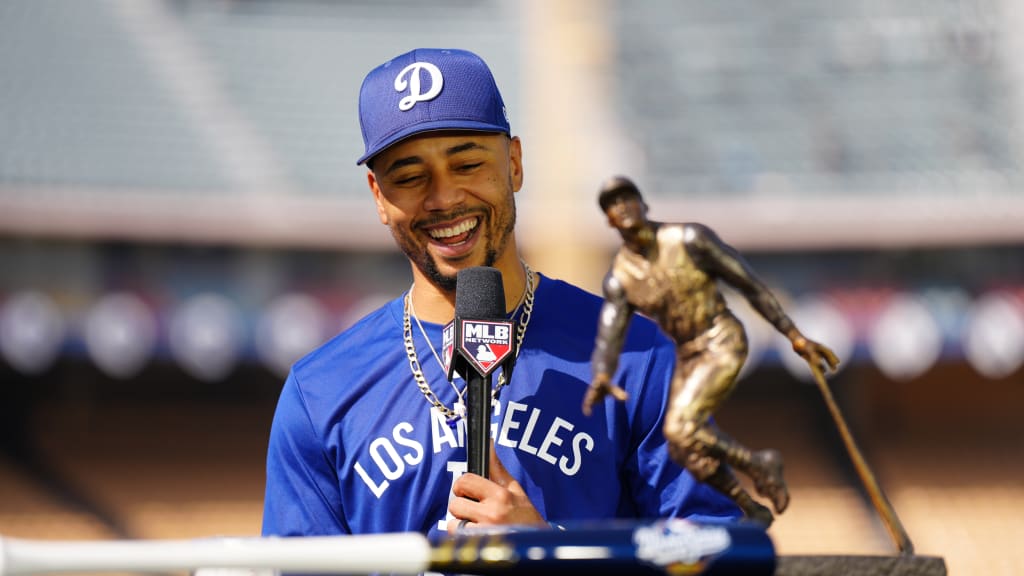
Neverett, who now calls games for the Dodgers on both radio and television, spoke candidly about the physical weight and emotional significance of his four championship rings, three from the Dodgers and one from the Boston Red Sox. He described how he brings the rings to public appearances, allowing fans to take pictures with them, a practice that reflects his humility and appreciation for the rare opportunity to be part of so many winning teams. “They’re big, they’re heavy, they’re great,” Neverett said, holding up the latest ring. “I bring them out on special occasions. I share them with people.” He noted that he and Dodgers star Mookie Betts share the same collection of rings, a coincidence that brings him particular pride.
The broadcaster reflected on the moment he knew the 2018 World Series was within reach, a personal revelation that came during a critical play in Game 4. As Steve Pearce hit a bases-clearing double, Neverett recalled pausing mid-call, thinking to himself, “We’re going to win this. We’re going to win the World Series.” He described the surreal experience of shaking himself back to reality to continue his professional duties, a moment that remains etched in his memory. The celebration that followed, including a parade in Boston where the Red Sox included their broadcasters, stands in stark contrast to the Dodgers’ policy, which does not allow broadcasters in the parade.
Neverett’s path to the major leagues was driven by a singular goal: to get to the big leagues and stay. He never imagined he would accumulate four rings, a feat he acknowledges is rare in the broadcasting world. “I’ve got friends in this business that haven’t sniffed one of these,” he said, emphasizing his gratitude. His career has been marked by consistent success, including postseason appearances with the Pittsburgh Pirates before his tenure with the Red Sox and Dodgers. The broadcaster’s ability to remain grounded despite his achievements is a testament to his character, as he continues to share his success with fans and colleagues alike.

Perhaps the most poignant part of the interview centered on Neverett’s relationship with Vin Scully, the iconic voice of the Dodgers for 67 years. Neverett recalled a moment early in his career with the Pittsburgh Pirates when he walked into the press box and heard Scully call out his name. “How does he know my name?” Neverett remembered thinking. Scully invited him into the booth, asked about his family, and talked baseball, leaving Neverett feeling like “10 million dollars.” The following year, Scully greeted him again, this time calling him “Tom,” a mistake Neverett still cherishes. “He got two of the three letters right. That’s good enough for me,” he said with a smile.
The night Scully passed away, Neverett was on the air in San Francisco with Rick Monday, who had known Scully since childhood. The broadcast team was given advance notice that Scully had entered hospice, but they were instructed not to announce his death until the family cleared it. When the moment came, Neverett turned to Monday and told him he had to be the one to break the news. Monday’s eloquent tribute set the tone for a surreal evening. The Giants organization, showing remarkable class, chose not to announce Scully’s death during the game to avoid affecting the integrity of the contest. Instead, after the final out, the stadium fell silent, with no organ music playing. The only sounds were the seagulls and the scoreboard displaying Scully’s dates of birth and death. Fans and umpires alike stopped, turned, and applauded spontaneously. “It was one of the most surreal moments I’ve had in sports,” Neverett said.
Neverett also spoke about the responsibility he feels every time he sits in the broadcast booth, knowing he is occupying the same space where Scully worked for decades. He admitted to physically hitting his leg during his first television game, wondering how a kid from New Hampshire could end up in that seat. “It wasn’t lost on me,” he said. “I felt a massive responsibility.” That sense of duty extends to his preparation, which he described as relentless. Neverett revealed that he listens to his own broadcasts the day after games, constantly critiquing his performance to ensure he is delivering the best possible product to the Dodgers’ international audience.
The conversation also shifted to the next generation of broadcasters, as Neverett discussed his son Matt, who is building his own career with UNLV and the Las Vegas Aviators. Neverett expressed immense pride in his son’s progress, noting that the Las Vegas market is on the verge of exploding with the arrival of major sports teams. He predicted that Matt will eventually land a major broadcasting seat, a testament to the younger Neverett’s talent and dedication. The broadcaster also offered advice to aspiring broadcasters, urging them to persist despite rejection. “You’re going to hear no a lot in this business,” he said. “Don’t stop asking for the job. Once you get the job, cherish the job. Do the absolute very best you can, whether it’s for 4 million people or for four people.”
Neverett’s preparation for spring training is a case study in dedication. He and Rick Monday called all 33 spring training games in 35 days, a grueling schedule that requires a unique system of preparation. Neverett builds a database starting in January, gathering stories and information about players through clubhouse conversations and research. He emphasized that spring training games are the hardest to call because of the sheer volume of players involved, with some games featuring as many as 58 players. “The spring games are the hardest ones we do,” he said, noting that regular season games feel like a relief in comparison.
The interview also featured Alex Freedman, the voice of the Oklahoma City Dodgers, the Dodgers’ Triple-A affiliate. Freedman, who has been with the organization for over a decade, described the unique challenges of minor league broadcasting, where he wears multiple hats, including media relations, baseball information, and travel coordination. “The bigger challenge in the minor leagues is you’re wearing many hats,” Freedman said. “You’re performing a lot of different duties.” Despite the demands, Freedman expressed gratitude for being part of the Dodgers organization, which he described as top-notch in every aspect.
Freedman recalled the most memorable rehab assignment he has witnessed, pointing to Clayton Kershaw’s first rehab start in 2017. The ballpark was packed to capacity, with fans crammed into every possible space, yet the crowd was unusually quiet, captivated by Kershaw’s performance. “Everyone is so quiet and engaged, wanting to watch that person pitch,” Freedman said. He also noted the surreal experience of seeing players like Corey Seager, Cody Bellinger, and Will Smith come through Oklahoma City before going on to win major awards with the Dodgers. The list of future stars who have passed through the affiliate is a testament to the strength of the Dodgers’ player development system.
Freedman also addressed the challenge of waiting for an opportunity to move up to the major leagues, a goal he continues to pursue. He acknowledged the statistical rarity of such a move, with hundreds of qualified broadcasters vying for a limited number of spots. “You have to have literally hundreds of things go your way,” he said. Despite the difficulty, Freedman remains committed to baseball, describing it as his passion and the only sport he wants to pursue professionally. His dedication to the craft and his role with the Dodgers organization make him a key figure in the pipeline of talent that feeds the major league club.
The episode concluded with a reflection on the importance of broadcasting excellence and the legacy being built by voices like Neverett and Freedman. The Dodgers’ broadcast team, which includes Joe Davis, Orel Hershiser, Nomar Garciaparra, and Eric Karros, is widely regarded as one of the best in baseball. Neverett’s commitment to his craft, his respect for the history of the game, and his willingness to share his success with fans and colleagues alike make him a standout figure in the industry. As the Dodgers continue their season, fans can rest assured that the voices they hear are not only talented but deeply passionate about the game and the organization they represent.
