On a grim summer morning in 1946, a crowd of thousands gathered on a hill in Gdansk to witness a spectacle of retribution. Five women, former guards of the nearby Stutthof concentration camp, were publicly hanged on massive gallows constructed for all to see. Their crimes, detailed in harrowing testimony during the Stutthof trials, included selecting prisoners for the gas chambers and inflicting brutal violence on the incarcerated.
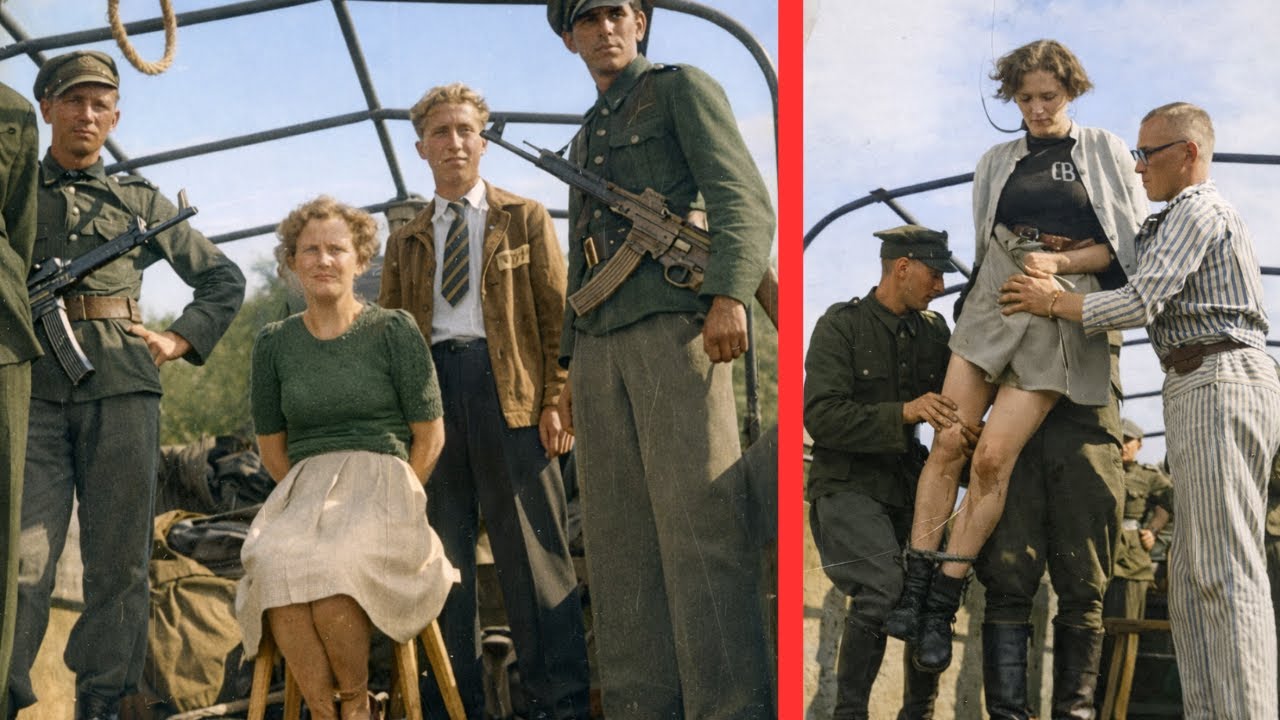 The executions of Jenny-Wanda Barkmann, Elisabeth Becker, Wanda Klaff, Ewa Paradies, and Gerda Steinhoff on July 4th were among the most shocking judicial spectacles of the postwar period. The condemned were brought before a sea of faces, many belonging to survivors and grieving families who cried out for vengeance. The method was deliberate and agonizing: slow strangulation by hanging, not a swift drop to break the neck.
This public display of state-sanctioned death was a calculated act by the new Polish authorities. After years of Nazi occupation characterized by secret terror and extrajudicial murder, justice needed to be visible, immediate, and undeniable. The public hanging served as a powerful inversion of the power dynamics enforced by the Nazis themselves, who had often forced prisoners to witness executions.
 The scale of the gallows ensured no one could miss the fate of these women, known for their cruelty in a camp where approximately 65,000 perished. Stutthof’s final months were marked by death marches and the machine-gunning of prisoners marched into the sea. The few who survived liberation provided damning evidence of the guards’ actions, shattering any preconception that women were merely victims or bystanders.
Polish society, awash in instability and armed with leftover weapons, simmered with a desire for vigilante justice. The government feared uncontrolled lynching of suspected collaborators. By channeling the collective fury into this orchestrated event, authorities aimed to reassert the rule of law and demonstrate that retribution would be administered by the courts, not the mob.

The location was symbolically charged. Biskupia Gorka Hill overlooked a city scarred by war and was relatively close to the former camp. This deliberate choice linked the punishment directly to the geography of the crimes, reminding onlookers that the atrocities happened nearby, often at the hands of locals like the condemned.

Hanging was the standard civilian punishment in Poland, a choice that stripped the guards of any perceived martial honor and branded them simply as criminals. A former prisoner of Stutthof even participated, securing a noose around one guard’s neck, a stark embodiment of the tables being turned.
For the assembled crowd, the gruesome spectacle offered a form of closure, a tangible sign that the Nazi reign of terror was irrevocably finished. It broadcast a message that no one, regardless of gender, was exempt from accountability for crimes against humanity. The women, particularly the young and blonde Barkmann dubbed “the beautiful spectre,” had become symbols of a perverse and unsettling brutality.
Today, such a public execution would be widely condemned as a barbaric relic. In the raw context of 1946, however, it was viewed by many as a necessary, if brutal, restoration of a moral order. It served as a visceral reckoning for a society emerging from genocide, a stark demonstration that the architects of suffering would themselves face a very public end. Following the executions, the bodies of the five women were reportedly handed over to medical science, a final, clinical epilogue to their violent demise.
