The final, convulsive days of World War II witnessed a descent into lawless vengeance as Allied and Soviet forces, encountering the full horror of Nazi crimes, sometimes meted out brutal, extrajudicial killings against captured German soldiers. While the vast majority of prisoners were processed according to convention, a dark undercurrent of retaliatory violence, particularly targeting the SS, stained the war’s conclusion. This wave of fatal beatings and summary executions, though never official policy, emerged from a perfect storm of battlefield trauma, visceral hatred, and the shocking discovery of systematic atrocities.
 Frontline combat had brutalized all sides, leaving soldiers emotionally shattered and primed for explosive rage. After enduring artillery barrages, ambushes, and the loss of comrades, the sight of a surrendering enemy could snap the thin veneer of military discipline. For many Allied troops, the enemy before them was not an abstract combatant but the direct cause of their friends’ deaths moments earlier. In this psychologically overwhelming environment, the urge for immediate, physical retribution often overrode protocol, leading to captives being beaten or shot on the spot during the heat of capture.
This reactive fury was exponentially magnified by the systematic uncovering of Nazi war crimes. As Allied units advanced into Germany and liberated concentration camps, prisoner-of-war enclosures, and devastated villages, the scale of German brutality became inescapably clear. Soldiers confronted piles of emaciated corpses, evidence of mass executions, and traumatized survivors. The psychological impact was catastrophic for unit discipline. The enemy ceased to be a soldier and became the embodiment of the atrocity just witnessed.
 The discovery of the Malmedy massacre, where Waffen-SS troops murdered dozens of American POWs, triggered direct and violent reprisals against subsequent SS captives. On the Eastern Front, where Nazi policies had resulted in millions of civilian deaths and a scorched-earth campaign of unimaginable cruelty, the Red Army’s approach was even more severe. Soviet propaganda had explicitly encouraged hatred, and the troops’ personal suffering—often including the loss of their own families—fueled a policy of ruthless vengeance against surrendering Germans, especially SS and Gestapo personnel.
Nowhere was the impulse for revenge more immediate and visceral than in the newly liberated concentration camps. Emaciated prisoners, having endured years of starvation, torture, and dehumanization, seized the moment of liberation to turn on their former captors. At camps like Dachau, Buchenwald, and others, surrendering SS guards were set upon by inmates and, in some documented cases, by enraged Allied soldiers who had just opened the gates. These reprisals were rarely stopped by commanding officers in the immediate aftermath, understood as a raw and predictable reaction to the horrors found within the camp walls.

The SS themselves, through their own fanaticism and terror tactics in the war’s final months, sealed their fate. In cities like Berlin, SS units executed German civilians for defeatism and hanged deserters from lampposts. This created an environment where surrendering SS men were viewed as uniquely dangerous and morally culpable, unworthy of the protections afforded to other prisoners. To Allied and Soviet troops, they represented the ideological core of the Nazi regime’s cruelty, making them prime targets for summary justice.
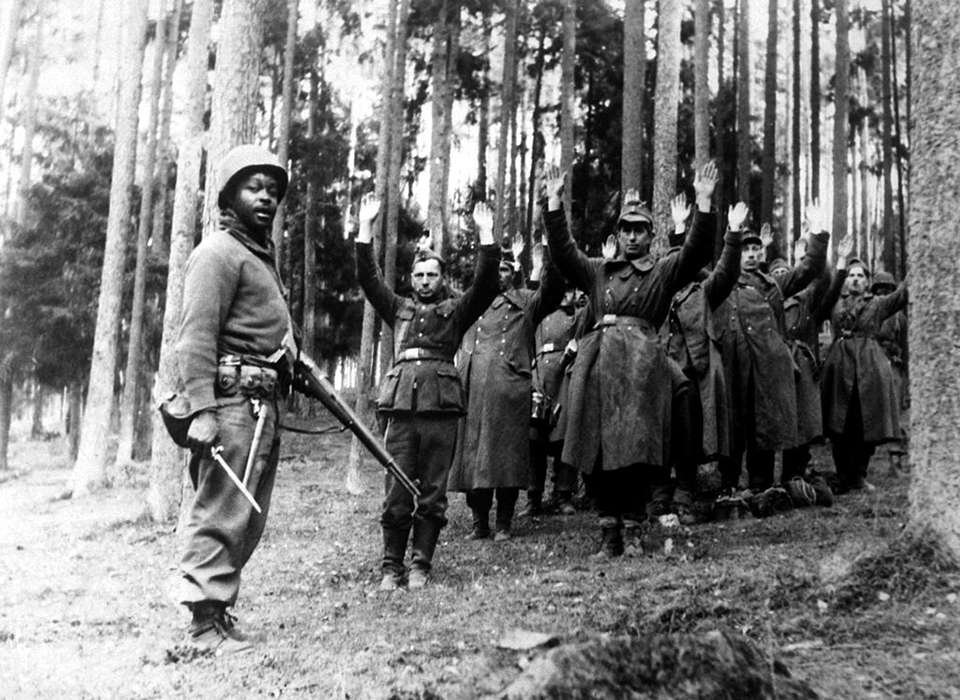 The legal and moral landscape surrounding these killings remains complex. They were clear violations of the Geneva Conventions, which all Allied nations ostensibly upheld. However, in the chaotic collapse of the Third Reich, with command structures strained and moral outrage at its peak, such breaches were frequently overlooked. Investigations, like a minor inquiry into the Dachau reprisals, typically resulted in no prosecutions, with the actions tacitly framed as an understandable, if illegal, response to unprecedented criminality.
Quantifying this violence is difficult; it was not systematic army policy but a widespread series of isolated incidents, escalating sharply in the war’s final year. Most German POWs, especially those captured on the Western Front before 1945, were treated correctly. Yet the beatings and killings were far from rare anomalies. They represented a fatal breakdown in the rules of war, directly born from the very atrocities those rules were designed to prevent.
In the end, the dark reason captured German soldiers were beaten to death lies in the catastrophic moral vacuum created by the Nazi regime itself. The war it started and waged with unparalleled barbarism ultimately generated a reciprocal fury that consumed some of its perpetrators in the final moments of the conflict. These acts of vengeance, while comprehensible in the context of sheer horror, stand as a grim testament to war’s ultimate power to corrupt all involved, even those on the side of liberation. They underscore how the complete dehumanization of the enemy, a central tenet of Nazi ideology, ultimately rebounded with terrible force upon its own agents in the war’s chaotic, violent end.
