A chilling act of calculated terror unfolded before a horrified crowd on February 8, 1943, in a small German-occupied town, as 17-year-old Lepa Radić was publicly hanged for her role in the Yugoslav partisan resistance. Her defiant final words, shouted with a noose around her neck, transformed a brutal execution into a lasting symbol of courage against tyranny. The spectacle, intended to crush the spirit of the local population, instead etched her name into history as a martyr whose death exposed the ruthless psychological warfare of Nazi occupation forces.
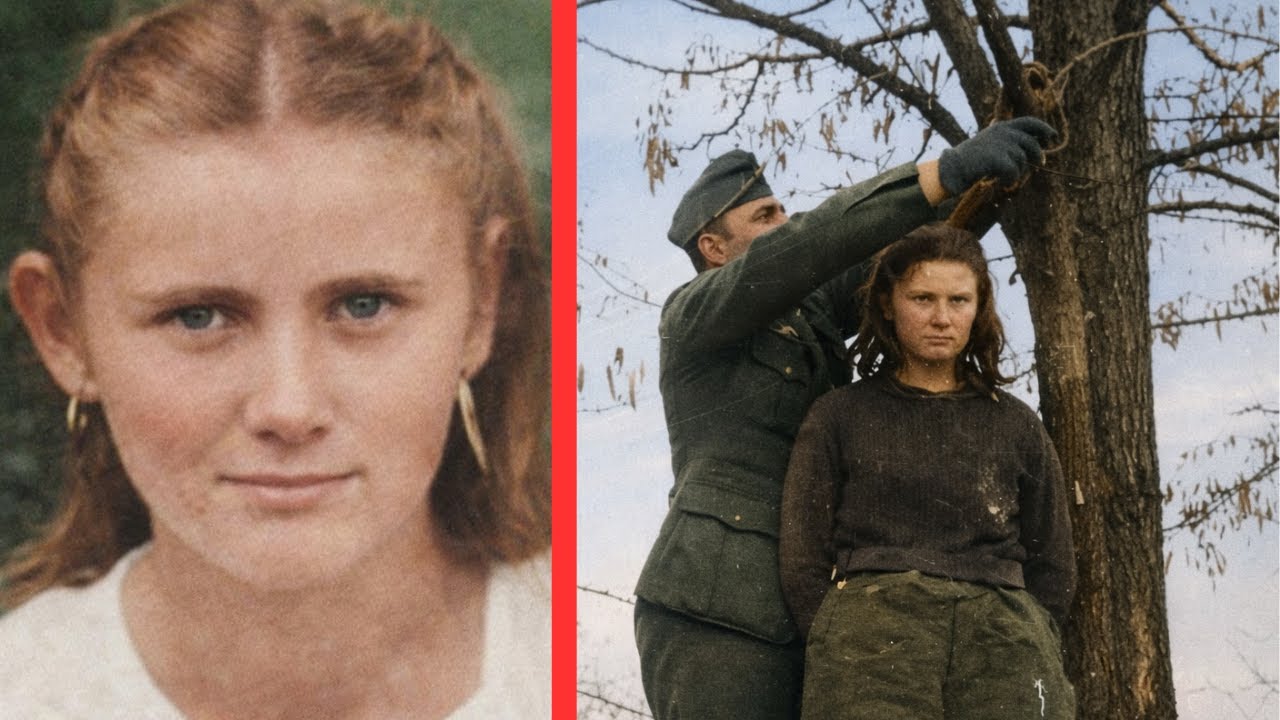 The teenager’s journey to the gallows began years earlier, shaped by family influence into communist youth groups where she showed early promise as a potential leader. The Axis invasion of Yugoslavia in April 1941 irrevocably changed her world, placing her hometown under the control of the German military and their notoriously brutal Croatian fascist allies, the Ustaše. By age 15, Radić had already been arrested by the paramilitaries, only to escape and fully devote herself to the partisan cause.
Radić proved to be a versatile and committed resistor, operating in the mountainous terrain that favored guerrilla warfare. Her activities ranged from providing crucial medical care and evacuating wounded fighters to participating in sabotage operations after receiving weapons training. This logistical support was vital to the partisan movement, making individuals like Radić high-value targets for German counterinsurgency units determined to sever the connection between fighters and the civilian population that sustained them.
Her capture occurred during the Battle of Neretva, a major confrontation between partisans and Axis forces. While transporting wounded comrades to safety, she was surrounded by soldiers of the 7th SS Volunteer Mountain Division Prinz Eugen. After emptying her weapon at the encircling troops, she was overwhelmed, subdued, and taken into German custody. What followed was days of severe torture and beatings as interrogators pressed her for the names of her comrades and collaborators.
She refused every demand. Faced with her unwavering silence, the German authorities swiftly sentenced her to death. The method and setting were deliberately chosen: a public hanging in the town square. Led before a crowd numbering in the hundreds, possibly thousands, the teenage girl was forced onto a box as a noose was secured over a tree branch and around her neck.

In a final act of psychological pressure, the German executioner offered her a last chance to save herself by betraying the resistance. Her reported reply was a defiant declaration: “I am not a traitor of my people. Those whom you are asking about will reveal themselves when they have succeeded in wiping out all you evildoers to the last man.” The box was then kicked away, and she was left to hang, her body left on display as a grim warning.
The public nature of Lepa Radić’s execution was a coldly strategic decision, not an arbitrary act of violence. German occupation policy in Yugoslavia, with its difficult terrain and widespread partisan sympathy, relied heavily on terror to compensate for a lack of stable administration and sufficient troop numbers. Public executions served as a primary tool of this strategy, designed to achieve multiple psychological and military objectives simultaneously.
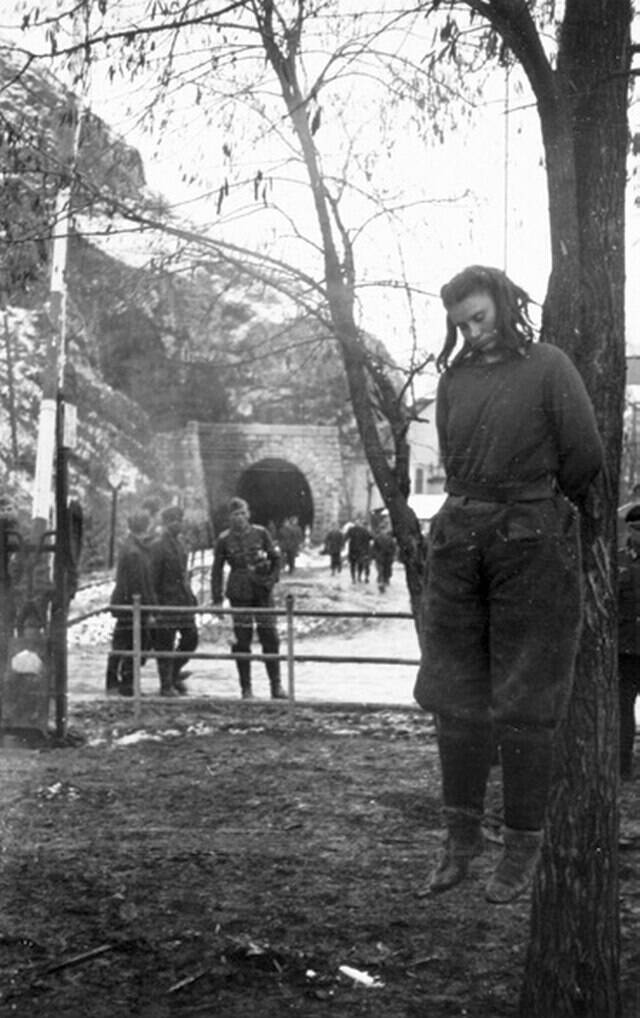
Foremost was collective intimidation. By staging the killing in the open, the occupiers aimed to instill paralyzing fear in every witness. The visible agony and finality of death were meant to deter civilians from providing any support—food, shelter, intelligence—to the resistance. It was a stark demonstration of absolute power, reinforcing the message that defiance would be met with swift, brutal, and humiliating consequences for all to see.
The choice of Radić as a subject for this spectacle was also calculated. As a young woman performing critical support roles, she represented the vital logistical backbone of the partisan movement. German anti-partisan doctrine explicitly recognized that guerrilla forces could not survive without civilian aid. Executing her publicly sent a clear signal that even those in non-combat roles would be punished with death, aiming to disrupt local support networks and encourage informants.
Her youth and gender amplified the intended shock value. Executing a teenage girl shattered any preconceived notions that women or minors would be spared from the harshest reprisals. This was designed to deepen fear within families, making parents think twice about allowing their children to assist the partisans. The emotional impact of the scene was weaponized to foster compliance and isolation of the fighters from their community.
Ideological hatred played a central role. The Yugoslav partisans were openly communist, placing them squarely in the crosshairs of Nazi ideology, which viewed communism as an existential threat. A young person in the communist resistance represented the future of that enemy ideology. Her public punishment reinforced the Nazi narrative that communist resistance was a criminal activity deserving of annihilation, aiming to symbolically suppress its influence among the youth.

Furthermore, the execution functioned as an “exemplary punishment,” a tactic routinely used by German forces in the Balkans. These were public acts of retaliation designed to serve as a warning following partisan attacks. Radić’s death occurred during a period of intense German counterinsurgency operations, making her a victim of this policy of collective reprisal meant to deter further resistance activity through overwhelming terror.
Ultimately, however, the calculated act backfired. Lepa Radić’s profound courage in the face of torture and her defiant final words turned the intended spectacle of fear into a powerful legend of resistance. Rather than extinguishing local support for the partisans, her martyrdom fueled resentment against the occupiers and strengthened the resolve of the resistance movement. The image of the hanged teenage girl became a potent symbol of the occupation’s brutality and the unbreakable spirit of those who fought it.
The story of her execution endures not merely as a historical account of wartime atrocity, but as a stark case study in the failure of psychological terror. The German authorities sought to use her death as a tool of control, but they could not account for the resilience of the human spirit. Lepa Radić’s legacy demonstrates that even in the face of meticulously planned cruelty, an act of ultimate defiance can resonate louder than any intended warning, echoing through history as a testament to courage.
