The final reckoning for those who operated the Nazi killing machine came not with a soldier’s bullet, but with the hangman’s noose. In the grim aftermath of World War II, Allied forces confronted a profound moral and legal dilemma: how to deliver justice for the industrialized murder uncovered at camps like Auschwitz, Bergen-Belsen, and Ravensbrück. The answer was found in courtrooms and prison yards across Europe, where thousands of SS concentration camp guards, both men and women, were tried and executed by hanging for their crimes against humanity.
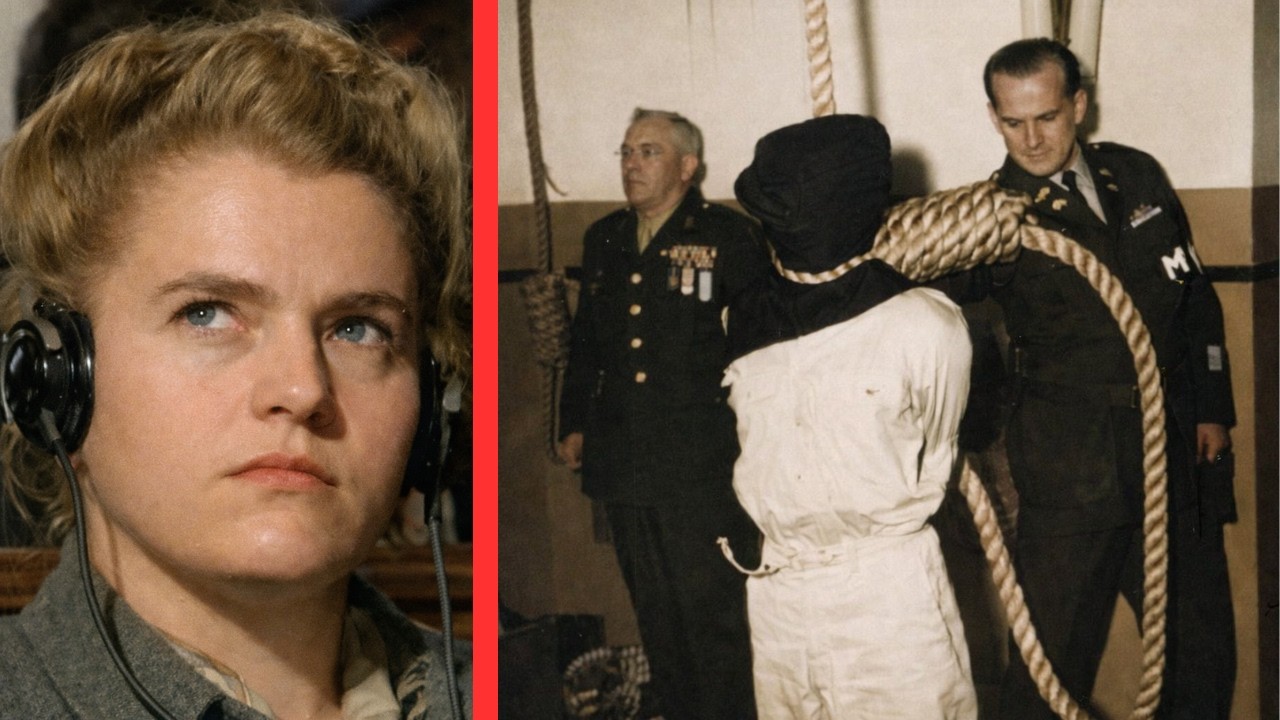 This judicial process provided a crucial, if harrowing, form of closure for survivors and established a foundational principle of international law: that following orders is no defense for atrocity. The gallows became the ultimate symbol of this accountability, deliberately chosen to denote criminal status rather than military honor. Executions were carried out following formal trials, with British, American, and Polish authorities insisting on due process even for the most heinous offenders. The scale of the punishment was a direct response to the scale of the crime.
Among the condemned were figures whose brutality became emblematic of the camps’ evil. Irma Grese, the 22-year-old “Beautiful Beast” of Auschwitz and Bergen-Belsen, was hanged in Hamelin prison in December 1945. Witness testimony detailed her personal sadism, from whipping prisoners to selecting victims for the gas chambers. The court found her an enthusiastic participant in the camp’s murderous system, her youth offering no mitigation for the severity of her actions. Her execution underscored a key tenet of the tribunals: gender and age would not exempt perpetrators from responsibility.

This precedent was starkly demonstrated in Poland, where public executions served as raw, visible justice for a ravaged nation. In July 1946, a crowd of 20,000 gathered in Gdańsk to watch five female guards from the Stutthof camp, including Jenny-Wanda Barkmann, hanged on massive gallows. The Polish authorities orchestrated these spectacles to channel collective fury into state-controlled punishment, demonstrating that the architects of terror were now powerless. It was a deliberate inversion of the public terror the Nazis had once wielded.
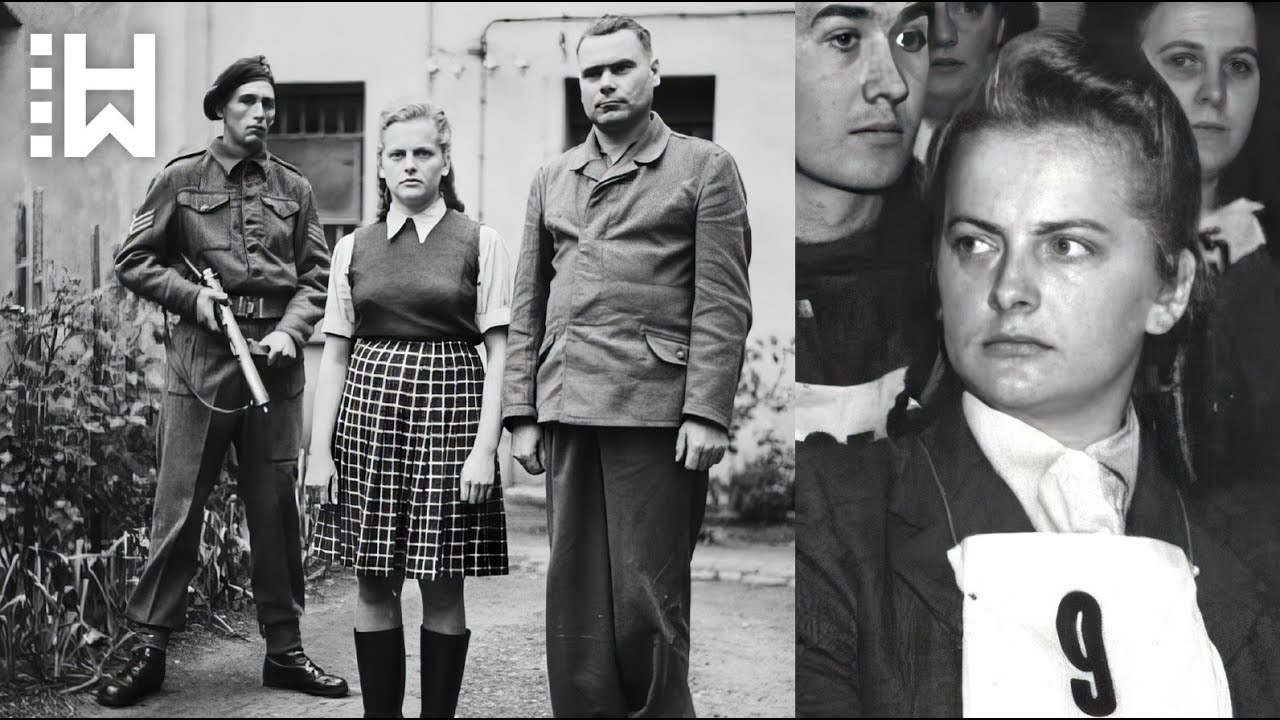
The machinery of justice operated on an industrial scale at dedicated sites like Landsberg Prison in the American zone. Designated “War Criminal Prison No. 1,” it became the central execution facility where over 250 Nazis met their fate. The Americans chose Landsberg for its security, its symbolic link to Hitler—who was incarcerated there in 1924—and its capacity for what officials termed “industrial scale punishment” for industrial-scale murder. Here, the condemned included not just camp guards but SS doctors like Karl Brandt and Karl Gebhardt, men who signed off on euthanasia programs and conducted lethal experiments.

Legal proceedings, such as the Dachau and Belsen trials, focused on the guard’s integration into a system of extermination. Prosecutors successfully argued that service within a death camp, enforcing lethal conditions and participating in selections, constituted direct criminal responsibility. The evidence was meticulous, drawn from captured SS rosters, transport logs, and harrowing survivor accounts. This paper trail, combined with eyewitness testimony, sealed the fates of those who had believed their crimes would be lost in the fog of war.
The hanging of concentration camp guards after World War II was a conscious, legalistic rejection of vengeance in favor of documented justice. It sent an unambiguous message that crimes against humanity would be prosecuted to the fullest extent, regardless of the perpetrator’s rank, gender, or claimed obedience. These executions, from the private drop in a prison chamber to the public scaffold in a Polish square, closed a chapter of unprecedented barbarity by affirming the rule of law. They stand as a somber legacy and a permanent warning about the consequences of complicity in evil.
